

Remote Team Documentation Strategies
|
March 9, 2026
|

Compare 5 Business Training Software Solutions for Optimal Efficiency
Key Highlights:
- Business training software, often called Learning Management Systems (LMS), is essential for organisations to enhance staff skills and streamline onboarding.
- Centralised educational resources reduce manual processes and increase productivity.
- Key features to consider when selecting training software include user-friendly interface, customization options, analytics, integration capabilities, mobile accessibility, and scalability.
- TalentLMS is affordable and user-friendly but has limited advanced features; Absorb LMS is customizable and scalable but may be costly for smaller businesses.
- Docebo offers AI-driven learning paths and extensive analytics but has a complex setup; SAP SuccessFactors is ideal for large enterprises but can overwhelm smaller organisations.
- SkyPrep is great for onboarding but lacks advanced features compared to larger platforms.
- Choosing the right training software involves identifying learning goals, assessing user demographics, considering budget constraints, ensuring future scalability, and gathering feedback through trials.
Introduction
You might be wondering how to choose the right business training software. It can really be a game-changer for organizations looking to boost employee skills and streamline operations. With so many options out there, it’s super important to understand the key features and benefits of different platforms. But as companies dive into this sea of choices, they often find themselves grappling with how to match their unique needs with what these software solutions offer.
So, what should organizations focus on to pick the most effective training software? It’s all about ensuring optimal efficiency while keeping things simple and straightforward. Let’s explore this together!
Understanding Business Training Software: Definition and Importance
You might be wondering what business development software is all about. Well, it’s often referred to as Learning Management Systems (LMS), which are a form of business training software designed to help create, deliver, and manage educational programs. If you’re part of an organization looking to boost staff skills, streamline onboarding, or ensure compliance with industry standards, utilizing business training software is essential.
Imagine having a centralized spot for all your educational resources. Sounds great, right? This setup can really cut down on the time spent on manual processes and ramp up overall productivity. The beauty of these programs lies in their ability to adapt to different learning styles, keep track of staff progress, and provide analytics that can steer future development efforts. In the end, this all leads to a more skilled workforce, which is something we can all get behind!

Evaluation Criteria for Selecting Training Software: Key Features and Considerations
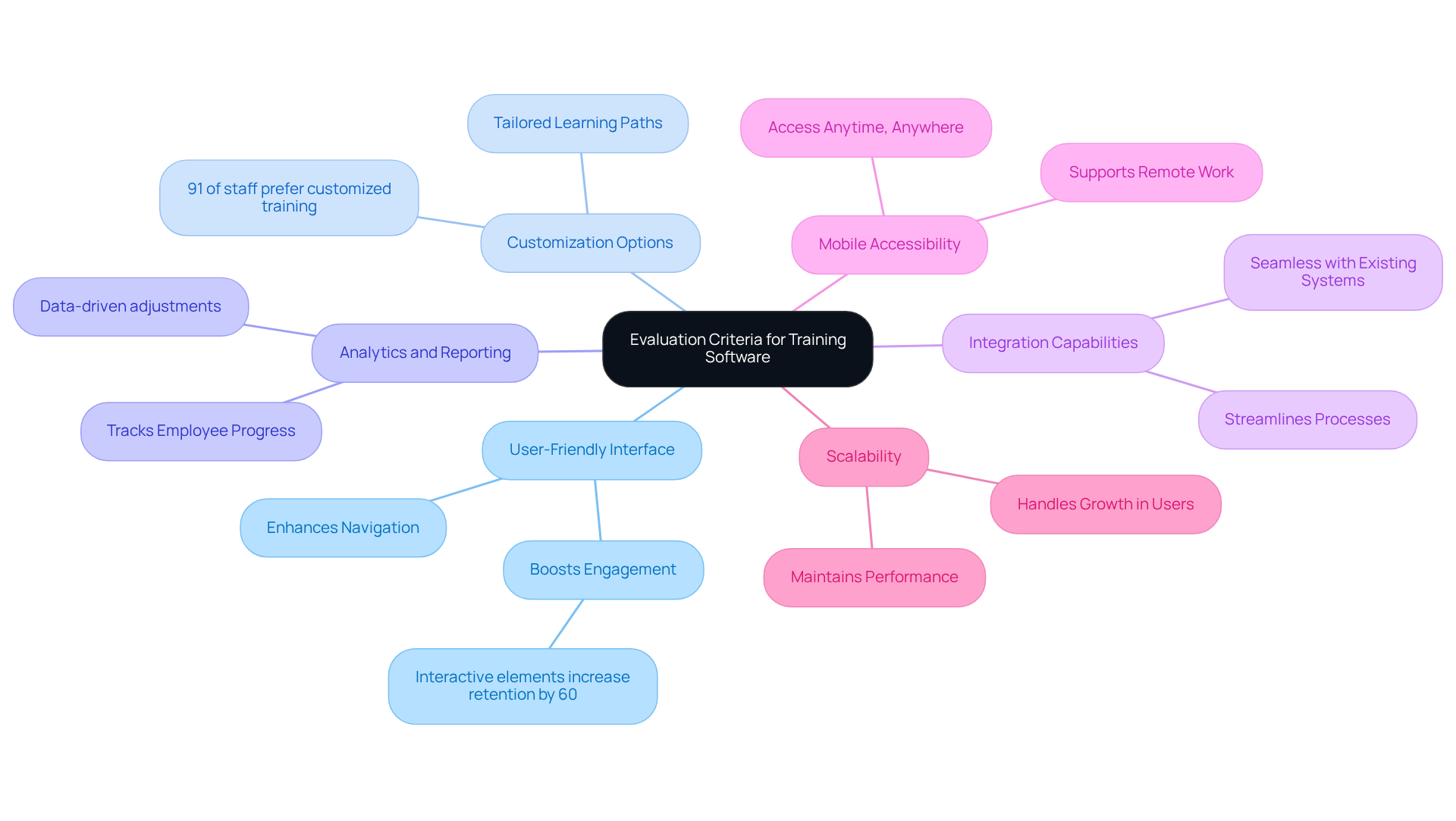
When you're on the hunt for training software, there are a few key features you really want to keep in mind:
-
User-Friendly Interface: You might be wondering why an intuitive design matters so much. Well, it makes it super easy for employees to navigate the platform, which means less time spent figuring things out and more time learning! Research shows that a well-designed interface can boost user engagement and retention significantly. In fact, interactive elements can enhance knowledge retention by up to 60% compared to just passively consuming content (Ethan Hilner, Journal of Applied Psychology).
-
Customization Options: Now, let’s talk about customization. The ability to tailor educational content to fit your organization’s specific needs is becoming more and more important. By 2025, many companies are focusing on personalized learning paths because they know that tailored education keeps things relevant and engaging. Did you know that 91% of staff want development that’s customized to their job roles? Companies that invest in these personalized solutions often see better performance and satisfaction among their teams.
-
Analytics and Reporting: Robust analytics tools are a must-have for tracking employee progress and the effectiveness of your development programs. This data-driven approach lets you see how well your initiatives are working and make any necessary tweaks along the way.
-
Integration Capabilities: You’ll want software that plays nicely with your existing systems, like HR software and CRM platforms. Seamless integration helps streamline processes and keeps everything aligned with your broader organizational goals.
-
Mobile Accessibility: With remote work on the rise, mobile-friendly platforms are essential. They let employees access educational materials anytime, anywhere, which is perfect for today’s diverse work environments and schedules.
-
Scalability: As your company grows, so do your development needs. The software you choose should be able to handle more users and content without slowing down. Scalable solutions ensure that your training programs can expand alongside your company, keeping effectiveness and engagement intact.
By focusing on these essential features, you can pick training software that not only meets your current needs but also adapts to future challenges. This way, you’ll be fostering a culture of ongoing learning and development!
Comparative Analysis of the Top 5 Business Training Software Solutions: Features, Pros, and Cons
-
TalentLMS:
- Features: You’ll love its user-friendly interface, customizable learning paths, and robust reporting tools.
- Pros: It’s affordable, easy to set up, and has strong customer support.
- Cons: However, it does have limited advanced features compared to some competitors.
-
Absorb LMS:
- Features: This one boasts comprehensive course creation tools, mobile accessibility, and great integration capabilities.
- Pros: It’s highly customizable and scalable, making it perfect for large enterprises.
- Cons: Just a heads up, the higher cost might be a barrier for smaller businesses.
-
Docebo:
- Features: With AI-driven learning paths, social learning features, and extensive analytics, it’s quite the package.
- Pros: You’ll find innovative features that really enhance user engagement.
- Cons: But be prepared for some complexity in setup and a higher learning curve.
-
SAP SuccessFactors Learning:
- Features: It integrates seamlessly with SAP systems, offers compliance tracking, and provides extensive reporting.
- Pros: This is ideal for large enterprises that already have SAP infrastructure in place.
- Cons: It can feel a bit overwhelming for smaller organizations due to its complexity.
-
SkyPrep:
- Features: You’ll appreciate the easy course creation, tracking capabilities, and user-friendly design.
- Pros: It’s excellent for onboarding and customer education.
- Cons: Just keep in mind that it has limited advanced features compared to larger platforms.

Choosing the Right Training Software: Matching Solutions to Organizational Needs
Selecting the right instructional software? It’s all about understanding what your organization truly needs. Let’s break it down together!
-
Identify Learning Goals: What are you hoping to achieve? Whether it’s compliance, skill enhancement, or onboarding, having clear objectives is key. Did you know that 51% of HR managers see development as the best way to close skills gaps? Plus, 40% of Fortune 500 companies are using e-learning to train their teams. That’s a clear sign that digital solutions are on the rise!
-
Assess User Demographics: You might be wondering how your team prefers to learn. Understanding their learning styles and tech skills is super important. For instance, 70% of employees like online learning, and 68% prefer to learn right at work. By tailoring your software to these preferences, you can boost engagement and retention. And here’s a fun fact: 92% of employees say that workplace development makes them feel more engaged in their jobs. So, accessible platforms are a must!
-
Budget Constraints: Let’s talk money. It’s essential to look at the total cost of ownership, which includes licensing, implementation, and ongoing support. Companies with robust development programs see a whopping 218% increase in income per employee. That really highlights the importance of making smart investments in educational tools!
-
Future Scalability: Now, think about the future. Can your software grow with your organization? You’ll want something that can handle more users and content as your team expands. With the global workplace development market projected to hit $401 billion in 2024, scalability is crucial for long-term success.
-
Trial and Feedback: Finally, don’t forget to test the waters! Use free trials or demos to gather feedback from potential users. Involving employees in the selection process can lead to higher satisfaction rates-92% of them believe effective training boosts their job engagement. This collaborative approach ensures the software meets both user expectations and organizational needs.
So, what do you think? Ready to dive into the world of instructional software? The right business training software can make all the difference!

Conclusion
Choosing the right business training software is super important for organizations looking to boost employee skills and make learning smoother. You might be wondering why these systems, often called Learning Management Systems (LMS), are such a big deal. Well, they give you a centralized spot to manage training resources, track progress, and cater to different learning styles. By investing in solid training software, companies can build a more skilled workforce, which in turn drives productivity and keeps things compliant.
So, what should you look for when evaluating training software? The article highlighted some key criteria:
- User-friendly interfaces
- Customization options
- Comprehensive analytics
- Integration capabilities
- Mobile access
- Scalability
Each of the five solutions we looked at - TalentLMS, Absorb LMS, Docebo, SAP SuccessFactors Learning, and SkyPrep - brings its own unique features and perks to the table, tailored to different organizational needs. Understanding these differences is key to making a smart choice that fits your training goals, user demographics, budget, and future growth plans.
In today’s fast-paced business world, the right training software can really make a difference in employee engagement and overall success. As companies keep prioritizing development and learning, the message is clear: take a good look at your current and future training needs, explore your options, and invest in a solution that promotes a culture of continuous growth. By doing this, organizations can not only improve their training programs but also stay competitive and adaptable in a changing landscape.
Frequently Asked Questions
What is business training software?
Business training software, often referred to as Learning Management Systems (LMS), is designed to help create, deliver, and manage educational programs within an organization.
Why is business training software important?
It is essential for organizations looking to boost staff skills, streamline onboarding processes, and ensure compliance with industry standards.
How does business training software improve productivity?
It provides a centralized location for educational resources, reducing time spent on manual processes and increasing overall productivity.
Can business training software adapt to different learning styles?
Yes, these programs are designed to adapt to various learning styles, catering to the needs of different users.
What features do business training software programs offer?
They keep track of staff progress and provide analytics that can inform future development efforts.
What is the ultimate goal of using business training software?
The ultimate goal is to create a more skilled workforce, which enhances the overall effectiveness of the organization.
👍
What others are liking


5 Steps to outline your ideal documentation structure
5 MINS READ
Where to start the your journey of mapping out your ideal documentation structure, aligning it with the very heartbeat of your organization?
Defining a winning level of detail in your process
3 MINS READ
What is too much detail, and what is too little? This article described in that winning level detail about what detail is enough.


