
Automation and Documentation
|
April 29, 2026
|

8 Steps to Create Effective Training Documents for Your Team
Key Highlights
- Define clear training objectives aligning with organisational goals using SMART criteria.
- Understand your target audience through demographic analysis and learner personas to tailor content effectively.
- Gather input from stakeholders across departments to enhance development efforts and increase project success.
- Plan content structure by outlining main topics and ensuring logical flow for better readability.
- Choose the right format for training manuals, considering audience preferences for engagement and retention.
- Develop content that is clear, concise, and visually engaging to improve learning outcomes.
- Assemble and distribute training manuals using a centralised platform and inform team members about their availability.
- Collect and analyse feedback to continuously improve educational materials and maintain relevance.
Introduction
Creating effective training documents is super important for boosting team performance and making sure employees have the skills and knowledge they need. You might be wondering how to go about it, right? This guide lays out a straightforward approach to crafting training materials that not only hit your organizational goals but also connect with learners in a meaningful way.
But here’s the thing: with so many factors to consider - from defining your objectives to picking the right format - how can you make sure your training documents really resonate with your audience and drive results? Let’s dive into that!
Define Objectives for Your Training Documents
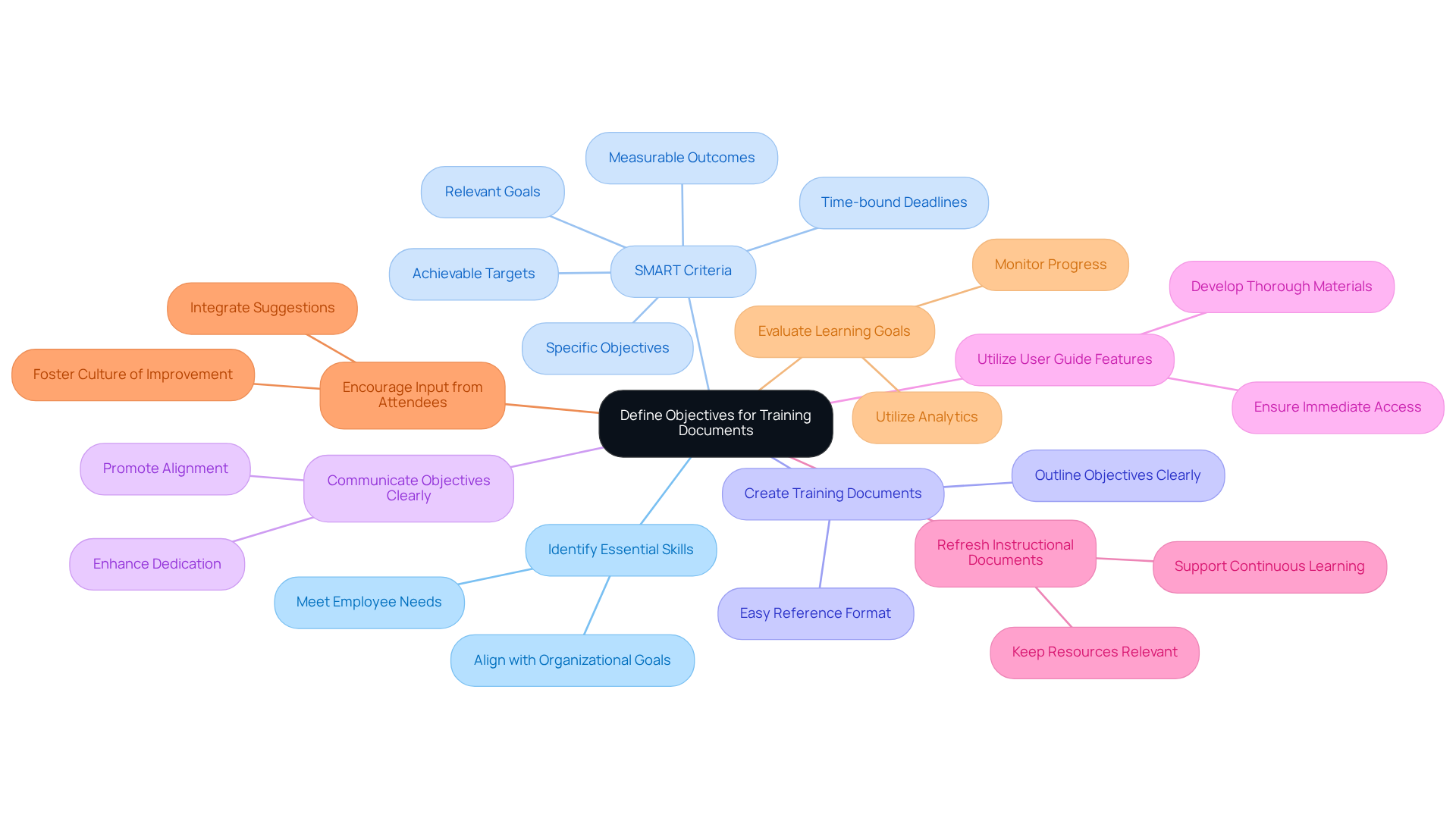
- You might be wondering where to start. Begin by pinpointing the essential skills or knowledge that your program aims to impart. This foundational step is key to ensuring that everything aligns with your organizational goals and meets employee needs.
- Now, let’s talk about the SMART criteria - Specific, Measurable, Achievable, Relevant, and Time-bound. Crafting precise objectives is crucial! Instead of saying, "improve customer service skills," how about specifying, "increase customer satisfaction scores by 20% within six months through improved communication education?" This kind of clarity makes tracking progress and outcomes a breeze.
- Don’t forget to create training documents that outline these objectives in a format that’s easy to reference throughout your instructional materials. This practice not only reinforces your goals but also helps to create training documents that serve as a handy guide for both trainers and participants.
- It’s super important to convey these objectives clearly to everyone involved in the development process. When everyone understands the goals, it promotes alignment and dedication - essential ingredients for achieving those desired educational outcomes. Research shows that organizations with clearly defined learning objectives see a significant boost in employee engagement and retention. In fact, 94% of employees say they’d stick around longer at a company that invests in their growth and development!
- Speaking of resources, make sure to create training documents by utilizing the user guide generation features of this platform. This way, you can develop thorough instructional materials that are readily available. It empowers your team with immediate access to essential documentation, enhancing their ability to hit those educational objectives effectively.
- And don’t worry about being stuck with outdated materials! Use the platform’s features to refresh and modify your instructional documents with ease. Keeping your resources relevant in today’s fast-paced business landscape not only boosts productivity but also supports continuous learning within your organization.
- Encourage input from attendees regarding the resources. Use documentation tools to integrate their suggestions into upcoming updates. This collaborative approach fosters a culture of improvement and engagement - everyone loves to feel heard!
- Finally, make it a habit to consistently evaluate and assess the effectiveness of your learning goals and resources. Utilize SowFlow's analytics to monitor progress and results. This data-driven approach will help you enhance your preparation strategy over time.
Identify Your Target Audience
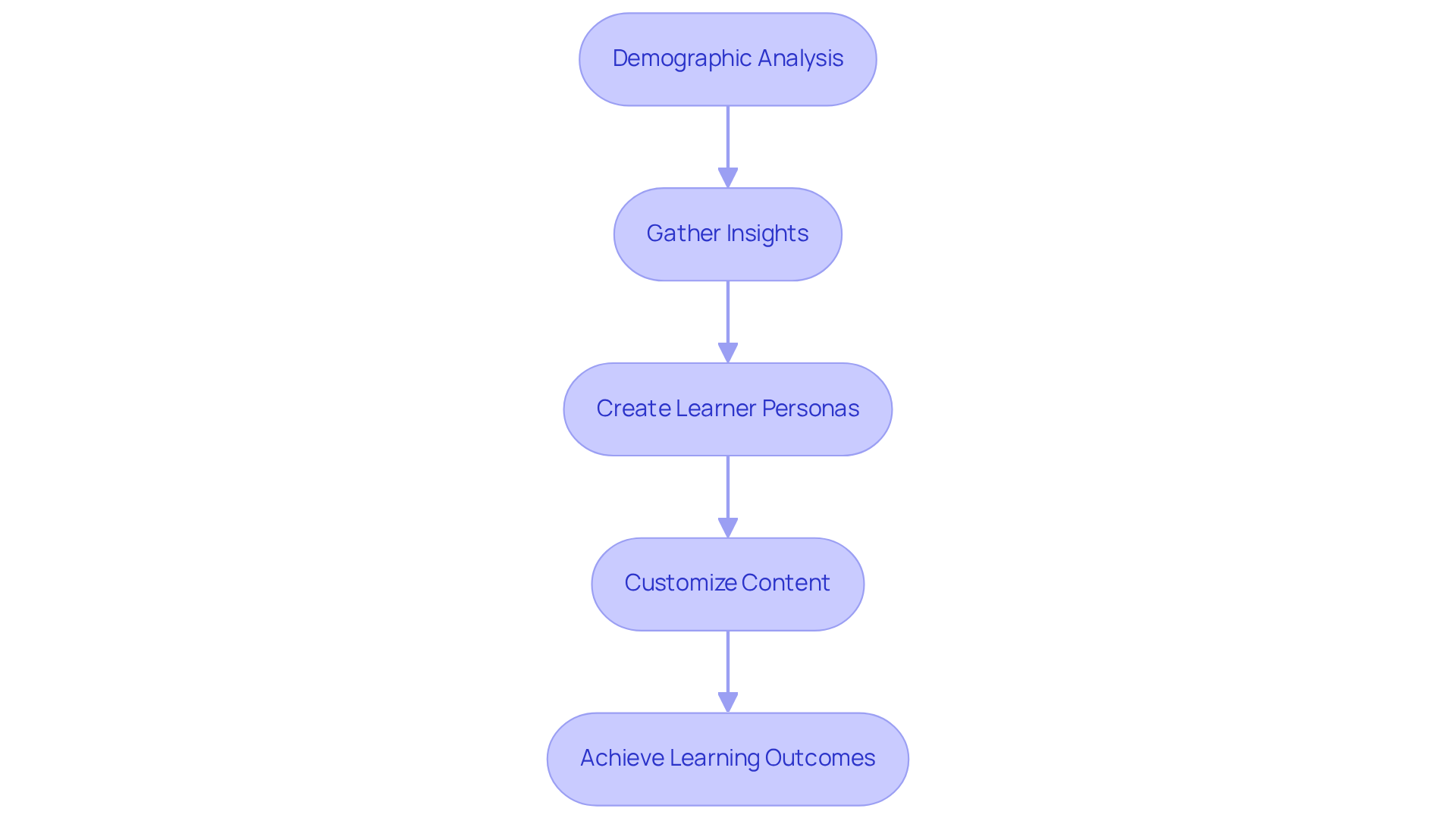
- Have you ever thought about how well you really know your audience? Conducting a demographic analysis can help you understand their age, experience level, and learning preferences. This foundational step is key to making sure your instructional materials resonate with the diverse backgrounds of your team members. For instance, did you know that 68% of staff prefer to learn right at work? Plus, 58% want to learn at their own pace. This highlights the need for adaptability in your development methods. With SowFlow, you can whip up user guides that cater to these preferences, giving your team instant access to documentation that truly empowers them.
- Now, let’s dive into how you can gather insights about your team's prior knowledge and expectations. Using surveys or interviews not only enriches your content but also fosters a sense of ownership among staff. Research shows that 92% of employees believe well-structured development programs boost their engagement at work. With SowFlow's platform, you can quickly update educational resources, keeping them relevant and captivating.
- You might be wondering how to visualize the different segments of your audience. Creating learner personas is a fantastic way to do this! By developing detailed profiles that represent the traits and needs of various learner types, you can customize your training resources more effectively. This approach aligns with the fact that 94% of staff would stick around longer at a company that invests in their learning and development. SowFlow's user guide creation tools can help you design materials that really resonate with each persona.
- Speaking of customization, it’s crucial to tailor your content to address the specific needs and challenges faced by each audience segment. Companies with strong development programs report a whopping 218% higher revenue per staff member! By ensuring your instructional documents are relevant and targeted, you can create training documents that boost the chances of achieving those desired learning outcomes. With SowFlow, you can create training documents to streamline the process of standardizing documentation, facilitating the onboarding of new employees and knowledge sharing across your team.
Gather Input from Relevant Teams
- You might be wondering how to kick things off. Start by identifying key stakeholders across departments who can share valuable insights into development needs. Engaging diverse perspectives not only broadens your understanding of objectives but also boosts your chances of success. In fact, companies that actively engage with stakeholders are 30% more likely to succeed with new products!
- Now, let’s dive into the next step: arranging cooperative meetings or workshops. These gatherings are perfect for discussing development objectives and collecting feedback. Plus, they foster a sense of ownership and encourage everyone to participate actively. Did you know that 78% of projects succeed when stakeholders are engaged? That really highlights the importance of collaboration!
- Speaking of collaboration, don’t forget to utilize tools like surveys and shared documents. These can really streamline the feedback collection process. Organizations that use these tools often see improved engagement and efficiency in their program development.
- Finally, make sure to create training documents that incorporate the feedback you gather into your educational material. This ensures it aligns with the needs of all teams. Not only does this enhance the significance of your development efforts, but it also fosters a culture of collaboration and continuous improvement. As Christopher Pappas wisely noted, investing in development can boost your employees' performance, making them more productive and skilled.

Plan Your Content Structure
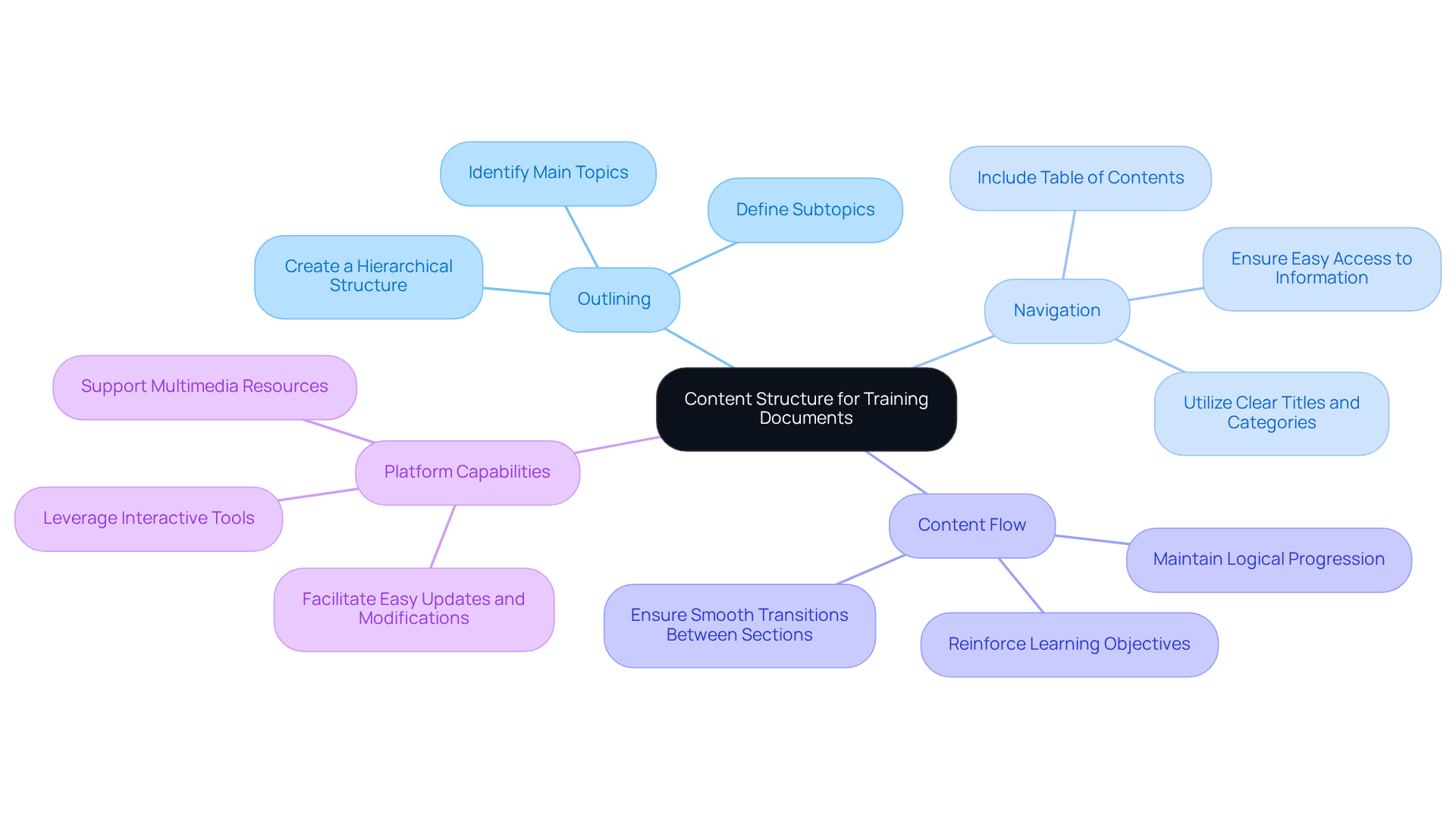
To create training documents that are effective for your team, you might be wondering where to start. Well, outlining the main topics and subtopics is a great first step! This foundational move ensures that all the necessary information is included and organized logically. Think of it like building a house; you need a solid foundation to support everything else. Using a hierarchical structure to arrange your content can really help present complex information in a clear and digestible way.
Now, let’s talk about navigation. Including a table of contents is key! It allows users to quickly find the information they need, which is super important in today’s fast-paced business environment. Timely access to documentation can really boost productivity, don’t you think?
As you develop each section, make sure the content flows smoothly into the next. This continuity not only reinforces your learning objectives but also keeps everyone engaged. Imagine being able to access all your documentation with just a single command! With this approach, you can create training documents that provide immediate access to crucial information. Plus, the platform makes it easy to update and modify your resources, keeping them relevant and efficient. By leveraging SowFlow's capabilities, you can streamline standardization, onboarding, and knowledge sharing, ultimately empowering your team with the resources they need to succeed.
Choose the Right Format for Your Training Manual
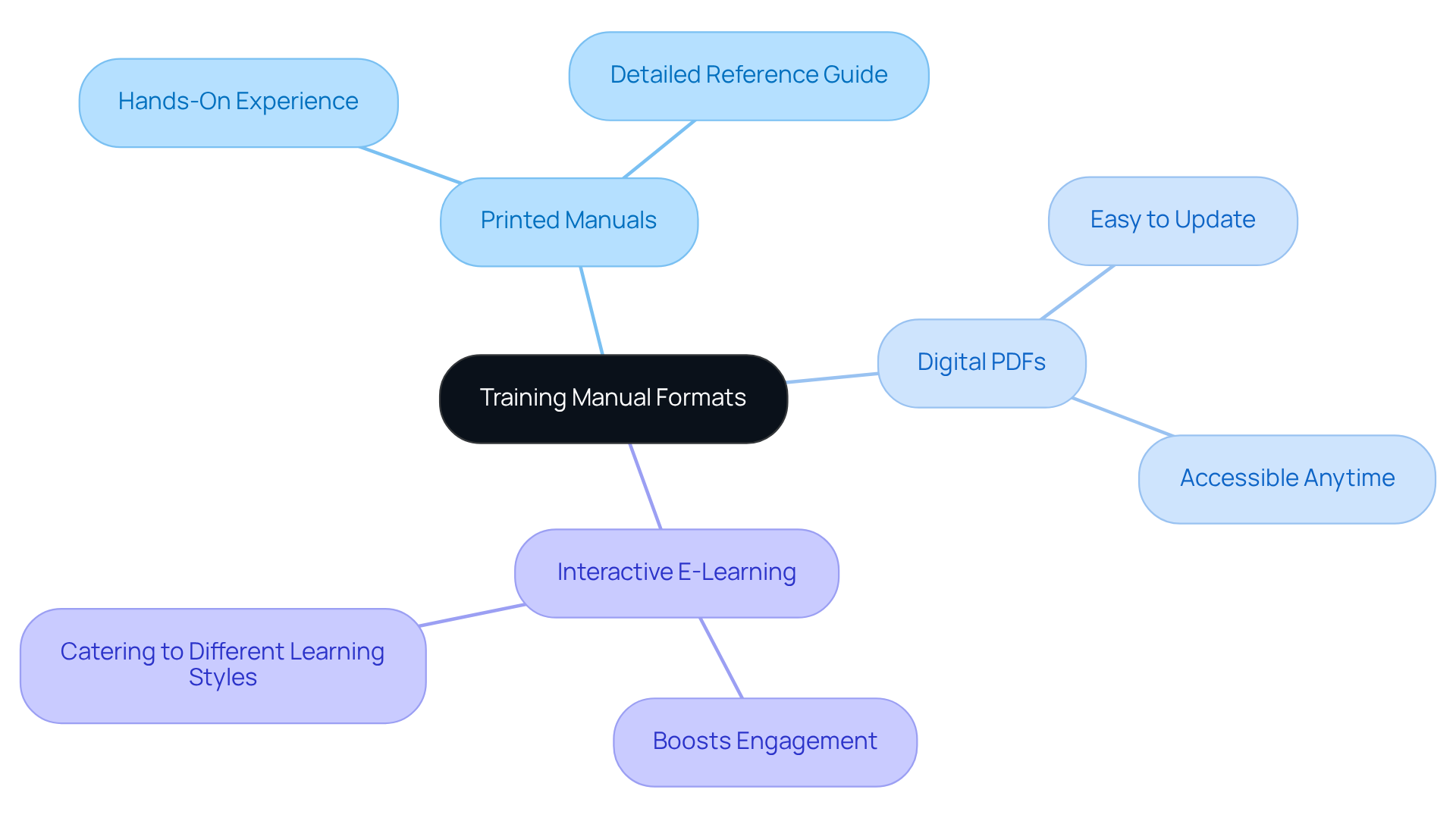
Choosing the right format for your training manual is super important if you want to keep everyone engaged and make sure the information sticks. You might be wondering what options are out there. Well, think about printed manuals, digital PDFs, or even interactive e-learning modules. Each of these has its perks! For instance, digital resources are a breeze to update and can be accessed anytime, while some folks really enjoy the hands-on feel of a printed manual.
Now, let’s talk about your audience. Understanding what they prefer is key! Did you know that a whopping 95% of employees prefer video-based learning over plain text? That really shows how effective visual learning can be. So, why not spice things up by adding some multimedia elements to your training materials? It’s a great way to cater to different learning styles.
Make sure the format you choose aligns with your learning goals. For example, interactive e-learning modules can really boost engagement by letting learners get involved, while printed materials might be better for detailed reference guides. And here’s a tip: try testing your chosen format with a small group before rolling it out fully. This way, you can gather feedback and tweak things to better fit your team’s needs.
At the end of the day, the goal is to create training documents that not only share information effectively but also foster a culture of continuous learning and growth within your organization. So, let’s get to it!
Develop Content for Your Training Documents
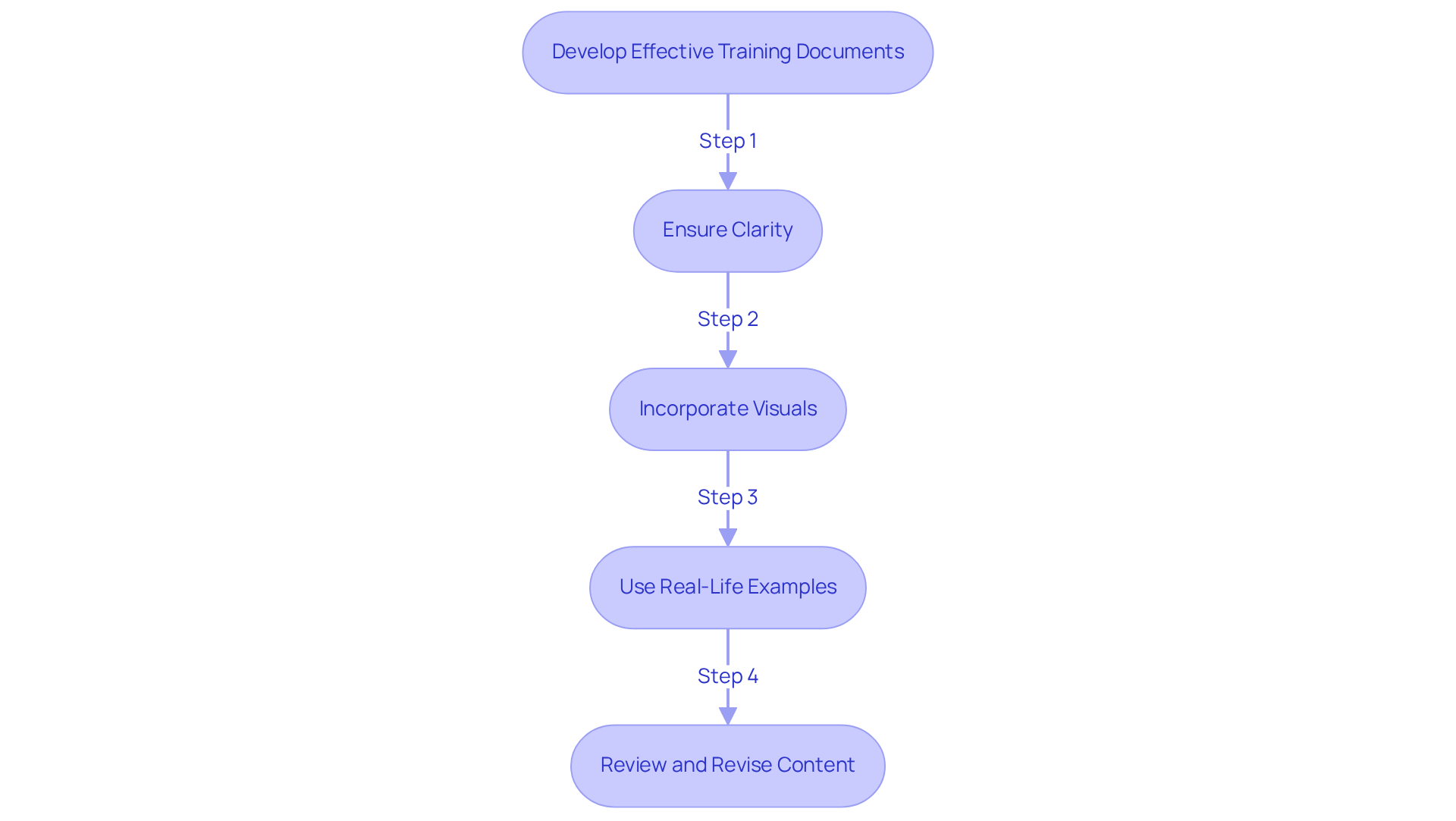
You might be wondering how to create training documents that are truly effective and hit home. Well, it all starts with producing clear and concise material that aligns with your educational goals. Clarity is key here! Did you know that studies show people can only remember about 10% of what they hear after three days? On the flip side, they retain around 65% of what they see. That’s why incorporating bullet points, headings, and visuals can make a world of difference in readability, helping learners absorb information more easily. For example, using visuals can boost the learning experience by up to 400%! They break down complex concepts into bite-sized pieces that are much easier to digest.
Now, let’s talk about real-life examples and case studies. These are fantastic for illustrating key concepts. Research indicates that people perform tasks 323% more effectively when they have visuals to guide them instead of just written instructions. That really highlights the power of visual aids in education! Plus, visuals keep teams engaged and help retain crucial information, especially since about 65% of us are visual learners who thrive when we can actually see the information.
Finally, don’t forget to review and revise your content. This step is super important to ensure accuracy and relevance. Keeping your educational materials up-to-date is essential for meeting the evolving needs of your team. By focusing on clarity and including visual elements, you can create training documents that not only inform but also engage and empower your team. So, are you ready to dive in and make your documentation shine?
Assemble and Distribute Your Training Manual
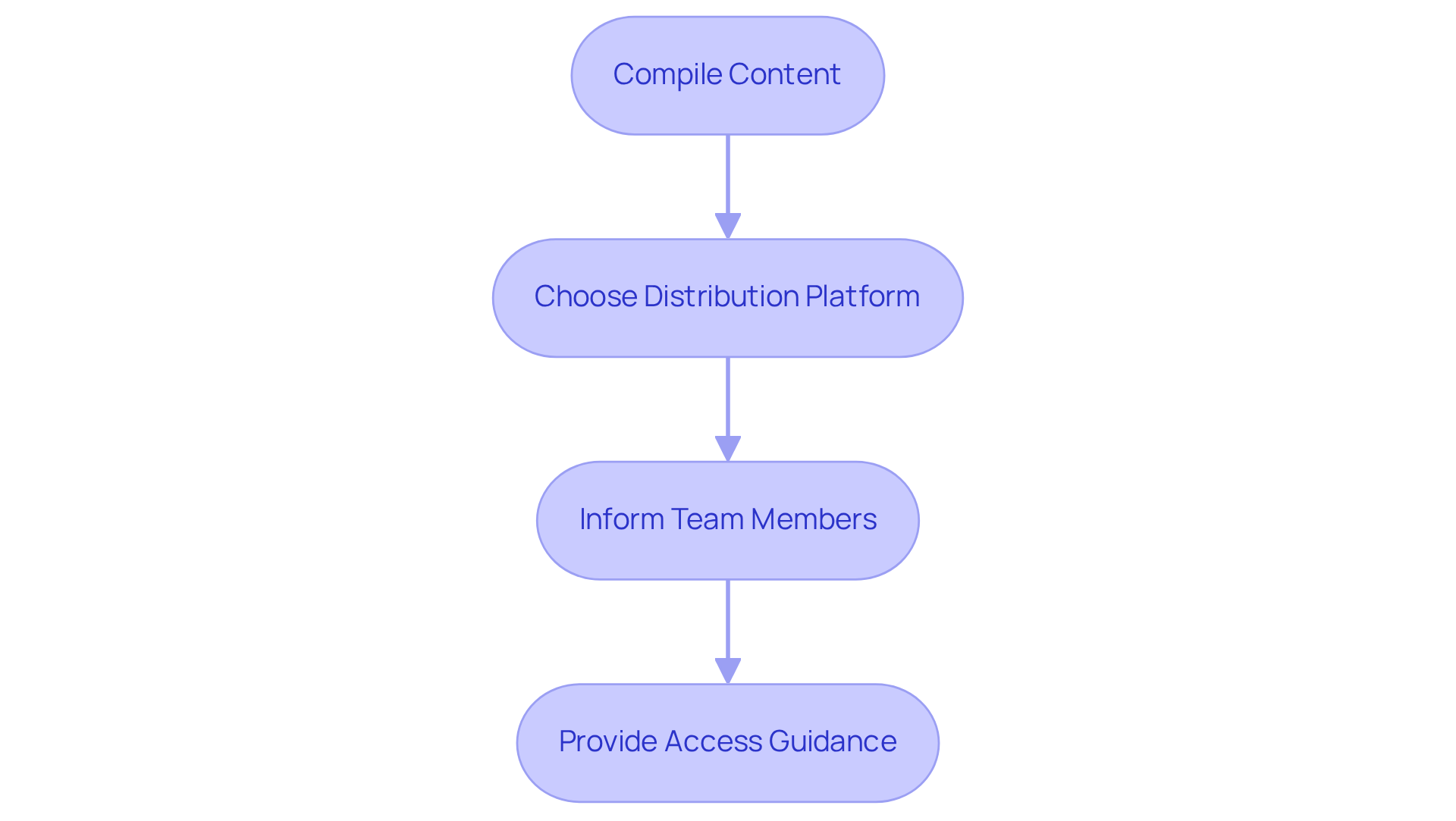
- So, let’s start by compiling all your content into the format you’ve chosen. It’s super important to keep everything consistent in design and layout, right?
- Next up, think about using a centralized platform for distribution. A company intranet or a learning management system can work wonders here!
- You might be wondering how to keep everyone in the loop. Just make sure to inform all the relevant team members about the manual’s availability.
- Finally, don’t forget to give some guidance on how to access and use those educational resources efficiently. It’ll make a world of difference!
Collect and Analyze Feedback for Improvement
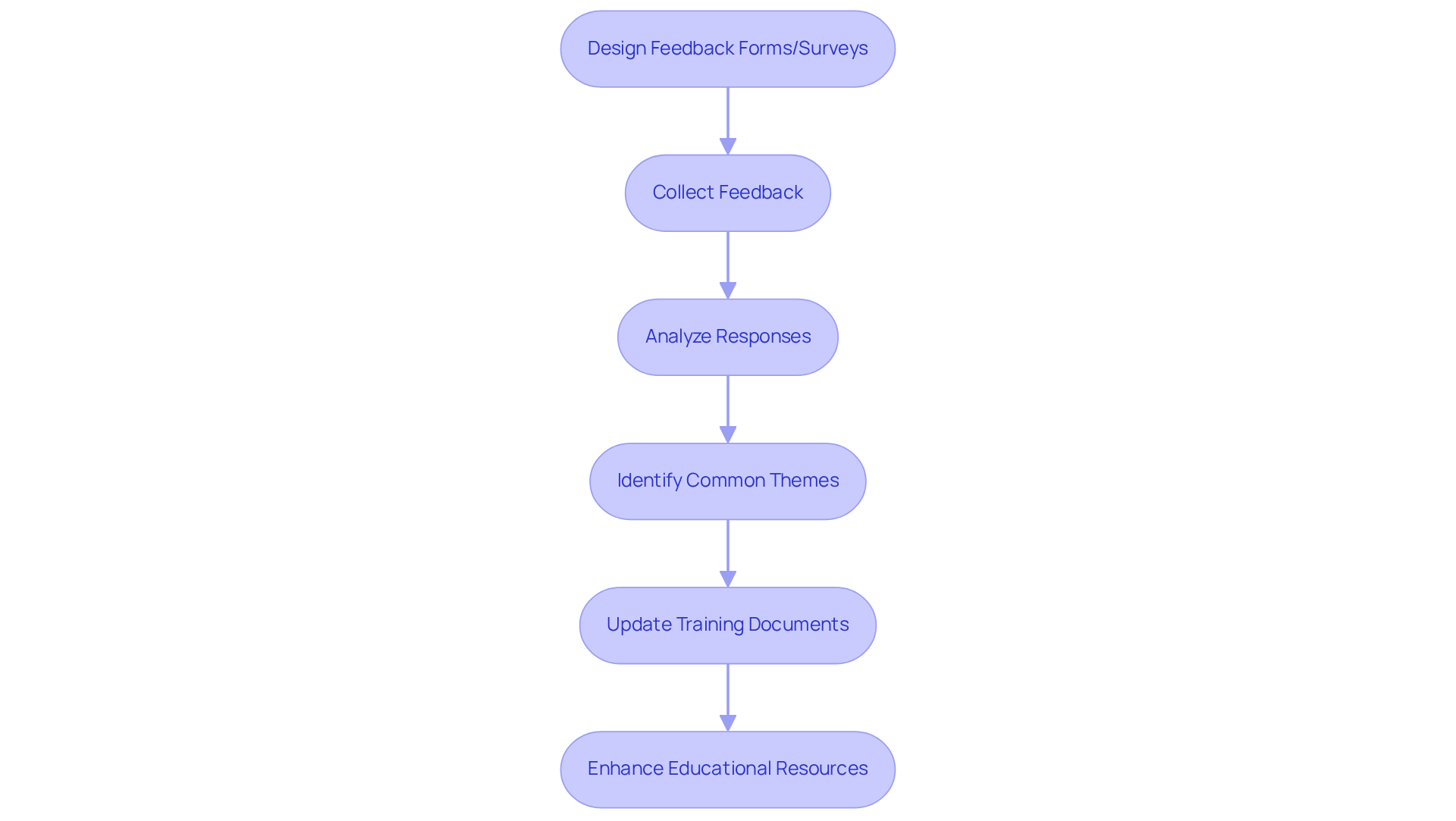
To make educational materials really effective, you’ve got to have a solid feedback collection process in place. You might be wondering how to start? Well, begin by designing feedback forms or surveys that users can fill out after they finish their instruction. This step is super important, especially since 69.8% of U.S. workers have received formal education in the past year. That’s a huge opportunity to gather insights from a lot of participants!
Once you’ve gathered that feedback, take a good look at the responses. What are people saying? Identify those common themes and suggestions that can help create training documents for real changes in your instructional materials. Regularly updating your educational resources based on user feedback not only boosts content quality but also shows your commitment to create training documents for continuous improvement-a principle that industry leaders really stand by.
And let’s not forget about the need to create training documents and keep them up to date! It’s crucial to reflect any changes in processes or objectives. This way, your resources stay relevant and effective, creating an environment where staff members feel supported in their learning journey. By prioritizing feedback and making those iterative improvements, organizations can build a strong development framework that enhances employee engagement and performance.
Now, speaking of tools, the platform you choose plays a key role in this whole process. It simplifies the process to create training documents and develop educational resources. As Anastasia Masadi, a Product Owner, puts it, "This tool has transformed the way we document work and deliver to our clients." You don’t even have to capture each screenshot individually or exit your browser while creating SOPs and instructional materials. This service has really given me back some time in my life! By leveraging SowFlow's capabilities, organizations can significantly enhance their documentation processes, making training not just more efficient but also more effective.
Conclusion
Creating effective training documents isn’t just about throwing information together; it’s about crafting resources that truly empower your team to learn and grow. You might be wondering how to do this, right? Well, by focusing on clear objectives, understanding your audience, and encouraging collaboration, you can develop training materials that really resonate with employees and boost engagement.
So, what are the key steps?
- Define specific learning goals.
- Tailor your content to meet the needs of your audience.
- Don’t shy away from using various formats to enhance understanding.
- Get input and feedback from stakeholders.
- Ensure ongoing evaluation to keep improving.
- Integrate multimedia elements and a clear content structure.
Ultimately, the importance of well-crafted training documents can’t be overstated. They’re vital tools for employee development, helping to foster a culture of continuous learning and improvement within your organization. By committing to these best practices, you can enhance your training programs and create an environment where employees feel valued and equipped to succeed. So, why not embrace these strategies? Elevate your training initiatives and cultivate a workforce that thrives on knowledge and collaboration!
Frequently Asked Questions
What is the first step in creating effective training documents?
The first step is to define the essential skills or knowledge that your training program aims to impart, ensuring alignment with organizational goals and employee needs.
What does the SMART criteria stand for?
The SMART criteria stand for Specific, Measurable, Achievable, Relevant, and Time-bound, which are used to craft precise training objectives.
How can I improve the clarity of training objectives?
Instead of vague objectives, specify clear targets, such as "increase customer satisfaction scores by 20% within six months through improved communication education."
Why is it important to convey objectives clearly to everyone involved in the training process?
Clearly communicating objectives promotes alignment and dedication among all participants, which is essential for achieving desired educational outcomes.
What impact do clearly defined learning objectives have on employee engagement?
Organizations with clearly defined learning objectives see a significant boost in employee engagement and retention; 94% of employees are likely to stay longer at a company that invests in their growth and development.
How can I keep training documents up-to-date and relevant?
Utilize the platform’s features to refresh and modify instructional documents easily, which supports continuous learning and boosts productivity.
What is the benefit of encouraging input from attendees regarding training resources?
Gathering input fosters a culture of improvement and engagement, making attendees feel heard and valued.
How can I assess the effectiveness of my learning goals and resources?
Use analytics tools to monitor progress and results, allowing for a data-driven approach to enhance your preparation strategy over time.
Why is it important to identify the target audience for training documents?
Understanding your audience through demographic analysis ensures that instructional materials resonate with diverse backgrounds and learning preferences.
How can I gather insights about my team's prior knowledge and expectations?
Conduct surveys or interviews to enrich content and foster a sense of ownership among staff.
What are learner personas and how do they help in training development?
Learner personas are detailed profiles representing the traits and needs of various learner types, helping to customize training resources effectively.
What is the impact of tailoring content to specific audience segments?
Tailoring content to meet the needs and challenges of each audience segment can significantly enhance the chances of achieving desired learning outcomes and boost revenue per staff member.
👍
What others are liking


5 Steps to outline your ideal documentation structure
5 MINS READ
Where to start the your journey of mapping out your ideal documentation structure, aligning it with the very heartbeat of your organization?
Defining a winning level of detail in your process
3 MINS READ
What is too much detail, and what is too little? This article described in that winning level detail about what detail is enough.


