

Knowledge Management through Documentation
|
March 9, 2026
|

6 Step-by-Step Instructions on How to Create Effective SOPs
Key Highlights:
- SOPs provide step-by-step instructions for routine tasks, enhancing consistency and reducing errors.
- Implementing SOPs can significantly improve operational efficiency, as demonstrated by XYZ Manufacturing Inc.'s increased on-time delivery rate.
- SOPs facilitate training for new employees, reducing onboarding time and enabling quicker acclimatisation.
- They ensure compliance with industry regulations, minimising legal risks and improving overall quality.
- SOPs help preserve institutional knowledge, maintaining continuity when employees leave.
- Key types of SOPs include fundamental, methodic, and safety precaution procedures.
- Creating effective SOPs involves conducting a workflow audit, engaging stakeholders, prioritising procedures, and considering compliance needs.
- An SOP should have a clear structure, including title, purpose, scope, definitions, responsibilities, procedures, references, and revision history.
- To enhance clarity, use simple language, direct instructions, break down steps, include visuals, and limit length.
- Reviewing and testing SOPs involves peer reviews, pilot testing, gathering feedback, revising accordingly, and documenting changes.
- Regular maintenance of SOPs is essential, including establishing a review cycle, monitoring changes, incorporating feedback, and ensuring proper training and communication.
Introduction
You might be wondering why creating effective Standard Operating Procedures (SOPs) is such a big deal for organizations. Well, it’s all about boosting efficiency and compliance! These structured documents not only help standardize tasks but also lay the groundwork for training and keeping knowledge intact. But here’s the kicker: it’s not just about whipping up some paperwork. The real challenge is making sure these procedures are clear, concise, and updated regularly.
So, how can organizations tackle the complexities of developing SOPs that genuinely enhance performance and reduce risks? Let’s dive into a step-by-step guide on crafting effective SOPs. We’ll highlight best practices and essential components that can turn your routine processes into smooth operations. Ready to explore? Let’s go!
Understand the Importance of Standard Operating Procedures (SOPs)
You might be wondering why Standard Operating Procedures (SOPs) are such a big deal in organizations. Well, let’s break it down! These essential documents offer step by step instructions on how to complete routine tasks, and they serve multiple purposes that can really make a difference.
First off, let’s talk about consistency. SOPs help ensure that tasks are performed uniformly, which means less variability and fewer errors. For instance, after implementing SOPs, XYZ Manufacturing Inc. saw its on-time delivery rate jump from 73% to 91%! That’s a solid example of how sticking to uniform methods can boost reliability.
Now, onto efficiency. With clear instructions in place, workflows get optimized, saving both time and resources. In the same case study, they found that the training duration for new employees dropped from four weeks to just two! That’s a fantastic illustration of how effective procedures can streamline onboarding processes.
Speaking of onboarding, let’s not forget about training. New hires can quickly learn their roles through well-documented procedures, which cuts down on the time they need to get up to speed. SOPs act as valuable training resources, letting employees familiarize themselves with their tasks without needing constant supervision.
Then there’s compliance. SOPs help organizations stay on the right side of industry regulations and standards, which reduces legal risks. Companies that prioritize these procedures are more likely to meet compliance obligations. Just look at XYZ Manufacturing Inc. again; after implementing SOPs, they saw a reduction in defect rates. It’s worth noting that many issues flagged in FDA's 483s and Warning Letters can often be traced back to gaps in SOPs.
And let’s not overlook knowledge retention. SOPs preserve institutional knowledge, ensuring that critical information doesn’t vanish when employees leave. This continuity is key for keeping operations running smoothly.
Now, it’s also important to recognize the different types of SOPs that should be part of your organizational practices. Think about:
- Fundamental procedures
- Methodic procedures
- Safety precaution procedures
Plus, training on how to create these SOPs is crucial for improving quality and compliance.
Understanding these benefits is just the first step in realizing why it’s so important to invest time and resources into developing effective SOPs. In the end, this effort leads to better organizational performance and compliance. So, what do you think? Are you ready to dive into creating some effective SOPs for your team?

Identify Key Processes for Documentation
Creating effective Standard Operating Procedures (SOPs) can feel like a daunting task, but it doesn’t have to be! You might be wondering where to start. Well, let’s break it down together. Here are some steps to guide you:
-
Conduct a Workflow Audit: First things first, take a good look at your existing workflows. What operations are absolutely vital to your activities? With SowFlow's immediate documentation features, you can simplify this audit process and keep an eye on how your planned audits are progressing.
-
Engage Stakeholders: Next up, chat with your team members who are involved in these activities. They can provide valuable insights on what really needs to be documented. The platform makes this collaboration a breeze, enhancing the quality of your documentation and helping everyone feel a sense of ownership.
-
Prioritize Procedures: Now, let’s focus on the tasks that matter most - those high-volume, high-risk, or frequently performed ones. These are often the most beneficial to document. With SowFlow, you can quickly spot these areas, ensuring you’re using your resources efficiently.
-
Consider Compliance Needs: Don’t forget about compliance! Identify which procedures are subject to regulatory requirements, as these will need thorough documentation. The tools provided ensure that your compliance-related documentation is always up-to-date, helping you steer clear of any legal headaches.
-
Map Out Current Workflows: Finally, create a visual representation of your processes. This will help you understand the flow and spot any gaps in your documentation. Thanks to the platform's user-friendly interface, updating and revising your workflows is a piece of cake.
By using the step-by-step instructions on how to follow these steps and leverage SowFlow's solutions, you can ensure your standard operating procedures effectively tackle the most critical areas of your business. This leads to improved operational efficiency and keeps you compliant. So, are you ready to get started?

Outline the Structure and Components of Your SOP
Creating an effective Standard Operating Procedure (SOP) is all about having a clear structure. You might be wondering what that looks like, right? Well, here are the essential components you’ll want to include:
- Title: Start with a title that clearly states what the SOP is about. This way, anyone can recognize its purpose right away.
- Purpose: Next up, outline why this SOP is necessary. What benefits does it bring to your organization? This is your chance to highlight its importance.
- Scope: Define what activities the SOP covers. Are there any limitations or exceptions? Clarifying this helps everyone understand when to use it.
- Definitions: Don’t forget to include definitions for any terms or acronyms that might be new to users. This promotes understanding and cuts down on confusion.
- Responsibilities: Specify who’s responsible for what. Clearly outlining roles ensures accountability and makes task delegation a breeze.
- Procedure: Here’s where you provide step by step instructions on how to perform the task. Use straightforward language to make it easy to follow.
- References: List any related documents or resources that can help users grasp the SOP better. This encourages knowledge sharing and adds context.
- Revision History: Keep a record of changes made to the SOP over time. Document dates, summaries, and who was responsible for the updates to ensure everything stays accurate and compliant.
By following this organized approach, you can create SOPs that are not just easy to navigate but also super effective in standardizing processes and boosting operational efficiency. So, what do you think? Ready to dive into crafting your own SOP?

Write Clear and Concise SOPs
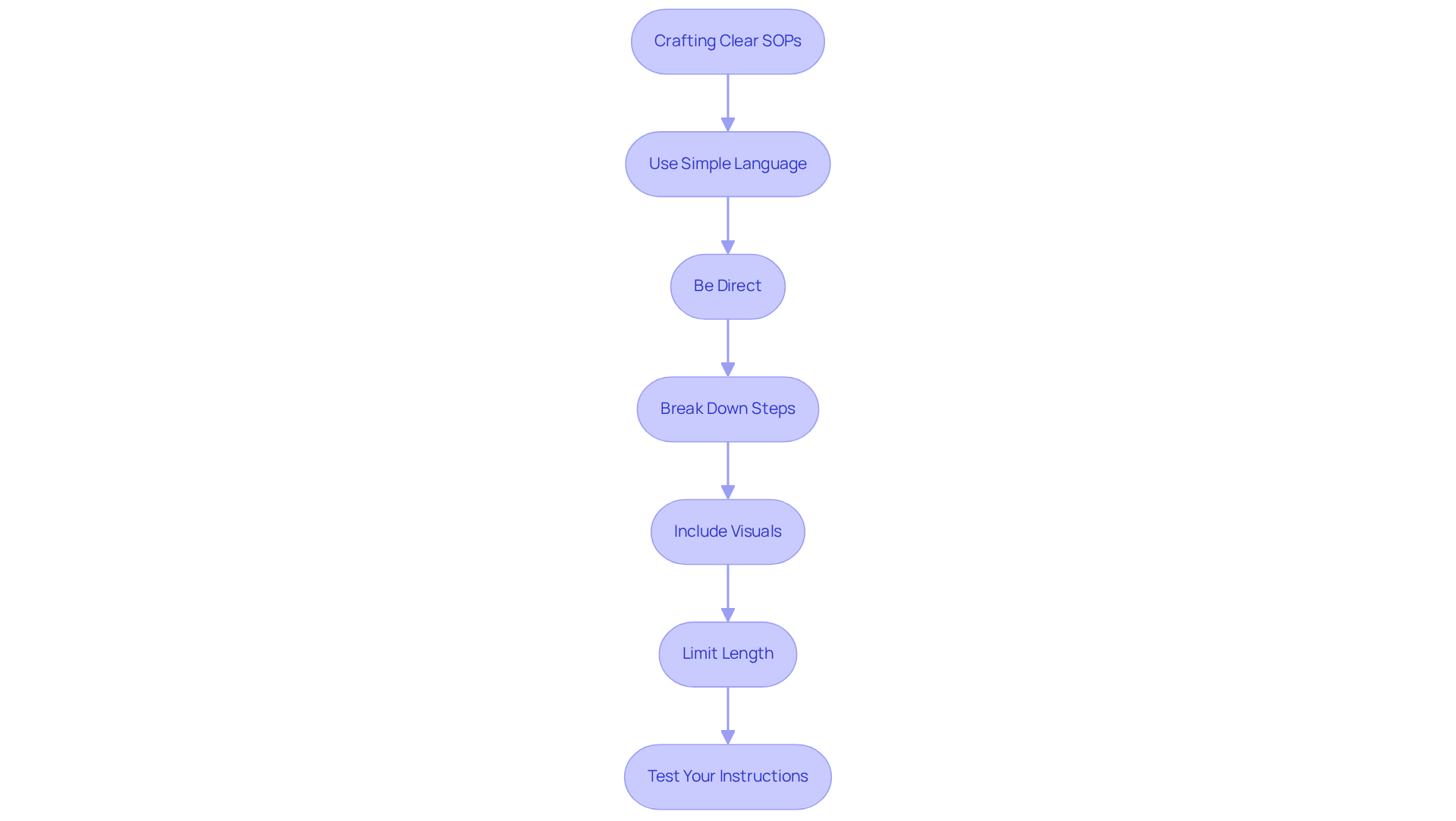
When you're crafting your SOPs, you might be wondering how to make them clearer and more concise. Here are some friendly guidelines to help you out:
- Use Simple Language: Ditch the jargon and complex terms. Go for straightforward language that everyone can understand. The platform's tools can help you streamline your language choices.
- Be Direct: Use the active voice and imperative sentences to give clear instructions. For example, say 'Turn on the machine' instead of 'The machine should be turned on.' This platform makes it easy to create those direct instructions.
- Break Down Steps: Split the procedure into bite-sized steps. Using bullet points or numbered lists can really boost readability. The user guide creation tools here offer step by step instructions on how to develop clear instructions.
- Include Visuals: Don’t forget to add diagrams, flowcharts, or images where it makes sense. Research shows that visuals are processed about 60,000 times faster than text, which can really enhance understanding. Plus, the platform allows for easy updates to visuals, keeping your documentation fresh.
- Limit Length: Try to keep each SOP short and sweet, ideally one to two pages. This helps maintain focus and keeps the reader from feeling overwhelmed. With this tool, you can quickly revise and update your documentation to keep it concise and effective.
- Test Your Instructions: Have someone who’s not familiar with the process follow the SOP. This can help you spot any unclear steps or confusing language. Using SowFlow's tools can make this testing phase easier by giving instant access to documentation for review.
By adhering to these principles, you can develop standard operating procedures that include step by step instructions on how to be both informative and user-friendly. This way, your team can perform operations accurately and consistently, leading to quality results.
Review and Test Your SOP for Effectiveness
To make sure your SOP is effective, let’s walk through some steps for review and testing:
-
Peer Review: Have you thought about getting your colleagues or stakeholders involved? Their fresh eyes can really help spot any gaps and boost the overall quality of your SOP. It’s like having a buddy check your work before you turn it in!
-
Pilot Testing: Now, how about putting your SOP to the test in a controlled environment? This is your chance to see how it performs in real life. You’ll be able to catch any hiccups or misunderstandings that pop up when it’s actually used.
-
Gather Feedback: After testing, it’s time to gather some feedback from users. What did they think? Focus on aspects like clarity, usability, and overall effectiveness to guide your revisions. Remember, providing step by step instructions on how to create a solid SOP can really cut down on training time for new employees, helping them get up to speed faster. Plus, using an instant documentation solution can make collecting this feedback a breeze, ensuring updates happen smoothly.
-
Revise Accordingly: Based on the feedback you’ve gathered, make the necessary tweaks to ensure your SOP is clear and effective for everyone. With the right platform, updating and modifying your documentation can be a walk in the park, keeping it relevant in our ever-changing business world.
-
Document Changes: Don’t forget to keep a record of all the changes you make during the review process! Every SOP should have a version history table that tracks the version number, date of change, summary of changes, and who approved them. This is super important for keeping tabs on how your SOP evolves and ensuring it meets current standards. SowFlow’s user guide creation tools can help you maintain this documentation without a hitch.
By thoroughly reviewing and testing your SOP, you can ensure it meets your organization’s operational needs and is ready for successful implementation. Regular pilot testing and peer reviews are key - they not only improve the quality of your SOP but also help minimize the risk of non-compliance, which can lead to some serious operational headaches. And hey, adopting a risk-based strategy for review frequencies means you’ll be checking in on higher-risk procedures more often, keeping your standard operating procedures effective and reliable.

Maintain and Update Your SOPs Regularly
To keep your SOPs effective and relevant, let’s talk about setting up a solid maintenance schedule:
-
Establish a Review Cycle: You might be wondering how often you should check in on your standard operating procedures. A good rule of thumb is to set a timeline for reviews-think annually or bi-annually-based on how complex or risky each task is. Regular reviews are key to operational excellence! They help you spot outdated procedures that could lead to compliance risks or inefficiencies.
-
Monitor Changes: Now, let’s dive into staying alert about changes. Are there new regulations, tech updates, or shifts in your organization that might need you to tweak your SOPs? When something significant changes, it’s time for an immediate review to keep everything aligned with current practices. The right solution can help you make those updates quickly, ensuring your documentation stays relevant.
-
Incorporate Feedback: Have you thought about asking users for feedback? Actively seeking input can highlight areas that need clarification or improvement. This not only makes your SOPs better but also builds a culture of continuous improvement in your organization. With a solid system in place, gathering and implementing feedback becomes a breeze.
-
Version Control: Let’s chat about version control. Keeping a version history for each SOP is a smart move. It helps track changes effectively, so everyone is always looking at the most current document. This reduces confusion and boosts compliance. Plus, there are tools out there that make version control seamless!
-
Training and Communication: Finally, don’t forget about training and communication. It’s super important to keep all team members in the loop about updates and ensure they’re trained on any changes to the SOPs. Good communication is crucial for maintaining consistency. Tools like SowFlow can help you create user guides effortlessly, making training a lot smoother.
By prioritizing the maintenance and regular updating of your SOPs, you can turn them into invaluable resources that really support your organization’s growth and operational efficiency.

Conclusion
Creating effective Standard Operating Procedures (SOPs) is super important for organizations that want to boost consistency, efficiency, and compliance. You might be wondering how SOPs can help your business. Well, by putting them in place, you can streamline operations, cut down on errors, and make sure that essential knowledge sticks around. It’s like giving your team a clear roadmap to follow, which is crucial for success.
So, what are the key steps to whip up effective SOPs? First off, it’s all about understanding why SOPs matter. Then, you’ll want to:
- Pinpoint those key processes
- Structure your document well
- Write in a way that’s clear and easy to follow
- Review how effective your SOPs are
- Keep them updated regularly
Each of these steps highlights the need for clarity and user-friendliness, making it easier for everyone on your team to get on board. And hey, tools like SowFlow can really help make documentation and updates a breeze!
Now, let’s talk about the bigger picture. Committing to developing and maintaining solid SOPs can really foster a culture of continuous improvement in your organization. By prioritizing these practices, you’re not just ticking boxes for compliance; you’re empowering your workforce, which can lead to a boost in productivity and operational excellence. Embracing the journey of creating effective SOPs is a key step toward achieving long-term success in any organization. So, why not dive in and start making those SOPs work for you?
Frequently Asked Questions
What are Standard Operating Procedures (SOPs)?
SOPs are essential documents that provide step-by-step instructions on how to complete routine tasks within an organization. They help ensure consistency, efficiency, compliance, and knowledge retention.
Why are SOPs important for organizations?
SOPs are important because they promote consistency in task performance, optimize workflows, aid in training new employees, ensure compliance with regulations, and preserve institutional knowledge.
How do SOPs improve consistency in organizations?
SOPs help ensure that tasks are performed uniformly, which reduces variability and errors. For example, after implementing SOPs, XYZ Manufacturing Inc. improved its on-time delivery rate significantly.
In what ways do SOPs enhance efficiency?
SOPs streamline workflows, saving time and resources. For instance, they can reduce the training duration for new employees, as seen in the case study where training time dropped from four weeks to two.
How do SOPs assist in employee training?
SOPs serve as valuable training resources, allowing new hires to learn their roles quickly and independently, which minimizes the need for constant supervision.
What role do SOPs play in compliance?
SOPs help organizations meet industry regulations and standards, reducing legal risks. Companies that implement SOPs are more likely to fulfill compliance obligations and avoid issues flagged by regulatory bodies.
How do SOPs contribute to knowledge retention?
SOPs preserve critical institutional knowledge, ensuring that important information remains accessible even when employees leave, thus maintaining operational continuity.
What types of SOPs should organizations consider?
Organizations should consider fundamental procedures, methodic procedures, and safety precaution procedures as part of their SOP practices.
What steps should be taken to create effective SOPs?
Steps include conducting a workflow audit, engaging stakeholders, prioritizing procedures, considering compliance needs, and mapping out current workflows.
How can tools like SowFlow assist in creating SOPs?
SowFlow provides features for immediate documentation, collaboration with team members, identifying high-priority tasks, ensuring compliance, and creating visual representations of processes, making SOP development easier and more efficient.
👍
What others are liking


5 Steps to outline your ideal documentation structure
5 MINS READ
Where to start the your journey of mapping out your ideal documentation structure, aligning it with the very heartbeat of your organization?
Defining a winning level of detail in your process
3 MINS READ
What is too much detail, and what is too little? This article described in that winning level detail about what detail is enough.


