
Automation and Documentation
|
April 29, 2026
|

5 Steps for Creating a Training Document That Works
Key Highlights
- Creating a training document requires clear definition of its purpose, including target audience and specific skills to be taught.
- Organisations with defined development objectives see a 10% productivity increase and improved employee retention.
- Effective instructional guides should outline scope and structure, identify key topics, and organise content logically.
- Using a mix of formats and best practises enhances clarity and engagement in training documents.
- Involving stakeholders in the creation process ensures the content is relevant and resonates with users.
- Content should be clear and engaging, using simple language, visuals, and real-life examples to aid comprehension.
- Gathering feedback after the first draught is crucial for improving the document's effectiveness and relevance.
- A structured evaluation process helps streamline feedback and revision, leading to better learning outcomes.
Introduction
Creating effective training documents is super important for organizations that want to boost employee performance and keep their talent around. You might be wondering, how can we make sure our instructional materials really connect with our audience and hit those learning goals? Well, it all starts with clearly defining the purpose and structure of these documents.
But here’s the kicker: how do we strike that perfect balance between clarity and engagement while also weaving in valuable feedback from stakeholders? This guide is here to help! We’ll explore five essential steps to craft training documents that not only inform but also inspire. So, let’s pave the way for a more knowledgeable and skilled workforce together!
Understand the Purpose of a Training Document
Is creating a training document an effective way to provide instruction? It all starts with clearly defining its purpose. You might be wondering:
- What specific skills or knowledge should the trainees acquire?
- Who's the target audience for the instructional material?
- What specific tasks or processes will the text address?
By diving into these questions, you can ensure that creating a training document keeps your guide focused and relevant. This clarity not only boosts how well the document conveys the intended learning outcomes but also significantly aids in creating a training document that impacts employee performance. Did you know that organizations with clearly defined development objectives see a 10% increase in productivity and better retention rates among employees? Plus, 68% of employees believe that education and development are the most important policies a company can adopt.
As Christopher Pappas puts it, "By investing in your employees' development, you not only make them feel valued but also demonstrate that you care about their growth." Think about successful instructional materials like onboarding manuals that lay out essential skills for new hires or process guides that detail specific workflows. Both of these examples show clear objectives and measurable results. So, let’s keep exploring how to make your instructional guides even better!

Define the Scope and Structure of Your Document
To develop an effective instructional guide, you’ll want to start by clearly outlining its scope and structure. So, let’s dive into some essential steps:
- Identify Key Topics: First things first, list out all the relevant subjects and subtopics that need addressing in your session. This way, you can make sure all the necessary information is included.
- Organize Logically: Next, arrange these topics in a logical sequence. Think about progressing from basic concepts to more advanced subjects. This helps learners build their understanding step by step.
- Choose the Right Format: Now, what format will your document take? Will it be a manual, an online guide, or something else? Consider how each section will be presented. Mixing it up with text, visuals, and interactive elements can cater to different learning styles, making it more engaging.
- Outline Best Practices: It’s also a good idea to utilize best practices for structuring your instructional document. For instance, make sure each section has a clear heading, concise content, and actionable steps. This clarity really aids in comprehension and retention. As Lizzy Smith wisely points out, "Discover what to seek in a CE provider to ensure your education meets compliance and audit requirements."
- Provide Examples: Don’t forget to include examples of well-structured instructional manuals and guides. These can serve as templates or inspiration for your material, showing effective organization and presentation. Research shows that well-organized instructional materials can significantly boost knowledge retention and application, highlighting the importance of clarity in your documentation.
By following this structured approach, you’re creating a training document that provides a clear roadmap for your instructional needs. This not only enhances its effectiveness but also ensures it meets your audience's needs. Plus, incorporating tools like SowFlow can really streamline the documentation process. Imagine summoning the wisdom of your documentation with just a single command-no more unnecessary meetings, and your teams get instant access to updated guides!

Involve Key Stakeholders in the Creation Process
You might be wondering how to get everyone on board when starting a project. Engaging with stakeholders like team leaders, subject matter experts, and potential users right from the get-go is key! Here’s a friendly guide to help you out:
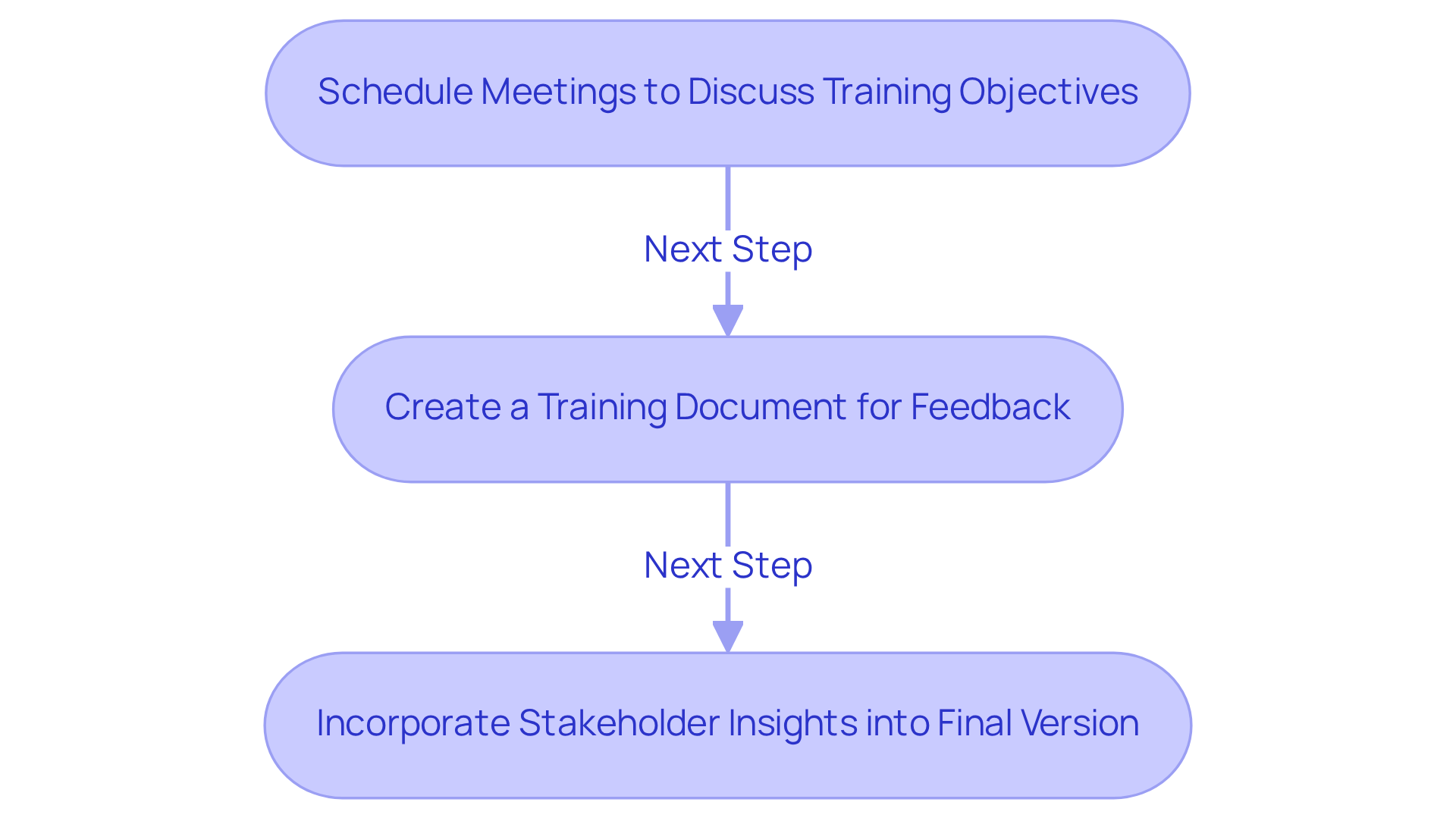
- First off, schedule some meetings to chat about your training objectives. This is a great chance for creating a training document that gathers input on what content will truly resonate. You want to make sure everyone feels heard, right?
- Next, think about creating a training document that facilitates a feedback loop. This means letting stakeholders review drafts and share their suggestions. It’s all about collaboration!
- Finally, don’t forget to incorporate their insights into the final version. This not only enhances the relevance of your content but also boosts its usability. After all, who doesn’t want to create something that truly resonates with its audience?
Create Clear and Engaging Content
Are you focused on creating a training document that is effective? Let’s talk about how to make them clear and engaging! Here are some essential guidelines to keep in mind:
- First off, use simple, straightforward language. You want everyone to understand your content, right? Avoid jargon unless it’s absolutely necessary. Remember what Chris Sacca said: 'Simplicity is challenging to create, simple to utilize, and difficult to bill for.' This really highlights how important simplicity is in instructional materials.
- Now, let’s break down those intricate concepts into smaller, digestible sections. This not only helps with comprehension but also caters to visual learners who thrive on structured information. Did you know that research shows up to 80% of people learn better with visuals? That’s a big deal!
- Speaking of visuals, don’t forget to incorporate diagrams, charts, and screenshots to illustrate your key points. Visual content can significantly boost retention and understanding, making it a must-have in your educational materials. As Hans Hofmann put it, "The ability to simplify means to eliminate the unnecessary so that the necessary may speak." That’s a perfect fit for our clarity theme!
- Also, consider using bullet points and numbered lists. They really improve readability and help your readers quickly grasp essential information. It’s all about making it easy for them to engage with your content.
- And here’s a tip: include real-life examples or scenarios. This makes your content relatable and practical. Think about it-effective instructional materials often use case studies or scenarios that link educational content to familiar situations. This way, learners can better comprehend and apply the information you provide.
By integrating these approaches, you’ll not only enhance the efficiency of your educational materials but also focus on creating a training document that provides a more captivating learning experience for your audience. Experts agree that the ability to clarify complex information without losing crucial details is a valuable skill that can greatly improve communication and comprehension in any educational setting. With the expected rise of visual content in 2024, incorporating these elements will keep your educational materials relevant and effective.

Gather Feedback and Revise Accordingly
To make your training materials really hit the mark, it’s super important to gather and integrate feedback after you’ve wrapped up that first draft. So, how do you go about it? Let’s break it down:
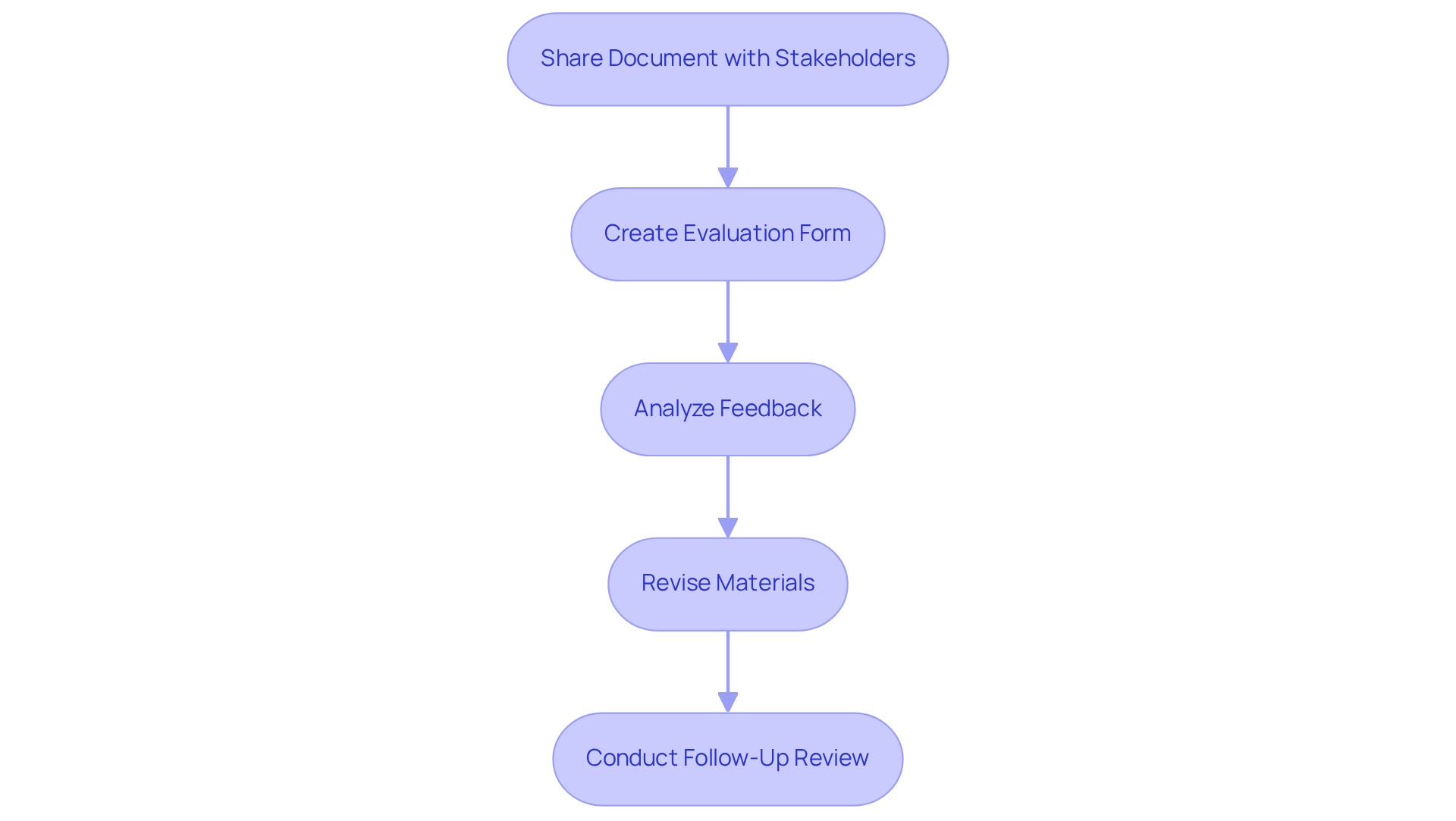
- First off, share the document with stakeholders and potential users for their thoughts. You want a mix of perspectives to get a well-rounded view.
- Next, whip up a structured evaluation form. This will help reviewers focus on key areas like clarity, relevance, and engagement. It’s a smart way to streamline the evaluation process.
- Once you’ve got the feedback, take a good look at the responses. Are there common themes or suggestions popping up? Remember, 83% of workers appreciate input, so it’s clear that feedback plays a big role in boosting the quality of your reports.
- Now, it’s time to revise! Tackle those comments and make sure you address all the critical points. Efficient revision can really elevate your instructional materials. Studies show that teams who get strengths-oriented evaluations see a 12.5% bump in productivity-pretty impressive, right?
- Finally, think about doing a follow-up review. This isn’t just about checking off a box; it reinforces the importance of feedback and helps foster a culture of continuous improvement.
Consultants often point out that revising isn’t just about fixing mistakes; it’s about enhancing the overall effectiveness of your educational materials. By actively engaging with user feedback, you can focus on creating a training document that truly resonates with your audience and leads to better learning outcomes. So, what do you think? Ready to dive into the feedback process?
Conclusion
Creating an effective training document is super important - it can really boost the learning experience and help employees perform better. You might be wondering how to make this happen, right? Well, by focusing on the purpose, structure, stakeholder involvement, content clarity, and the importance of feedback, organizations can whip up materials that not only inform but also engage their audience.
Throughout this article, we’ve outlined some key steps:
- Define the document's purpose.
- Establish a logical structure.
- Involve stakeholders.
- Create clear content.
- Don’t forget to revise based on feedback.
Each of these elements is crucial for ensuring that your training document hits the mark and resonates with its users. Remember, a well-crafted training document can lead to increased productivity, better retention rates, and a more knowledgeable workforce.
So, why invest time and effort into creating training documents? Because it’s an investment in your organization’s future success! By implementing these strategies, companies can foster a culture of continuous learning and development. This way, employees are equipped with the skills and knowledge they need to thrive. Embrace these best practices to create training documents that truly work, and watch as the benefits unfold within your organization. Now, doesn’t that sound like a plan?
Frequently Asked Questions
What is the purpose of a training document?
The purpose of a training document is to provide clear instruction and ensure that trainees acquire specific skills or knowledge relevant to their tasks. It helps to keep the guide focused and relevant, ultimately impacting employee performance.
What key questions should be addressed when creating a training document?
Key questions to address include: What specific skills or knowledge should the trainees acquire? Who is the target audience for the instructional material? What specific tasks or processes will the text address?
How can one define the scope and structure of a training document?
To define the scope and structure, identify key topics and subtopics, organize them in a logical sequence, choose the right format for presentation, outline best practices for clarity, and provide examples of well-structured instructional materials.
What are some best practices for structuring an instructional document?
Best practices include using clear headings, concise content, and actionable steps in each section. This clarity aids in comprehension and retention of information.
Why is it important to provide examples in a training document?
Providing examples of well-structured instructional manuals and guides serves as templates or inspiration, demonstrating effective organization and presentation, which can significantly boost knowledge retention and application.
How can incorporating tools like SowFlow benefit the documentation process?
Tools like SowFlow can streamline the documentation process by allowing teams to access updated guides instantly, reducing the need for unnecessary meetings and enhancing efficiency.
👍
What others are liking


5 Steps to outline your ideal documentation structure
5 MINS READ
Where to start the your journey of mapping out your ideal documentation structure, aligning it with the very heartbeat of your organization?
Defining a winning level of detail in your process
3 MINS READ
What is too much detail, and what is too little? This article described in that winning level detail about what detail is enough.


