

Knowledge Management through Documentation
|
April 29, 2026
|

4 Steps to Write Effective Step-by-Step Instructions
Key Highlights
- Step-by-step instructions serve as a roadmap for clarity and precision in task execution.
- Breaking down complex tasks into simpler stages eases cognitive load and enhances comprehension.
- Using numbered lists improves the clarity of sequential steps in instructions.
- Visual aids can significantly enhance understanding when paired with written content.
- SowFlow's documentation solution streamlines the creation and updating of user guides.
- Defining the objective and identifying the audience are crucial first steps in writing instructions.
- Outlining steps in clear, sequential actions helps users follow along easily.
- Using clear language and active voice makes instructions direct and actionable.
- Testing instructions with unfamiliar users helps identify confusing elements.
- Common challenges in instruction writing include ambiguity, overcomplication, inconsistent formatting, lack of testing, and disregarding the audience.
- Choosing the right documentation tools, like SowFlow and Dr.Explain, can enhance the efficiency of the writing process.
Introduction
Crafting clear and effective step-by-step instructions is super important, right? In a world where precision and clarity can really make or break a task, turning complex processes into manageable steps not only helps you understand better but also empowers others to follow along without a hitch. But here’s the kicker: how do you make sure these instructions are both comprehensive and easy to grasp? You might be wondering how to strike that perfect balance to maximize effectiveness.
Well, this article is here to help! We’ll dive into the essential steps for writing instructions that not only guide but also engage users, paving the way for successful outcomes. So, let’s get started!
Understand the Purpose of Step-by-Step Instructions
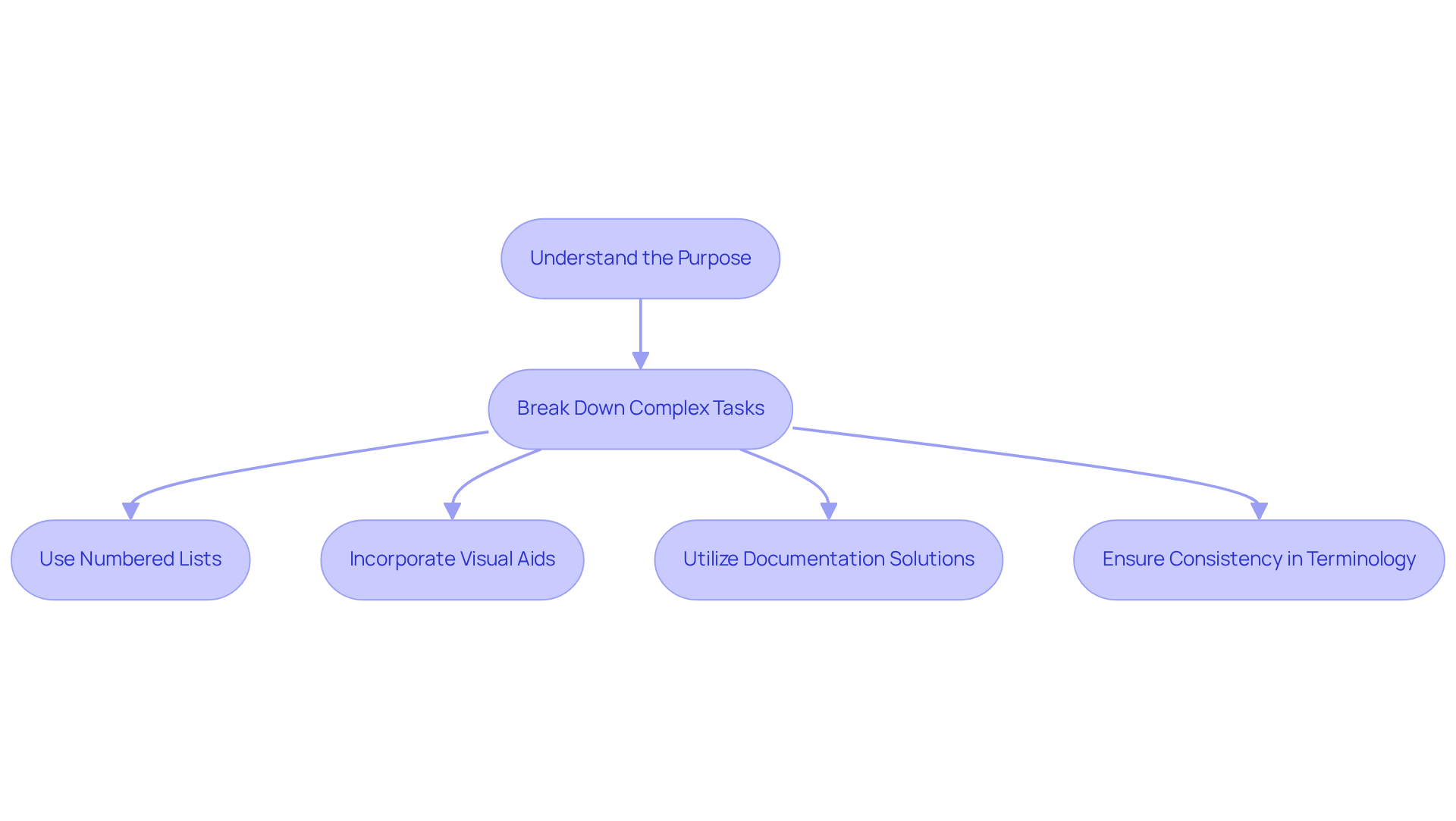
You might be wondering how to write that can really make a difference, right? Well, think of them as your trusty roadmap, guiding you through tasks with clarity and precision. The main goal here is to cut through the confusion and help you get things done effectively. By breaking down complex tasks into simpler stages, you’re not just easing your cognitive load; you’re demonstrating how to write to navigate through the process.
This is especially crucial in settings where every detail matters, like or operational procedures. And hey, using numbered lists for those sequential steps? That’s a game changer for clarity! Plus, don’t underestimate - they can really boost understanding when paired with your written content.
Now, let’s talk about . It makes creating and updating a breeze, streamlining and enhancing knowledge sharing. And if you’ve ever dealt with customer inquiries, you know how important are. They help ensure that responses are consistent and quality service is delivered every time.
Understanding the purpose of these guidelines, along with the and analyzing your audience before diving into material development, will help you learn how to write step-by-step instructions that are not just effective but also user-friendly. So, what do you think? Ready to tackle your ?
Follow a Structured Process for Writing Instructions
Crafting effective step-by-step instructions on can feel daunting, but it doesn’t have to be! Let’s break it down together with these simple steps:
- Define the Objective: What’s the goal here? is key to understanding . This foundational step is essential for understanding how to write step-by-step instructions that tailor your content to meet your audience's needs, making everything clearer and more purposeful.
- : Who are you talking to? Understanding your audience is crucial. to ensure everyone can grasp the instructions easily.
- Outline the Steps: Now, let’s get into the nitty-gritty. To effectively explain the process, demonstrate how to write step-by-step instructions by breaking it down into clear, sequential actions. To avoid overwhelming anyone, each step should tackle one task at a time, which is essential when learning how to write step-by-step instructions. This way, it’s easier for users to follow along and execute the tasks while understanding how to write step-by-step instructions.
- Use : Keep it simple! Use plain language and avoid jargon unless you are explaining how to write step-by-step instructions. When considering how to write step-by-step instructions, using active voice and imperative verbs works wonders, making your guidelines direct and actionable.
- : Before you wrap things up, have someone unfamiliar with the task give your instructions a go. This testing phase is super important for spotting any confusing bits or errors. Feedback is gold - it shows you how to write step-by-step instructions for better clarity and usability.
And hey, if you want to make this process even smoother, check out SowFlow's . It’s a game changer for creating and updating , keeping them relevant in our fast-paced business world. This tool not only simplifies and onboarding but also boosts knowledge sharing within your team. Trust me, it leads to better outcomes when it comes to getting tasks done!

Leverage Tools for Efficient Documentation
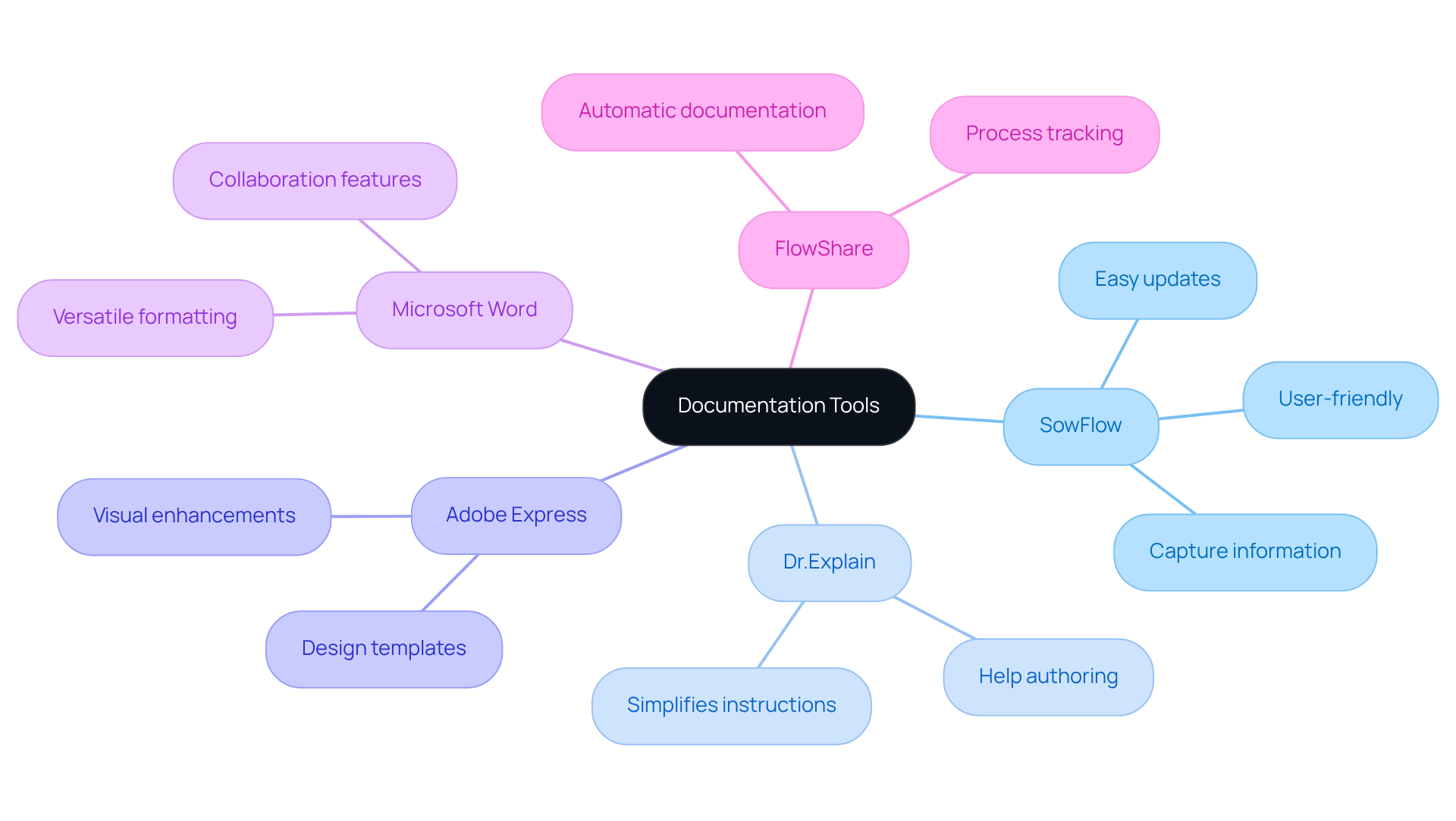
You might be wondering how to write to make your smoother. Well, using the right tools can really make a difference! Here are some great options to consider:
- SowFlow: This lets you with ease. Plus, its helps you capture information directly from your browser in a snap.
- Dr.Explain: If you need to understand how to for user manuals or guides, this simplifies the whole process.
- Adobe Express: Want your guidelines to look visually stunning? This tool offers templates and design features that can help you .
- : A classic choice! It’s versatile for drafting and formatting guidelines, and it has great collaboration and editing features.
- FlowShare: This nifty tool documents processes automatically as you go about your tasks, making it super easy to create detailed guides.
Choosing the right tool is essential when considering how to write based on what you need. Think about the complexity of your guidelines and how you want them to look. So, which one will you try first?
Troubleshoot Common Challenges in Instruction Writing
When you're writing instructions, you might run into a few common hiccups:
- Ambiguity: You want to make sure every step is crystal clear, right? Avoid those vague terms and get specific about what needs to be done. With SowFlow's , you can clarify each phase, making it a breeze to communicate exactly what actions to take.
- Overcomplication: Let’s face it, some tasks can get pretty intricate. The trick to how to write is to break them down into smaller, manageable actions. SowFlow helps you simplify this process, so you can whip up without even leaving your browser.
- Inconsistent Formatting: Consistency is key! Keep the same font, style, and structure throughout your document to boost readability. SowFlow's templates are here to ensure your documentation looks uniform and professional.
- Absence of Testing: Always test your guidelines with real participants. Gather their feedback and tweak things as needed to enhance clarity and effectiveness. With SowFlow's , integrating feedback into your guidelines is a walk in the park.
- Disregarding the Audience: Tailor your guidance to match your audience's understanding level. Ditch the jargon for newbies and add context for those trickier tasks. SowFlow lets you create that really resonate with your audience, saving you time and making their learning experience a whole lot better.
By tackling these challenges head-on with SowFlow, you can craft instructions that are not just effective but also user-friendly!

Conclusion
You might be wondering why writing effective step-by-step instructions is so important. Well, it’s all about clarity and efficiency! When you understand the purpose behind these guidelines, you can create a structured approach that simplifies complex processes and boosts user comprehension. The goal here is to provide a clear roadmap that guides folks through tasks, making their experience smoother and more productive.
Throughout this article, we’ve highlighted some key steps, like:
- Defining your objective
- Identifying your audience
- Outlining the steps
- Using clear language
- Testing those instructions
These elements come together to form a cohesive strategy that tackles common pitfalls like ambiguity and overcomplication. And hey, using tools like SowFlow can really streamline the documentation process, making it a breeze to create and maintain high-quality instructions.
Ultimately, being able to write effective step-by-step instructions is a skill that pays off big time. It can lead to better communication and improved outcomes in all sorts of contexts. By putting these strategies into practice and using the right tools, anyone can step up their documentation game. Embracing this approach not only helps you as the creator but also empowers your audience, ensuring they can tackle tasks with confidence and clarity. So, why not give it a shot?
Frequently Asked Questions
What is the purpose of step-by-step instructions?
The purpose of step-by-step instructions is to provide a clear roadmap that guides users through tasks, helping them complete complex tasks effectively by breaking them down into simpler stages.
Why is it important to use numbered lists in step-by-step instructions?
Using numbered lists for sequential steps enhances clarity, making it easier for users to follow the instructions without confusion.
How do visual aids contribute to step-by-step instructions?
Visual aids boost understanding when paired with written content, making the instructions more effective and easier to comprehend.
What is SowFlow’s instant documentation solution?
SowFlow’s instant documentation solution simplifies the process of creating and updating user guides, streamlining process standardization and enhancing knowledge sharing.
Why are Standard Operating Procedures (SOPs) important?
SOPs are important because they ensure consistent responses and quality service when dealing with customer inquiries.
What factors should be considered before developing instructional material?
It is essential to understand the purpose of the guidelines, keep terminology consistent, and analyze the audience to create effective and user-friendly step-by-step instructions.
👍
What others are liking


5 Steps to outline your ideal documentation structure
5 MINS READ
Where to start the your journey of mapping out your ideal documentation structure, aligning it with the very heartbeat of your organization?
Defining a winning level of detail in your process
3 MINS READ
What is too much detail, and what is too little? This article described in that winning level detail about what detail is enough.


