

Building a Documentation Culture
|
April 29, 2026
|

Understanding the Training Manager Role: Key Responsibilities and Impact
Key Highlights
- Development Managers oversee the creation, execution, and assessment of educational programmes to enhance employee skills.
- Key responsibilities include identifying training needs, creating educational programmes, and implementing development initiatives.
- Evaluating programme effectiveness is crucial for continuous improvement and aligns with organisational goals.
- Training Managers manage development budgets to ensure cost efficiency and effective use of resources.
- Collaboration with stakeholders is essential to align training initiatives with business objectives.
- Organisations with robust development programmes see significantly higher revenue and profit margins.
- 70% of employees value work-related education opportunities, impacting their job retention.
- Essential skills for Training Managers include strong communication, organisational abilities, analytical skills, and adaptability.
- A relevant educational background, often in human resources or education, is typically required for the role.
Introduction
You might be wondering just how crucial a Training Manager is in today’s fast-paced world. Well, let me tell you, understanding their role is key! Continuous learning isn’t just a nice-to-have anymore; it’s a must. These folks aren’t just whipping up training programs; they’re the architects of a successful workforce, making sure employees have the skills they need to shine.
But here’s the kicker: as companies change and grow, the expectations for Training Managers shift too. So, how can they keep up? How can they tweak their strategies to meet the demands of a business landscape that’s always on the move? Let’s dive into this together!
Define the Training Manager Role
You might be wondering what exactly a Development Manager does, right? Well, they’re the go-to specialists who oversee the creation, execution, and assessment of within an organization. This role is super important because it ensures that employees have the skills and knowledge they need to do their jobs effectively.
So, what does a Development Manager actually do? They evaluate , whip up curricula, and guide that align with the organization’s goals. Think of them as strategic partners in , which ultimately contributes to the overall success of the business.
Now, let’s dive into how this role has evolved over time. Educators have shifted from just being facilitators of instructional sessions to becoming key players in . This change reflects the growing importance of in today’s fast-paced business world. It’s all about keeping up and making sure everyone is on the same page!

Outline Key Responsibilities of a Training Manager
You might be wondering what the really entails and why it matters. Well, let’s break it down! The key responsibilities of the are all about driving success within an organization, and they cover several critical functions.
- . Training Managers in the training manager role dive deep into assessments to find those pesky skills gaps lurking in the organization. They look at performance metrics and gather feedback from employees to make sure development initiatives hit the mark. Did you know that organizations keeping tabs on educational impact see 41% higher program completion rates? That just goes to show how vital is!
- Creating . These folks whip up tailored educational solutions that address the identified needs, often mixing things up with instructor-led sessions, e-learning, and even microlearning. This blend keeps programs engaging and effective, catering to all sorts of learning styles. And with the rise of , we can expect even better program delivery and effectiveness.
- Implementing . Development Managers are the ones who coordinate all the logistics-scheduling, resource allocation, and getting participants involved. They make sure everything runs smoothly, maximizing attendance and participation.
- . Development Managers gather feedback, conduct assessments, and analyze performance metrics to evaluate how effective the programs are. Continuous improvement is key! Plus, AI-driven coaching assistants have shown a 23% boost in skill application rates, highlighting the need for modern development methods.
- . The training manager role involves closely monitoring the financial resources allocated for educational activities, ensuring cost efficiency while aligning expenses with organizational goals. They make smart choices about outsourcing education and using technology to enhance learning experiences.
- Partnering with Stakeholders. Educators work hand-in-hand with department leaders and external education providers to ensure development initiatives align with business goals. This teamwork fosters a culture of learning and growth throughout the organization.
- . It’s essential for supervisors to keep up with the latest in educational methodologies and technologies. They need to adapt to changing trends, like the increasing use of AI in education, to improve program delivery and effectiveness. As Christopher Pappas wisely said, 'Skilled personnel contribute significantly to building a thriving workforce.' This really underscores the importance of effective training in driving organizational success.
By fulfilling these responsibilities, Development Supervisors play a vital role in enhancing staff skills and boosting overall organizational effectiveness. So, what do you think? Ready to dive deeper into the world of training management?

Explore the Impact of Training Managers on Organizations
You might be wondering just how important the is in shaping a culture of in organizations. Well, their efforts do more than just boost ; they also ramp up and retention rates. Did you know that companies with robust see a whopping 218% higher revenue per employee and a 24% increase in profit margins? That’s a clear sign that effective education is directly tied to productivity!
And here’s something to think about: 70% of employees say that play a big role in their decision to stick around. When team members feel skilled and confident in their roles, their engagement levels soar, creating a workplace culture that truly values learning. This kind of environment is a breeding ground for innovation and adaptability - traits that are crucial in today’s fast-paced business world.
Speaking of which, industry experts like Devlin Peck emphasize that strong staff can really inspire and retain top talent. Plus, there’s a noticeable shift in how we evaluate success - it's not just about completing courses anymore; it’s about achieving meaningful results. Oh, and get this: 68% of employees consider training essential for , and 39% of U.S. workers believe that the chance for future advancement is key to feeling satisfied at work. This really highlights the vital role that the plays in crafting a thriving work environment.

Identify Essential Skills and Qualifications for Training Managers
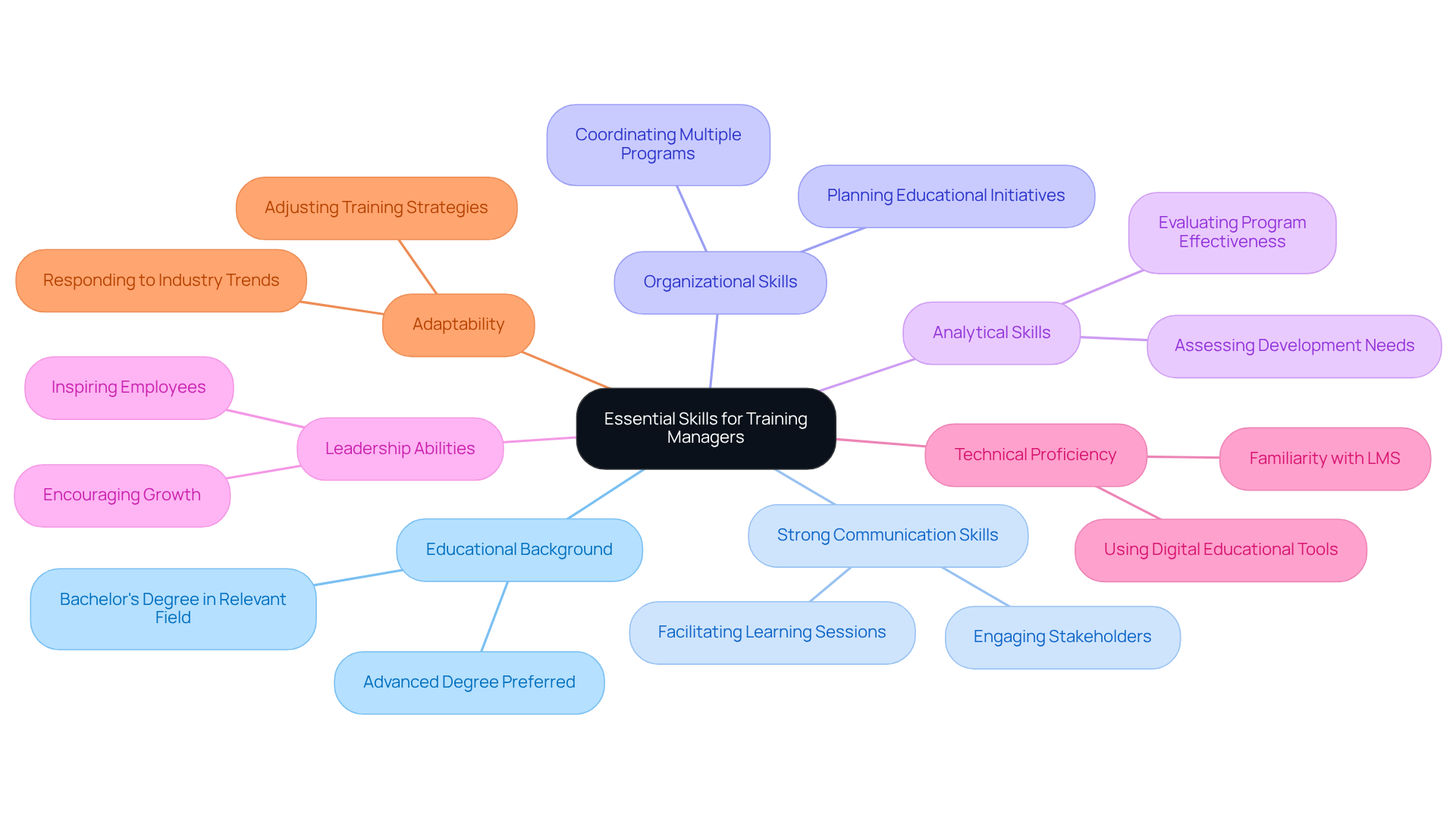
You might be wondering what it takes to be an effective instructional leader. Well, let’s break it down into some essential skills and qualifications that can really make a difference!
- : Most organizations look for a bachelor’s degree in human resources, education, or something similar. And hey, if you’ve got an advanced degree, that’s even better!
- : Being able to share information clearly is super important. It helps you facilitate learning sessions and really engage everyone involved.
- : Juggling multiple educational initiatives at once? No problem! Instructional leaders need to be great at planning and coordinating all those moving parts.
- : You’ll want to assess development needs and evaluate how effective your programs are. This is key for continuous improvement.
- : Inspiring and motivating employees on their learning journeys is a must. You want to be that person who encourages growth!
- : In today’s tech-driven world, being familiar with learning management systems and digital educational tools is becoming increasingly important.
- Adaptability: Finally, being able to adjust your training strategies based on changing organizational needs and industry trends is vital for ongoing success.
So, which of these skills do you think you’d like to develop further? Let’s dive into how you can enhance your abilities and make a real impact!
Conclusion
You might be wondering just how crucial a Training Manager really is in today’s fast-paced work environment. Well, let me tell you, their role is absolutely vital in creating a culture of continuous learning within organizations. By overseeing the development and implementation of educational programs, Training Managers not only boost employee skills but also play a huge part in the overall success of the organization. Their strategic involvement helps ensure that the workforce is aligned with business goals, leading to better performance and happier employees.
Throughout this article, we’ve explored some key responsibilities of Training Managers. They:
- Identify training needs
- Create tailored educational programs
- Assess how effective those programs are
The impact of these roles is pretty impressive! Organizations that invest in solid training initiatives often see higher revenue per employee and better profit margins. Plus, it’s essential for Training Managers to stay updated on industry trends and embrace innovative teaching methods. This adaptability is what keeps them relevant in our ever-changing business landscape.
Ultimately, the importance of Training Managers goes beyond just skill development. They’re key players in shaping an engaged and satisfied workforce. As companies aim for excellence, investing in effective training programs and the talented professionals who manage them is a must. Embracing the role of a Training Manager not only boosts individual employee performance but also drives organizational growth and innovation. It really highlights just how critical this position is in today’s competitive environment. So, what do you think? Are you ready to dive deeper into the world of training management?
Frequently Asked Questions
What is the primary role of a Development Manager?
A Development Manager oversees the creation, execution, and assessment of educational programs within an organization, ensuring that employees have the skills and knowledge needed to perform their jobs effectively.
What specific tasks does a Development Manager perform?
A Development Manager evaluates developmental needs, creates curricula, and guides learning experiences that align with the organization’s goals.
Why is the Development Manager role important?
The role is important because it enhances workforce capabilities, contributing to the overall success of the business.
How has the role of Development Manager evolved over time?
The role has evolved from being merely facilitators of instructional sessions to becoming key players in organizational development, reflecting the growing importance of continuous learning in today’s fast-paced business world.
👍
What others are liking


5 Steps to outline your ideal documentation structure
5 MINS READ
Where to start the your journey of mapping out your ideal documentation structure, aligning it with the very heartbeat of your organization?
Defining a winning level of detail in your process
3 MINS READ
What is too much detail, and what is too little? This article described in that winning level detail about what detail is enough.


