

Process Improvement through Documentation
|
April 29, 2026
|

10 Training SOP Examples to Enhance Your Onboarding Process
Key Highlights
- SowFlow enables rapid development of training SOPs, improving new hire access to essential information.
- Effective orientation can increase new hire retention by 82% and productivity by over 70%.
- New employees typically face 54 orientation tasks, making organised documentation crucial.
- Structured hiring processes can reduce time-to-hire by up to 35% and improve candidate experience.
- Standardised onboarding fosters a cohesive workplace and enhances long-term employee commitment.
- Customer Success Routines SOP enhances client engagement through regular cheque-ins and proactive communication.
- Compliance Training SOP is essential for reducing non-compliance risks and improving employee engagement.
- Performance Evaluation SOP promotes fairness and consistency, leading to higher employee satisfaction and performance.
- IT Onboarding SOP equips new hires with necessary technical skills, boosting productivity by over 70%.
- Cross-Departmental Onboarding SOP encourages collaboration and communication among teams.
- Feedback and Improvement SOP focuses on gathering insights from new hires to enhance the onboarding experience, potentially increasing retention rates by 52%.
Introduction
You might be wondering why onboarding is such a big deal in today’s competitive job market. Well, organizations are catching on to just how crucial effective onboarding is for keeping employees around and boosting their productivity. Did you know that a well-structured onboarding process can improve new hire retention by up to 82%? That’s a pretty significant number! So, if companies want to create a welcoming and efficient environment, they really need to pay attention to this.
In this article, we’re diving into ten comprehensive training SOP examples that can help streamline onboarding processes. We’ll explore how organizations can implement these practices to make new employees feel right at home and clear about their roles. But let’s pause for a moment - what happens when these processes don’t hit the mark? How can companies ensure they’re truly setting their new hires up for success? Let’s find out!
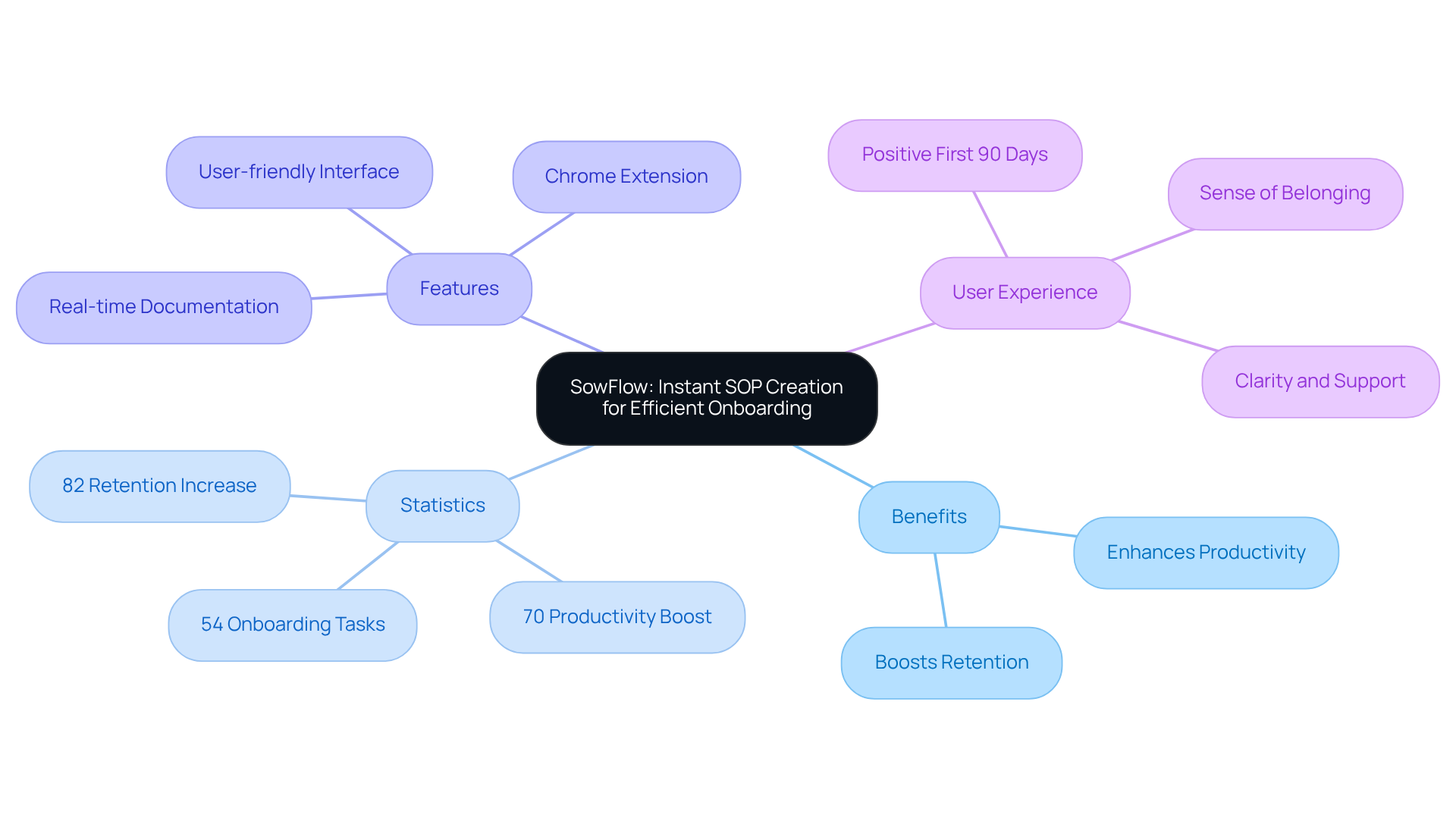
SowFlow: Instant SOP Creation for Efficient Onboarding
You might be wondering how to make the integration experience smoother for your team. Well, SowFlow has got your back! It enables organizations to quickly develop a [](https://sowflow.io). This means your team can document workflows and processes as they happen, giving new hires instant access to the info they need. Did you know that can and productivity by over 70%? That’s huge!
Now, think about this: on average, . That can feel pretty overwhelming if things aren’t organized just right. But with SowFlow’s advanced tech, you can cut down on the time spent on documentation. This way, your organization can focus on what really matters - helping new staff settle in smoothly. Plus, the intuitive interface and provide a great [[training SOP example](https://sowflow.io/blog-post/10-workflow-document-examples-to-boost-operational-efficiency)](https://sowflow.io), making it a breeze to keep SOPs up-to-date and adapt to whatever changes come your way.
Speaking of settling in, . That really highlights how crucial successful integration is! And let’s not forget what Jessica Heijmans said: 'A poor beginning does more than just create temporary unhappiness; it actively drives workers toward the exit.'
So, this real-time documentation method doesn’t just enhance the integration experience; it also fosters a sense of belonging and clarity for new employees. This can significantly reduce the uncertainty that often comes with starting a new job. How cool is that?
Recruitment and Hiring Process SOP: Standardizing New Employee Integration
You might be wondering why a well-defined is so crucial for bringing new staff into an organization. Well, this should clearly lay out every step of the hiring journey, from job requisition all the way to integration. Key components? Think clearly defined roles and responsibilities, timelines for each phase, and making sure everything complies with legal requirements. By standardizing these processes, organizations can seriously boost the . In fact, studies show that can !
Now, let’s dive into why consistency matters. A uniform approach means that all new hires get the same information about their roles and the company culture, which helps them transition smoothly into the organization. For instance, companies that follow a training SOP example often see better . New recruits feel more informed and engaged right from the start. Did you know that effective orientation procedures can enhance by a whopping 82%? Plus, 75% of workers believe that a solid really impacts their long-term commitment to a company.
So, this structured methodology doesn’t just streamline the hiring process; it also helps create a more . It’s all about making sure everyone feels welcomed and ready to contribute!

Customer Success Routines SOP: Ensuring Consistent Client Engagement
You might be wondering how to keep your clients happy and engaged consistently. Well, the serves as your go-to guide for just that! It lays out essential practices for connecting with clients effectively, like:
- Regular check-ins
- Gathering feedback
- Using proactive communication strategies
By setting clear routines, your can work together seamlessly to meet , which ultimately , as illustrated in a training SOP example.
Now, let’s dive into why recording these routines is a game-changer. The for new customer success reps is made easy with a training SOP example! They’ll know exactly what’s expected of them from day one, which helps everyone get on the same page quickly. And with SowFlow's , is a snap. Imagine having all your team members instantly access the right documents in seconds!
This not only streamlines how you but also enhances knowledge sharing. It’s easier for new hires to catch up and for existing team members to stay aligned. So, why not take a moment to think about your own documentation challenges? How could a little routine help your team shine?

Employee Training SOP: Building a Foundation for Success
You might be wondering how important an really is. Well, it’s a key document that lays out a solid framework for bringing new hires on board. It should clearly outline:
- Learning objectives
- Delivery methods
- How success will be measured
A systematic approach not only equips newcomers with the they need to excel but also plays a big role in their long-term performance and retention. Did you know that organizations with can ? That really highlights how crucial a well-defined instructional SOP is!
Now, let’s talk about . The SOP should also include , making sure employees have access to educational opportunities that match their career goals. For example, companies can roll out microlearning strategies, offering quick learning sessions that last just 5-10 minutes. This approach caters to shorter attention spans and busy schedules, making it easier for everyone to fit learning into their day. Plus, using can really streamline the development process, providing a centralized platform to track progress and boost engagement.
You might be curious about what effective structured development processes look like. Think:
- Mentorship programs, where new hires are paired with seasoned employees to help them navigate their first few weeks
By investing in a , organizations can not only enhance the onboarding experience but also cultivate a skilled workforce ready to contribute to the company’s success. So, what are you waiting for? Let’s dive into making your training processes more effective!

Remote Onboarding SOP: Adapting Training for Virtual Teams
You might be wondering how to tackle the unique challenges that come with virtual teams. Well, the for is here to help! This guide serves as a training sop example, laying out the steps for pre-boarding, , and in a remote setting.
Key elements include:
- Using technology for
- Giving access to digital resources
- Setting up regular check-ins to keep everyone engaged
Speaking of keeping things smooth, with SowFlow's , teams can share their workflows in just seconds. This means can dive right into essential documents without delay.
By tweaking the onboarding process for remote staff and leveraging SowFlow's features, organizations can create a training sop example that ensures new recruits feel connected and supported, no matter where they are. So, let’s explore how can make a real difference in your !

Compliance Training SOP: Navigating Regulatory Standards
You might be wondering how really impact your organization. Well, let’s break it down! The Compliance Procedure lays out some pretty crucial educational needs for staff to ensure everyone’s on the same page with regulatory standards. This should clearly outline the topics covered, the frequency of training sessions, and the methods used to assess understanding. The training SOP example emphasizes that is key because it significantly reduces the risks tied to non-compliance, ensuring all staff members know their responsibilities.
For instance, organizations that roll out see a remarkable boost in . In fact, 92% of employees say that well-planned training positively affects their job performance. And here’s a staggering fact: the average yearly cost of non-compliance issues is around $14.82 million! That really drives home the in place.
Now, let’s talk about tracking progress. The training SOP example should definitely include ways to and effectiveness, which helps in continuous improvement. By using Learning Management Systems (LMS), organizations can keep tabs on employee progress in real-time, ensuring that training stays relevant and effective. This proactive approach not only boosts compliance adherence but also nurtures a within the organization.
As compliance leaders often point out, investing in standardized development programs isn’t just about ticking boxes; it’s a strategic move that can really enhance your organization’s resilience and performance. Plus, with the EU's Digital Operational Resilience Act set to kick in on January 1, 2025, the need for is clearer than ever. Rick Stevenson even noted that "41% of leaders state that training staff on compliance was a key focus for the year ahead." That really highlights how important compliance training is becoming in organizational priorities.

Performance Evaluation SOP: Standardizing Employee Assessments
You might be wondering how to assess staff performance effectively, right? Well, the for Performance Evaluation is here to help! It sets up a standardized framework that’s all about fairness and consistency across your organization. This training sop example should clearly lay out , specify how often reviews take place, and outline the feedback process. By following these guidelines, you can ensure that everyone gets a fair shake, which is super important for keeping engagement levels high.
Did you know that companies with solid are 4.2 times more likely to outshine their competitors? Plus, those that really get into see 40% higher staff satisfaction rates. That just goes to show how crucial structured assessments are!
Now, let’s talk about . This training sop example should also include resources that promote and align with your organizational goals. For example, companies that use regular feedback mechanisms enjoy 40% higher staff engagement rates and 26% better performance outcomes. It’s clear that can really boost workforce motivation!
Speaking of effective assessments, have you considered frameworks like ? This approach allows for comprehensive evaluations from multiple perspectives, giving you a well-rounded view of performance.
And here’s a thought: incorporating quotes from industry leaders can really drive home the importance of standardized assessments. Peter F. Drucker once said that management's fundamental task is to enable joint performance through common goals and values. It’s also key to create a culture of continuous feedback. By embracing these ideas, you can build a culture of accountability and growth, leading to improved staff performance and satisfaction. So, what do you think? Ready to dive into the world of effective performance evaluations?

IT Onboarding SOP: Equipping New Hires with Technical Skills
You might be wondering what makes a great , right? Well, the IT Onboarding is your go-to guide for understanding the essential technical skills new hires need in IT roles. It’s all about laying out the tools and technologies they should get comfortable with, along with the to them. A solid approach to IT integration not only arms new employees with the skills they need to shine but also boosts overall performance. Did you know that organizations with can ramp up by over 70%? That’s pretty impressive!
Now, let’s talk about . The training SOP example should be a key part of this SOP, helping to create a culture of continuous learning within the IT department. By setting up mentorship programs and tailored instruction, companies can make sure new hires feel supported and engaged. This, in turn, leads to and job satisfaction. For instance, 64% of workers in India say that role-specific orientation really clears up job expectations, which shows just how crucial can be.
Speaking of tools, have you heard about SowFlow's ? It’s a game-changer for creating and updating training materials, keeping them relevant and easy to access. This proactive approach to onboarding not only sets new employees up for immediate success but also nurtures a long-term commitment to the organization. So, what do you think? Ready to dive into enhancing your onboarding process?

Cross-Departmental Onboarding SOP: Fostering Interdepartmental Collaboration
You might be wondering how the can really make a difference in your organization. Well, it’s all about ! This outlines the steps for introducing new hires to various departments, including:
- Scheduling meetings
- Offering shadowing opportunities
- Diving into
Now, let’s talk about how SowFlow's comes into play. It cuts down on those unnecessary meetings and allows for real-time updates, making the a breeze. Imagine producing ! This not only strengthens interdepartmental relationships but also boosts communication and teamwork, leading to better overall performance.
But wait, there’s more! This training SOP example should also incorporate across departments. After all, in our fast-paced business world, staying relevant is key. As Andrew Carnegie once said, '' This really highlights how essential collaboration is for hitting those organizational goals.

Feedback and Improvement SOP: Enhancing the Onboarding Experience
You might be wondering how feedback plays a role in making new employees feel at home, right? Well, the focuses on creating a structured way to gather and analyze insights from new hires about their . It’s not just about collecting data; it’s about using methods like surveys, interviews, and even casual chats to really understand what’s going on.
When organizations proactively ask for feedback from their new staff, they can spot areas that need a little TLC and tweak the integration process accordingly. This doesn’t just make things better for future recruits; it shows that the organization genuinely cares about . And here’s a fun fact: studies reveal that folks who feel supported during their onboarding are . That really highlights how crucial a responsive orientation framework is!
Now, let’s dive into the numbers a bit more. Organizations that make feedback a priority can actually ! That’s a clear win, showing just how beneficial it is to commit to continuous improvement in onboarding practices. So, what do you think? Ready to explore how feedback can transform your onboarding experience?

Conclusion
Creating an effective onboarding process is super important for building a productive and engaged workforce. You might be wondering how to make this happen, right? Well, by putting structured Standard Operating Procedures (SOPs) in place for different parts of onboarding, organizations can really boost the integration experience for new hires. Whether it’s using SowFlow for quick documentation, standardizing recruitment practices, or improving customer success routines, each training SOP example acts as a key tool in streamlining workflows and keeping things consistent across teams.
As we dive deeper, let’s talk about why a solid onboarding strategy matters. Did you know that effective orientation can significantly impact employee retention and productivity? Plus, feedback mechanisms play a crucial role in fine-tuning the onboarding experience. It’s clear that organizations should prioritize these practices. The stats show that structured onboarding processes can lead to higher engagement rates, lower turnover, and ultimately, a more cohesive workplace environment.
Now, let’s wrap this up! Embracing the principles from these training SOP examples not only makes the onboarding experience better but also fosters a culture of continuous improvement and collaboration. So, take a moment to assess your current onboarding practices. How could implementing these SOPs lead to long-term success? By investing in a solid onboarding framework, companies can make sure that new hires feel welcomed, supported, and ready to thrive in their roles. This paves the way for a more engaged and productive workforce!
Frequently Asked Questions
What is SowFlow and how does it help with onboarding?
SowFlow is a tool that enables organizations to quickly create training Standard Operating Procedures (SOPs). It allows teams to document workflows and processes in real-time, providing new hires with instant access to essential information, which enhances their onboarding experience.
How can effective orientation impact new hire retention and productivity?
Effective orientation can boost new hire retention by 82% and increase productivity by over 70%, making it a crucial component of the onboarding process.
What challenges do new employees face during orientation?
New employees typically face an average of 54 orientation tasks, which can be overwhelming if not organized properly. SowFlow helps streamline this process to reduce the time spent on documentation and improve the onboarding experience.
What benefits does SowFlow provide for keeping SOPs up-to-date?
SowFlow offers an intuitive interface and a user-friendly Chrome extension that makes it easy to keep SOPs current and adaptable to changes, ensuring that new hires always have the latest information.
Why is the first 90 days critical for new employees?
Workers who have a positive experience during their first 90 days are 10 times more likely to remain with the company, highlighting the importance of successful integration.
What is the significance of a well-defined Recruitment and Hiring Process SOP?
A well-defined Recruitment and Hiring Process SOP standardizes every step of the hiring journey, from job requisition to integration, ensuring compliance with legal requirements and improving the candidate experience.
How can structured hiring practices benefit organizations?
Structured hiring practices can reduce time-to-hire by up to 35% and help ensure that all new hires receive consistent information about their roles and the company culture, leading to better retention rates.
What are the key components of an effective Customer Success Routines SOP?
An effective Customer Success Routines SOP includes essential practices such as regular check-ins, gathering feedback, and using proactive communication strategies to enhance client engagement and satisfaction.
How does documenting customer success routines benefit new hires?
Documenting customer success routines provides new customer success representatives with clear expectations from day one, facilitating a smoother onboarding process and ensuring everyone is aligned.
What advantages does SowFlow offer for knowledge sharing among team members?
SowFlow's instant documentation solution allows team members to access the right documents quickly, streamlining processes and enhancing knowledge sharing, which helps both new hires catch up and existing team members stay aligned.
👍
What others are liking


5 Steps to outline your ideal documentation structure
5 MINS READ
Where to start the your journey of mapping out your ideal documentation structure, aligning it with the very heartbeat of your organization?
Defining a winning level of detail in your process
3 MINS READ
What is too much detail, and what is too little? This article described in that winning level detail about what detail is enough.


