

Knowledge Management through Documentation
|
April 29, 2026
|

4 Simple Process Improvement Ideas for Operations Managers
Key Highlights
- Enhancing operations leads to smoother and more effective business activities, potentially improving efficiency by 5% to 15%.
- 55% of companies report financial returns of $100,000 to $500,000 from process improvements.
- Businesses waste 32% to 41% of their software budgets on unnecessary features, emphasising the need for process optimization.
- Creating a culture of ongoing development is crucial for adapting to market demands and maintaining a competitive edge.
- Effective strategies for process improvement include Lean, Six Sigma, and Kaizen, which focus on waste reduction, defect minimization, and continuous improvement.
- Organisations using Lean principles have achieved up to 30% reduction in production time and 20% in operational costs.
- Automation and data analytics can reduce operating costs by 10% to 50% and provide insights for identifying inefficiencies.
- Resistance to change is a common challenge, with 37% of employees opposing organisational changes due to a lack of understanding.
- Involving stakeholders early and providing training can mitigate resistance and foster ownership during process changes.
Introduction
You might be wondering why enhancing operational efficiency is such a big deal these days. Well, it’s not just a nice-to-have anymore; it’s a must in our competitive world. By embracing some straightforward process improvement ideas, businesses can snag some serious perks - think reduced costs and better service quality. This all leads to a more agile and resilient operation, which is what we’re all aiming for, right?
But here’s the kicker: many operations managers hit roadblocks like employee resistance and tight resources when trying to make these improvements happen. So, how can they tackle these challenges head-on? It’s all about fostering a culture of continuous improvement and rallying their teams toward success. Let’s dive into how they can do just that!
Understand the Importance of Process Improvement in Operations
You might be wondering why enhancing operations is such a big deal for managers. Well, it’s all about making business activities run smoother and more effectively. Organizations can utilize simple process improvement ideas by regularly analyzing and refining workflows to cut out waste, lower costs, and boost service quality. Did you know that companies focusing on system enhancement can see operational efficiencies of 5% to 15%? That’s pretty impressive!
And here’s something to think about: 55% of companies have reported returns of $100,000 to $500,000 from process enhancements. That really highlights the financial perks of these initiatives! But wait, there’s more-businesses are wasting between 32% to 41% of their software budgets on features they don’t even need. Talk about cost implications!
This isn’t just about optimizing resources; it’s about creating a culture of ongoing development, which is super important in today’s fast-paced business world. Operations managers really need to prioritize simple process improvement ideas so their teams can quickly adapt to changing market demands and retain that competitive edge.
As Brian Tracy puts it, 'Practice the philosophy of ongoing development. Get a little bit better every single day.' And let’s not forget Hendrith Vanlon Smith Jr., who says, 'One certain method to boost a business's profits is to adopt a system enhancement program.' This mindset is key to building resilience and sparking innovation within teams.

Explore Effective Methods for Process Improvement
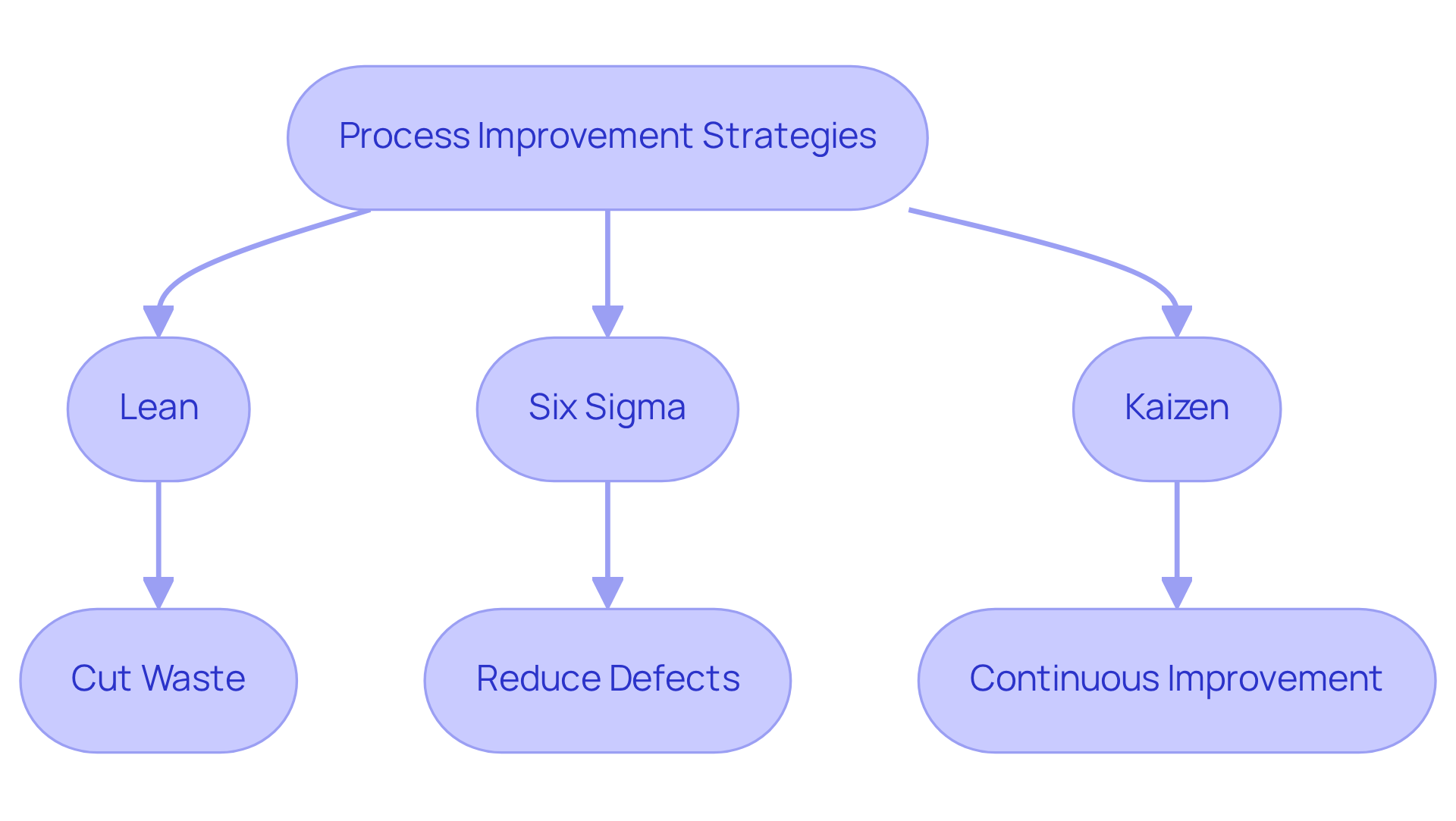
You might be wondering how operations managers can really boost their workflows. Well, there are some pretty effective strategies out there, like Lean, Six Sigma, and Kaizen. Lean is all about cutting out waste and maximizing what customers value. On the other hand, Six Sigma focuses on reducing defects and variability in processes. And then there's Kaizen, which means continuous improvement - think small, steady changes that can lead to big results over time.
For example, imagine a manufacturing firm that embraced Lean principles. They managed to cut their production time by a whopping 30% and slashed operational costs by 20%! Pretty impressive, right? Plus, organizations that have adopted Lean Six Sigma report an average defect rate of just 3.18%. That really shows how these methodologies can drive significant improvements in efficiency and quality.
So, how can you get started? By adopting these frameworks, operations managers can incorporate simple process improvement ideas to create a systematic approach to enhancing workflows that not only delivers measurable results but also fosters a culture of ongoing development.
Speaking of making things easier, have you heard about SowFlow's immediate documentation solution? It simplifies the process by allowing you to create user guides quickly and update them on the fly. This boosts standardization, onboarding, and knowledge sharing, ultimately ramping up team efficiency and productivity. Sounds like a win-win!
Leverage Technology to Enhance Process Improvement Efforts
You might be wondering how technology can really make a difference in enhancing processes, right? Well, it’s pretty essential! Think about it: automation software, data analytics platforms, and advanced documentation systems can really streamline workflows and boost communication. For instance, using a documentation tool like SowFlow helps teams create and manage business documentation efficiently, cutting down on the time spent on those tedious manual tasks.
Now, here’s something to consider: automation can actually reduce operating costs by 10 to 50 percent! That’s because organizations can ditch those old paper and Excel workflows. Plus, real-time data analysis gives you valuable insights into how things are running, allowing supervisors to quickly spot bottlenecks and areas that need a little TLC.
By weaving these technologies into their efficiency strategies, operations supervisors can ramp up effectiveness and flexibility. And who doesn’t want a more productive work environment? So, let’s dive into how you can make the most of these tools!

Overcome Challenges in Implementing Process Improvements
You might be wondering why introducing enhancements can be such a hassle. Well, it often runs into roadblocks like resistance to change, not enough resources, and sometimes, a lack of training. Did you know that about 37% of employees resist organizational changes? Most of the time, it’s because they don’t really understand why those changes are happening.
So, how can operations managers tackle these challenges? One effective way is to involve stakeholders early in the process. This helps ensure everyone’s on the same page and feels included. When people feel like they have a say, it not only cuts down on resistance but also fosters a sense of ownership among team members. Plus, providing ample training and resources can really help employees feel confident in adopting new methods.
For instance, there was a company that faced a lot of pushback when rolling out a new workflow system. But they turned things around by getting team members involved in the decision-making process and offering thorough training sessions. This collaborative approach made for a smoother transition and boosted employee satisfaction.
By addressing these challenges head-on, operations managers can create a supportive environment that really increases the chances of successful implementation of simple process improvement ideas. So, what do you think? Ready to tackle those obstacles together?

Conclusion
You might be wondering how enhancing operational efficiency through process improvement isn’t just a strategic choice but a must for organizations that want to thrive in today’s competitive landscape. By embracing simple yet effective process improvement ideas, you can drive significant boosts in productivity, cut down on waste, and ultimately see your profitability soar. The evidence is pretty compelling - many companies have reaped impressive financial returns by systematically refining and optimizing their workflows.
Now, let’s dive into some key strategies we’ve discussed, like implementing methodologies such as Lean, Six Sigma, and Kaizen. These frameworks are powerful tools for driving continuous improvement. And let’s not forget about technology! Integrating automation and data analytics plays a crucial role in streamlining operations and enhancing communication. But here’s the kicker: addressing common challenges during implementation - like resistance to change and lack of training - can really set the stage for a more receptive work environment and successful adoption of new processes.
The significance of process improvement? It can’t be overstated! It’s essential for fostering a culture of ongoing development and adaptability. Organizations that prioritize these initiatives not only boost their operational efficiency but also position themselves to respond effectively to market changes. As you look ahead, embracing these improvement strategies will be vital for maintaining that competitive edge and driving sustainable growth. So, are you ready to take the first step on your journey toward operational excellence? Let’s get started!
Frequently Asked Questions
Why is process improvement important for operations managers?
Process improvement is crucial for operations managers as it helps make business activities run smoother and more effectively, ultimately leading to enhanced operational efficiencies and service quality.
What are the benefits of implementing process improvement initiatives?
Companies that focus on process improvement can achieve operational efficiencies of 5% to 15% and report significant financial returns, with 55% of companies seeing returns of $100,000 to $500,000.
How much of their software budgets do businesses waste on unnecessary features?
Businesses waste between 32% to 41% of their software budgets on features they do not need, highlighting the cost implications of not optimizing processes.
What role does a culture of ongoing development play in process improvement?
Creating a culture of ongoing development is essential as it allows teams to adapt to changing market demands and maintain a competitive edge in a fast-paced business environment.
What mindset should operations managers adopt for successful process improvement?
Operations managers should adopt a mindset of ongoing development, aiming to improve a little bit every day, which fosters resilience and innovation within teams.
👍
What others are liking


5 Steps to outline your ideal documentation structure
5 MINS READ
Where to start the your journey of mapping out your ideal documentation structure, aligning it with the very heartbeat of your organization?
Defining a winning level of detail in your process
3 MINS READ
What is too much detail, and what is too little? This article described in that winning level detail about what detail is enough.


