


Key Highlights
- A code of conduct is a formal document that outlines expectations and standards for behaviour in the workplace.
- Establishing guidelines promotes a respectful work environment and enhances organisational integrity and responsibility.
- By July 1, 2026, organisations must clarify their codes of conduct to address unwanted behaviour effectively.
- Historical context shows that codes of conduct evolved from informal cultural norms to formal guidelines due to corporate governance needs.
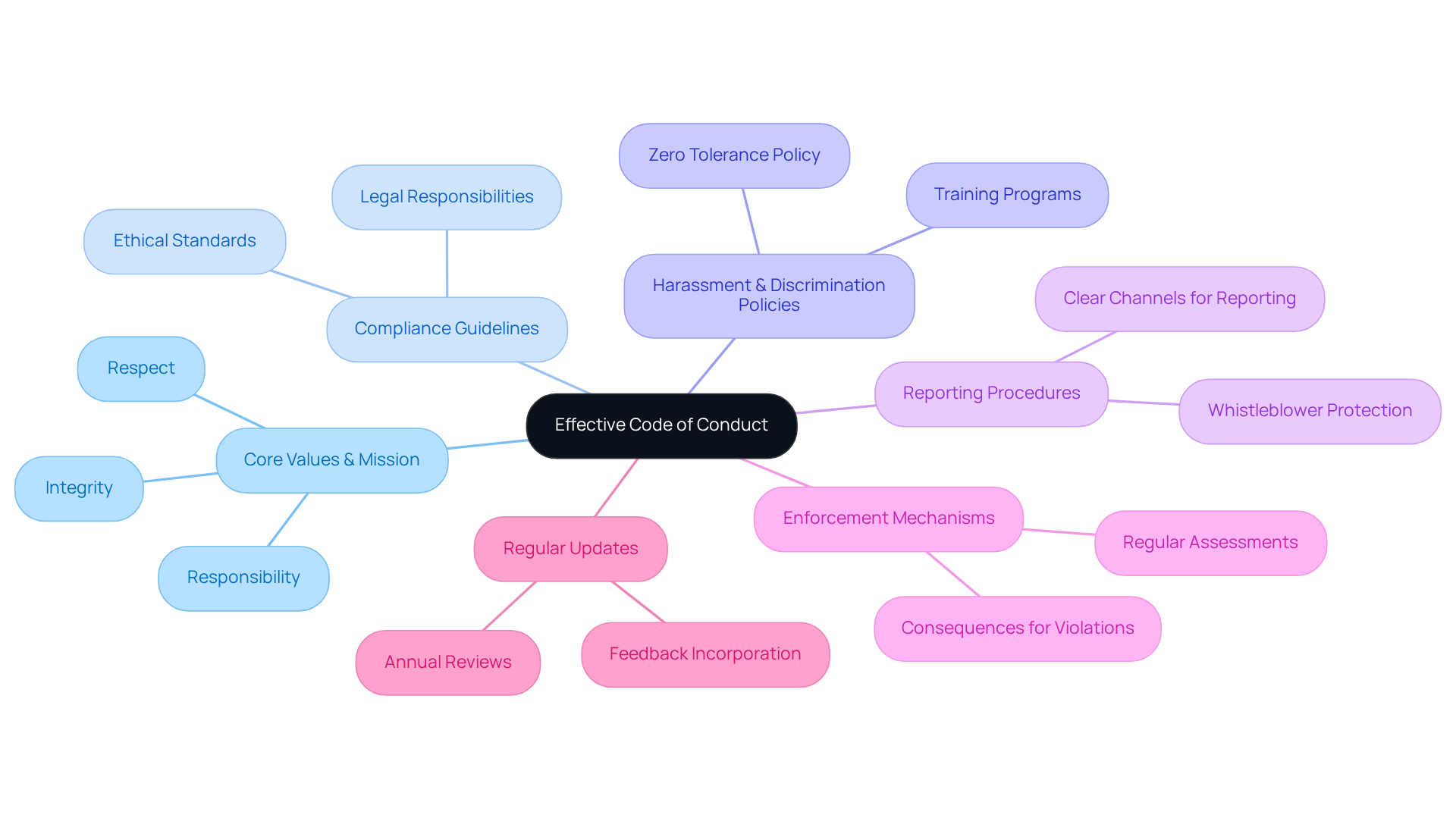
- Key components of an effective code include core values, compliance guidelines, and procedures for reporting misconduct.
- Effective guidelines foster a culture of accountability and help employees recognise and report issues.
- Regular updates to the code of conduct are essential to keep it relevant and compliant with legal standards.
- A well-defined code of conduct boosts staff morale, retention rates, and enhances the organisation's reputation.
Introduction
You might be wondering why understanding workplace behavior is so important. Well, it’s all about creating a productive and harmonious environment, right? A solid code of conduct is key here. It lays out the expectations and ethical standards that guide how employees interact with one another.
Now, with new compliance regulations on the horizon for 2026, managers face a big question: how can they effectively roll out and communicate these guidelines? It’s crucial for fostering a culture of integrity and accountability. So, let’s dive into why a code of conduct matters in the workplace. We’ll explore how it’s evolved, what key components it includes, and the significant impact it can have on your organization’s culture.
Define Code of Conduct: Essential Workplace Guidelines
You might be wondering what a set of guidelines really is. Well, it’s a formal document that defines what is a code of conduct in the workplace by outlining the expectations and standards for behavior within a group. Think of it as a roadmap for staff that explains what is a code of conduct in the workplace, highlighting what’s acceptable and what’s not, along with the ethical standards and core values of the organization. By establishing these guidelines, you are essentially defining what is a code of conduct in the workplace, creating a framework that promotes a respectful and productive work environment while boosting integrity and responsibility. Plus, this document isn’t just about following the law in many places; it also helps clarify what is a code of conduct in the workplace, enhancing workplace culture and keeping staff morale high.
Now, let’s discuss what is a code of conduct in the workplace and why having a solid set of guidelines is crucial, especially as we look ahead to 2026. By July 1, 2026, organizations need to clarify what is a code of conduct in the workplace to address unwanted behavior. This really highlights what is a code of conduct in the workplace, emphasizing the importance of getting started early and involving employees in the process to ensure everything is compliant and effective. As a Dutch lawmaker pointed out, "Creating a set of guidelines and frequently emphasizing it has a preventive effect." This really drives home what is a code of conduct in the workplace, emphasizing the importance of clarifying acceptable behaviors and those that are not.
You might be curious about what is a code of conduct in the workplace and how it looks in practice. Well, organizations that clearly define what is a code of conduct in the workplace, including undesirable actions like discrimination and harassment, help staff recognize and report issues, fostering a culture of accountability. When guidelines are communicated clearly, employees understand what is a code of conduct in the workplace better, which leads to improved compliance and a more cohesive workplace atmosphere. Ultimately, what is a code of conduct in the workplace serves not only to guide employee behavior but also to strengthen the organizational culture, making it a cornerstone of effective management.

Trace the Evolution: Historical Context of Codes of Conduct
You might be wondering how ethical guidelines have changed over time, right? Well, the development of these guidelines really shows a shift in how organizations think about morals and governance. In the beginning, they were pretty casual - often unrecorded and based on cultural norms within companies. But as businesses grew and things got more complicated, it became clear that formal guidelines were a must.
The late 20th century was a game-changer. It was during this time that corporate governance really took off, especially in response to some major scandals and ethical slip-ups. Companies started to realize that what is a code of conduct in the workplace is necessary to lay down some formal rules of behavior. Take AT&T's Code of Business Conduct, for instance. It emphasizes accessibility and clarity, making sure everyone understands their responsibilities.
Fast forward to today, and these guidelines are not just nice to have - they're often legally required! This shows a real commitment to ethical conduct and accountability. Microsoft’s Standards of Business Conduct are another great example. They focus on building a culture of trust while being easy on the eyes for all employees.
These regulations are essential tools for navigating the complexities of modern business practices. They help ensure that ethical standards are upheld at every level of the organization. This evolution really highlights what is a code of conduct in the workplace, emphasizing the need for a structured approach to ethics that fosters a culture valuing integrity and responsibility. So, what do you think? How do these changes resonate with your own experiences in the workplace?

Identify Key Components: Elements of an Effective Code of Conduct
Understanding what is a code of conduct in the workplace involves recognizing the key components that guide staff behavior and maintain the organization’s integrity. You might be wondering what these elements are. Well, first off, it’s all about clearly stating the organization’s core values and mission. This foundation is crucial for ethical behavior. Plus, having guidelines for compliance with laws and regulations is super important, as they help staff understand their legal responsibilities. And let’s not forget that these guidelines should tackle issues like harassment, discrimination, and conflicts of interest. Did you know that around 70% of organizations have policies on harassment and discrimination? That’s a big step toward creating a safe workplace!
Now, effective guidelines also need to include procedures for reporting misconduct. It’s essential that employees have clear channels to voice their concerns without worrying about retaliation. A well-structured program will have mechanisms for enforcement and outline the consequences for violations, which really reinforces the importance of sticking to these guidelines. Regular updates and assessments are a must to keep things relevant. Just look at firms like Deloitte - they periodically tweak their guidelines to stay in line with changing legal standards and shifts within the organization. It’s a good idea to review and refresh your guidelines at least once a year or whenever there are significant changes to company policy or laws.
As Linda Meikle, Associate Director of Content Marketing, puts it, "The aim of a strong set of guidelines is to bring together the entity through a shared perspective of moral competence with an emphasis on communication, addressing ethical challenges, resolving conflicts of interest, and recognizing the appropriate avenues to raise concerns when something seems amiss."
By weaving these components together, organizations can really cultivate a culture of integrity and accountability. This, in turn, boosts staff engagement and trust. For instance, companies like Apple use visually appealing designs in their programming, making the guidelines not just informative but also captivating. This approach can significantly enhance employee understanding and adherence. In short, what is a code of conduct in the workplace involves a comprehensive set of guidelines that not only sets clear expectations but also serves as a strategic tool for fostering a positive organizational culture.
Highlight Benefits: The Role of Code of Conduct in Shaping Workplace Culture
You might be wondering how a set of guidelines can really shape workplace culture. Well, it’s pretty crucial! Think of it as a framework for ethical conduct that fosters trust and respect among your team. When expectations are clearly defined, it helps steer clear of misconduct and reduces the chances of legal headaches. This, in turn, creates a more harmonious work environment.
Now, here’s something interesting: teams that have solid guidelines often see a boost in staff morale and retention rates. Why? Because employees feel valued and understood. Plus, having a clear set of guidelines can really enhance your organization’s reputation, making it more attractive to potential employees and clients alike.
In essence, what is a code of conduct in the workplace goes beyond just a bunch of rules; it’s a foundational piece that contributes to the overall success and sustainability of your organization. So, let’s dive into how you can create or improve your own set of guidelines!

Conclusion
You might be wondering why establishing a solid code of conduct in the workplace is so crucial. Well, it’s all about creating a respectful and productive environment! This formal document doesn’t just lay out what’s acceptable behavior; it also acts as a guiding framework that reinforces your organization’s core values and ethical standards. By clarifying expectations, a well-crafted code of conduct really shapes workplace culture and helps ensure everyone’s on the same page with legal requirements.
Throughout this article, we’ve highlighted some key insights about the significance of a code of conduct. It’s important that these guidelines clearly outline your organization’s core values, tackle issues like discrimination and harassment, and offer strong reporting mechanisms for any misconduct. Looking back, the historical evolution of these codes shows just how vital they’ve become in modern business practices. They reflect a commitment to ethical conduct and accountability that resonates with employees, boosting overall morale.
So, what’s the takeaway? Implementing a strong code of conduct isn’t just about ticking a box for regulations; it’s a strategic advantage that can lead to a more engaged and cohesive workforce. Organizations should really prioritize developing and regularly updating these guidelines to keep them relevant and effective. By doing this, you’re not just protecting your workforce; you’re also cultivating a culture of integrity that promotes trust and respect-two essential ingredients for long-term success. Now, doesn’t that sound like a win-win?
Frequently Asked Questions
What is a code of conduct in the workplace?
A code of conduct in the workplace is a formal document that outlines the expectations and standards for behavior within an organization, serving as a roadmap that defines acceptable and unacceptable behaviors, ethical standards, and core values.
Why is having a code of conduct important?
Having a code of conduct is crucial as it promotes a respectful and productive work environment, boosts integrity and responsibility, clarifies legal compliance, enhances workplace culture, and maintains high staff morale.
What is the deadline for organizations to clarify their code of conduct?
Organizations need to clarify their code of conduct to address unwanted behavior by July 1, 2026.
How can involving employees in the code of conduct process be beneficial?
Involving employees in the process of creating a code of conduct ensures that the guidelines are compliant and effective, and it helps foster a sense of ownership and accountability among staff.
What undesirable behaviors should be included in a code of conduct?
A code of conduct should include undesirable actions such as discrimination and harassment, helping staff recognize and report such issues.
How does a clear code of conduct affect workplace culture?
A clear code of conduct improves compliance, fosters accountability, and strengthens organizational culture, leading to a more cohesive workplace atmosphere.
👍
What others are liking


5 Steps to outline your ideal documentation structure
5 MINS READ
Where to start the your journey of mapping out your ideal documentation structure, aligning it with the very heartbeat of your organization?
Defining a winning level of detail in your process
3 MINS READ
What is too much detail, and what is too little? This article described in that winning level detail about what detail is enough.


