

General
|
March 9, 2026
|

Understanding the Process: Best Practices for Effective Documentation Management
Key Highlights:
- Define clear objectives for record-keeping, considering materials, audience, and desired outcomes.
- Assess current records to identify gaps or redundancies for improvement.
- Establish guidelines for formatting, language, and structure to ensure consistency.
- Assign roles and responsibilities to enhance accountability in record management.
- Implement a review system to keep documentation accurate and relevant through regular audits.
- Utilise templates for common formats to streamline the creation process.
- Adopt a centralised file management system to improve storage, retrieval, and sharing of documents.
- Utilise automation tools to reduce processing time and minimise human error.
- Integrate collaboration platforms for real-time document editing and feedback.
- Implement version control to track changes and maintain document accuracy.
- Utilise analytics to monitor file usage and inform future documentation strategies.
- Regularly update materials to ensure they reflect current processes and reduce version control issues.
- Establish a feedback loop to improve documentation relevance based on team input.
- Utilise cloud storage for easy access to documents from anywhere.
- Implement search functionality to help users quickly find needed information.
- Train employees on navigating resources effectively to enhance productivity.
- Create comprehensive onboarding manuals and utilise checklists to support new hires.
- Incorporate visual aids in training materials to clarify complex information.
- Provide access to a centralised knowledge base for training resources.
- Solicit feedback on training materials to ensure they meet the needs of new employees.
Introduction
You might be wondering why effective documentation management is such a big deal for businesses. Well, it’s crucial for boosting productivity and streamlining operations! Surprisingly, many organizations overlook the importance of structured record-keeping. In fact, a staggering 97% of firms don’t have effective processes in place. By diving into some best practices for documentation management, you’ll discover strategies that not only enhance your record-keeping but also tackle common issues like accessibility and relevance.
So, how can companies use technology and systematic approaches to transform their documentation processes and drive success? Let’s explore!
Define Effective Documentation Management Processes
To kick off effective record management processes, you might be wondering where to start. Well, it all begins with defining clear objectives for your record-keeping efforts. Think about the types of materials you need, who your audience is, and what results you’re aiming for. A structured approach can really make a difference, so let’s break it down into some simple steps:
-
Assess Current Records: First things first, take a good look at your existing materials. Are there gaps or redundancies? This evaluation aids in understanding the process of what’s working and what could use a little boost. Did you know that 97% of firms have minimal or no records management processes in place? That’s a big opportunity for improvement!
-
Establish Clear Guidelines: Next up, create a set of guidelines that lay out the standards for your records. This includes formatting, language, and structure. Consistency is key here! Understanding the process of efficiently managing materials can boost employee productivity by as much as 40%. Who wouldn’t want that?
-
Define Roles and Responsibilities: It’s also important to assign specific roles for record tasks. Who’s going to create, review, and update materials? Understanding the process fosters accountability and enhances the quality of your records. After all, 83% of employees have to recreate lost files due to poor information sharing. Let’s avoid that!
-
Implement a Review System: Now, let’s talk about keeping things fresh. Establish a regular review framework for understanding the process to ensure that your documentation remains accurate and relevant. This could mean periodic audits or feedback sessions with your team. Interestingly, 70% of team members believe that fewer meetings and emails would boost productivity. Sounds like a win-win!
-
Employ Templates: Finally, consider creating templates for common formats. This can simplify the creation process and ensure consistency across the board. You’ll be amazed at how much time you can save-some organizations report up to 80% time savings when using document management systems.
By tapping into SowFlow's instant record-keeping solution, you can really enhance your management systems. Imagine your teams having immediate access to user guides and the ability to make seamless updates. This approach not only streamlines process standardization and knowledge sharing but also leads to improved operational performance. So, why not explore these solutions further?

Leverage Technology for Streamlined Documentation
You might be wondering how technology can really change the game when it comes to managing your documents. Well, incorporating tech into your documentation management can seriously boost efficiency and make everything more accessible. Let’s explore some best practices that can help you leverage technology effectively:
-
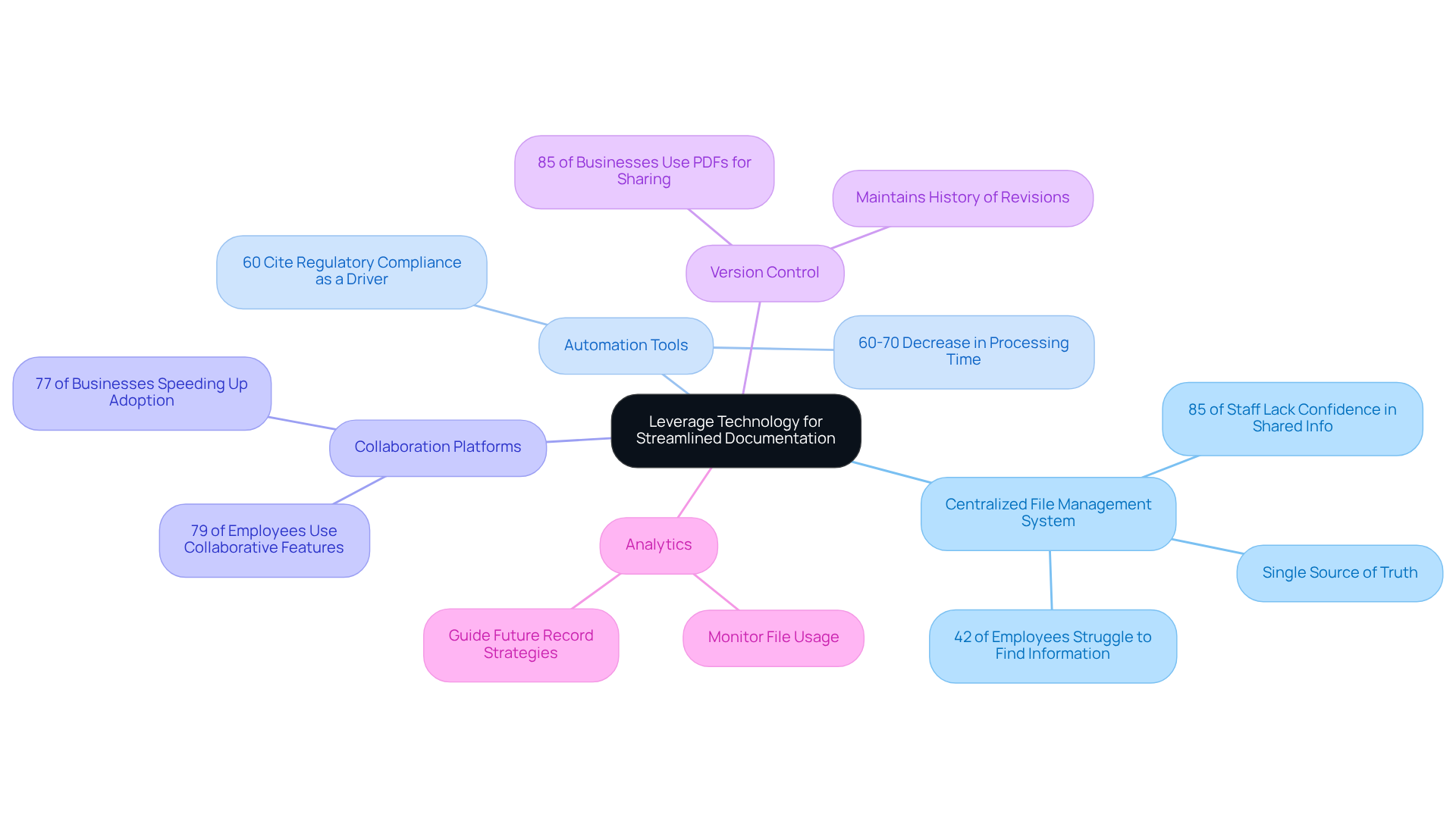
Adopt a Centralized File Management System (DMS): Have you ever felt lost trying to find a file? Implementing a DMS can make storage, retrieval, and sharing a breeze. It creates a single source of truth, which means less confusion and more consistency across the board. Did you know that 42% of employees struggle to find and share information because data is scattered everywhere? Plus, 85% of staff aren’t confident in the info they share externally. A DMS can really help build trust in what’s being shared.
-
Utilize Automation Tools: Imagine saving time on repetitive tasks like content creation and updates. Automation tools can do just that! By streamlining these processes, companies can cut down on human error and save a ton of time. Studies show that businesses see a 60-70% decrease in processing time after adopting these solutions. And let’s not forget, 60% of organizations cite regulatory compliance as a key reason for jumping on the automation bandwagon.
-
Integrate Collaboration Platforms: Ever tried editing a document with a team in real-time? It’s a game changer! Collaboration tools allow for instant feedback and teamwork, which is crucial since 79% of employees use management systems with collaborative features. With 77% of businesses speeding up their adoption of management software, it’s clear that embracing these technologies is the way to go.
-
Implement Version Control: Keeping track of changes can be tricky, right? That’s where version control comes in. It helps maintain a history of revisions, ensuring everyone has access to the most current info. This is especially important since 85% of businesses rely on PDFs for sharing information.
-
Utilize Analytics: Curious about how your content is being used? Analytics tools can help you monitor file usage and pinpoint areas for improvement. Understanding the process of how files are accessed can guide your future record strategies, allowing you to continuously adjust and enhance your methods.
By embracing these technologies, you can create a more efficient record-keeping system that boosts collaboration and cuts down on the time spent on documentation tasks. As Jeff Bezos wisely said, "There is no alternative to digital transformation," so it’s time to adopt these best practices and see the difference for yourself!
Ensure Continuous Relevance and Accessibility of Documentation
To keep your documentation relevant and easy to access, here are some friendly tips you might want to consider:
-
Regularly Update Materials: Have you thought about scheduling regular reviews of your documents? It’s a great way for understanding the process to ensure that everything reflects your current processes. Research shows that a whopping 83% of employees face version control headaches, so regular updates can really help clear up confusion. Aim for quarterly or bi-annual reviews, depending on what you’re working with. With SowFlow, updating your materials is a breeze, helping you stay on top of things in our fast-paced business world.
-
Establish a Feedback Loop: How about encouraging your team to share their thoughts on the documentation? This not only helps pinpoint areas that need a little more clarity but also builds a collaborative culture. Organizations that embrace feedback often find their documentation becomes much more relevant, adapting to what users really need.
-
Utilize Cloud Storage: Are your files stored in a cloud-based system? This allows easy access from anywhere! With 80% of employees needing mobile access to do their jobs well, cloud storage makes sure your team can grab the info they need without any holdups, boosting productivity.
-
Implement Search Functionality: Does your management system have a solid search feature? It’s essential for helping users quickly find what they’re looking for. Tagging documents with relevant keywords can save a ton of time-after all, searching for information can eat up 25% of a typical workweek! With SowFlow's solution, users can access their records with just one command, cutting down on those unnecessary meetings where everyone’s hunting for answers.
-
Train Employees on Accessing Resources: Have you provided training sessions to help your team navigate resources effectively? This could include tutorials on using the management system and understanding the materials. Good training can enhance understanding the process, which can help reduce the 21.3% productivity loss that comes from poor document management practices.
By following these tips, you can ensure your records remain a valuable asset that supports efficiency and boosts overall business performance, all while leveraging SowFlow's capabilities for smooth workflow sharing.

Enhance Onboarding and Training with Effective Documentation
Effective record-keeping is super important when it comes to onboarding and training new employees. You might be wondering how understanding the process can make these processes smoother. Here are some friendly tips to help you out:
-
Create Comprehensive Onboarding Manuals: Have you thought about putting together detailed onboarding manuals? These should cover company policies, procedures, and what’s expected from new hires. With SowFlow, crafting these user guides is a breeze, and you can keep them fresh and relevant in our fast-paced business world.
-
Utilize Checklists: Ever feel overwhelmed by all the tasks new employees need to complete? Checklists can be a lifesaver! They help ensure that every step is covered. SowFlow’s record-keeping solution makes this super easy, helping you standardize procedures and keep things consistent.
-
Incorporate Visual Aids: Visuals can really make a difference! Think diagrams, flowcharts, and videos that help clarify complex information. With SowFlow, you can easily add these elements, making it more engaging for new hires.
-
Provide Access to Knowledge Bases: Imagine having a one-stop shop for all training materials, FAQs, and resources. That’s what a centralized knowledge base can do! SowFlow empowers employees to find what they need on their own, cutting down on unnecessary meetings and boosting team efficiency.
-
Solicit Feedback on Training Materials: Feedback is gold! Regularly ask new hires how effective they find the training materials. With SowFlow, updating and revising documentation based on their input is a snap, ensuring it meets everyone’s needs.
By embracing these practices and understanding the process of utilizing SowFlow’s innovative features, you can create an onboarding experience that truly sets new employees up for success. So, why not give it a try?

Conclusion
You know, effective documentation management is super important for organizations that want to streamline their processes and boost productivity. By setting clear goals, using the right technology, and keeping things relevant, businesses can build a solid framework for efficient record-keeping. This structured approach not only encourages accountability but also helps teams collaborate better, which ultimately leads to improved operational performance.
So, what are some key strategies? Well, it starts with:
- Assessing your current records
- Implementing a centralized file management system
- Making the most of automation tools
These practices tackle common headaches like scattered information and version control issues. Plus, they emphasize the need for regular updates and feedback loops to keep your documentation fresh and useful. Embracing tech like cloud storage and collaborative platforms can really boost accessibility and efficiency in managing your documents.
In wrapping this up, let’s not underestimate the importance of effective documentation management. It’s the backbone of successful onboarding, training, and overall organizational efficiency. By adopting these best practices and leveraging innovative tools like SowFlow, you can turn your documentation processes into a strategic advantage. So, why wait? Now’s the time to embrace these strategies and elevate your documentation management to drive your organization forward!
Frequently Asked Questions
What is the first step in effective documentation management processes?
The first step is to define clear objectives for your record-keeping efforts, considering the types of materials needed, the target audience, and the desired results.
How should one assess current records?
You should evaluate existing materials to identify gaps or redundancies, which helps in understanding what is working well and what needs improvement.
What percentage of firms have minimal or no records management processes?
97% of firms have minimal or no records management processes in place, indicating a significant opportunity for improvement.
Why is it important to establish clear guidelines for records?
Establishing clear guidelines ensures consistency in formatting, language, and structure, which can boost employee productivity by up to 40%.
What roles should be defined in the documentation management process?
Specific roles should be assigned for tasks such as creating, reviewing, and updating materials to foster accountability and enhance record quality.
What issue do 83% of employees face related to records management?
83% of employees have to recreate lost files due to poor information sharing, highlighting the need for better management practices.
What is the purpose of implementing a review system for documentation?
A review system ensures that documentation remains accurate and relevant through periodic audits or feedback sessions with the team.
How do team members feel about meetings and emails in relation to productivity?
70% of team members believe that reducing the number of meetings and emails would enhance productivity.
What is the benefit of employing templates in documentation management?
Using templates for common formats simplifies the creation process and ensures consistency, potentially saving organizations up to 80% of time when utilizing document management systems.
How can SowFlow's record-keeping solution enhance management systems?
SowFlow's solution provides immediate access to user guides and allows for seamless updates, improving process standardization, knowledge sharing, and operational performance.
👍
What others are liking


5 Steps to outline your ideal documentation structure
5 MINS READ
Where to start the your journey of mapping out your ideal documentation structure, aligning it with the very heartbeat of your organization?
Defining a winning level of detail in your process
3 MINS READ
What is too much detail, and what is too little? This article described in that winning level detail about what detail is enough.


