


Key Highlights
- Setting clear objectives for note-taking enhances effectiveness by tailoring the approach to specific goals, such as capturing meeting discussions or creating SOPs.
- Structured methods like the Cornell, Charting, and Mapping techniques help organise information for better clarity and review.
- Using tools like SowFlow allows for instant documentation updates and real-time collaboration, improving team contributions and access to notes.
- The environment impacts note-taking effectiveness; a quiet space may enhance focus, while distractions can hinder productivity.
- Regularly reviewing and updating documentation keeps records relevant and accurate, with companies seeing up to 30% productivity boosts from digital management.
- Collaborative note-taking encourages team participation, leading to richer discussions and improved understanding, though it may face challenges like uneven participation.
- Real-time collaboration tools can facilitate group note-taking, allowing diverse perspectives and enhancing memory retention of content.
Introduction
You might be wondering, what’s the deal with note-taking? Well, it’s way more than just jotting down a few words here and there. Effective note-taking is a crucial skill that can really boost your operational efficiency. For operations managers, getting this right can mean clearer communication, better project tracking, and a more engaged team.
But here’s the catch: many folks struggle with figuring out how to make note-taking work for them. What are the best practices that can turn this seemingly mundane task into a powerful tool for collaboration and productivity? Let’s dive into that!
Establish Clear Objectives for Note Taking
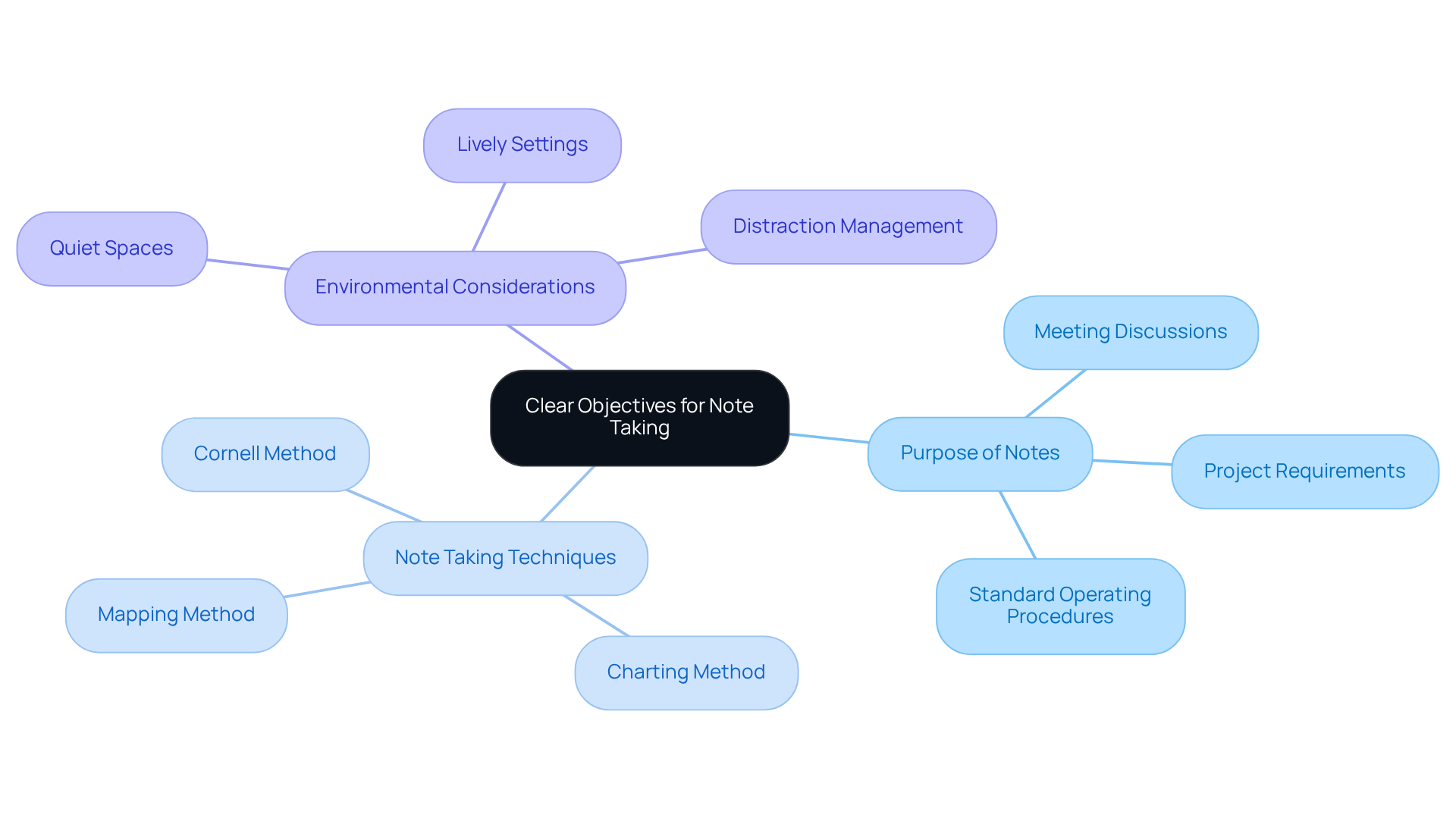
You might be wondering why setting clear objectives before any documentation session is so crucial. Well, especially when you're using tools like SowFlow for record-keeping, having a clear purpose can really maximize your effectiveness. Think about it: Are your notes meant to capture meeting discussions, outline project requirements, or document processes? By defining specific goals, you can tailor your scribe note taking approach to fit your needs. For example, if you're aiming to create a standard operating procedure (SOP), focus on capturing detailed steps and responsibilities. This way, your notes not only become more relevant but also serve their intended purpose, making it easier for your team to reference them later.
Now, let’s dive into some structured methods for capturing information. Techniques like the Cornell Method, Charting Method, or Mapping Method can really boost your effectiveness. They help organize information clearly, making it a breeze to review and understand later. Plus, with SowFlow's instant documentation solution, you can easily update and revise your notes, keeping your guides fresh in our ever-changing business world. And let’s not forget about SowFlow’s intuitive interface and real-time collaboration tools - they make recording information a team effort, allowing everyone to contribute and access details on the fly.
But here’s something to consider: the environment where you take notes can really impact your effectiveness. A quiet space might help you focus, while a lively setting could lead to distractions. Research shows that implementing scribe note taking methods can simplify your study activities and speed up understanding, which highlights just how important it is to have clear goals. And hey, avoiding common pitfalls - like trying to transcribe every word or neglecting to organize your notes - can lead to much more productive outcomes. So, what do you think? Are you ready to take your documentation game to the next level?
Utilize Advanced Tools for Efficient Documentation
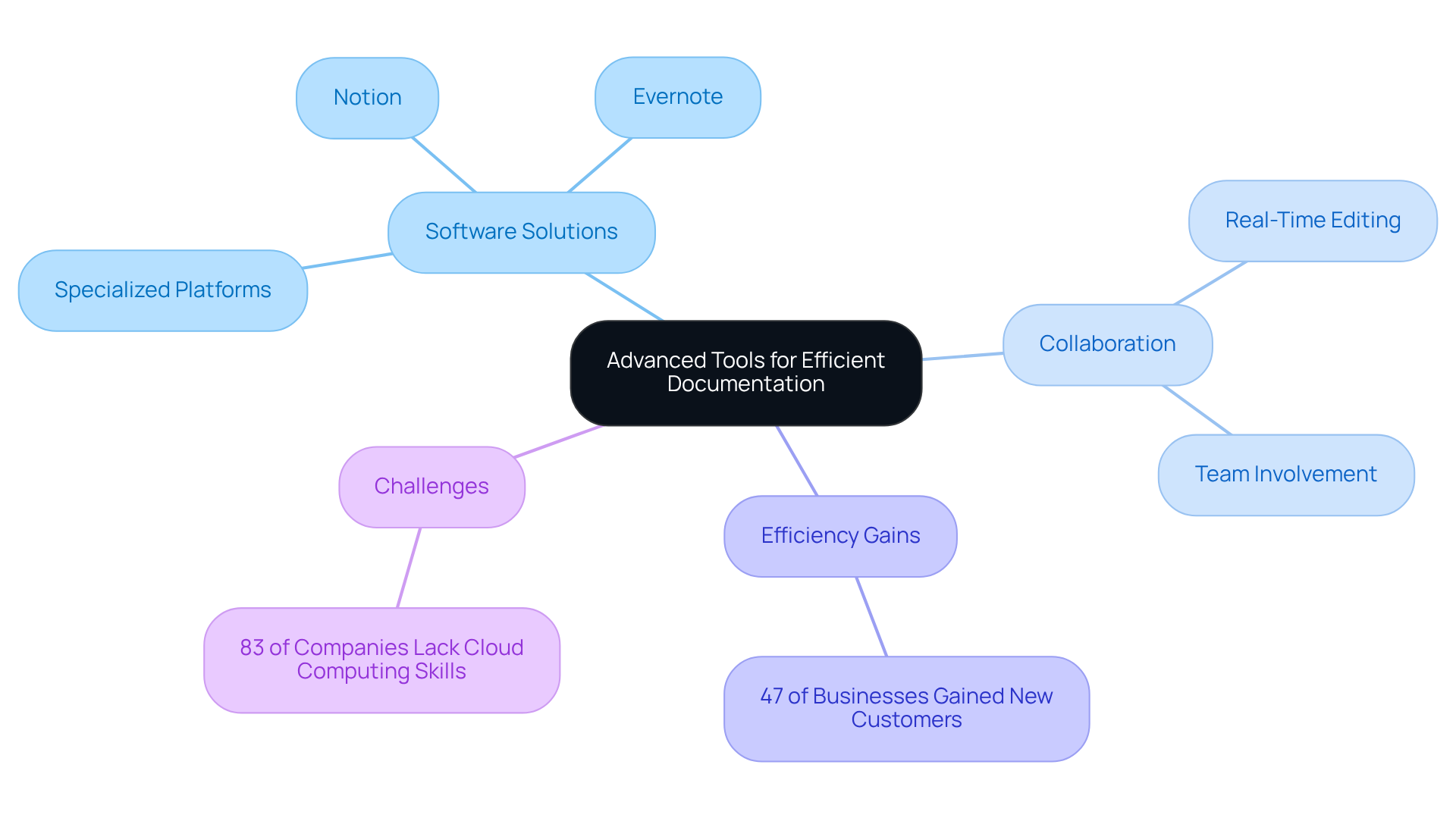
You might be wondering how integrating some smart resources into your note-taking can really amp up your effectiveness and structure. Well, software solutions like Notion, Evernote, and other specialized platforms are designed to help you organize your notes better, making them easier to navigate and update. Imagine having tools that let you tag and categorize your notes - suddenly, accessing info related to your current projects becomes a breeze, and your workflow gets a serious boost.
Now, let’s dive into the collaborative side of things. Choosing resources that allow team members to pitch in and refine notes in real-time not only improves the quality of your documentation but also builds a collaborative culture within your team. Organizations that have jumped on the digital bandwagon are seeing some impressive results in note-taking efficiency. In fact, many have reported spending less time managing documents. Did you know that a study found 47% of businesses that digitized their document processes gained new customers? That’s a clear sign of how digital resources can impact operational success.
As Berenika Teter points out, boosting employee involvement through effective record-keeping can lead to higher productivity and engagement, which is a win-win for operations managers. But here’s the kicker: 83% of companies say a lack of cloud computing skills is holding them back from adopting these tools. It’s a real challenge, but recognizing it is the first step toward overcoming it!
Regularly Review and Update Documentation
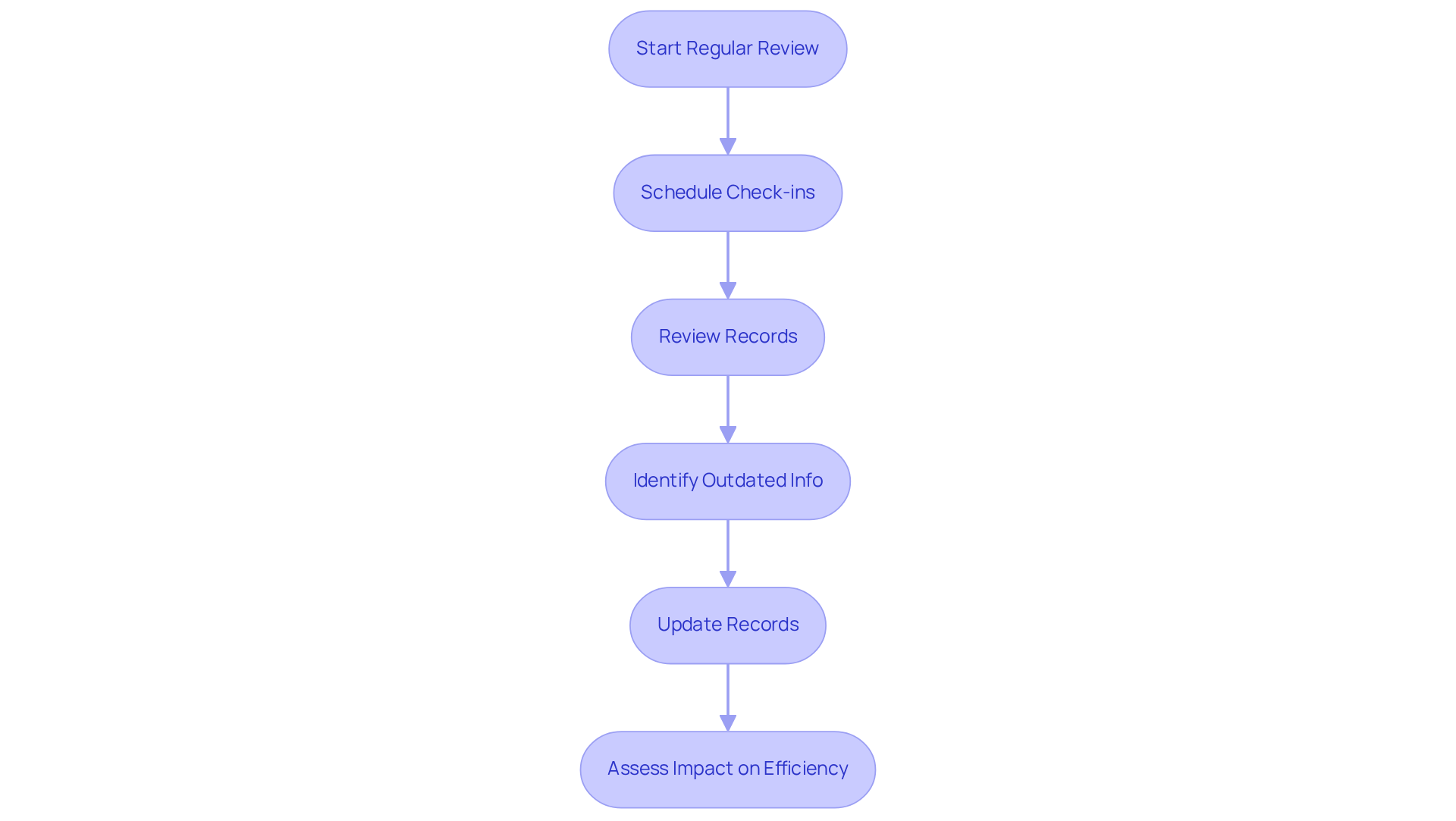
You might be wondering how to keep your records effective. Well, establishing a routine for reviewing and updating your notes is key! Think about scheduling regular check-ins-maybe quarterly or bi-annually-to see how relevant and accurate your records really are. During these reviews, take a moment to spot any outdated info, redundancies, or areas that could use a little clarification. For example, if a process has changed, it’s super important to update the related records accordingly.
Now, this proactive approach doesn’t just keep your records fresh; it also underscores how crucial precise information is for your organization. Speaking of that, have you heard about SowFlow's instant reporting solution? It makes updates a breeze, ensuring your guides stay relevant in our fast-paced business world. One Product Owner even said, "SowFlow has been a game changer in the way we document work and deliver to our clients," which really highlights the time-saving perks of the platform.
And here’s a fun fact: a study by Glean.com found that employees spend an average of two hours each day hunting for documents! That really shows how vital it is to keep your records up to date. Companies that regularly review their records often see a boost in operational efficiency, with reports suggesting that digital file management can ramp up productivity by as much as 30% compared to traditional methods. So, by prioritizing your review processes and tapping into SowFlow's capabilities, you can cut down on errors in your workflows and really enhance overall productivity.
Encourage Collaborative Note Taking
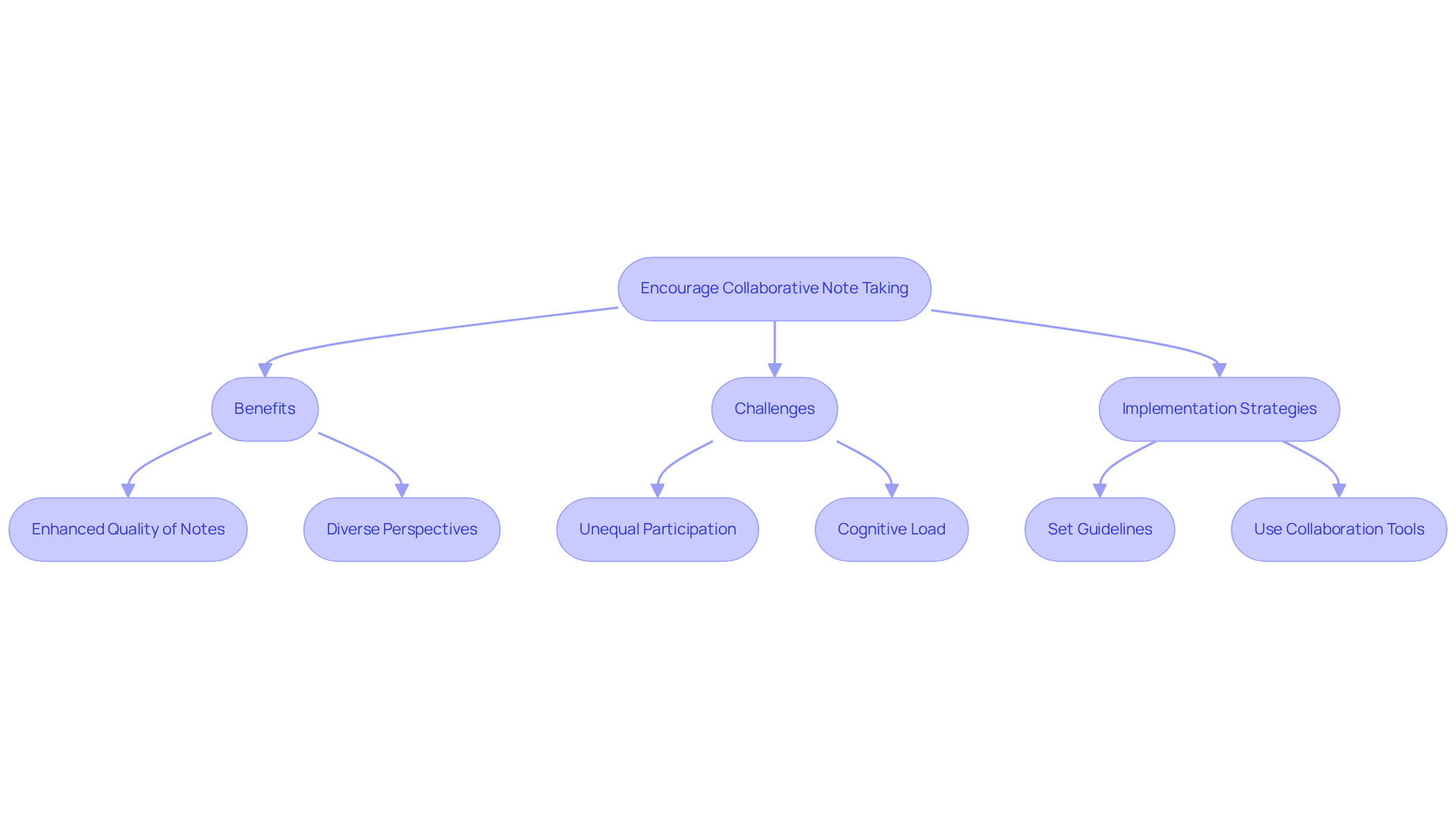
You might be wondering how to boost the quality of your documentation. Well, nurturing a culture of teamwork can really make a difference! Encouraging your team members to pitch in during meetings or brainstorming sessions can enhance the quality of scribe note taking, leading to richer and more comprehensive records. Think about using real-time collaboration tools like Google Docs or Microsoft OneNote. They make it super easy for everyone to contribute, so no one’s stuck just taking notes while missing out on the conversation.
By sharing the scribe note taking responsibility, your team can dive deeper into discussions instead of just focusing on writing everything down. This collaborative approach not only brings in diverse perspectives but also improves scribe note taking, helping everyone grasp the topics better. Research even shows that folks who take notes together tend to remember course content more effectively than those who go solo. Pretty cool, right?
Of course, it’s not all smooth sailing. You might run into challenges like some team members not participating as much as others or the cognitive load of keeping up with the discussion. To tackle these hiccups, operations managers can set up some simple guidelines for scribe note taking during participation. This way, everyone gets a chance to share their thoughts, maximizing the benefits of collaborative note-taking. Now, let’s dive into how you can implement these strategies in your own team!
Conclusion
You might be wondering how to make your note-taking practices more effective, especially if you’re an operations manager looking to boost productivity and streamline your documentation. Well, it’s all about setting clear objectives, using the right tools, and regularly reviewing what you’ve jotted down. Plus, encouraging collaboration can really elevate the quality and relevance of your notes. These strategies not only help you stay organized but also create a team culture that thrives on shared insights and engagement.
Key takeaways from the article emphasize the need to define specific goals for your note-taking. Choosing the right tools can enhance your efficiency, and keeping your records up-to-date through regular reviews is crucial. And let’s not forget about collaborative note-taking! It can improve information retention and spark a lively exchange of ideas among your team members. When you implement these practices effectively, you can truly transform how your team documents and references important information.
In today’s fast-paced business world, being able to adapt and refine your documentation processes is key. By prioritizing these best practices, you can not only ramp up your team’s productivity but also make sure your documentation remains a valuable resource. Embracing these strategies encourages a proactive approach to note-taking, leading to greater operational success and a more cohesive team dynamic. So, why not give it a try? Your team will thank you!
Frequently Asked Questions
Why is it important to establish clear objectives for note-taking?
Establishing clear objectives for note-taking is crucial because it helps maximize effectiveness by tailoring the note-taking approach to specific needs, such as capturing meeting discussions, outlining project requirements, or documenting processes.
What are some examples of specific goals for note-taking?
Specific goals for note-taking might include creating a standard operating procedure (SOP) by focusing on capturing detailed steps and responsibilities, ensuring that the notes serve their intended purpose.
What note-taking methods can enhance effectiveness?
Techniques like the Cornell Method, Charting Method, and Mapping Method can enhance effectiveness by organizing information clearly, making it easier to review and understand later.
How does SowFlow assist in the note-taking process?
SowFlow provides an instant documentation solution that allows users to easily update and revise notes, ensuring that guides remain current. Its intuitive interface and real-time collaboration tools enable team members to contribute and access details simultaneously.
How does the environment affect note-taking effectiveness?
The environment can significantly impact note-taking effectiveness; a quiet space may enhance focus, while a lively setting could introduce distractions.
What are common pitfalls to avoid in note-taking?
Common pitfalls to avoid in note-taking include trying to transcribe every word and neglecting to organize notes, as these can hinder productivity and understanding.
👍
What others are liking

5 Steps to outline your ideal documentation structure
5 MINS READ
Where to start the your journey of mapping out your ideal documentation structure, aligning it with the very heartbeat of your organization?
Defining a winning level of detail in your process
3 MINS READ
What is too much detail, and what is too little? This article described in that winning level detail about what detail is enough.


