

General
|
April 29, 2026
|

Master Hospital Standard Operating Procedures for Operational Excellence
Key Highlights
- SOPs ensure consistency, safety, and high quality in healthcare operations.
- Approximately 70% of medical organisations have adopted SOPs, indicating their importance.
- Effective SOPs enhance operational efficiency, reduce errors, and improve patient outcomes.
- Hospitals implementing SOPs have seen significant improvements, such as a 30% drop in surgical errors.
- Clearly defined roles in SOPs foster accountability among healthcare professionals.
- SOPs must be tailored to specific workflows to avoid being too generic.
- Key components of effective SOPs include a clear purpose, detailed instructions, and defined roles.
- Regular training and stakeholder involvement are crucial for developing useful SOPs.
- SowFlow's documentation solution aids in creating and updating SOPs efficiently.
- A systematic review cycle for SOPs every 6-12 months helps maintain their relevance and effectiveness.
- Electronic document management systems like SowFlow streamline the SOP review process and ensure compliance.
Introduction
In the fast-paced world of healthcare, you might be wondering how to keep everything running smoothly. Well, that’s where standard operating procedures (SOPs) come into play! They’re not just paperwork; they’re essential for achieving operational excellence. As more hospitals jump on the SOP bandwagon, they’re reaping some serious rewards - think enhanced efficiency, fewer errors, and better patient outcomes.
But here’s the catch: implementing SOPs isn’t always a walk in the park. How can healthcare institutions make sure their procedures stay relevant and effective in a world that’s always changing? Let’s dive into this together and explore how to tackle these challenges head-on!
Define the Purpose and Importance of SOPs in Healthcare
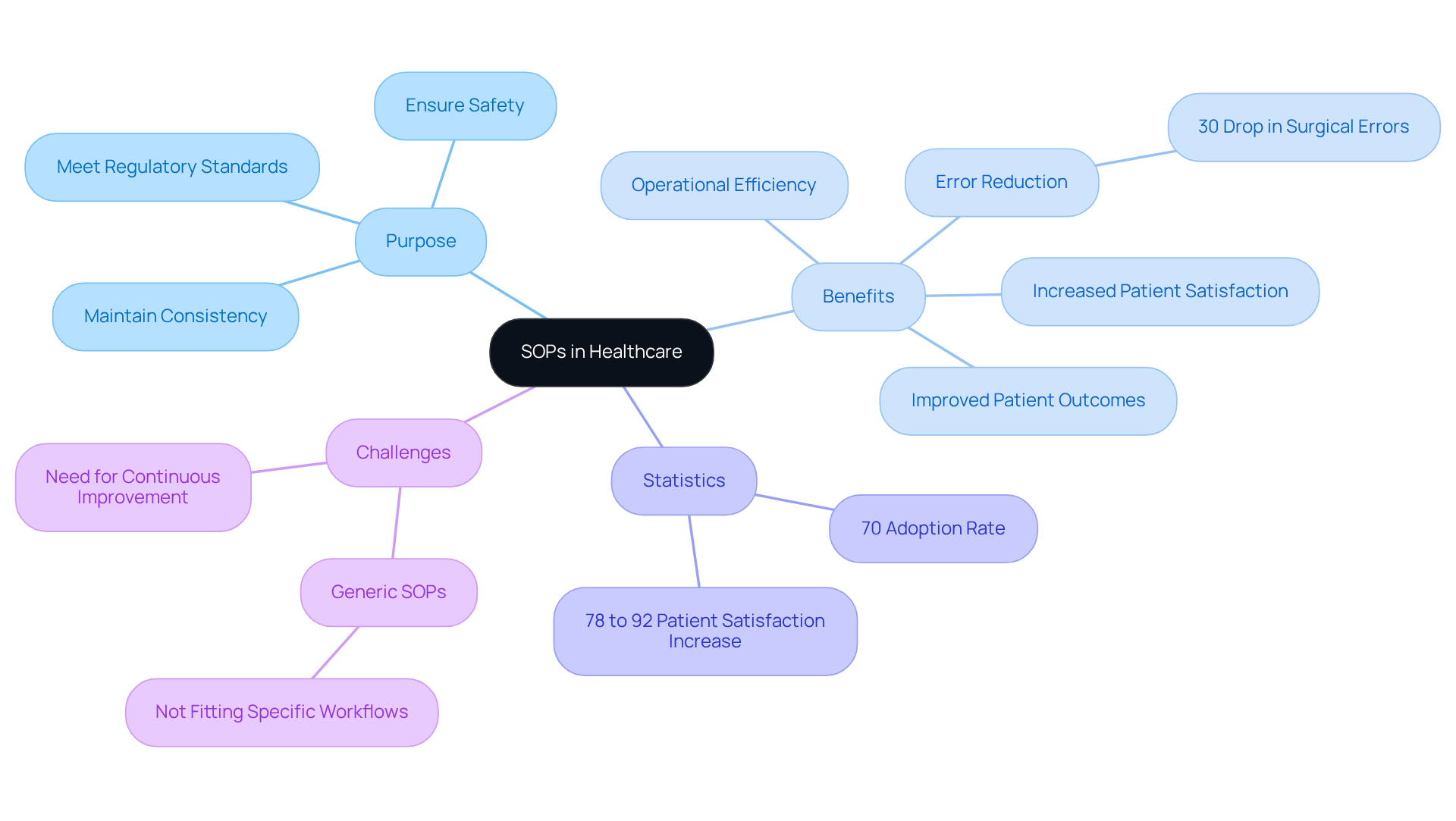
You might be wondering why hospital standard operating procedures (SOPs) in healthcare are such a big deal. Well, they’re essentially the hospital standard operating procedures for routine tasks, which help to maintain consistency, safety, and high quality across the board. Plus, they’re crucial for staying on the right side of regulations set by bodies like the Joint Commission and CMS, which are governed by hospital standard operating procedures. Did you know that around 70% of medical organizations have jumped on the SOP bandwagon? That’s a clear sign that they’re recognized as a game-changer in hospital standard operating procedures within the industry.
Now, let’s talk about the real benefits. When hospital standard operating procedures are established, they can significantly enhance operational efficiency, reduce errors, and even improve patient outcomes. For example, one well-known medical institution saw a whopping 30% drop in surgical errors after they rolled out detailed guidelines for their surgical procedures. And it doesn’t stop there - hospitals using SOPs reported quicker patient discharges, which shot up patient satisfaction ratings from 78% to 92%! That’s a win-win, right?
By clearly defining roles and responsibilities, hospital standard operating procedures assist healthcare professionals in performing their jobs effectively, fostering a culture of accountability and excellence. But, hold on a second! It’s important to keep an eye out for potential pitfalls. Sometimes, SOPs can end up being too generic, not quite fitting the specific workflows of a facility. Addressing these challenges is key to making sure SOPs work their magic in healthcare.
Identify Key Components of Effective SOPs
You might be wondering what makes an effective Standard Operating Procedure (SOP) really tick. Well, it all starts with a clear purpose. This isn’t just a formality; it tells users why the SOP matters and how it can help them. Next up, you need detailed step-by-step instructions. Think of these as your roadmap for executing tasks-clear guidance that helps minimize errors and keeps everything running smoothly.
Now, let’s talk about roles and responsibilities. Defining these within the SOP is crucial. It fosters accountability, making sure everyone knows what they’re supposed to do. And don’t forget about document control measures! These are essential for keeping your SOPs intact and easy to access, allowing for quick updates whenever necessary.
Speaking of updates, have you heard about SowFlow’s instant documentation solution? It’s a game changer! With just a single command, teams can create and update user guides effortlessly, ensuring that all documentation stays relevant in our fast-paced business world. Plus, incorporating training requirements is key. It ensures that everyone is on the same page and ready to follow the procedures laid out.
For example, imagine a well-structured hospital standard operating procedures for the administration of medication. It might include sections on preparation, administration techniques, and post-administration monitoring. This way, all healthcare providers are aligned in their approach, which is super important! Regular reviews and updates are also a must to keep up with evolving clinical practices and regulatory demands. After all, we want to enhance patient safety and operational efficiency, right?
Did you know that medication mistakes account for 22% of hospital readmissions? That really highlights how effective hospital standard operating procedures can be in reducing errors. And with SowFlow, staff training is a breeze thanks to integrated modules that boost the effectiveness of these procedures.
Lastly, involving stakeholders in the SOP development process is essential. Their insights can lead to more comprehensive and practical guidelines, ensuring that the procedures are relevant and effective. So, what do you think? Are you ready to tackle your documentation challenges head-on?

Implement Best Practices for Developing SOPs
To develop effective hospital standard operating procedures, healthcare institutions must focus on best practices that involve everyone in the conversation during the drafting process. You might be wondering why this is so important. Well, involving key stakeholders - especially those on the front lines - is crucial. They can highlight practical challenges and ensure that the procedures are not just theoretical but actually useful and easy to follow. For instance, a study found that organizations that actively involve stakeholders in SOP development are 40% more likely to finish projects on time and within budget. That’s a pretty compelling reason to engage everyone, right?
Now, let’s talk about language. Using clear and concise wording in hospital standard operating procedures can really boost understanding and compliance among staff. Templates can help standardize the format, making it easier for everyone to follow procedures consistently. And don’t forget about regular training sessions! These hospital standard operating procedures are essential for getting personnel up to speed with new or revised procedures, highlighting their importance in daily operations. Implementing a quarterly review process allows employees to share feedback on existing SOPs, which fosters a culture of continuous improvement. This approach not only enhances operational efficiency but also empowers staff, leading to better compliance and overall quality of care.
Speaking of efficiency, have you heard about SowFlow? It’s been a game changer for how organizations document work and deliver to clients. With SowFlow, teams don’t have to take each screenshot individually or exit the browser while developing standard operating procedures and training materials. This efficiency directly supports best practices by simplifying the documentation workflow and saving valuable time. Ultimately, it improves the effectiveness of hospital standard operating procedures and training initiatives.

Establish a Review and Update Cycle for SOPs
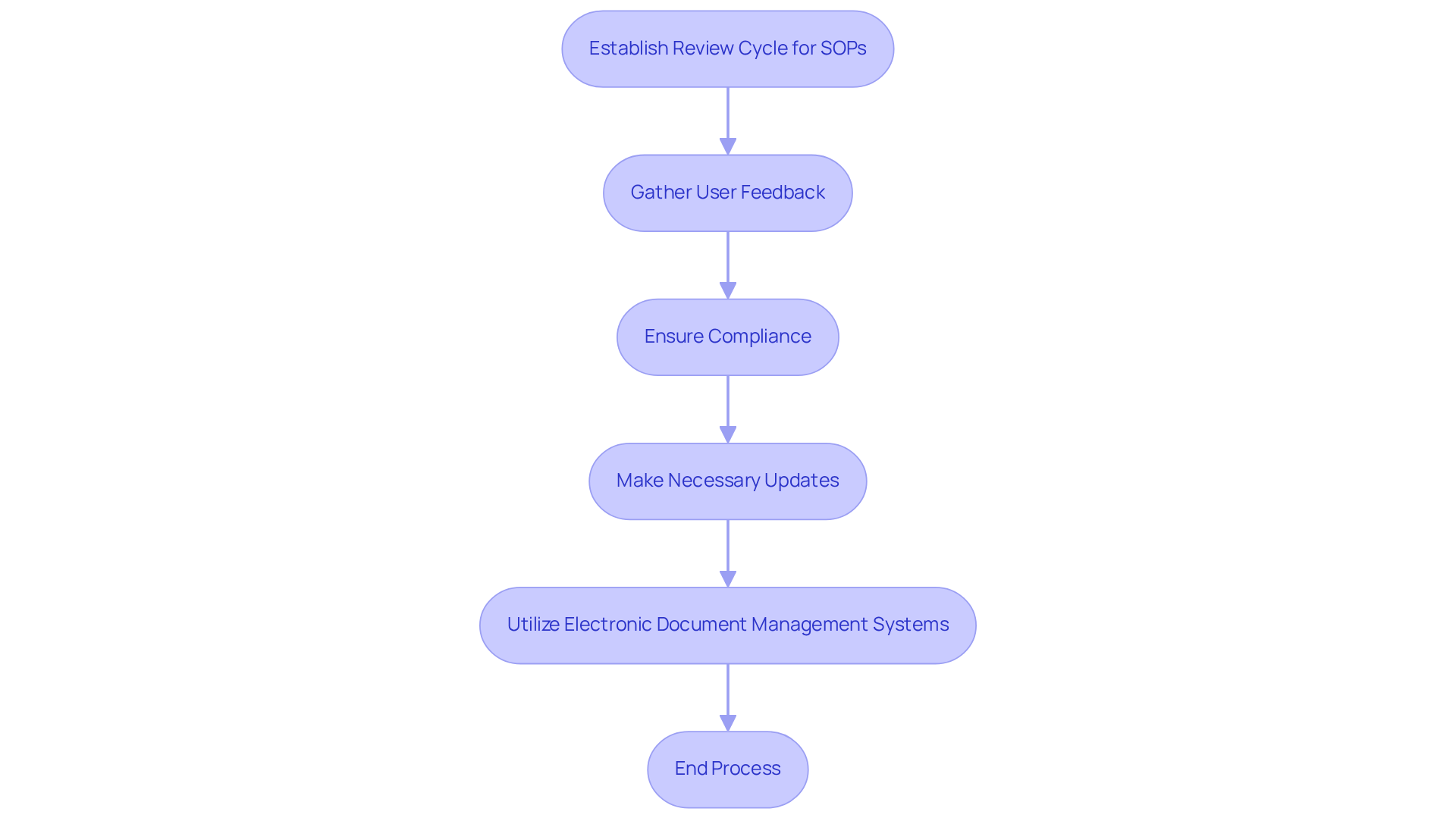
You might be wondering how healthcare entities can keep their hospital standard operating procedures fresh and effective. Well, it’s all about establishing a systematic evaluation and revision cycle - ideally every 6 to 12 months. And for those high-risk activities? You’ll want to check in even more often! This approach isn’t just about ticking boxes; it involves gathering user feedback, ensuring compliance with current regulations, and making necessary updates.
Speaking of updates, have you heard about electronic document management systems like SowFlow? They make creating and organizing documentation a breeze! Plus, SowFlow is free and can automatically alert your staff when it’s time to review those SOPs. This means everyone has access to the latest versions, simplifying your workflow. And let’s not forget the support services they offer, like onboarding and training in best practices, which can really help you implement a solid documentation system.
By prioritizing regular updates, healthcare facilities can significantly cut down on risks tied to outdated procedures. This isn’t just about compliance; it’s about improving patient safety and operational efficiency. For instance, a Texas hospital saw a 25% drop in regulatory violations over two years after they kicked off a thorough SOP review process. Dr. Cheryl Wibbens even points out that well-crafted SOPs are crucial for safety and consistency. So, what are you waiting for? Regular reviews are key!
Conclusion
Mastering hospital standard operating procedures (SOPs) is super important for achieving operational excellence in healthcare settings. You might be wondering why these procedures matter so much. Well, they not only standardize routine tasks but also boost safety, efficiency, and patient outcomes. By putting effective SOPs into action, hospitals can make sure they’re compliant with regulatory standards and build a culture of accountability among healthcare professionals.
Throughout our discussion, we’ve highlighted the key components of effective SOPs. Think about it:
- Clear purpose
- Detailed instructions
- Defined roles
- The importance of getting everyone involved
It’s also crucial to regularly review and update these procedures to keep them relevant and effective. And let’s not forget about tools like SowFlow, which have really stepped up the game in streamlining the documentation process, making SOPs even more effective.
Ultimately, committing to develop, implement, and maintain strong SOPs is vital for healthcare organizations that want to improve patient safety and operational efficiency. By prioritizing these practices, hospitals can not only cut down on errors and boost patient satisfaction but also create a resilient framework that supports continuous improvement in care delivery. Embracing these principles will pave the way for a more effective healthcare system, ensuring that quality care stays at the forefront of operations. So, what do you think? Are you ready to dive into the world of SOPs and see how they can transform your healthcare setting?
Frequently Asked Questions
What are hospital standard operating procedures (SOPs) in healthcare?
Hospital standard operating procedures (SOPs) are established guidelines for routine tasks in healthcare that help maintain consistency, safety, and high quality in operations.
Why are SOPs important in healthcare?
SOPs are crucial for ensuring compliance with regulations from bodies like the Joint Commission and CMS, enhancing operational efficiency, reducing errors, and improving patient outcomes.
How prevalent are SOPs in medical organizations?
Approximately 70% of medical organizations have implemented SOPs, indicating their recognition as significant tools in the healthcare industry.
What benefits can be observed from implementing SOPs in hospitals?
Implementing SOPs can lead to a significant reduction in errors, improved patient outcomes, quicker patient discharges, and increased patient satisfaction ratings.
Can you provide an example of the impact of SOPs on surgical procedures?
One medical institution experienced a 30% drop in surgical errors after implementing detailed guidelines for their surgical procedures.
How do SOPs contribute to the roles of healthcare professionals?
SOPs help clearly define roles and responsibilities, enabling healthcare professionals to perform their jobs effectively and fostering a culture of accountability and excellence.
What challenges can arise from using SOPs in healthcare?
A potential pitfall is that SOPs can sometimes be too generic, not aligning well with the specific workflows of a facility, which can hinder their effectiveness.
👍
What others are liking


5 Steps to outline your ideal documentation structure
5 MINS READ
Where to start the your journey of mapping out your ideal documentation structure, aligning it with the very heartbeat of your organization?
Defining a winning level of detail in your process
3 MINS READ
What is too much detail, and what is too little? This article described in that winning level detail about what detail is enough.


