


Key Highlights
- Documentation is essential for ensuring team members have access to clear and consistent information.
- Effective documentation reduces time spent on repetitive tasks and enhances focus on strategic initiatives.
- Onboarding new team members is streamlined with well-documented procedures, improving their integration into the team.
- A McKinsey study reveals that workers spend an average of 1.8 hours daily searching for information, highlighting the need for accessible records.
- Organisations can lose up to 21.3% of efficiency due to document-related issues, emphasising the importance of solid record-keeping practises.
- Clear documentation outlines roles and responsibilities, fostering a culture of accountability within teams.
- Fragmented systems can lead employees to waste up to 60% of their time searching for documents.
- Regularly updated documentation minimises errors, enhances collaboration, and conserves resources.
- Challenges of poor documentation include miscommunication, knowledge silos, and reliance on outdated records.
- Implementing centralised repositories and regular reviews of documentation helps maintain data quality and operational efficiency.
Introduction
You might be wondering why effective documentation is such a big deal. Well, it’s the backbone of team efficiency! Yet, surprisingly, many organizations overlook its transformative potential. When everyone has access to clear and consistent information, teams can streamline processes, cut down on misunderstandings, and boost productivity.
But here’s the kicker: how do teams tackle the hurdles of poor record-keeping and outdated practices to really tap into the benefits of documentation? This article dives into the crucial role that effective documentation plays in enhancing team performance. We’ll explore common challenges and share some best practices that can foster collaboration and success. So, let’s get started!
Understand the Importance of Documentation for Team Efficiency
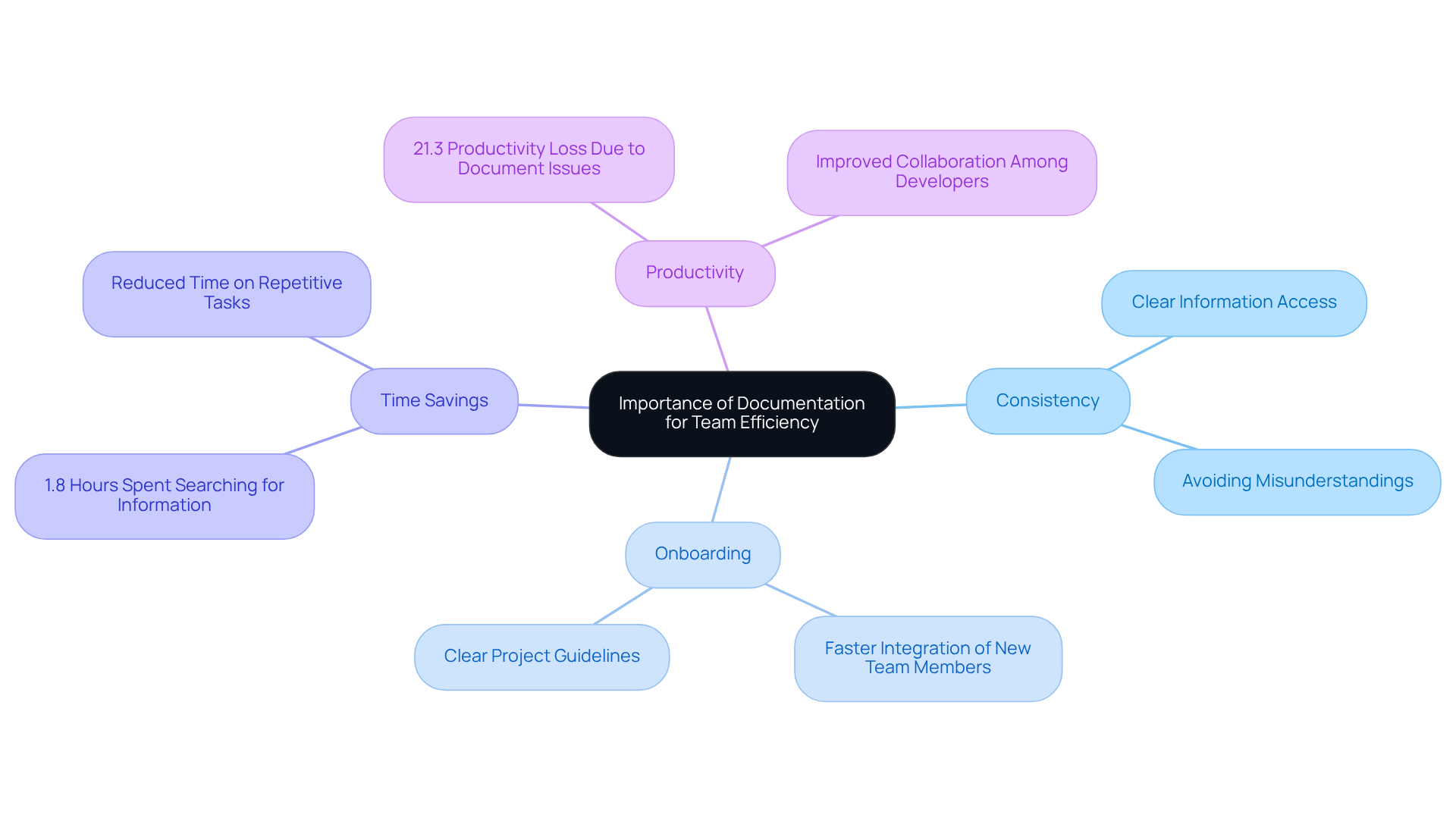
You might be wondering why documentation is such a big deal for group operations. Well, it’s the backbone that helps to describe the benefits of documentation by ensuring everyone has access to the same clear information. This consistency is key for keeping processes straightforward and avoiding those pesky misunderstandings. By jotting down workflows, teams can cut down on the time spent on repetitive tasks, allowing them to focus on more strategic initiatives.
Now, think about onboarding new team members. Effective record-keeping can help describe the benefits of documentation by making it a breeze for them to get up to speed with established procedures. For instance, in a software development environment, having a well-documented codebase and clear project guidelines can seriously slash troubleshooting time and boost collaboration among developers.
Did you know that, according to a McKinsey study, workers spend an average of 1.8 hours each day just searching for information? That really highlights how crucial it is to have easily accessible records to cut down on that time. Plus, organizations that embrace solid record-keeping practices can actually reduce productivity losses. IDC research even suggests that businesses can lose up to 21.3% of their efficiency due to document-related issues.
By prioritizing documentation, teams can effectively describe the benefits of documentation, as they ramp up their operational efficiency and foster a culture of continuous improvement and adaptability. As freelance writer Catherine Heath puts it, "It conserves resources, minimizes errors, and enhances collaboration." That really sums up the diverse benefits of effective record-keeping!
Explore Key Benefits of Documentation for Team Performance
You might be wondering how effective documentation can help to describe the benefits of documentation in boosting your team's performance. Well, it turns out that having easy access to information makes a world of difference! When team members can quickly find what they need, it not only saves time but also builds a culture of accountability. Clear documentation serves to describe the benefits of documentation by outlining roles and responsibilities, so everyone knows what’s expected of them.
Take a marketing group, for example. When they carefully document their campaign strategies, they can easily describe the benefits of documentation by looking back at what worked and what didn’t. This kind of analysis leads to smarter decisions in future projects. Plus, keeping good records helps to describe the benefits of documentation as a fantastic training resource. It helps teams grow while keeping essential knowledge intact.
Did you know that organizations that describe the benefits of documentation with centralized records report a significant reduction in the time spent searching for information? In fact, employees in fragmented systems can waste up to 60% of their time just trying to find documents! By adopting efficient record-keeping practices - like using tools such as SowFlow - teams can stick to industry standards and regulations. This not only cuts down on errors but also creates a more organized work environment.
Anastasia Masadi, a Product Owner, puts it perfectly: "SowFlow has significantly enhanced our record-keeping process, allowing me to create SOPs and training materials without the hassle of taking separate screenshots. It has truly given me back valuable time in my life." So, why not explore how effective documentation can transform your team's workflow?

Identify Challenges Addressed by Effective Documentation
You might be wondering how inefficient records can really impact your team's effectiveness. Well, let’s dive into it! Miscommunication is a biggie, often popping up when team members interpret processes differently. This can lead to errors and duplicated efforts, which nobody wants, right? In fact, a staggering 85% of employees don’t feel confident about the accuracy of the information shared outside their teams. That’s a clear sign of the risks tied to poor record-keeping practices.
Now, think about it: when records aren’t clear, knowledge can get stuck in silos. Essential information might be locked away with just a few people, making it tough for others to access what they need. In project management, if timelines and responsibilities aren’t documented clearly, teams can easily miss deadlines. That’s a recipe for frustration and low morale!
And let’s not forget about outdated records. Relying on old information can lead teams down the wrong path, following practices that just don’t fit anymore. Did you know that nearly 80% of organizations struggle because of outdated digital technologies? It’s a real issue!
So, what can you do? By prioritizing effective record-keeping, you can describe the benefits of documentation, which include:
- Cutting down on miscommunication
- Streamlining processes
- Boosting overall productivity
That’s where SowFlow comes in! It offers a super simple way to create user guides, giving teams immediate access to updated materials. This not only cuts down on unnecessary meetings but also keeps everyone on the same page with the latest processes. In the end, it’s all about enhancing group efficiency!

Implement Effective Documentation Practices in Your Team
You might be wondering how to kick off effective record-keeping practices. Well, start by setting up a centralized repository that makes it super easy to access and update all your files. This way, you can say goodbye to those pesky information silos and hello to better data quality, which means smoother operations all around. With SowFlow, you can create user guides in a snap, allowing for quick updates that keep everything relevant in our fast-paced business world. Encourage your team to chip in regularly on the documentation, so it stays fresh and useful.
Using templates for common documents is a real time-saver and helps keep things consistent. For example, your project team could look at access frequency data to see which documents are getting the most love, and then prioritize updates for those. Speaking of keeping things current, don’t forget to schedule regular reviews of your records to catch any outdated content and make the necessary tweaks. A practical tip? Hold quarterly meetings to evaluate your records, ensuring all processes are up-to-date with the latest practices and compliance standards.
This proactive approach can really cut down on the time spent on support inquiries, which helps to describe the benefits of documentation by leading to fewer support tickets. Plus, SowFlow can help you avoid unnecessary meetings by giving everyone quick access to records, so they can find answers without the back-and-forth. And let’s not forget about training! Providing your team with guidance on documentation tools and best practices empowers them to create and maintain high-quality documents, boosting overall team efficiency.

Conclusion
You might be wondering why effective documentation is such a big deal. Well, it’s really the backbone of boosting team efficiency! When everyone’s on the same page and has access to clear, easy-to-understand records, misunderstandings drop, processes get smoother, and teams can focus on what really matters - strategic initiatives instead of getting bogged down in repetitive tasks. So, the takeaway here is that good documentation doesn’t just help operations run smoothly; it also builds a culture of collaboration and continuous improvement.
Throughout this article, we’ve touched on some pretty cool benefits of solid documentation. Think about it: less time spent hunting for information, better onboarding experiences, and the chance to look back at past projects to pave the way for future successes. Those stats about time wasted on finding info and the headaches caused by outdated records really drive home the point - adopting effective documentation practices is urgent! And tools like SowFlow? They can seriously change the game for how teams handle their documentation, boosting overall performance.
Now, let’s wrap this up. Embracing strong documentation strategies isn’t just another task on your to-do list; it’s a must for any team that wants to thrive in today’s competitive world. By tackling common documentation hurdles and putting best practices into action, organizations can see some major boosts in productivity and teamwork. So, here’s the call to action: make documentation a priority, and watch your team’s efficiency soar while driving success in everything you do!
Frequently Asked Questions
Why is documentation important for team efficiency?
Documentation is crucial for team efficiency as it ensures everyone has access to the same clear information, which helps maintain consistency, simplifies processes, and reduces misunderstandings.
How does documentation help with onboarding new team members?
Effective documentation makes it easier for new team members to understand established procedures, allowing them to get up to speed quickly, especially in environments like software development where clear project guidelines are essential.
What impact does poor documentation have on productivity?
Poor documentation can lead to significant productivity losses. A study by IDC suggests that businesses can lose up to 21.3% of their efficiency due to document-related issues.
How much time do workers spend searching for information, and why is this significant?
According to a McKinsey study, workers spend an average of 1.8 hours each day searching for information, highlighting the importance of having easily accessible records to reduce this time.
What are the overall benefits of prioritizing documentation in a team?
Prioritizing documentation can enhance operational efficiency, foster a culture of continuous improvement, conserve resources, minimize errors, and enhance collaboration among team members.
👍
What others are liking


5 Steps to outline your ideal documentation structure
5 MINS READ
Where to start the your journey of mapping out your ideal documentation structure, aligning it with the very heartbeat of your organization?
Defining a winning level of detail in your process
3 MINS READ
What is too much detail, and what is too little? This article described in that winning level detail about what detail is enough.


