

Knowledge Management through Documentation
|
April 29, 2026
|

How to Create a Playbook for Work: 4 Essential Steps
Key Highlights
- Define the playbook's purpose by identifying its audience and the specific challenges it addresses.
- Organisations with clear onboarding processes can improve employee retention by up to 82%.
- Conduct an audit of current processes by identifying key activities, gathering existing documentation, evaluating effectiveness, and organising information.
- Outline the playbook structure with key sections like Introduction, Process Descriptions, and FAQs to guide content creation.
- Draught clear and concise instructions, incorporating visuals like flowcharts to enhance understanding and retention.
- Choose an appropriate platform for sharing the playbook, such as an intranet or cloud-based system, to improve accessibility.
- Communicate the launch effectively to emphasise the playbook's purpose and benefits to the team.
- Provide training sessions to familiarise staff with the playbook, leading to increased productivity.
- Gather user feedback post-implementation to identify improvement areas and keep the playbook relevant.
Introduction
You might be wondering why creating a playbook for work is so important. Well, it’s not just about jotting down processes; it’s about crafting a strategic tool that boosts productivity and streamlines operations. This guide lays out four essential steps that help organizations:
- Define their objectives
- Audit existing workflows
- Compile clear instructions
- Implement their playbook effectively
But here’s the kicker: how can teams make sure their playbook evolves alongside their organization? It’s crucial to keep it relevant and beneficial over time. So, let’s dive into how you can tackle this challenge!
Define the Purpose of Your Playbook
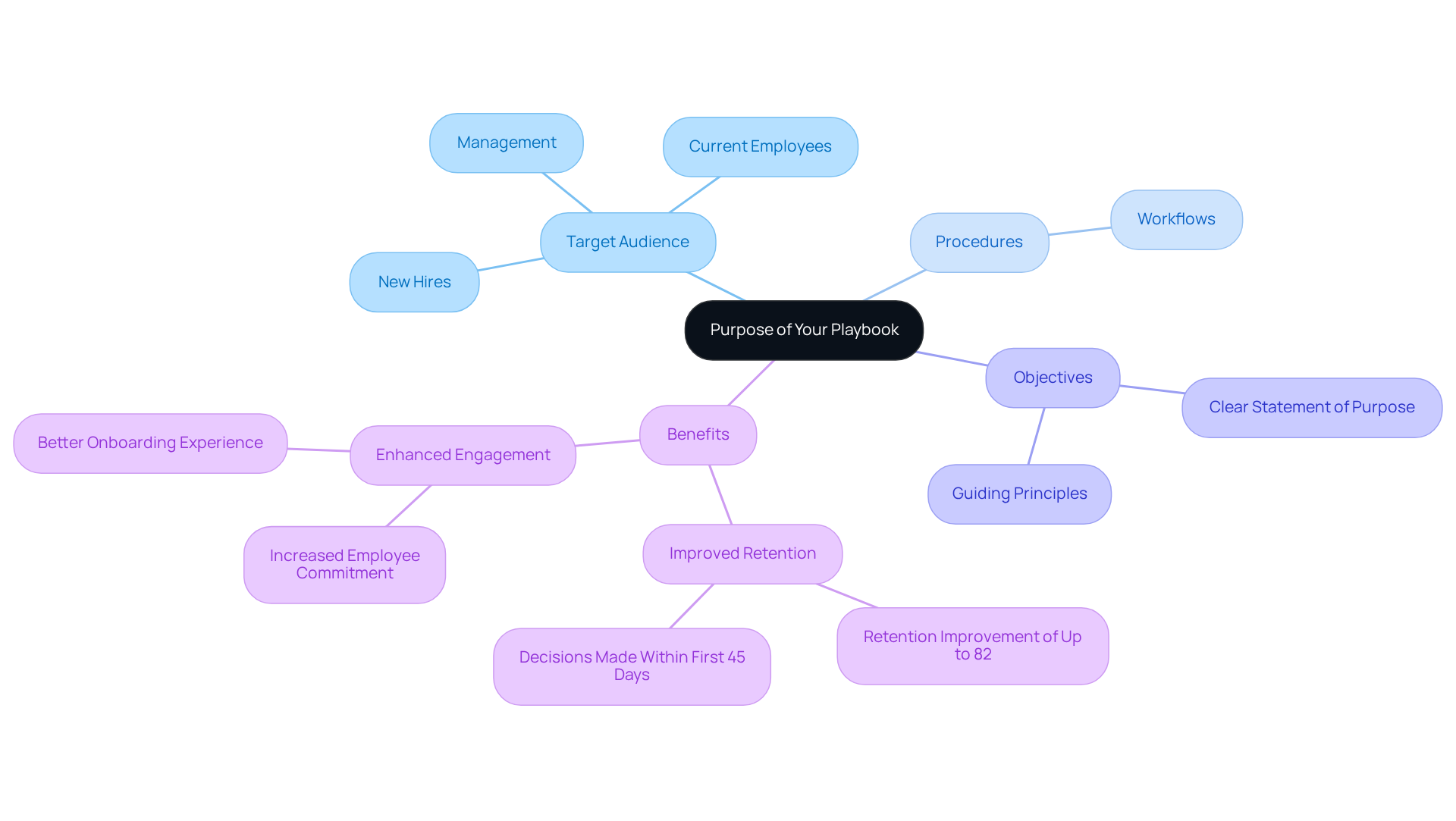
Creating your strategy guide? Let’s start by figuring out its purpose. You might be wondering: to tackle ? Who’s it for - new hires, current employees, or maybe management? And what procedures or workflows will it cover?
Jotting down these insights in a clear statement will help summarize your strategy’s objectives. Think of it as your guiding principle throughout the development phase. This clarity not only keeps everything relevant and focused but also makes the so much better. Did you know that organizations with well-defined can see ? That’s because employees often decide whether to stick around for the long haul within their first 45 days.
By setting , operations managers can learn that boosts engagement and makes transitions smoother for new hires. This ultimately leads to a . , we see documentation as a system that integrates into your organization, assigning clear responsibilities and ownership. This way, your strategy isn’t just a one-off project; it’s a living document that evolves and stays current, paving the way for a more scalable organization.
So, what do you think? Ready to dive into that really works?
Audit and Organize Existing Processes
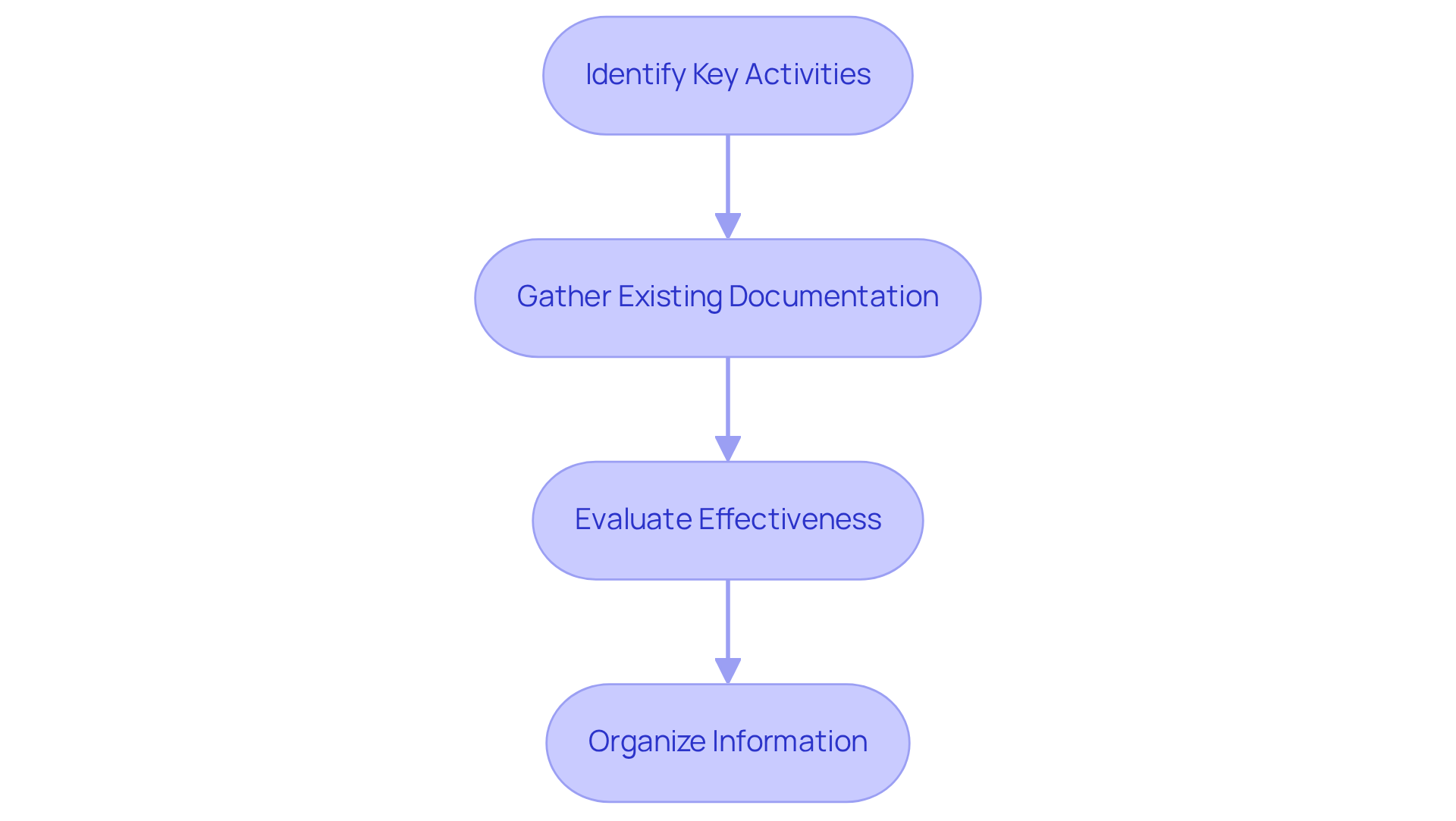
Are you looking for how to ? Let’s start with a solid audit of your current processes. Here’s how you can tackle it:
- : First things first, make a list of all the tasks that matter for your playbook's goals. This foundational step is crucial because it helps you zero in on the most important areas.
- : Next up, collect all the relevant documents you have - think and guidelines. With SowFlow, you can whip up and update in no time, keeping your documentation fresh and easy to find.
- : Now, let’s take a good look at how well these methods are working. Are there any bottlenecks or inefficiencies slowing you down? SowFlow’s can help you simplify standardization, making it a breeze to spot areas that need a little love.
- : Finally, it’s time to categorize your processes based on how relevant and significant they are to your guide. This structured approach not only makes compiling everything easier but also boosts the clarity and usability of your final document.
By prioritizing these steps, you’ll be on your way to understanding how to that is not just useful but also drives continuous improvement in your operations. So, what do you think? Ready to dive in?
Compile and Structure Your Playbook
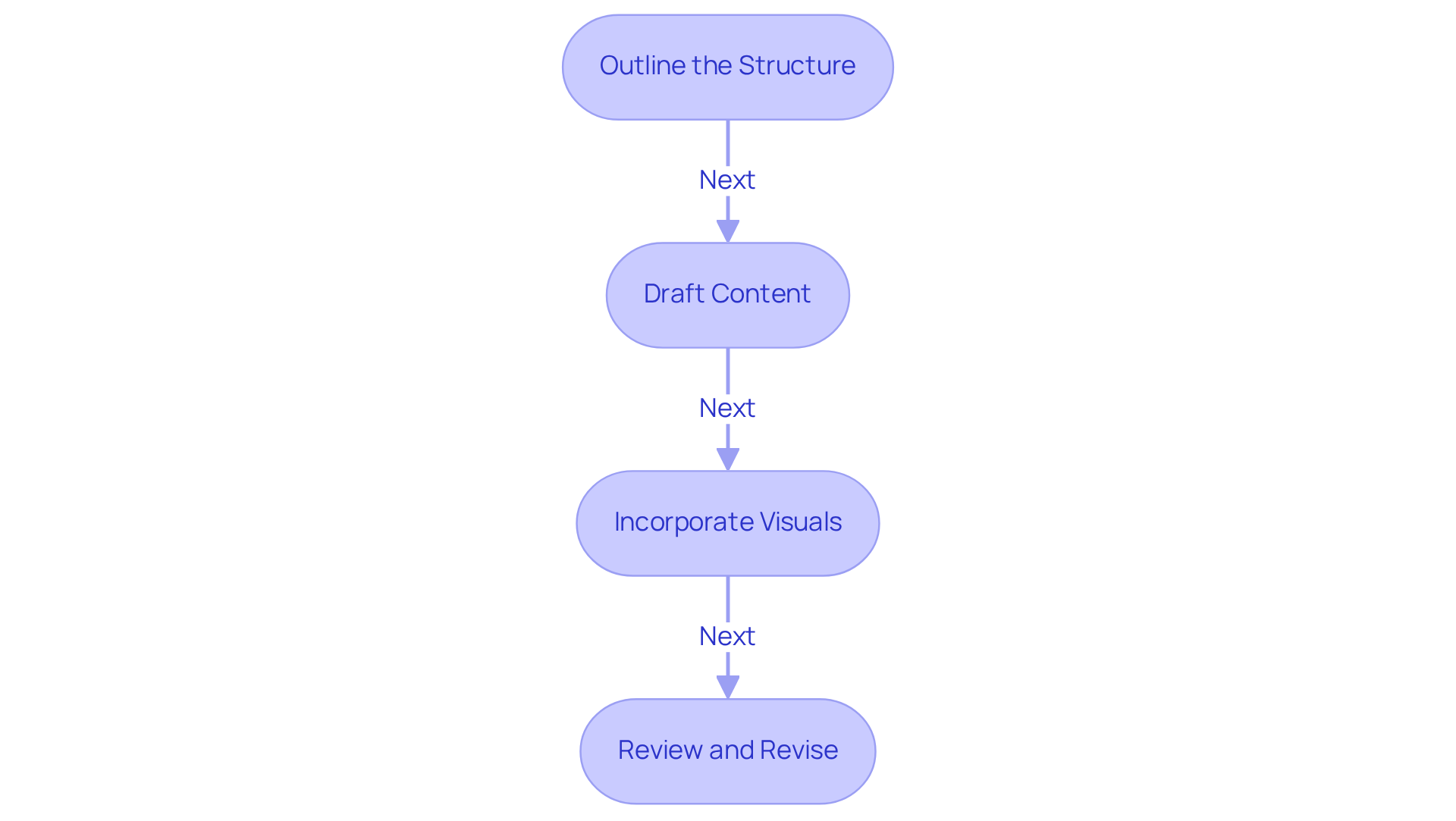
Now that you’ve wrapped up your audit, it’s time to understand how to . You might be wondering how to , right? Let’s break it down:
- Outline the Structure: Kick things off with a solid outline. Think about including , Process Descriptions, Roles and Responsibilities, and FAQs. This framework is your roadmap, guiding you on how to while ensuring you cover all the bases.
- Draft Content: For each section, aim for . Use bullet points, diagrams, and examples to make things easier to grasp. Research shows that and knowing how to can really , so clarity in your instructions is a must!
- Incorporate Visuals: Ever thought about adding flowcharts or infographics? They can really help . Studies suggest that visuals can enhance retention and understanding by up to 65%! Not only does this approach clarify things, but it also keeps users engaged.
- Review and Revise: Once you’ve got a draft, share it with your stakeholders for feedback. This is super important - it helps catch any unclear points or mistakes, ensuring your final document is spot on. Remember, is essential for understanding how to create a playbook for work. Organizations with often find they can recover lost productivity and achieve better business outcomes.
Share and Implement Your Playbook
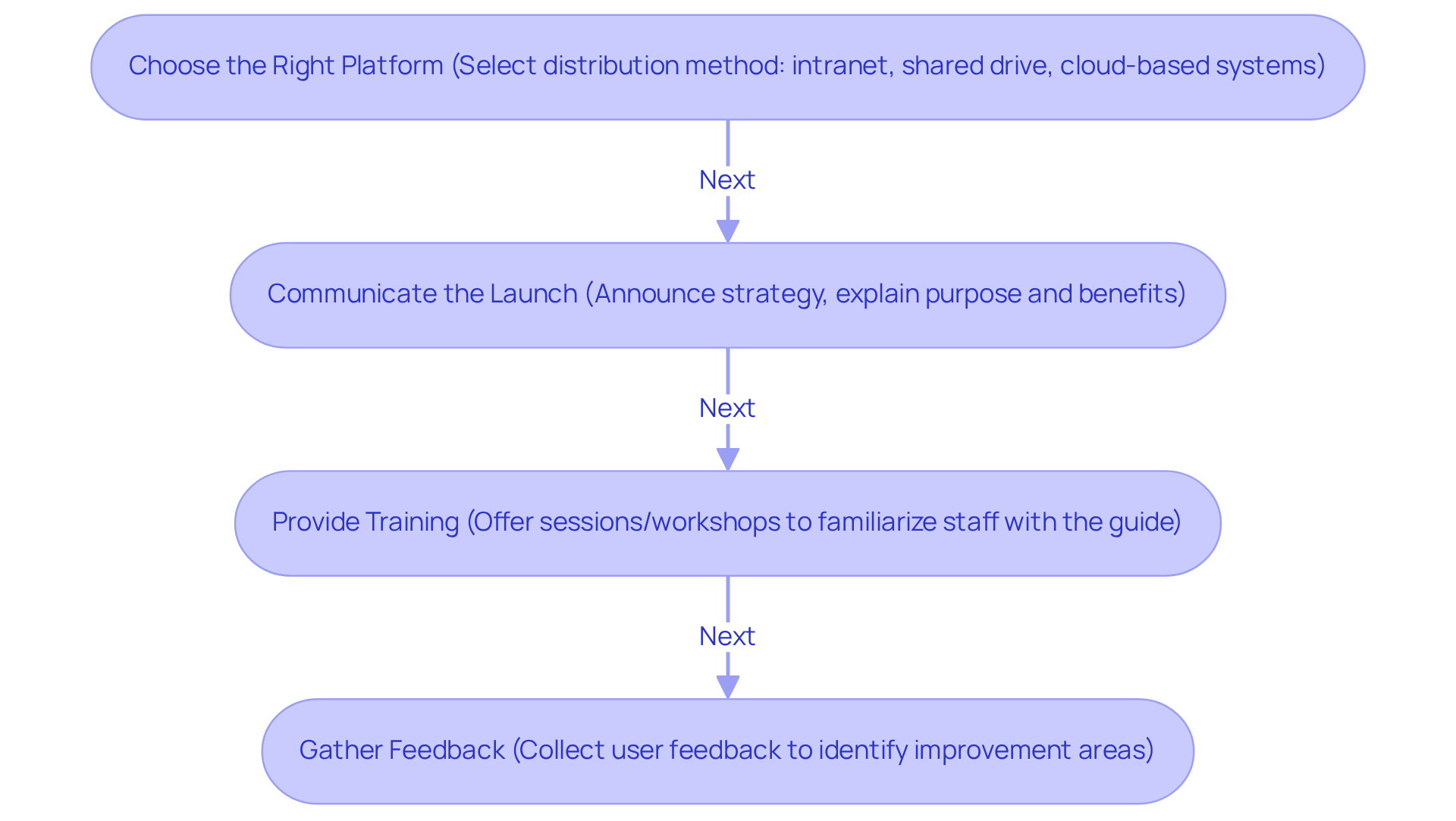
Once your playbook is ready to go, let’s talk about how to share and implement it effectively:
- Choose the Right Platform: You might be wondering where to put your guide. Think about the best way to distribute it - maybe an intranet, a shared drive, or even printed copies. Using can really boost accessibility and collaboration. In fact, 89% of companies say they see with these platforms.
- Communicate the Launch: Now, it’s time to announce your strategy to the team. Make sure to clearly explain its purpose and the benefits it brings to their work. Remember, is key! A whopping 94% of staff consider company policies, so clarity in your messaging is super important.
- : How about offering some training sessions or workshops? This is a great way to help your staff get familiar with the guide and understand how to for work. Research shows that companies with solid see a 218% increase in income per employee. That really highlights why investing in workforce development is a smart move!
- : After you’ve rolled it out, don’t forget to ask for feedback from users. This helps you spot areas that might need improvement. Keeping those feedback loops open is crucial - 76% of employees are more likely to stick around when they have . This way, your playbook stays relevant and effective!
Conclusion
Creating an effective playbook for work isn’t just a task; it’s a strategic move that can really boost your organization’s efficiency and keep employees engaged. You might be wondering how to make sure your playbook is a go-to resource for both new hires and current team members. By clearly defining its purpose and objectives, you can foster a more productive work environment that everyone benefits from.
Throughout this article, we’ve covered some essential steps, like:
- Auditing existing processes
- Compiling and structuring content
- Implementing the playbook effectively
Each phase highlights the importance of clarity, organization, and communication. Engaging stakeholders in the review process and gathering feedback after implementation can help you continuously refine your playbook, ensuring it stays relevant and effective.
Now, let’s talk about why a well-structured playbook is crucial. In a time when effective onboarding and streamlined processes are key to keeping employees happy and productive, you can’t afford to overlook this. Embracing these steps not only enhances operational efficiency but also nurtures a culture of continuous improvement and learning. So, why wait? Take action now and harness the power of a playbook to empower your teams and drive sustained success!
Frequently Asked Questions
What is the first step in creating a playbook for work?
The first step is to define the purpose of the playbook by determining its objectives, target audience, and the specific procedures or workflows it will cover.
Why is it important to have a clear purpose for the playbook?
A clear purpose helps summarize the strategy’s objectives, keeps the development focused and relevant, and enhances the onboarding experience for new hires.
How can a well-defined onboarding process impact employee retention?
Organizations with well-defined onboarding processes can see retention improvements of up to 82%, as employees often decide whether to stay within their first 45 days.
What benefits can operations managers gain from creating a playbook?
Operations managers can create a playbook that boosts engagement and makes transitions smoother for new hires, ultimately leading to a more productive workforce.
How does SowFlow view documentation in relation to the playbook?
SowFlow views documentation as a system that integrates into the organization, assigning clear responsibilities and ownership, making the strategy a living document that evolves and remains current.
List of Sources
- Define the Purpose of Your Playbook
- 30+ Employee Onboarding Statistics & Best Practices for 2026 (https://archieapp.co/blog/employee-onboarding-statistics)
- Onboarding Your Next Hire: A Playbook for Optimizing Success (https://spiresearchpartners.com/onboarding-playbook-for-impact)
- 22 Employee Onboarding Statistics for 2026 | Thirst (https://thirst.io/blog/22-employee-onboarding-statistics-for-2026-every-ld-leader-should-know)
- 15 employee onboarding stats you’ll need in 2024 and why (https://blog.leena.ai/15-employee-onboarding-stats-youll-need-in-2024-and-why)
- 80 Employee Onboarding Statistics You Should Know in 2025 (https://key-g.com/ru/blog/80-employee-onboarding-statistics-you-should-know-in-2025)
- Audit and Organize Existing Processes
- comidor.com (https://comidor.com/news/industry-news/bpm-statistics)
- flowforma.com (https://flowforma.com/blog/business-process-automation-statistics)
- Key Business Process Management Statistics You Should Know | Automated Dreams (https://automateddreams.com/blog/key-business-process-management-statistics)
- Top Business Process Management Stats to Help You Add Efficiency in 2025 | Quixy (https://quixy.com/blog/business-process-management-stats)
- 47 Critical Process Improvement Statistics to Drive Change (https://quandarycg.com/process-improvement-statistics)
- Compile and Structure Your Playbook
- 13 Shocking Document Management Statistics Revealed! (https://theecmconsultant.com/document-management-statistics)
- Just the Numbers: 10 Document Management Stats You Need to Know (https://foxit.com/blog/just-the-numbers-10-document-management-stats-you-need-to-know)
- 11 Documentation Statistics to Make You Rethink Process in 2025 - Whale (https://usewhale.io/blog/documentation-statistics)
- 100 Document Management Statistics to Make You Rethink Your Processes in 2025 (https://filecenter.com/blog/document-management-statistics)
- zentao.pm (https://zentao.pm/blog/10-business-process-management-statistics-you-need-to-know-1157.html)
- Share and Implement Your Playbook
- 11 Documentation Statistics to Make You Rethink Process in 2025 - Whale (https://usewhale.io/blog/documentation-statistics)
- 100 Document Management Statistics to Make You Rethink Your Processes in 2025 (https://filecenter.com/blog/document-management-statistics)
- Employee Training Statistics, Trends, and Data in 2025 | Devlin Peck (https://devlinpeck.com/content/employee-training-statistics)
- Document Management Stats & Trends in Digital Era | Insights丨PDF Reader Pro (https://pdfreaderpro.com/blog/document-management-statistics)
- 98+ Employee Training Statistics That Will Blow Your Mind in 2025 - Teachfloor Blog (https://teachfloor.com/blog/employee-training-statistics)
👍
What others are liking


5 Steps to outline your ideal documentation structure
5 MINS READ
Where to start the your journey of mapping out your ideal documentation structure, aligning it with the very heartbeat of your organization?
Defining a winning level of detail in your process
3 MINS READ
What is too much detail, and what is too little? This article described in that winning level detail about what detail is enough.


