

Streamlined Onboarding Processes
|
April 29, 2026
|

Essential IT Offboarding Checklist for Operations Managers
Key Highlights
- Confirm the departing employee's last working day to avoid confusion.
- Notify relevant stakeholders, including HR, IT, and team members, about the departure date for a smooth transition.
- Schedule a meeting to discuss transition plans and clarify responsibilities among team members.
- Prepare a formal announcement to maintain transparency during the offboarding process.
- Facilitate knowledge transfer through handover meetings and comprehensive documentation of responsibilities.
- Encourage outgoing employees to share insights with successors to enhance understanding of their roles.
- Conduct exit interviews at a suitable time to gather honest feedback and identify areas for improvement.
- Ensure confidentiality during exit interviews to promote open dialogue and trust.
- Revoke system access and collect company assets on the employee's last day to secure sensitive information.
- Document all offboarding tasks for compliance and operational integrity.
- Finalise payroll, ensuring the final paycheck includes any owed vacation pay or bonuses to maintain employee satisfaction.
- Prepare necessary documentation for benefits continuation and communicate with finance for timely processing of final payments.
Introduction
You might be wondering how to navigate the tricky waters of employee departures. It can feel overwhelming, right? But don’t worry! This is a vital part of keeping your organization running smoothly and maintaining morale. An effective offboarding process is key - not just for protecting sensitive information, but also for ensuring that knowledge transfer and workload handover happen without a hitch.
So, how can you make sure every step of this process goes off without a hitch? And what should you watch out for to avoid security threats and compliance issues? This article is here to help! We’ve put together a handy checklist to streamline your offboarding process. With these tools, you’ll be well-equipped to foster a smooth transition and boost your workplace culture.
Confirm Departure Date and Notify Stakeholders
You might be wondering how to handle an smoothly with an . First things first, confirm their last working day with them. This step is crucial for clarity and helps avoid any confusion down the line.
Next up, make sure to notify all the relevant folks - HR, IT, and your team members - about the departure date. This way, everyone’s on the same page, and it sets the stage for a smooth transition. As Richard Branson wisely said, ", and they will take care of your business." It’s a great reminder of how important it is to during this process.
Now, let’s dive into scheduling a meeting with your team. This is a perfect opportunity to discuss and ensure everyone knows their responsibilities and expectations. You want to keep things running smoothly, right?
If necessary, prepare a in accordance with the for the organization. Transparency is key here! Did you know that 76% of IT leaders say, ""? That just goes to show how vital is during this time.
Lastly, remember to keep all communications . This approach not only fosters a positive atmosphere but also helps maintain morale throughout the transition.

Facilitate Knowledge Transfer and Workload Handover
You might be wondering how to make handover meetings smoother when someone leaves your team. Well, arranging those meetings between the outgoing staff member and their successor or relevant is a great start! This way, you can ensure a .
Now, let’s talk about documentation. It’s super helpful to jot down and ongoing projects in a . This allows the incoming team member to easily access and understand what’s going on. Plus, it is essential to create a detailed of tasks to complete before the staff member’s last day. You don’t want to overlook any critical steps, right?
Encouraging the leaving staff member to share their can really enhance the successor’s understanding and effectiveness. Speaking of that, have you tried using SowFlow’s ? They’re perfect for capturing processes and workflows, giving future a handy reference point and keeping operations running smoothly.
This approach not only streamlines the but also includes an to cut down on unnecessary meetings. With all the essential information readily available, everyone can stay on the same page!

Conduct Exit Interview and Gather Feedback
You might be wondering how to set up an that really works. First off, it’s best to arrange it at a time that suits the departing staff member. Ideally, you’d want to do this a few days before they leave. This way, they can , without worrying about any backlash.
Next, think about preparing a structured list of open-ended questions. These should aim to get detailed responses, focusing on why they’re leaving and any . It’s all about getting to the heart of their experience.
Now, let’s talk about confidentiality. It’s super important to reassure staff that their feedback will be valued and kept private. This encourages honest and constructive dialogue. Just a heads-up, though: maintaining confidentiality can be tricky in smaller organizations, where anonymity might be harder to guarantee.
When you , make sure to record the insights carefully. This information can reveal trends related to and highlight areas where the organization can improve. Did you know that around 60% of companies conduct s? That just shows how common and crucial they are in managing talent.
Once you’ve gathered the feedback, share it with the relevant stakeholders. This can spark discussions about actionable steps to enhance and boost staff satisfaction. Not only does this help tackle current issues, but it also fosters a culture of continuous improvement. As seen in various case studies, understanding why staff leave can lead to better retention strategies.

Revoke System Access and Collect Company Assets
You might be wondering how to handle the when a staff member leaves. First things first, it’s super important to compile a and accounts they have access to. You don’t want to overlook any access points, right?
Now, let’s talk about coordinating with IT. It’s crucial to revoke access to all company systems on the individual’s last day. Timely action here is key to .
And what about company property? Make sure to arrange for the like laptops, phones, and access cards. This helps and keeps everything secure.
You’ll also want to ensure that all is locked down. This might mean archiving or deleting user accounts as needed to protect against data breaches.
Finally, don’t forget to in the ! It’s essential for compliance purposes. Did you know that only 20% of organizations consistently document compliance tasks? and operational integrity. So, let’s make sure you’re part of that 20%!
By following these steps, you’ll not only protect your organization but also make the for everyone involved.

Finalize Payroll and Provide Required Documentation
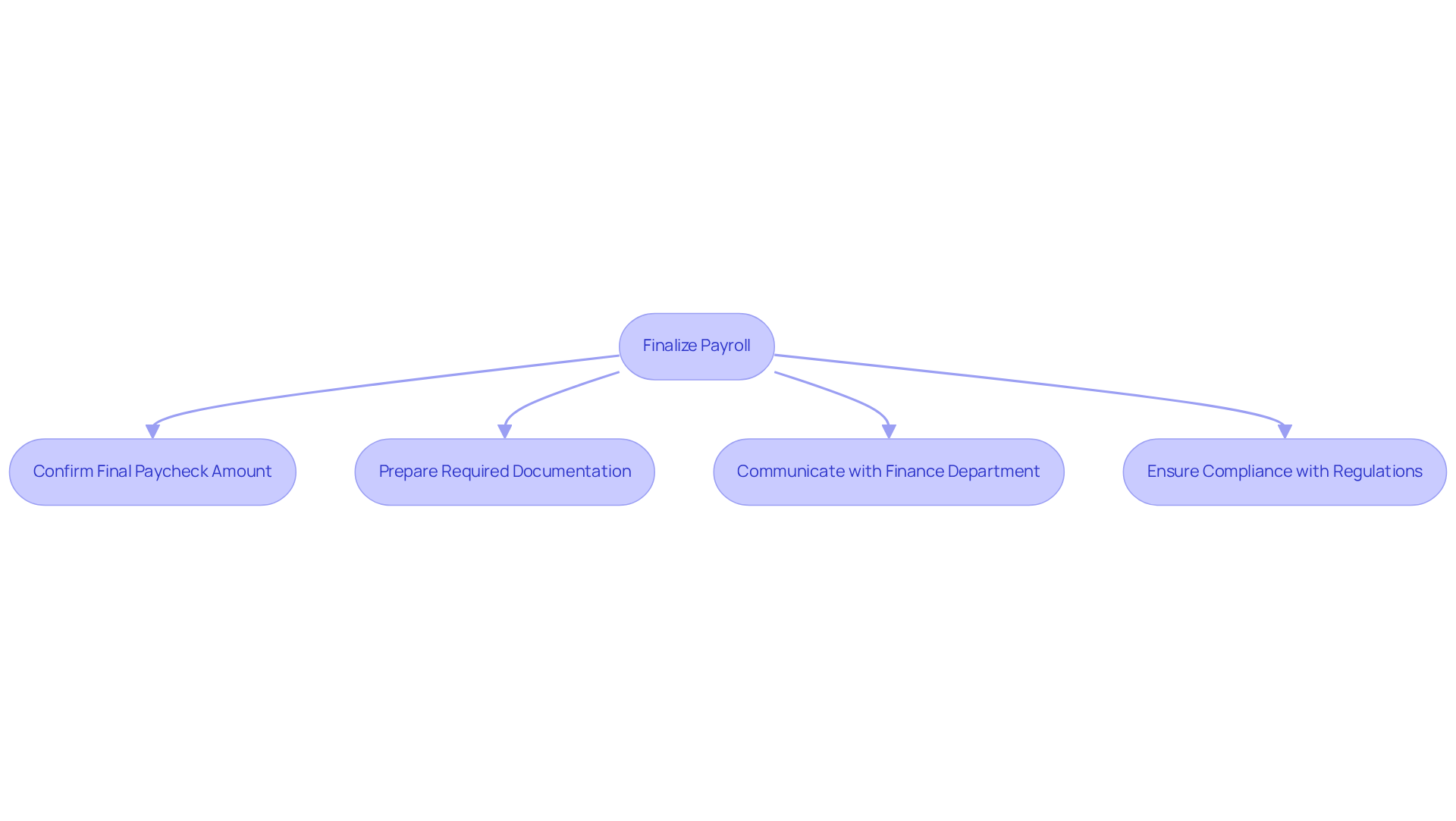
You might be wondering about the amount, right? It’s super important to confirm that it includes any outstanding vacation pay or bonuses. After all, payment errors can really dampen the spirits of departing staff - . And get this: 1 in 5 compensation cycles has errors, which means over half the workforce faces issues like delayed or incorrect payments. Not fun!
Now, let’s discuss the . You’ll want to prepare all the necessary documentation, like P45 forms, tax forms, and a full rundown of benefits information. It’s crucial to offer clear options for , such as COBRA. Many companies admit that only a fraction of departing staff actually receive this info. Imagine how much smoother things would go if we had a statistic showing how many companies provide details during offboarding!
Speaking of that, don’t forget to communicate with the finance department to ensure the gets processed on time. Delays in salary processing can really throw a wrench in things - , which can mess with their financial planning. Plus, U.S. companies rack up a whopping $4.5 billion each year in IRS penalties for not complying with tax regulations. That’s a hefty price for wage errors!
Lastly, ensure that all compensation tasks are documented in the and compliant with local regulations. Keeping accurate records is key to avoiding potential penalties, as . Proper documentation not only protects the organization but also builds trust with departing employees. So, let’s keep things smooth and friendly all around!
Conclusion
You might be wondering why a comprehensive IT offboarding checklist is so crucial for operations managers. Well, it’s all about making sure that when an employee leaves, everything goes smoothly for everyone involved. By following the steps laid out in the checklist, you can help ensure that both the departing employee and the rest of the team have a seamless experience. This not only protects company assets and data but also keeps morale high and fosters a positive workplace culture.
So, what are the key elements of the offboarding process? First up, confirming the departure date is essential. Then, there’s the knowledge transfer, which is super important for keeping things running smoothly. Don’t forget about effective exit interviews, revoking system access, and finalizing payroll. Each of these steps plays a vital role in reducing risks that come with employee departures and making sure you’re compliant with legal and organizational standards. By focusing on clear communication and thorough documentation, you can tackle potential challenges before they pop up.
Ultimately, investing time and resources into a solid offboarding strategy isn’t just about wrapping things up; it’s about setting the stage for future success. By emphasizing knowledge transfer and gathering feedback, you can improve retention strategies and strengthen your organizational culture. So, operations managers, it’s time to put these best practices into action and ensure your teams are ready for any transitions that come their way!
Frequently Asked Questions
What is the first step in handling an employee's departure?
The first step is to confirm the employee's last working day with them, as this provides clarity and helps avoid confusion.
Who should be notified about the employee's departure?
Relevant stakeholders such as HR, IT, and team members should be notified about the departure date to ensure everyone is informed and aligned.
Why is it important to schedule a meeting with the team during an employee's offboarding?
Scheduling a meeting is important to discuss transition plans and clarify responsibilities and expectations, ensuring a smooth continuation of work.
What should be included in a formal announcement regarding an employee's departure?
A formal announcement should be prepared in accordance with the organization's offboarding checklist, emphasizing transparency during the transition.
How can communication during the offboarding process affect team morale?
Keeping communications clear, respectful, and supportive fosters a positive atmosphere and helps maintain morale throughout the transition.
What is the purpose of facilitating knowledge transfer and workload handover?
Facilitating knowledge transfer and workload handover ensures a seamless transition of responsibilities between the outgoing staff member and their successor or relevant team members.
How can documentation assist in the offboarding process?
Documenting key responsibilities and ongoing projects in a shared format allows the incoming team member to easily access and understand the current work situation.
What role does an offboarding checklist play in the process?
An offboarding checklist helps ensure all critical tasks are completed before the staff member's last day, minimizing the risk of overlooking important steps.
How can the outgoing staff member contribute to the transition?
The outgoing staff member can share valuable insights and tips about their role, enhancing the successor's understanding and effectiveness.
What tools can assist in capturing processes and workflows during offboarding?
Tools like SowFlow's advanced documentation tools can be used to capture processes and workflows, providing future team members with a handy reference point.
List of Sources
- Confirm Departure Date and Notify Stakeholders
- 100+ Employee teamwork quotes that motivate, unite, and inspire success (https://culturemonkey.io/employee-engagement/employee-teamwork-quotes)
- Zeiss Case Study: Offboarding Employees | Appical (https://appical.com/why-appical/customer-stories/zeiss)
- Employee Offboarding: Step-by-Step Procedure Guide (https://document360.com/blog/employee-offboarding)
- pockethrms.com (https://pockethrms.com/blog/hr-quotes)
- risepeople.com (https://risepeople.com/blog/30-hr-quotes-to-inspire-p-and-c-pros)
- Facilitate Knowledge Transfer and Workload Handover
- Offboarding checklist: 5 essential steps + free template | CharlieHR Blog (https://charliehr.com/blog/article/offboarding-checklist)
- Zeiss Case Study: Offboarding Employees | Appical (https://appical.com/why-appical/customer-stories/zeiss)
- Employee Offboarding: Best Practices for a Smooth Transition (https://myhubintranet.com/employee-offboarding)
- Conduct Exit Interview and Gather Feedback
- What Are Exit Interviews — and How Stay Interviews Help You Avoid Them (https://greatplacetowork.com/resources/blog/the-importance-of-exit-interviews-best-practices-for-gathering-actionable-feedback)
- Exit Interviews: A Trap for Honest Feedback | Claus Villumsen posted on the topic | LinkedIn (https://linkedin.com/posts/clausvillumsen_the-exit-interview-is-a-trap-the-company-activity-7376891313021087744-nhcK)
- The Importance and Benefits of Conducting Exit Interviews - Addison Group (https://addisongroup.com/insights/the-importance-and-benefits-of-conducting-exit-interviews)
- How to Conduct a Successful Exit Interview - NIJobs Recruiter News (https://nijobs.com/recruiters/recruiters-news/how-to-conduct-a-successful-exit-interview)
- Exit Interviews: The Best Case Study to Tackle Your Employee Retention Issues (https://prevuehr.com/resources/insights/exit-interviews-the-best-case-study-to-tackle-your-employee-retention-issues)
- Revoke System Access and Collect Company Assets
- Employee Offboarding: 5 Security Guidelines for a Remote Workplace | Zluri (https://zluri.com/blog/offboarding-employees-security-guidelines)
- Offboarding Process: Best Practices & Key Steps for HR (https://crazehq.com/blog/offboarding-process)
- Incident Response Statistics to Know in 2025 (https://jumpcloud.com/blog/incident-response-statistics)
- 20 Top Cybersecurity Quotes for 2020 (https://secureworld.io/industry-news/20-top-cybersecurity-quotes-for-2020)
- Finalize Payroll and Provide Required Documentation
- How Long Does Payroll Processing Take? | TechnologyAdvice (https://technologyadvice.com/blog/human-resources/processing-payroll)
- What These 100+ Payroll Statistics 2026 Tell About Payroll Risks (https://yomly.com/payroll-statistics)
- 23 Payroll Statistics in USA to Know: Key Trends & Insights (https://paystub.org/posts/payroll-statistics)
- 60+ Payroll Statistics and Trends for 2026 - SSR (https://selectsoftwarereviews.com/blog/payroll-statistics)
👍
What others are liking


5 Steps to outline your ideal documentation structure
5 MINS READ
Where to start the your journey of mapping out your ideal documentation structure, aligning it with the very heartbeat of your organization?
Defining a winning level of detail in your process
3 MINS READ
What is too much detail, and what is too little? This article described in that winning level detail about what detail is enough.


