


Key Highlights:
- Key components of HR policies include recruitment, employee conduct, compensation, leave, health and safety, and diversity.
- Involving stakeholders in policy development fosters ownership and increases the likelihood of successful implementation.
- HR guidelines should reflect company culture and use appropriate language to enhance relatability and acceptance.
- Legal compliance is essential to mitigate risks and protect the organisation from potential legal challenges.
- Aligning HR policies with organisational goals enhances relevance and promotes a positive workplace culture.
- Policies should be drafted in clear, plain language, with specific expectations and examples to facilitate understanding.
- Regular review and update schedules are crucial for maintaining effective HR guidelines and adapting to legal changes.
- Collecting employee feedback can improve engagement and satisfaction, leading to lower turnover rates.
Introduction
Creating a comprehensive human resources policy and procedure manual is super important for any organization that wants to build a productive and compliant workplace. You might be wondering how to tackle this daunting task. Well, this guide breaks it down into four essential steps, giving you insights into key components that not only meet legal requirements but also boost employee satisfaction and engagement.
But here’s the catch: customizing these policies to fit your organization’s unique culture and needs can be a bit tricky. So, how can companies make sure their HR guidelines are effective and relatable? And how do they stay adaptable to the ever-changing landscape of labor laws and employee expectations? Let’s dive into this together!
Identify Key Components of HR Policies and Procedures
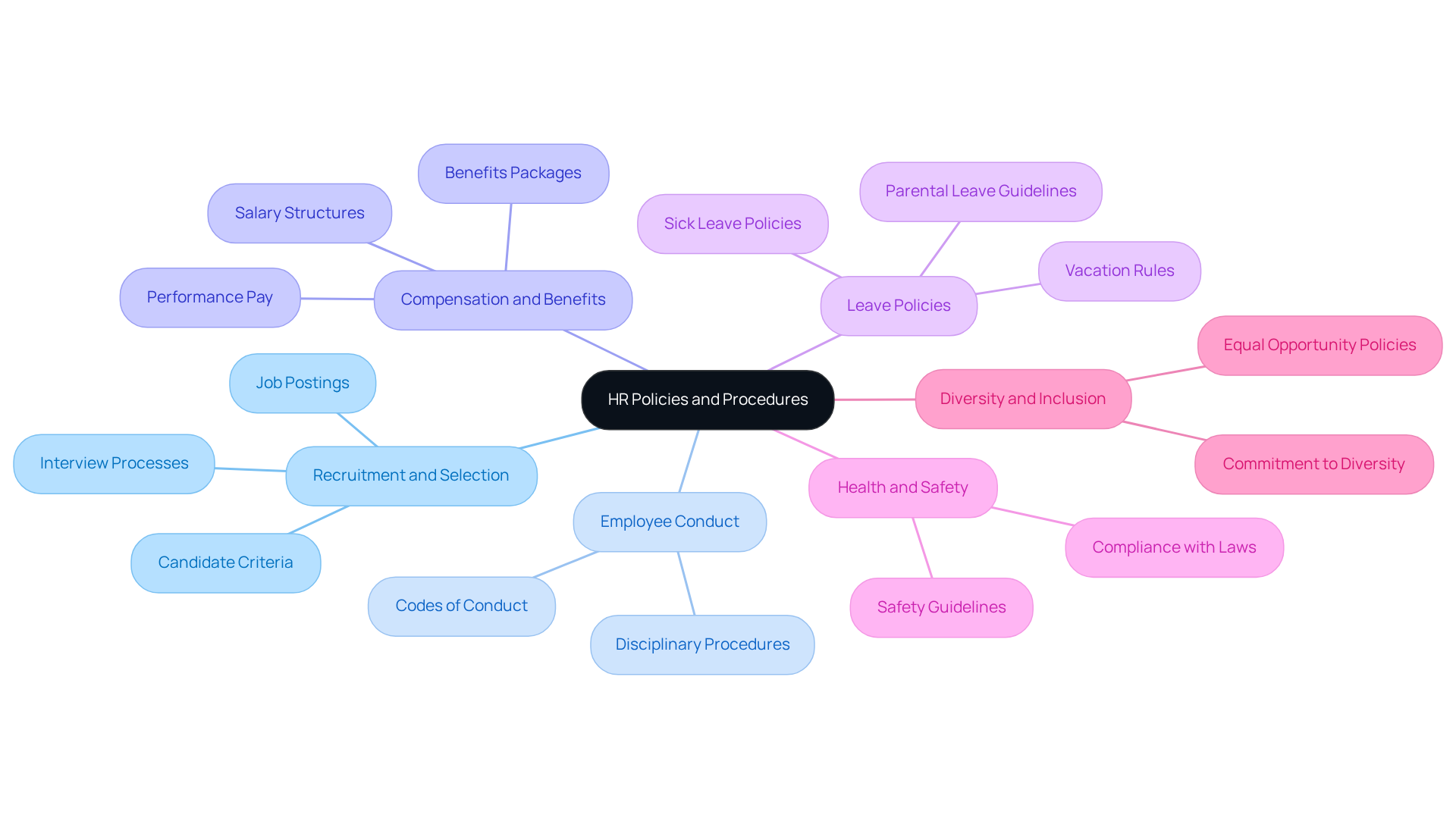
Creating a solid human resources policy and procedure manual? You might be wondering where to start. Well, let’s break it down into some key components that are essential for your organization.
-
Recruitment and Selection Policies. This is where you outline how you’ll bring new talent on board - think job postings, interviews, and what criteria you’ll use to pick the right candidates.
-
Employee Conduct Guidelines. It’s important to define what acceptable behavior looks like in your workplace. This includes codes of conduct and how you’ll handle any disciplinary issues that might pop up.
-
Compensation and Benefits. Here, you’ll want to detail your salary structures, benefits packages, and any performance-related pay. It’s all about keeping your team happy and motivated!
-
Leave Policies. Specify the rules around vacation, sick leave, parental leave, and any other types of absence. Everyone needs a break sometimes, right?
-
Health and Safety Regulations. You’ll want to ensure compliance with local laws and provide guidelines for keeping your work environment safe.
-
Diversity and Inclusion Policies. Promoting an inclusive workplace is key, so outline your commitment to diversity and equal opportunity.
By clearly defining these components, you’re establishing a strong foundation for your human resources policy and procedure manual. This way, you’ll not only meet legal requirements but also cater to your organization’s needs. So, ready to dive in and create a manual that works for you?
Customize Policies to Fit Organizational Needs
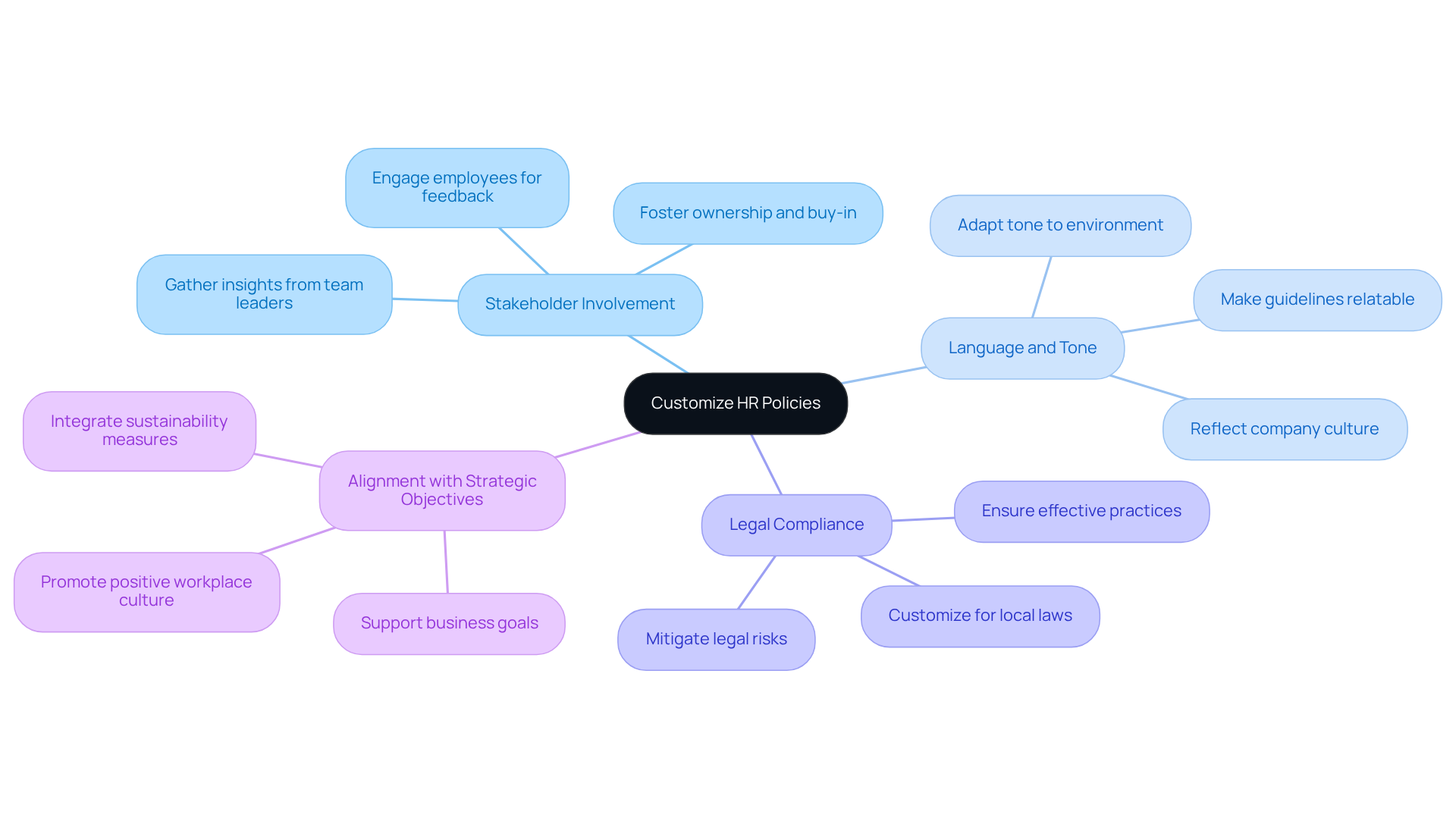
You might be wondering how to effectively tailor your HR guidelines. Well, it all starts with involving key stakeholders throughout the process. When you bring in team leaders and employees, you not only gather valuable insights but also foster a sense of ownership and buy-in. This buy-in is crucial for successful implementation! Did you know that organizations that actively involve stakeholders are 30% more likely to succeed with new initiatives? That really emphasizes the importance of collaboration in strategy development.
Now, let’s talk about the language and tone of your guidelines. It’s super important that they reflect your company culture. For example, if you’re in a tech startup, a casual tone might work best. On the other hand, a traditional corporate environment might call for something more formal. This alignment makes your guidelines more relatable and accepted by staff. And here’s a fun fact: 74% of workers believe that organizational culture is the primary factor for job satisfaction. So, incorporating this into your practices? Absolutely crucial!
Legal compliance is another biggie. You’ll want to customize your guidelines to comply with local labor laws and regulations. This ensures they’re not just effective but also legally sound. It’s all about mitigating risks and protecting your organization from potential legal challenges. Companies that don’t align their HR practices with legal requirements can face some serious repercussions, including costly litigation. Yikes!
Finally, let’s align your HR guidelines with your organization’s strategic objectives. If sustainability is a priority for your company, think about integrating measures that encourage environmentally friendly practices. This alignment not only strengthens your business objectives but also shows your dedication to principles that resonate with staff, promoting a positive workplace culture. In fact, 52% of HR teams are prioritizing aligning HR strategy with business goals in 2025. That really underscores the relevance of this approach.
By tailoring your human resources policy and procedure manual in this way, you’re creating a manual that’s compliant, relevant, and engaging. Ultimately, this enhances staff satisfaction and retention!
Draft Clear and Accessible Policy Statements
When you're drafting the human resources policy and procedure manual, it’s essential to keep the content clear and easy to understand. So, let’s dive into some key guidelines you should follow:
-
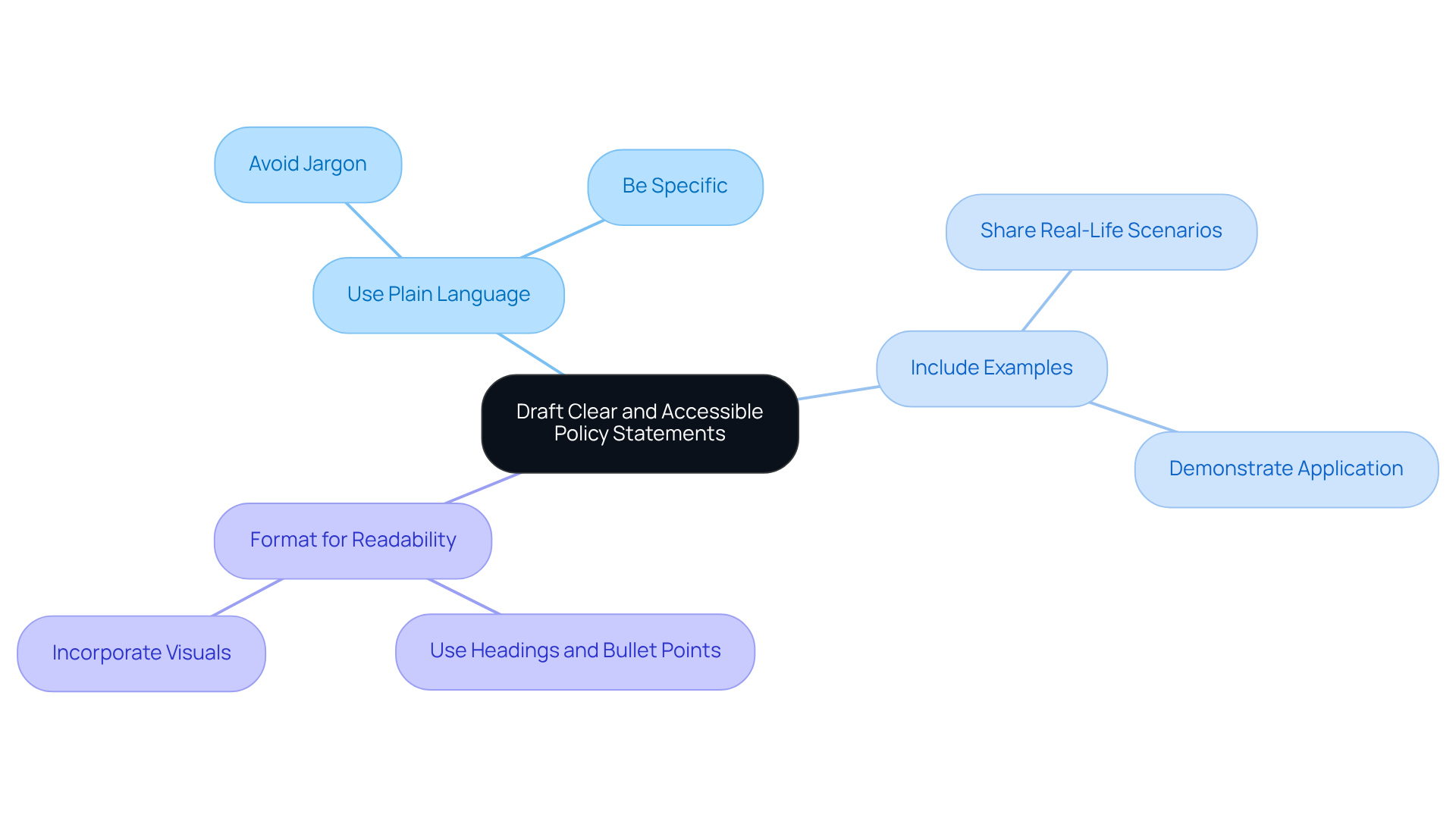
Use Plain Language: Ditch the jargon and complex terms. Write in a way that everyone can grasp easily. Did you know that 88% of staff feel their company doesn’t have a solid onboarding process? That just shows how crucial clear communication is right from the start! Be specific by clearly outlining what’s expected and the procedures tied to each guideline in the human resources policy and procedure manual. Instead of just saying 'staff must be punctual,' specify the exact time everyone should arrive. This kind of clarity helps cut down on confusion and builds accountability.
-
Include Examples: Share real-life scenarios to show how these guidelines should be put into action. This practical approach makes it easier for staff to relate to the guidelines and understand their importance.
-
Format for Readability: Use headings, bullet points, and short paragraphs to make your document easy to scan. Throwing in some visuals or infographics can also help break down complex info, catering to different learning styles.
By making sure your human resources policy and procedure manual is clear and accessible, you’re not just enhancing understanding - you’re also boosting adherence. This ultimately leads to a more organized and efficient workplace. So, what do you think? Ready to make your HR policies shine?
Establish a Review and Update Schedule
To keep your HR guidelines fresh and effective, it’s super important to set up a regular review and update schedule. You might be wondering how to do this effectively, right? Here’s a friendly guide to get you started:
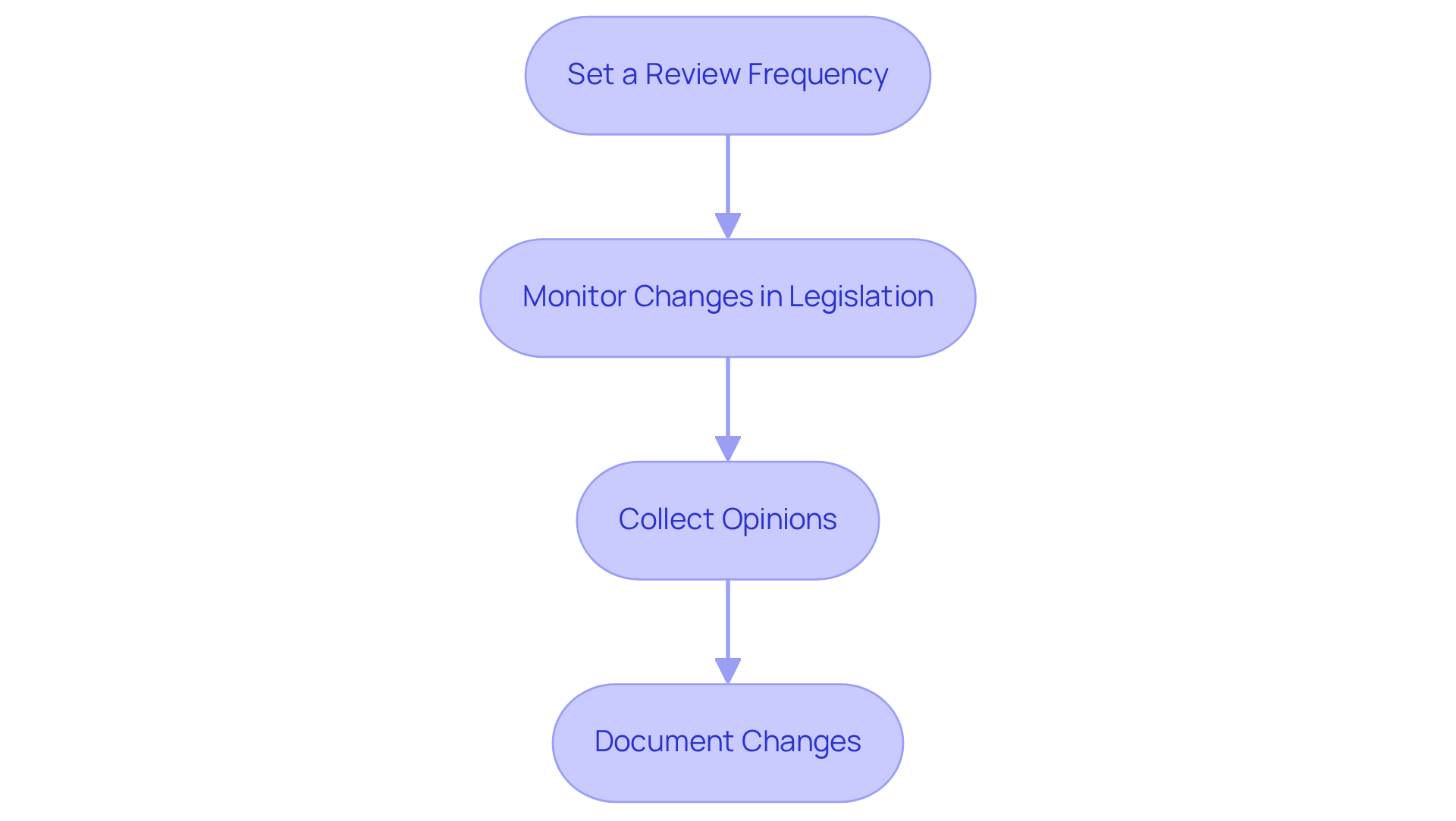
- Set a Review Frequency: First things first, decide how often you want to review your policies. While many folks go for an annual or biannual check-in, your specific needs might call for something different. Regular evaluations can really boost adherence and make operations run smoother.
- Monitor Changes in Legislation: Now, let’s talk about keeping an eye on changes in labor laws. Staying alert to these shifts is key! Organizations that tweak their guidelines in response to legal updates not only ensure compliance but also dodge risks tied to outdated practices. As we look ahead to 2025, many companies are already adjusting their HR practices to meet new legislative demands, showing just how dynamic the labor market can be. So, keeping tabs on these changes is essential for staying compliant and relevant.
- Collect Opinions: Have you thought about asking your staff for their thoughts on current regulations? Actively encouraging feedback can shine a light on areas that might need a little tweaking, and it helps create a culture where everyone feels included. Research shows that companies that involve employee feedback in decision-making enjoy higher engagement and satisfaction levels. In fact, those that provide regular feedback see turnover rates drop by 14.9%! That’s a big deal, right?
- Document Changes: Lastly, don’t forget to keep a detailed record of all updates to your guidelines. Make sure to note the review dates and reasons for any changes. This documentation is not just for compliance audits; it also shows your commitment to transparency and accountability.
By setting up a structured review and update schedule, you’re not just keeping your human resources policy and procedure manual effective; you’re also aligning it with the ever-evolving needs of your organization. This ultimately boosts employee engagement and enhances overall performance!
Conclusion
You might be wondering why creating a comprehensive human resources policy and procedure manual is so crucial for your organization. Well, it’s all about building a productive and compliant workplace! By pinpointing key components like:
- Recruitment
- Employee conduct
- Compensation
- Health and safety
you lay down a solid foundation. And let’s not forget, tailoring these policies to fit your unique culture and strategic goals makes them resonate with your team, boosting engagement and satisfaction.
Now, let’s talk about clarity and accessibility in drafting those policy statements. Using plain language, throwing in some examples, and formatting for readability are all essential strategies. They not only make understanding easier but also help everyone stick to the guidelines. Plus, setting a review and update schedule is super important for keeping your policies relevant and compliant with changing laws. This way, you’re not just ticking boxes; you’re fostering a more engaged workforce.
So, in a nutshell, developing an effective HR policy manual isn’t a one-and-done deal. It’s a dynamic process that needs your ongoing attention and adaptability. By focusing on collaboration, clarity, and regular updates, you can create a robust framework that meets legal requirements and supports a positive workplace culture. Taking action to implement these best practices can really amp up employee satisfaction and retention, paving the way for long-term success. Now, doesn’t that sound like a win-win?
Frequently Asked Questions
What are the key components of HR policies and procedures?
The key components include Recruitment and Selection Policies, Employee Conduct Guidelines, Compensation and Benefits, Leave Policies, Health and Safety Regulations, and Diversity and Inclusion Policies.
What should be included in Recruitment and Selection Policies?
Recruitment and Selection Policies should outline how new talent will be brought on board, including job postings, interview processes, and criteria for selecting candidates.
Why are Employee Conduct Guidelines important?
Employee Conduct Guidelines define acceptable behavior in the workplace and provide a framework for addressing disciplinary issues that may arise.
What details should Compensation and Benefits cover?
Compensation and Benefits should detail salary structures, benefits packages, and any performance-related pay to keep employees happy and motivated.
What should Leave Policies specify?
Leave Policies should specify the rules regarding vacation, sick leave, parental leave, and other types of absence to ensure that employees understand their entitlements.
Why are Health and Safety Regulations necessary in HR policies?
Health and Safety Regulations ensure compliance with local laws and provide guidelines for maintaining a safe work environment.
What is the purpose of Diversity and Inclusion Policies?
Diversity and Inclusion Policies promote an inclusive workplace and outline the organization's commitment to diversity and equal opportunity.
How do these components contribute to an HR policy manual?
Clearly defining these components establishes a strong foundation for the HR policy manual, helping to meet legal requirements and address the specific needs of the organization.
👍
What others are liking


5 Steps to outline your ideal documentation structure
5 MINS READ
Where to start the your journey of mapping out your ideal documentation structure, aligning it with the very heartbeat of your organization?
Defining a winning level of detail in your process
3 MINS READ
What is too much detail, and what is too little? This article described in that winning level detail about what detail is enough.


