

Process Improvement through Documentation
|
April 29, 2026
|

Create Effective Standard Operating Procedures for Hospitals
Key Highlights
- Standard Operating Procedures (SOPs) are documented guidelines that outline steps for routine healthcare activities to ensure safety and consistency.
- Effective SOPs reduce mistakes and enhance compliance with regulatory standards, crucial for patient safety.
- Research indicates that only 47.2% of healthcare workers follow documentation procedures, highlighting the need for organised SOPs.
- James Reason emphasises that errors are often unintentional, underscoring the need for SOPs to prevent mistakes in healthcare.
- SOPs can improve care quality, reduce treatment-related mishaps, and streamline operations, leading to better patient outcomes.
- Key steps for developing an SOP include identifying purpose, gathering stakeholder input, drafting, reviewing, implementing, and monitoring the SOP.
- Essential components of an effective SOP include a clear title, purpose, scope, definitions, roles and responsibilities, step-by-step instructions, references, and a review and approval section.
- Regular reviews and updates of SOPs are crucial for maintaining relevance and effectiveness, incorporating team feedback, and adapting to changes in technology or regulations.
Introduction
Creating a safe and efficient healthcare environment really depends on how clear and consistent our processes are. That’s where Standard Operating Procedures (SOPs) come in! These well-thought-out guidelines not only help streamline operations but also play a crucial role in keeping patients safe and meeting regulatory standards. But as healthcare systems change and new challenges pop up, you might be wondering: how can hospitals develop and maintain SOPs that keep up with these changes while ensuring top-notch care?
In this article, we’ll explore the essential steps and best practices for crafting effective SOPs in hospitals. We’ll highlight just how important they are in today’s healthcare management landscape. So, let’s dive in and see how we can tackle this together!
Define Standard Operating Procedures in Healthcare
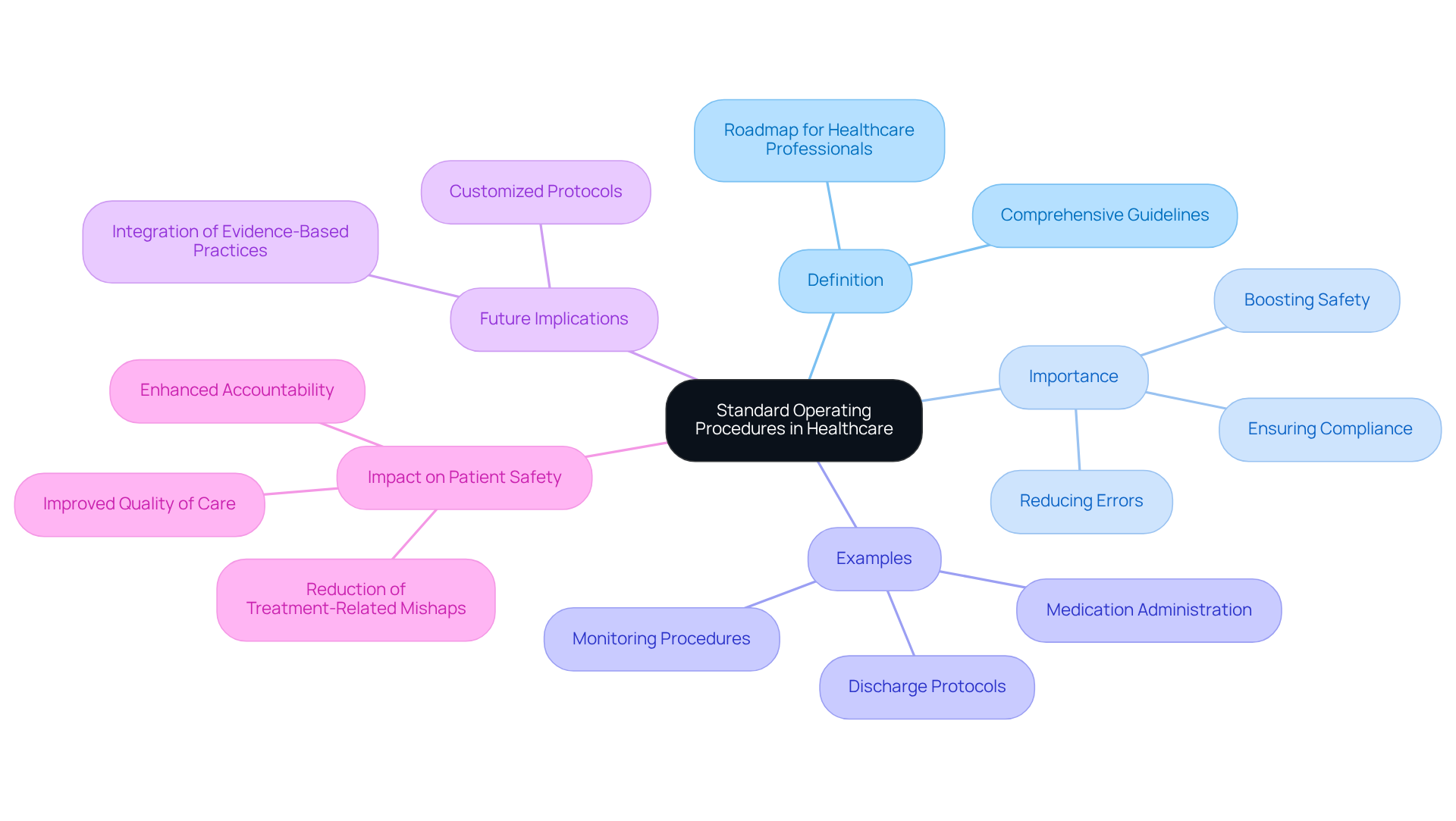
You might be wondering what Standard Operating Procedures (SOPs) really are in the medical field. Well, they’re basically comprehensive, documented guidelines that lay out the exact steps needed to carry out routine activities safely and consistently. Think of them as a roadmap for healthcare professionals, helping ensure that everyone’s on the same page when it comes to executing processes across the organization. These SOPs are super important for cutting down on mistakes, boosting safety for everyone involved, and making sure we stick to regulatory standards. In a healthcare setting, they cover a wide range of activities - from administering medication to discharge protocols - making sure all staff members are aligned in their practices.
Now, let’s talk about why the standard operating procedure hospital is crucial, especially as we look ahead to 2026 with all the advancements in medical systems. Research shows that effective SOPs can really ramp up compliance rates with established guidelines, which is crucial for keeping patients safe. For example, a study found that only 47.2% of healthcare workers were following documentation procedures. Yikes! That really highlights the urgent need for well-organized SOPs that not only guide clinical practices but also foster a culture of accountability and safety.
Healthcare professionals get how transformative SOPs can be. As James Reason pointed out, "Errors are largely unintentional. It is very difficult for management to control what people did not intend to do in the first place." This really emphasizes the importance of having a standard operating procedure hospital in place to prevent mistakes and ensure that essential medical assessments and monitoring are conducted consistently, ultimately protecting individual well-being. When the standard operating procedure hospital is effectively executed in healthcare facilities, it can improve the quality of care, reduce treatment-related mishaps, and streamline operations, leading to better outcomes for patients.
Looking ahead to 2026, the focus on the standard operating procedure hospital will be more important than ever as hospitals work to weave evidence-based practices into their daily routines. By crafting customized protocols that cater to specific demographics and conditions, medical facilities can enhance care processes and boost overall safety for everyone. Staying committed to refining and applying the standard operating procedure hospital will be essential in navigating the complexities of modern medical care, ensuring that patient safety remains at the forefront of clinical practice.
Outline the Steps for Developing an SOP
To develop an effective standard operating procedure hospital, you might be wondering where to start. Well, here are some essential steps to guide you:
- Identify the Purpose: First things first, clearly define what the SOP is all about. What process or task does it address? Make sure it aligns with regulatory standards and your operational goals.
- Gather Input from Stakeholders: Next up, involve key personnel - think medical professionals and administrative staff. Getting their insights is crucial! Engaging stakeholders in the standard operating procedure hospital development process can significantly enhance your chances of creating practical and useful procedures. In fact, organizations that do this are 40% more likely to complete projects on time and within budget. Pretty impressive, right?
- Draft the SOP: Now, let’s get to the nitty-gritty. Use a clear and consistent format. Start with a title, then lay out the purpose, scope, and detailed step-by-step instructions. An effective SOP should be concise yet comprehensive, typically ranging from 3 to 10 pages, depending on how complex the procedure is.
- Review and Revise: Once you have a draft, share it with your stakeholders for feedback. This is where the magic happens! Revise the document based on their input to ensure clarity and completeness. Regular reviews and updates are essential for maintaining the effectiveness and relevance of the standard operating procedure hospital, especially in the fast-changing world of healthcare.
- Implement the SOP: Time to put your SOP into action! Train your staff on the new standard operating procedure hospital, emphasizing their importance and the correct way to follow them. Providing accessible training materials and resources is vital for ensuring everyone is on the same page.
- Monitor and Evaluate: After implementation, keep an eye on how well the SOP is being followed and gather feedback for future improvements. Creating a systematic assessment and update cycle, ideally every 6 to 12 months, helps maintain compliance and includes user feedback. This ultimately boosts operational efficiency and safety. Plus, using SowFlow's centralized knowledge base for SOP documentation means all staff have on-demand access to the latest procedures, making implementation even smoother.

Identify Key Components of an Effective SOP
Creating an effective standard operating procedure hospital is crucial, and it’s not as daunting as it sounds! You might be wondering what key components make up a solid SOP. Let’s break it down together.
First off, you need a Title. This should be clear and descriptive, giving a good idea of what the SOP covers. Next, there’s the Purpose. Here, you’ll want to outline the objective of the SOP, highlighting how it boosts patient safety and operational efficiency. It’s all about making things better for everyone involved!
Then comes the Scope. This part defines who the SOP applies to and what specific processes it covers. It’s essential to ensure that all relevant staff are included. Speaking of clarity, don’t forget the Definitions section! Including relevant terminology and acronyms helps everyone understand the SOP better.
Now, let’s talk about Roles and Responsibilities. It’s super important to clearly define who’s accountable for each step in the procedure. After all, effective SOPs rely on accountability. Did you know that around 70% of medical organizations have adopted SOPs to streamline operations and meet safety standards? That’s a big deal!
Next up, you’ll want to provide Step-by-Step Instructions. This is where you lay out detailed, chronological steps to complete the task. Use straightforward language to make it easy to follow. And hey, using tools like SowFlow can really help here! It allows teams to create SOPs efficiently without needing to take separate screenshots or leave the browser, saving valuable time.
Don’t forget to include References! Listing related documents, guidelines, or regulations reinforces the SOP’s foundation in established practices. Finally, wrap it up with a Review and Approval section. This should have spaces for signatures and dates to show who approved the SOP and when it was last reviewed. It’s all about keeping a clear audit trail for compliance and accountability.
By incorporating these elements, hospitals can create a standard operating procedure hospital that effectively guides staff and improves patient outcomes. For instance, a case study from a reputable medical institution showed that having a comprehensive SOP for surgical practices led to a 30% decrease in surgical mistakes. That’s a fantastic example of how good guidelines can make a real difference! Plus, using SowFlow’s features can centralize documentation for easy access, further enhancing efficiency. So, what do you think? Ready to dive into creating some effective SOPs?

Emphasize the Importance of Regular Review and Updates
You might be wondering why regular reviews and updates of the standard operating procedure hospital are so crucial. Well, keeping them effective and relevant is key! Here are some friendly tips to help you out:
- Schedule Regular Reviews: How about setting up a routine for reviewing your SOPs? Whether it’s annually or biannually, adhering to the standard operating procedure hospital ensures they stay in line with current practices and regulations.
- [Incorporate Feedback](https://sowflow.io/blog-post/10-benefits-of-ongoing-training-for-operational-success): Don’t forget to gather input from your team! Those who use the procedures daily can offer valuable insights that highlight areas needing improvement or clarification.
- Adapt to Changes: Speaking of changes, be ready to update your SOPs when new technologies pop up, regulations shift, or your organization evolves. Flexibility is key to the standard operating procedure hospital.
- Document Changes: Keep a record of any revisions you make. Noting the date and nature of changes helps maintain a clear history of how your SOPs have evolved over time.
- Train Staff on Updates: Lastly, make sure everyone is in the loop about any changes. Providing training as needed keeps your team compliant and operationally efficient.
So, what do you think? Regularly reviewing your standard operating procedure hospital not only keeps things running smoothly but also fosters a culture of continuous improvement!

Conclusion
Creating effective Standard Operating Procedures (SOPs) in hospitals is super important for keeping things consistent, safe, and compliant in healthcare settings. You might be wondering how clear, documented guidelines can really make a difference. Well, they can help healthcare professionals cut down on errors and boost patient care significantly! It’s all about developing SOPs that not only meet regulatory standards but also fit the operational goals of the facility. This shows just how crucial these procedures are in navigating the complexities of modern healthcare.
Now, let’s break down some key steps for developing SOPs:
- Identify the purpose.
- Get stakeholders involved.
- Draft clear instructions.
- Set up a review process.
Each piece, from defining roles and responsibilities to making sure updates happen regularly, plays a part in how effective SOPs can be. And don’t forget, incorporating feedback and adapting to changes in technology and regulations is essential. This proactive approach is what keeps these critical documents relevant and useful.
Ultimately, committing to creating and refining SOPs isn’t just about ticking boxes for compliance; it’s about building a culture of safety and accountability in healthcare. As hospitals gear up for future advancements, integrating evidence-based practices into SOPs will be key. Embracing this mindset of continuous improvement will not only make operations run smoother but also ensure that patient safety stays at the forefront of clinical practice. So, what do you think? Are you ready to dive into the world of SOPs and make a real difference?
Frequently Asked Questions
What are Standard Operating Procedures (SOPs) in healthcare?
SOPs in healthcare are comprehensive, documented guidelines that outline the exact steps needed to carry out routine activities safely and consistently, serving as a roadmap for healthcare professionals.
Why are SOPs important in a healthcare setting?
SOPs are crucial for reducing mistakes, enhancing safety, ensuring compliance with regulatory standards, and aligning staff practices across various activities, such as administering medication and discharge protocols.
How do effective SOPs impact compliance rates in healthcare?
Effective SOPs can significantly increase compliance rates with established guidelines, which is vital for patient safety. Research indicates a need for well-organized SOPs, as only 47.2% of healthcare workers were following documentation procedures.
What role do SOPs play in preventing errors in healthcare?
SOPs help prevent errors by providing clear guidelines and fostering a culture of accountability and safety, thereby ensuring that essential medical assessments and monitoring are conducted consistently.
How can SOPs improve the quality of care in healthcare facilities?
When effectively executed, SOPs can enhance the quality of care, reduce treatment-related mishaps, and streamline operations, leading to better patient outcomes.
What is the future focus on SOPs in healthcare as we approach 2026?
The focus on SOPs will become increasingly important as hospitals integrate evidence-based practices into daily routines, creating customized protocols that enhance care processes and overall safety for diverse patient demographics.
👍
What others are liking


5 Steps to outline your ideal documentation structure
5 MINS READ
Where to start the your journey of mapping out your ideal documentation structure, aligning it with the very heartbeat of your organization?
Defining a winning level of detail in your process
3 MINS READ
What is too much detail, and what is too little? This article described in that winning level detail about what detail is enough.


