


Key Highlights:
- Establish clear objectives for customer service SOPs to align with broader organisational goals.
- Involve stakeholders to gather insights and enhance ownership of the procedures.
- Identify specific focus areas like complaint handling and client onboarding for targeted procedures.
- Set measurable outcomes to evaluate the effectiveness of SOPs, using metrics like customer feedback scores.
- Include essential components in SOPs: title, purpose, scope, roles, step-by-step procedures, quality assurance measures, and references.
- Implement training and onboarding to ensure team understanding of SOPs, leading to improved customer satisfaction.
- Conduct pilot testing to gather feedback before full implementation of SOPs.
- Schedule regular reviews of SOPs to maintain relevance and effectiveness.
- Establish feedback mechanisms to encourage team input and continuous improvement.
- Utilise standardised templates for SOPs to enhance efficiency and knowledge management in customer service.
- Encourage customization of templates to meet specific operational needs while maintaining standardisation.
Introduction
You might be wondering how to craft a customer service experience that really stands out. Well, it all starts with effective standard operating procedures (SOPs). These handy templates not only help streamline operations but also boost customer satisfaction and loyalty.
In this article, you’ll discover how to create impactful customer service SOP templates that align with your organizational goals, engage your team, and promote continuous improvement. But what are the key components that ensure these SOPs not only meet expectations but also adapt to the ever-changing needs of clients and businesses alike? Let’s dive into that!
Define Objectives and Focus Areas for Customer Service SOPs
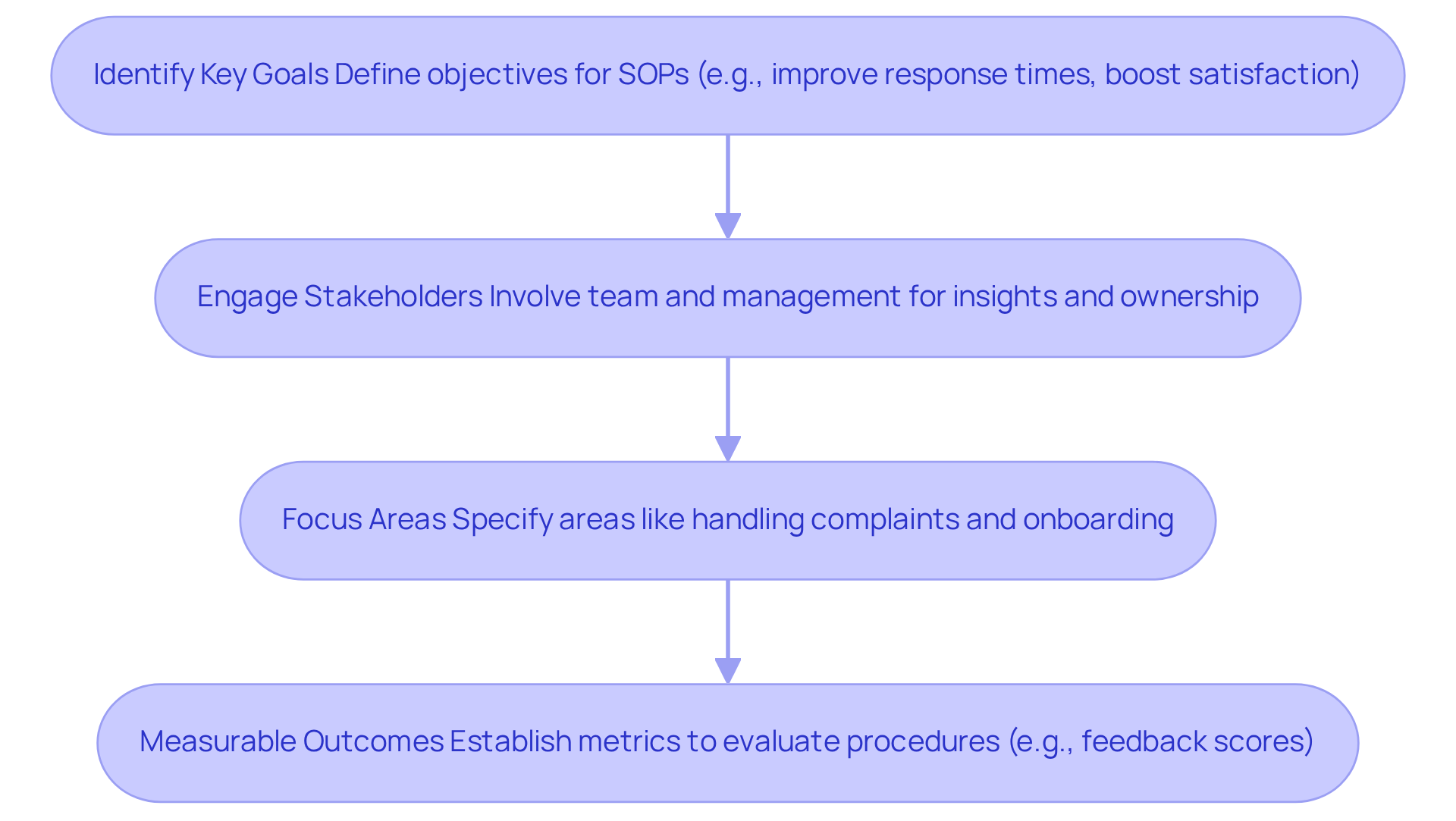
To develop efficient client support procedures, you might be wondering how to begin with a customer service SOP template. Well, it all begins with setting clear objectives that align with your organization's broader goals. Let’s break it down into some simple steps:
-
Identify Key Goals: What do you want to achieve with your SOPs? Maybe it’s improving response times, boosting customer satisfaction, or cutting down on errors. Research shows that organizations with clear service objectives experience a whopping 41% faster revenue growth than their peers. So, setting those goals is pretty important!
-
Engage Stakeholders: Now, let’s talk about involving your team and management. Getting everyone in on the conversation helps gather insights on what objectives matter most. Plus, when stakeholders feel included, they’re more likely to take ownership of the procedures. Did you know that 60% of clients would stop buying from a brand after just one unfriendly encounter? That’s why effective procedures in client support are essential.
-
Focus Areas: Next up, specify your focus areas. Think about handling complaints, onboarding new clients, or managing inquiries. This targeted approach helps you create procedures that meet specific operational needs, leading to better service delivery. Firms that nail down their service focus areas often report much higher satisfaction scores.
-
Measurable Outcomes: Finally, let’s establish some metrics to measure how well your procedures are doing. Customer feedback scores or average handling times can be great indicators. This way, you can continuously evaluate and tweak your procedures as needed. Organizations that track quantifiable results often see a 30% drop in errors, highlighting the importance of ongoing improvement.
By clearly defining your objectives and focus areas, you’re setting the stage for a customer service SOP template that is both effective and aligned with your organization’s strategic direction. This ultimately enhances the client experience, making it all worthwhile!
Outline Key Components of a Customer Service SOP
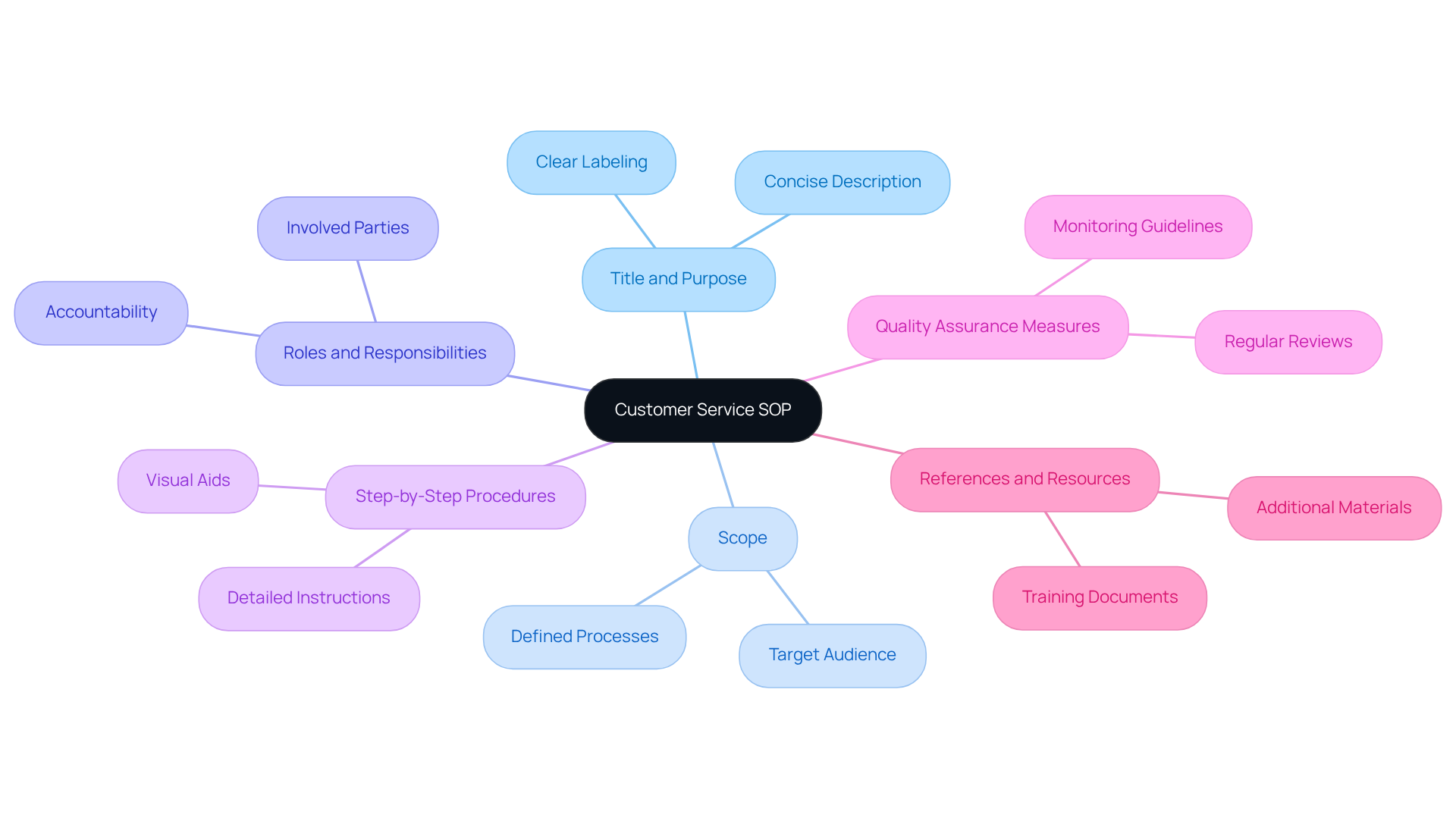
When you're developing a customer service SOP template, you might be wondering what key components to include. Well, let’s break it down together!
-
Title and Purpose: First off, make sure to clearly label your SOP and provide a concise description of its purpose. This helps everyone understand the context and significance of the document, ensuring it aligns with your organizational goals.
-
Scope: Next, define the scope of the SOP. Detail which processes it covers and to whom it applies. This clarity is super important because it ensures that users know when and how to utilize the SOP effectively.
-
Roles and Responsibilities: Now, let’s talk about roles. Clearly outline who’s involved in the process and what their responsibilities are. Specifying who’s responsible for each step minimizes confusion and boosts accountability. As industry leaders often say, clear delineation of roles is crucial for operational efficiency and service quality.
-
Step-by-Step Procedures: You’ll want to provide detailed, sequential instructions for each task. Use straightforward language, and consider adding visuals or flowcharts to enhance comprehension. With SowFlow's simple creation process, you can whip up user guides effortlessly, making sure your SOPs are thorough and user-friendly.
-
Quality Assurance Measures: Don’t forget to include guidelines for monitoring and evaluating the effectiveness of the SOP. Regular reviews and updates based on feedback and performance metrics are vital. Did you know that 60% of companies measuring first contact resolution report significant performance improvements? SowFlow makes it easy to keep your documentation relevant with instant updates.
-
References and Resources: Lastly, list any additional materials or documents that might help users follow the SOP, like training materials or related documents. Leveraging SowFlow's solutions can really streamline process standardization and enhance knowledge sharing among your team.
By incorporating these components and utilizing SowFlow's documentation features, your customer service SOP template will be more effective and user-friendly, leading to enhanced delivery. So, why not give it a try?
Implement and Monitor Customer Service SOPs for Continuous Improvement
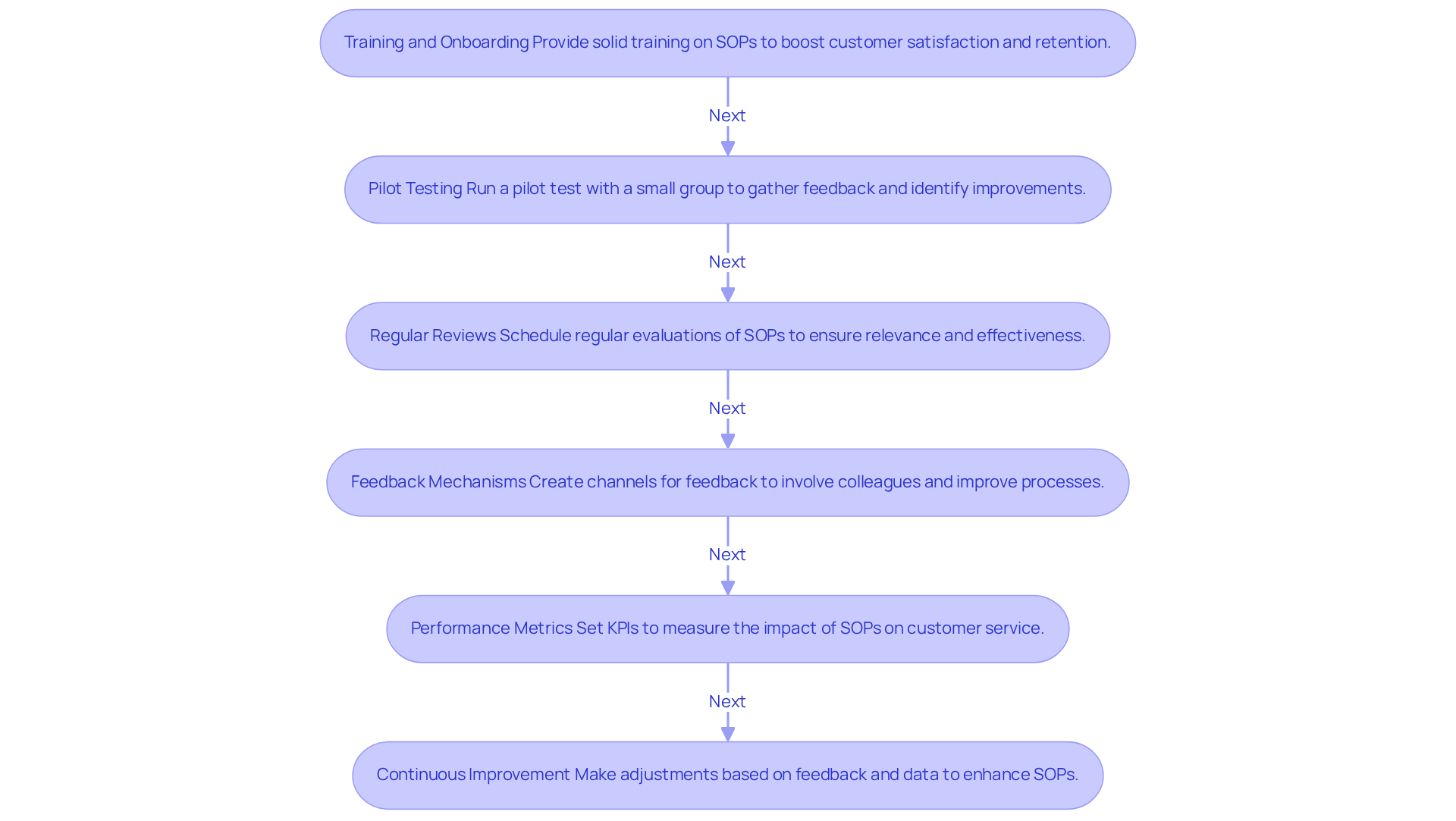
To make sure your customer service SOPs really hit the mark, let’s walk through some simple steps for implementation and monitoring:
-
Training and Onboarding: First off, you’ll want to give your team some solid training on these new standard operating procedures. Why? Because when everyone understands the importance of sticking to the procedures, it can lead to a whopping 26% boost in customer satisfaction and a 22% jump in retention rates. Pretty impressive, right?
-
Pilot Testing: Now, before you roll everything out, consider running a pilot test with a small group. This is your chance to gather feedback and spot any hiccups or areas that could use a little polish. Research shows that organizations that take the time to pilot their SOPs often see a big boost in successful implementation.
-
Regular Reviews: Don’t forget to schedule some regular check-ins on these procedures. Think of it as a tune-up! Evaluating them every few months-maybe quarterly or twice a year-helps you stay on top of any changes in your organization and ensures your SOPs are still relevant.
-
Feedback Mechanisms: You might be wondering how to get your colleagues involved. Creating channels for feedback is key! Whether it’s through surveys, suggestion boxes, or just chatting in team meetings, encouraging input helps everyone feel like they’re part of the process.
-
Performance Metrics: Next up, let’s talk about performance metrics. Setting up key performance indicators (KPIs) is a smart way to measure how your customer service SOP template is impacting client service. Keep an eye on customer satisfaction scores, response times, and resolution rates to see what’s working and what might need a little tweaking.
-
Continuous Improvement: Finally, based on all that feedback and data, don’t hesitate to make adjustments to your SOPs. This ongoing process is crucial for keeping everything effective and aligned with your goals. Organizations that focus on continuous improvement often find that their clients are more loyal and satisfied.
By putting these steps into action, you’ll not only implement and monitor your SOPs effectively but also create a culture of continuous improvement that enhances the quality of client interactions. So, are you ready to dive in?
Leverage SOP Templates to Enhance Efficiency and Knowledge Management
To really get the most out of SOP templates in your customer service operations, let’s chat about some strategies that can help:
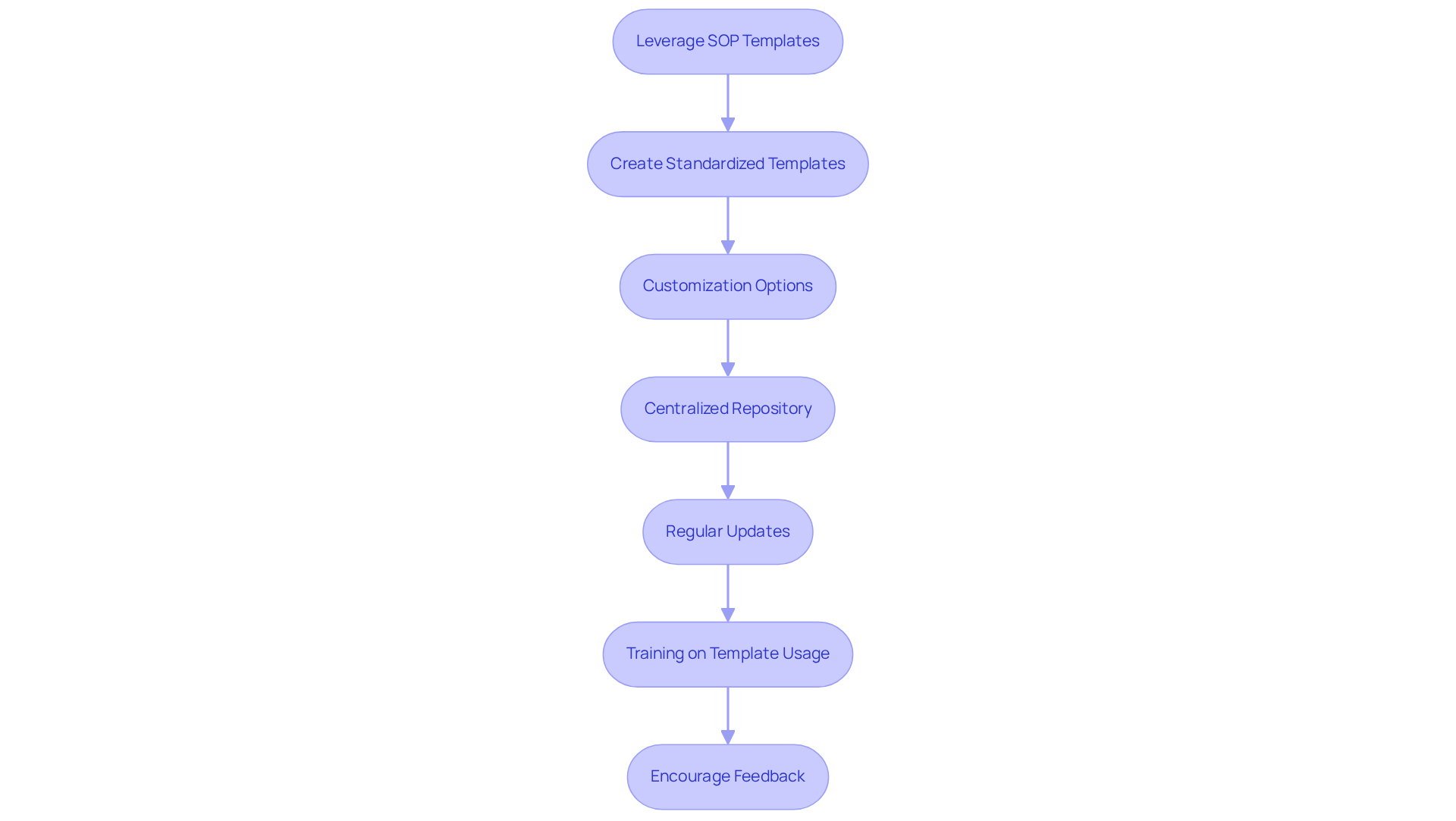
- Create Standardized Templates: Start by developing templates that cover all the essential components. Make sure they’re user-friendly and visually appealing-this way, everyone will want to use them!
- Customization Options: Think about adding customization features to your templates. This allows you to tweak them for specific processes or group needs, keeping those standard operating procedures relevant and practical, which is a win for operational efficiency.
- Centralized Repository: How about storing all your SOP templates in one easy-to-find spot? A knowledge management system or shared drive works wonders. This way, your team can quickly grab what they need, whenever they need it.
- Regular Updates: Don’t forget to set up a routine for reviewing and updating your templates. Keeping them fresh and in line with any changes in procedures or best practices is key to maintaining their effectiveness.
- Training on Template Usage: It’s super important to provide your team with solid training on how to use these templates effectively. Make sure to highlight the benefits of having uniform procedures-it really helps with consistency and boosts efficiency in client support.
- Encourage Feedback: Lastly, actively ask for feedback from your users about the templates. This collaborative approach not only helps identify areas for improvement but also fosters a sense of ownership among your team members, leading to ongoing enhancements of your procedures.
By using a customer service SOP template, you can simplify your documentation processes, enhance knowledge management, and ultimately improve customer service delivery. Research shows that companies that implement efficient standard operating procedures can significantly cut down onboarding time for new hires, helping them become productive contributors much faster. Plus, organizations that stick to standardized SOPs often see improved operational consistency, which translates to higher customer satisfaction and trust.
Conclusion
Creating effective customer service SOP templates is a crucial step in boosting both operational efficiency and customer satisfaction. You might be wondering how to get started. By setting clear objectives and honing in on key areas, organizations can craft structured procedures that not only streamline processes but also nurture a culture of continuous improvement. This way, customer interactions remain consistent and in line with the business's overall goals.
Throughout this article, we’ve highlighted the importance of engaging stakeholders, defining roles, and implementing measurable outcomes. Plus, the key components we discussed - like training, pilot testing, and regular reviews - are essential for keeping those SOPs effective. By using standardized templates and encouraging feedback, organizations can build a dynamic knowledge management system that benefits both employees and customers.
Now, let’s not underestimate the power of well-crafted customer service SOPs. They’re the backbone of effective client support, leading to happier customers and increased loyalty. By committing to the development, implementation, and ongoing refinement of these procedures, businesses set themselves up for long-term success in a constantly changing marketplace. So, embrace the journey of creating impactful SOPs, and watch your customer service evolve into a powerful asset for your organization!
Frequently Asked Questions
What is the first step in developing customer service SOPs?
The first step is to set clear objectives that align with your organization's broader goals, such as improving response times, boosting customer satisfaction, or reducing errors.
Why is it important to identify key goals for customer service SOPs?
Identifying key goals is crucial because organizations with clear service objectives experience significantly faster revenue growth, with research indicating a 41% increase compared to those without clear goals.
How can involving stakeholders benefit the development of customer service SOPs?
Engaging stakeholders, including team members and management, helps gather insights on important objectives and fosters ownership of the procedures, which can lead to more effective client support.
What are some examples of focus areas for customer service SOPs?
Focus areas may include handling complaints, onboarding new clients, or managing inquiries. A targeted approach in these areas helps create procedures that meet specific operational needs.
How can measurable outcomes be established for customer service SOPs?
Measurable outcomes can be established by using metrics such as customer feedback scores or average handling times, allowing for continuous evaluation and improvement of the procedures.
What benefits do organizations see from tracking quantifiable results in their customer service SOPs?
Organizations that track quantifiable results often experience a 30% drop in errors, highlighting the importance of ongoing improvement in their customer service procedures.
👍
What others are liking


5 Steps to outline your ideal documentation structure
5 MINS READ
Where to start the your journey of mapping out your ideal documentation structure, aligning it with the very heartbeat of your organization?
Defining a winning level of detail in your process
3 MINS READ
What is too much detail, and what is too little? This article described in that winning level detail about what detail is enough.


