


Key Highlights:
- Organisational bubble charts visually represent company structure using circles to denote departments, with size indicating significance.
- They improve communication and understanding among team members, fostering collaboration and decision-making.
- Regular updates to the charts are essential to reflect changes in responsibilities and reporting lines.
- Bubble charts enhance clarity and engagement, especially during onboarding and team changes, leading to a reported 33% increase in new employee engagement.
- Key steps to create a bubble chart include identifying positions, determining relationships, selecting a charting tool, and reviewing the chart for accuracy.
- Recommended tools for creating bubble charts include Lucidchart, Canva, Microsoft PowerPoint, Visme, Miro, OrgChart, and SmartDraw.
- Tips for effective charts include keeping designs simple, using colour wisely, labelling clearly, maintaining consistency, and soliciting feedback from team members.
Introduction
Creating a clear and engaging organizational structure is super important for any successful business. But let’s be honest - many still cling to those old hierarchical diagrams that just don’t capture the dynamic relationships at play. So, what’s the solution? Enter the organizational bubble chart! This modern visual tool not only shows connections and roles but also boosts communication and collaboration among team members.
As organizations evolve, you might be wondering how these flexible charts can help foster a culture of teamwork and adaptability. Well, you’re in the right place! This guide will walk you through the steps to create an effective bubble organizational chart, ensuring clarity and engagement in the workplace. Let’s dive in!
Understand the Bubble Organizational Chart
You might be wondering how an organizational bubble chart can really change the way we perceive organizational setups. Well, think of it as a dynamic visual aid that shows off the connections, functions, and positions within a company using circles or 'spheres.' Each sphere stands for a department or role, and its size tells you just how significant that department is. This approach is a breath of fresh air compared to traditional hierarchical diagrams, making it way more engaging and easier to grasp.
By breaking down complex relationships and workflows, the organizational bubble chart significantly helps improve communication and understanding among team members. They allow organizations to showcase their structure through an organizational bubble chart in a visually appealing way, which is key for effective collaboration and decision-making. Now, if you're an operations manager, you’ll love this: SowFlow’s user manual capabilities let you create and update these charts with ease, keeping everything relevant and accurate.
Frequent updates are super important to reflect any changes in responsibilities and reporting lines, and with SowFlow, it’s a breeze. Speaking of change, remember what Bill Clinton said? The cost of sticking with the status quo is way higher than the cost of embracing change. It really highlights how crucial it is to adjust our frameworks to meet evolving needs.
Recognize the Importance of Bubble Organizational Charts
You might be wondering how organizational bubble charts fit into today’s workplace. Well, they play a crucial role in modern organizational design! These diagrams make it super easy to see relationships and hierarchies, helping everyone understand their roles and how they connect to the bigger picture. Plus, they boost communication by giving a clear snapshot of how departments interact and work together.
Now, think about it: when you use circular diagrams, it creates a more collaborative vibe. This can really cut down on misunderstandings and ramp up productivity. They’re especially handy during onboarding, team shake-ups, or when launching new projects. In fact, research shows that companies using these visual tools see a 33% increase in new employee engagement. That’s a big deal!
As Paul J. Meyer puts it, "Communication - the human connection - is the key to personal and career success." This really drives home how important clear communication is for enhancing employee experiences. And the beauty of these circular diagrams? They’re flexible! This means organizations can adapt to changing needs, which is vital for keeping things running smoothly and fostering a culture of teamwork.
So, in a nutshell, using an organizational bubble chart is a smart way to boost clarity, communication, and collaboration in your workplace. Why not give it a try?

Follow Steps to Create Your Bubble Organizational Chart
-
Identify Key Positions and Departments: You might be wondering where to start. Well, kick things off by putting together a comprehensive list of all the positions and departments in your organization. Take a moment to evaluate how these roles interact and their importance to the overall framework. This foundational step is crucial - companies with well-defined responsibilities see a 21% boost in profitability and productivity. Pretty impressive, right?
-
Determine Relationships: Now, let’s talk about relationships. Map out how these roles connect. Who reports to whom? How do departments collaborate? Understanding these connections is key to visualizing your organization’s dynamics. After all, effective communication and collaboration can significantly enhance employee engagement and help reduce burnout.
-
Choose a Charting Tool: Next up, you’ll want to pick a charting tool that suits your needs. Options like Lucidchart, Canva, and Microsoft PowerPoint are popular choices. And if you’re using SowFlow, you can create user guides that show your team how to use these tools effectively. This way, everyone has easy access to the documentation they need - no more scrambling around!
-
Create the Chart: Time to get creative! Start positioning circles for each role or department, adjusting their sizes to reflect their significance. Connect these bubbles with lines to show how they relate to one another. This organizational bubble chart serves as a visual representation that helps clarify your company structure, which is essential for fostering a thriving corporate culture. Did you know that companies with clear structures can achieve over four times higher revenue growth? With SowFlow, creating and modifying your documentation is a breeze, keeping your structure relevant in a fast-paced business world.
-
Review and Revise: After you’ve crafted your diagram, take a moment to review it for clarity and accuracy. Make any necessary tweaks to ensure it effectively communicates your organization’s structure. Regularly revisiting and refreshing your diagram can help you stay aligned with changing business needs. Companies that adapt their frameworks efficiently are more likely to thrive in competitive environments. Plus, with SowFlow, you can access your documentation with just a command, cutting down on those endless meetings and keeping your team in sync.

Explore Tools for Creating Bubble Organizational Charts
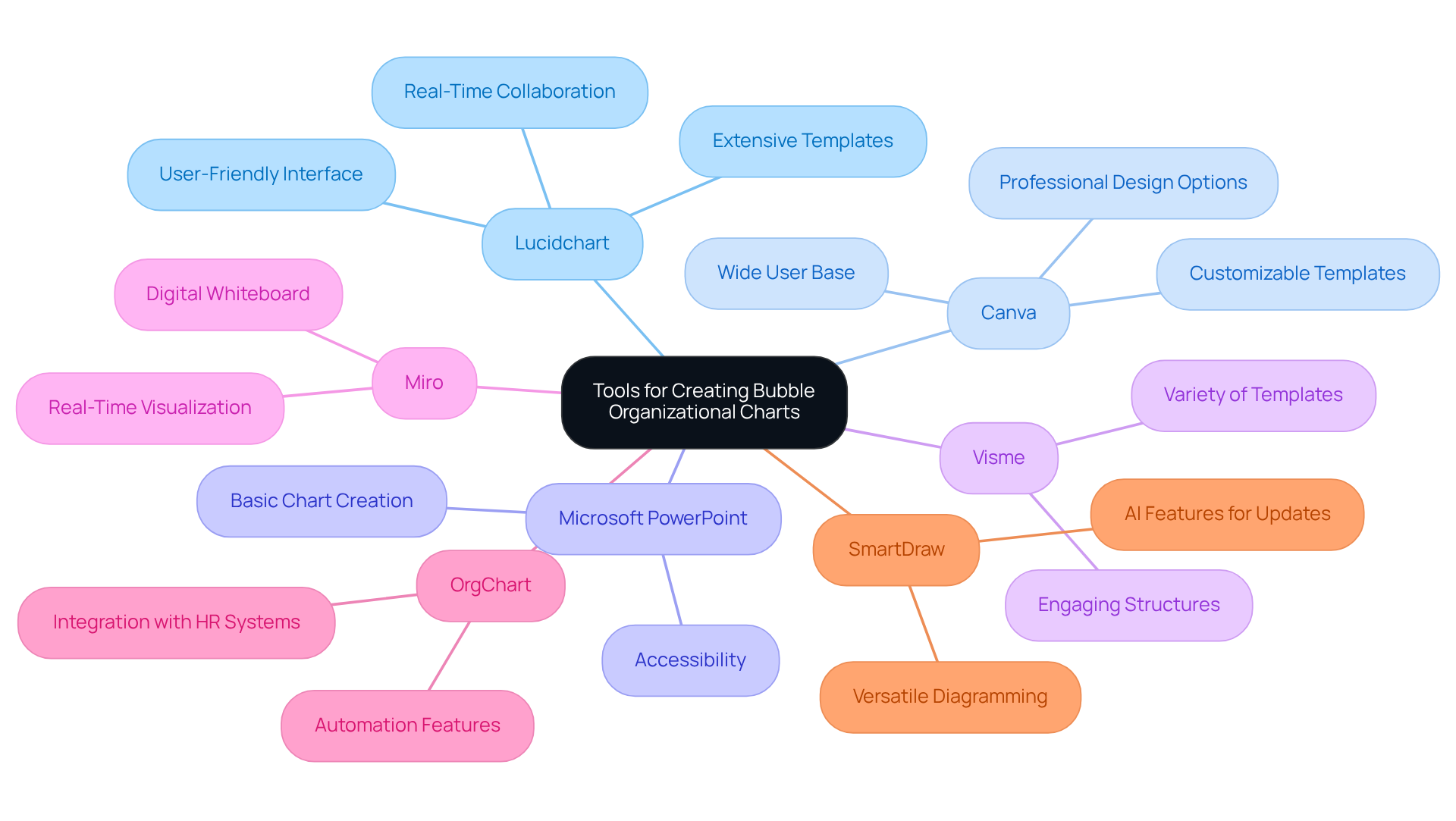
Are you looking to create some effective organizational bubble charts? You’ve got a few great tools at your fingertips that can help you out:
- Lucidchart: This user-friendly platform is a gem! It offers tons of templates and collaboration features that make designing and sharing your chart a breeze. With its intuitive interface, your team can work together in real-time, boosting communication and efficiency.
- Canva: If you love design, Canva is your go-to. It boasts a wide selection of customizable templates for circular diagrams, letting you showcase your creativity while keeping things professional. With over 220 million active users and a solid 12.47% market share in the graphics arena, it’s clear that Canva is a favorite for a reason.
- Microsoft PowerPoint: A classic choice for many, PowerPoint enables you to create basic organizational bubble charts using shapes and connectors. Its accessibility makes it a top pick for those who prefer a straightforward way to create graphs.
- Visme: This platform is all about engaging structures. With a variety of templates and design components, Visme helps you tell your organization’s story visually, making your structures compelling and easy to understand.
- Miro: Ever thought about brainstorming on a digital whiteboard? Miro allows teams to visualize their structure in real-time, fostering creativity and teamwork. It’s perfect for those dynamic environments where collaboration is key.
- OrgChart: This tool stands out for its automation features, which really cut down on the manual work involved in managing structure diagrams. By integrating with HR management systems, OrgChart ensures your diagrams are always up-to-date, giving you accurate representations of your company structure.
- SmartDraw: While SmartDraw packs a punch with its diagramming capabilities, some users on G2 have pointed out that it can be a bit demanding on system resources and tricky to navigate. Just something to keep in mind!
These tools cater to a variety of needs and preferences, so you’re sure to find the right fit for your diagram creation. Why not explore a few and see which one resonates with you?
Implement Tips for an Effective Bubble Organizational Chart
Are you creating an effective organizational bubble chart? You might be wondering where to start! Here are some friendly tips to help you out:
- Keep It Simple: Seriously, don’t overcrowd your chart with too many bubbles. Focus on the essential functions and relationships. A clear design utilizing an organizational bubble chart is key for effective visual communication, making things so much easier for everyone.
- Use Color Wisely: Think about a cohesive color scheme that sets apart different departments or levels in your organization. Not only does this make your chart look great, but it also helps everyone understand it better. It’s all about making navigation a breeze!
- Label Clearly: Make sure each circle is labeled with the role or department name. Clear labeling in the organizational bubble chart is a lifesaver - it prevents confusion and helps new hires get up to speed quickly.
- Maintain Consistency: Stick to uniform sizes and shapes for your bubbles. This creates a cohesive look that helps viewers navigate the diagram effortlessly. Plus, it strengthens the organizational hierarchy, as illustrated in the organizational bubble chart, which is always a good thing!
- Solicit Feedback: Before you wrap things up, gather some input from your team. You want to make sure the chart accurately represents the organization and is easy to understand. Regular reviews and updates are crucial to reflect any changes in roles and reporting lines. And hey, consider assigning someone to keep the chart accurate over time - it’ll be a valuable resource for everyone!

Conclusion
You might be wondering how to create an effective organizational bubble chart. Well, it’s not just about making things look pretty; it really changes how teams see their structure and work together. By using this dynamic visual tool, you can break away from the usual hierarchies and create a more engaging, communicative environment. Bubble charts are super versatile, clearly showing roles and relationships, so everyone on the team can stay aligned with the organization’s goals.
Throughout this article, we’ve laid out some key steps to help you create a bubble organizational chart:
- Identify key positions
- Map out relationships
- Use the right tools
And don’t forget - regular updates and feedback are crucial! They keep the chart relevant and evolving with your organization. Tools like Lucidchart, Canva, and SowFlow are fantastic for crafting these charts, making collaboration and clarity a breeze.
So, why should you adopt bubble organizational charts? It’s a smart move for better communication and teamwork. By embracing this innovative approach, you’re not just improving your internal dynamics; you’re also setting your organization up for greater success in a competitive landscape. Implementing these visual aids can really uplift workplace culture and boost productivity, making it a worthwhile endeavor for any organization aiming for excellence. Now, how about giving it a try?
Frequently Asked Questions
What is an organizational bubble chart?
An organizational bubble chart is a dynamic visual aid that represents connections, functions, and positions within a company using circles or 'spheres,' where each sphere represents a department or role, and its size indicates the significance of that department.
How does an organizational bubble chart improve communication?
It simplifies complex relationships and workflows, making it easier for team members to understand their roles and how they connect to the larger organization, thus enhancing communication and collaboration.
What are the benefits of using an organizational bubble chart compared to traditional hierarchical diagrams?
Organizational bubble charts are more engaging, visually appealing, and easier to grasp, providing a clearer snapshot of department interactions and fostering a collaborative atmosphere.
How can SowFlow assist in creating and updating organizational bubble charts?
SowFlow provides user manual capabilities that allow users to easily create and update organizational bubble charts, ensuring they remain relevant and accurate with frequent updates reflecting changes in responsibilities and reporting lines.
Why are organizational bubble charts important in modern workplaces?
They help visualize relationships and hierarchies, boost communication, and facilitate understanding of roles within the organization, which is essential for effective collaboration, especially during onboarding or team changes.
What impact do organizational bubble charts have on employee engagement?
Research indicates that companies using these visual tools experience a 33% increase in new employee engagement, highlighting their effectiveness in enhancing the onboarding process.
Can organizational bubble charts adapt to changing needs within a company?
Yes, the flexibility of organizational bubble charts allows organizations to adapt to changing needs, which is vital for maintaining smooth operations and fostering a culture of teamwork.
👍
What others are liking


5 Steps to outline your ideal documentation structure
5 MINS READ
Where to start the your journey of mapping out your ideal documentation structure, aligning it with the very heartbeat of your organization?
Defining a winning level of detail in your process
3 MINS READ
What is too much detail, and what is too little? This article described in that winning level detail about what detail is enough.


