

Streamlined Onboarding Processes
|
March 9, 2026
|

Best Practices for Crafting an Effective Onboarding Booklet
Key Highlights:
- A comprehensive onboarding booklet should include a Company Overview to align new hires with the organisation's mission and values.
- Role-Specific Information provides clarity on job expectations, helping new employees integrate smoothly into their roles.
- Policies and Procedures set clear behavioural expectations, aiding newcomers in navigating workplace norms.
- Training and Development Resources inform new hires about available training programmes and mentorship opportunities.
- Team Introductions foster interpersonal connexions, increasing the likelihood of long-term employee retention.
- Frequently Asked Questions (FAQs) address common concerns, easing the transition for new employees.
- Providing Contact Information ensures new hires know where to seek support, enhancing their sense of belonging.
- Customising content to reflect organisational culture and values helps new hires feel a sense of belonging.
- Incorporating role-specific scenarios enhances engagement and retention by making content relatable.
- Gathering input from current employees enriches the onboarding material and strengthens team cohesion.
- Using consistent branding and visual elements creates a cohesive and trustworthy onboarding experience.
- Interactive elements, such as QR codes, enhance engagement and provide additional context for new hires.
- Establishing a review schedule for the onboarding booklet ensures it remains relevant and up-to-date.
- Collecting feedback from recent employees helps identify areas for improvement in the onboarding process.
- Involving stakeholders in the review process ensures diverse perspectives are considered for continuous improvement.
Introduction
Crafting an effective onboarding booklet? It’s way more than just a checklist; it’s a key tool that shapes how new employees feel right from the start. You might be wondering what makes it so special. Well, by weaving in essential elements like:
- Company culture
- Role-specific info
- Eye-catching design
organizations can create a warm and welcoming vibe that really helps new hires connect and understand their place in the team.
But here’s the kicker: the challenge is keeping these materials fresh and relevant as both the company and its workforce evolve. So, how can businesses make sure their onboarding booklets do more than just inform? How can they inspire and engage new hires? Let’s dive into that!
Define Key Components of an Onboarding Booklet
Is creating an onboarding booklet that truly works for new hires a priority? It’s all about including a few key components that make their transition smooth and welcoming.
First up, let’s talk about the Company Overview. You might be wondering why it’s important. Well, a quick intro to your company’s mission, vision, and values helps new employees get a feel for the culture. It’s like giving them a map to align their personal goals with what the company stands for.
Next, there’s Role-Specific Information. Clear descriptions of job roles and expectations are crucial. Think about it: when employees know what’s expected from the get-go, they’re way less likely to feel confused and more likely to hit the ground running.
Don’t forget about Policies and Procedures! Including the essentials-like attendance, dress code, and code of conduct-sets clear behavioral expectations. This transparency helps newcomers navigate the workplace without feeling lost.
Now, let’s dive into Training and Development Resources. Sharing info about training programs and mentorship opportunities is a must. With SowFlow’s instant documentation solution, you can keep these resources updated and relevant, making it easy for new hires to access what they need.
What about Team Introductions? A section that introduces key team members can really foster connection. New employees who feel connected to their colleagues are ten times more likely to stick around long-term. It’s all about those interpersonal relationships!
And hey, let’s not overlook Frequently Asked Questions (FAQs). Addressing common queries can really ease the transition. With SowFlow, you can quickly create and update FAQs, making knowledge sharing a breeze and enhancing the new hire experience.
Lastly, providing Contact Information for support is key. Clear contact details help new employees feel secure and part of the team. Plus, with SowFlow’s user guide creation capabilities, keeping this info up-to-date is a piece of cake.
By including these elements, you can craft an onboarding booklet that not only informs but also engages new employees. This approach leads to greater retention and job satisfaction-who wouldn’t want that?

Customize Content for Organizational Needs
Are you creating a personalized onboarding booklet? Here are some strategies to consider:
-
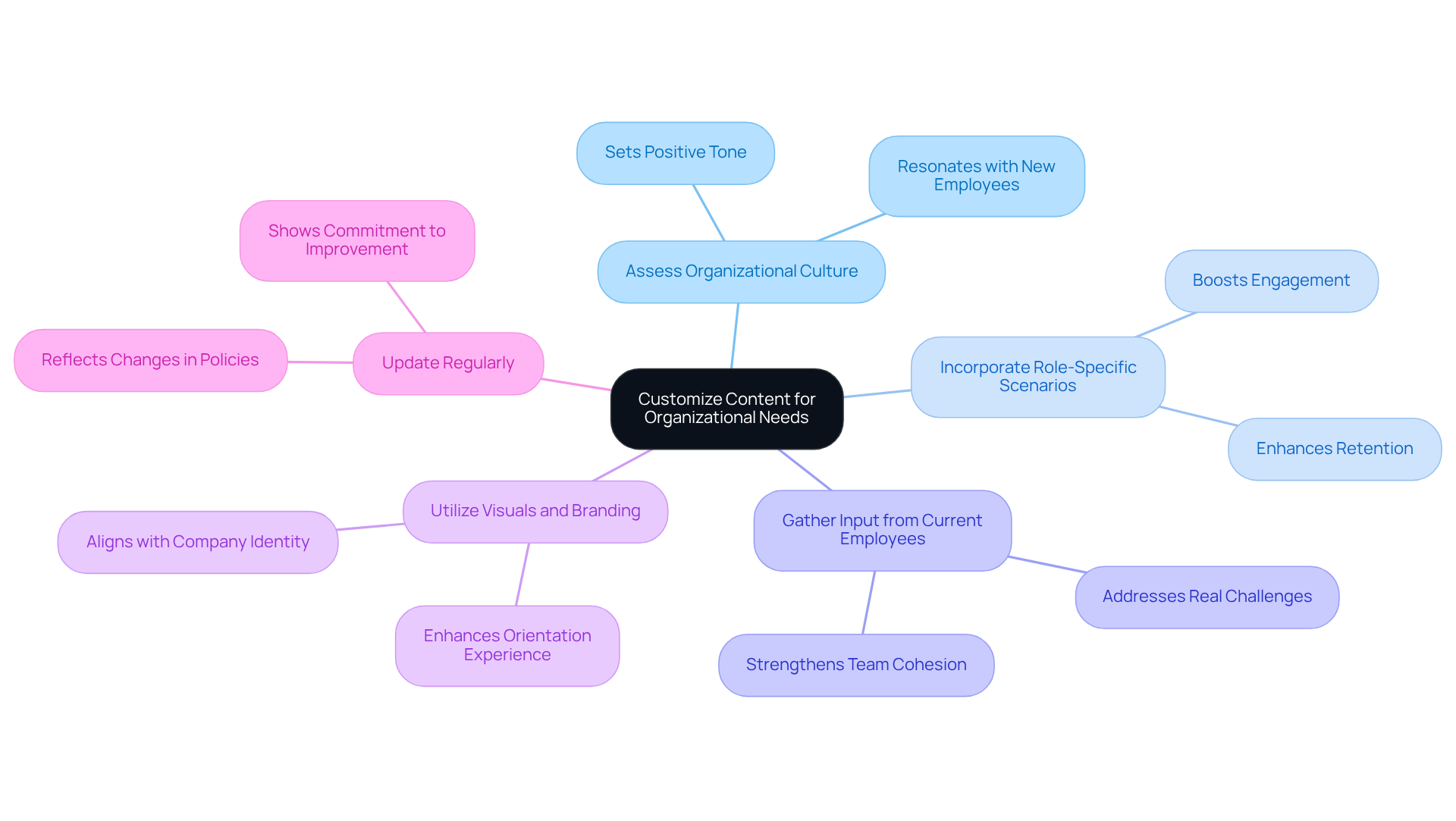
Assess Organizational Culture: You might be wondering why understanding your company’s culture and values is so crucial. Well, it’s all about ensuring that the language and tone of your onboarding booklet resonate with new employees. When they feel that sense of belonging right from the start, it sets a positive tone for their journey.
-
Incorporate Role-Specific Scenarios: Think about using examples and scenarios that are tailored to the specific roles your new hires will take on. Research shows that role-specific training scenarios can really boost engagement and retention. It makes the content relatable and effective, don’t you think?
-
Gather Input from Current Employees: Have you considered involving existing employees in the content creation process? This way, you can ensure the guide addresses real challenges and expectations. Plus, this collaborative approach not only enriches the material but also strengthens team cohesion. It’s a win-win!
-
Utilize Visuals and Branding: Now, let’s talk about visuals. Incorporating your company branding and visuals that align with your organization’s identity can make a big difference. A visually appealing pamphlet can really enhance the orientation experience, making it unforgettable for new employees.
-
Update Regularly: Finally, don’t forget to regularly review and update the content. Keeping it fresh reflects any changes in policies, procedures, or organizational structure. This practice not only keeps the information relevant but also shows your organization’s commitment to improving the induction process.
So, what do you think? Are you ready to dive into creating that onboarding booklet?
Incorporate Engaging Design Elements
To make your onboarding booklet not just informative but visually appealing, let’s chat about some design elements that can really make a difference:
-
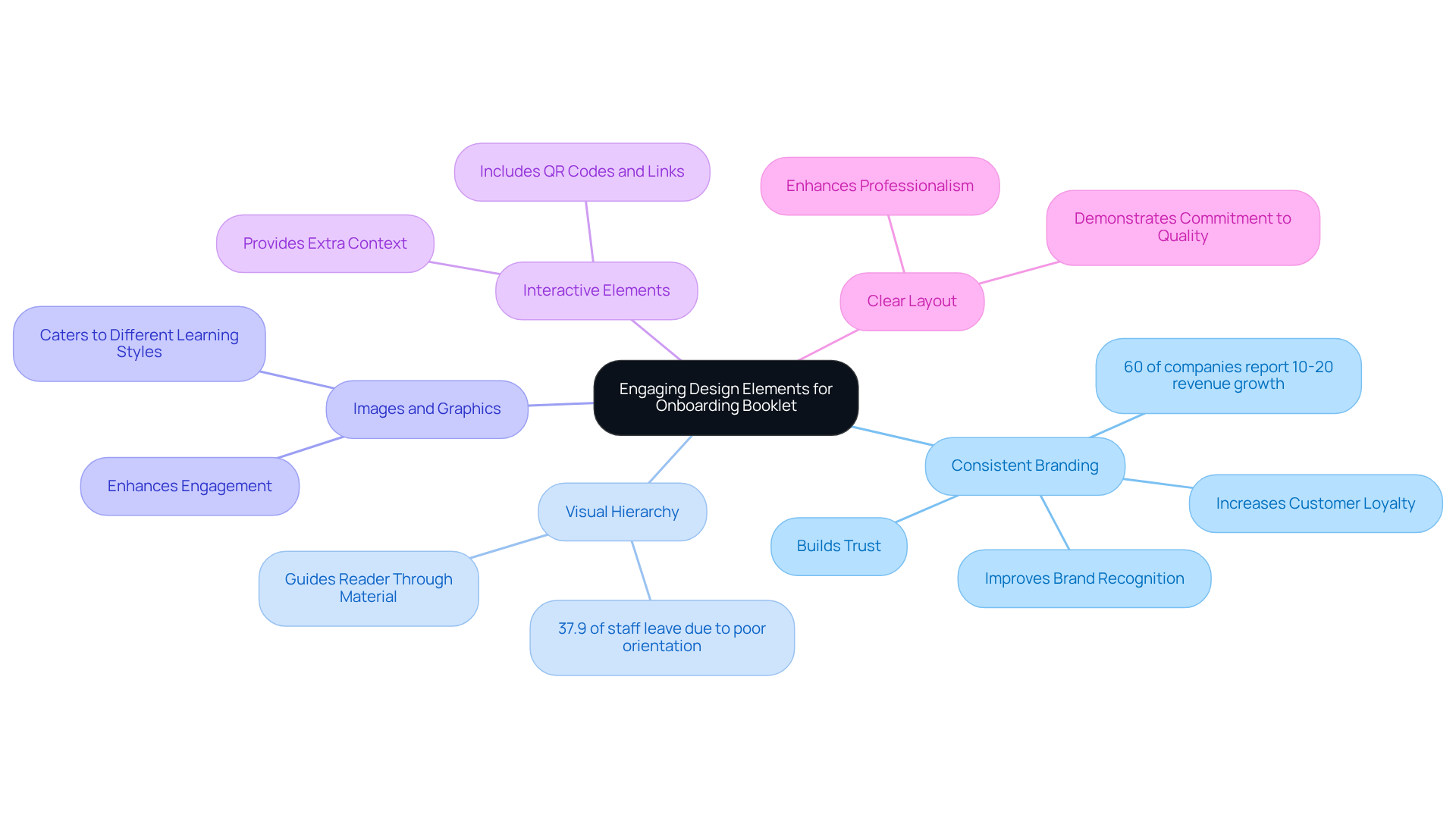
Consistent Branding: You might be wondering why branding matters. Well, using your company’s colors, fonts, and logos throughout the booklet creates a cohesive look that reinforces your brand identity. This isn’t just about aesthetics; it builds trust too! As Jessica Wong puts it, "Maintaining branding consistency creates trust, improves brand recognition and increases customer loyalty in every industry." And here’s a fun fact: 60% of companies say that keeping brand consistency can lead to a 10% to 20% boost in revenue growth. Who wouldn’t want that?
-
Visual Hierarchy: Now, let’s talk about how to organize your content. Clear headings, subheadings, and bullet points can guide readers through the material effortlessly. A well-organized onboarding booklet helps new employees absorb information better. Did you know that 37.9% of staff leave within their first year due to poor orientation experiences? By making your onboarding booklet intuitive, you can help reduce this risk and keep your team engaged.
-
Images and Graphics: Ever noticed how a picture can say a thousand words? Incorporating relevant images, infographics, and icons can break up text and illustrate key points, making your content more engaging. Visual elements cater to different learning styles, enhancing understanding and retention. So, don’t shy away from using them!
-
Interactive Elements: Speaking of engagement, why not include QR codes or links to videos? These can provide extra context and make the onboarding experience more dynamic. With SowFlow’s instant documentation solution, updating these interactive elements is a breeze, keeping your content fresh and relevant.
-
Clear Layout: Finally, let’s ensure your layout is clean and uncluttered. A well-crafted onboarding booklet enhances the onboarding experience and demonstrates your organization’s commitment to quality and professionalism. This is crucial for building a strong employer brand. With SowFlow, you can easily create and update user guides, ensuring your training materials are always up-to-date and effective.
Implement Regular Updates and Feedback Mechanisms
To keep your onboarding booklet effective, here are a few things you might want to consider:
-
Establish a Review Schedule: How often do you think it’s a good idea to check in on your content? Setting a regular schedule for reviewing and updating the onboarding booklet can help ensure that it reflects any changes in policies or procedures.
-
Collect Input from Recent Employees: You might be wondering how to make the guide even better. Why not use surveys or interviews to gather insights from new employees about their orientation experience? Their feedback can be invaluable!
-
Involve Stakeholders: Speaking of feedback, engaging team leaders and HR personnel in the review process ensures that all relevant perspectives are considered. It’s all about teamwork, right?
-
Analyze Feedback Trends: Regularly analyzing feedback can help you spot common themes or areas for improvement. This way, you can make targeted updates that really resonate with your audience.
-
Communicate Changes: Finally, don’t forget to keep everyone in the loop! Make sure all employees are informed of updates to the onboarding booklet. This reinforces the importance of the material and its relevance to their experience.

Conclusion
Creating an effective onboarding booklet is super important for making sure new hires have a smooth transition. It’s all about helping them feel like they belong and are engaged right from the start. By including key elements like a company overview, role-specific info, policies, and training resources, you can create a welcoming vibe that aligns new employees with the company’s mission and values.
You might be wondering how to make this happen. Well, throughout this article, we’ve highlighted the need to customize content to fit your organizational culture and to use engaging design elements. Think about incorporating visuals, getting input from current employees, and keeping the material fresh with regular updates. These strategies not only boost retention rates but also enhance job satisfaction for new hires.
Now, let’s wrap this up! Investing time and resources into a comprehensive onboarding booklet can really pay off for both employees and the organization. By focusing on clarity, engagement, and continuous improvement, you can make sure new hires feel informed, supported, and ready to jump in from day one. Embracing these best practices will not only strengthen your onboarding process but also help build a positive organizational culture that truly values its people.
Frequently Asked Questions
What is the purpose of creating an onboarding booklet for new hires?
The purpose of an onboarding booklet is to make the transition for new hires smooth and welcoming by including key components that help them understand the company culture, their roles, and the resources available to them.
What should be included in the Company Overview section of the onboarding booklet?
The Company Overview should include a brief introduction to the company’s mission, vision, and values, helping new employees align their personal goals with what the company stands for.
Why is Role-Specific Information important in the onboarding process?
Role-Specific Information provides clear descriptions of job roles and expectations, reducing confusion for new employees and enabling them to start their roles effectively.
What types of Policies and Procedures should be included in the onboarding booklet?
The onboarding booklet should include essential policies such as attendance, dress code, and code of conduct to set clear behavioral expectations for new hires.
How can Training and Development Resources benefit new employees?
Providing information about training programs and mentorship opportunities helps new hires access the resources they need for their professional development, enhancing their onboarding experience.
Why are Team Introductions important in an onboarding booklet?
Introducing key team members fosters connection among new employees, which can significantly increase their likelihood of staying with the company long-term.
How do Frequently Asked Questions (FAQs) assist new hires?
Including FAQs addresses common queries that new employees may have, easing their transition and enhancing their overall experience.
What role does Contact Information play in the onboarding process?
Providing clear contact details for support helps new employees feel secure and integrated into the team, ensuring they know where to seek assistance when needed.
👍
What others are liking


5 Steps to outline your ideal documentation structure
5 MINS READ
Where to start the your journey of mapping out your ideal documentation structure, aligning it with the very heartbeat of your organization?
Defining a winning level of detail in your process
3 MINS READ
What is too much detail, and what is too little? This article described in that winning level detail about what detail is enough.


