

Remote Team Documentation Strategies
|
April 29, 2026
|

7 Steps for Creating a Policy and Procedure Manual Effectively
Key Highlights
- Define the manual's purpose by identifying specific goals and the target audience to enhance clarity and relevance.
- A structured manual should include sections like Introduction, Guidelines, Procedures, and Appendices for easy navigation.
- Involving key stakeholders in the development process ensures the manual is practical and meets user needs, boosting engagement and success rates.
- Use plain language and visual aids to make the content user-friendly and improve comprehension.
- Establish a review process with regular feedback cycles to keep the documentation accurate and relevant.
- Publish the manual in digital formats for easy access and announce its availability to encourage usage.
- Collect user feedback through various channels and maintain updates to align the manual with organisational changes.
Introduction
You might be wondering how to tackle the task of creating a comprehensive policy and procedure manual. It can feel pretty daunting, right? But here’s the thing: it’s super important for keeping things clear and consistent in your organization. By taking a structured approach, you can not only streamline operations but also boost employee engagement and satisfaction.
Now, the real challenge is finding that sweet spot between being thorough and making it easy to navigate. How do you create a manual that’s both detailed and user-friendly? In this article, we’re diving into seven crucial steps that will guide you in crafting an effective policy and procedure manual. This way, you can empower your organization to foster a more organized and informed workplace. So, let’s get started!
Define the Purpose of Your Manual
You might be wondering how to kick off your guidelines and procedures effectively. Start by clearly laying out the main goals. What specific issues are you looking to tackle? And who stands to benefit from this guide? For instance, if you’re , it’s crucial to .
Research shows that a whopping 83% of employees think having a is a game-changer. That really highlights how important it is to have a ! A focused guide not only boosts clarity but also makes the , which can lead to .
By stating , you keep everything relevant throughout the writing process. This way, your content aligns with the intended outcomes and supports . So, let’s dive into how you can make this happen!

Plan and Organize Your Manual Structure
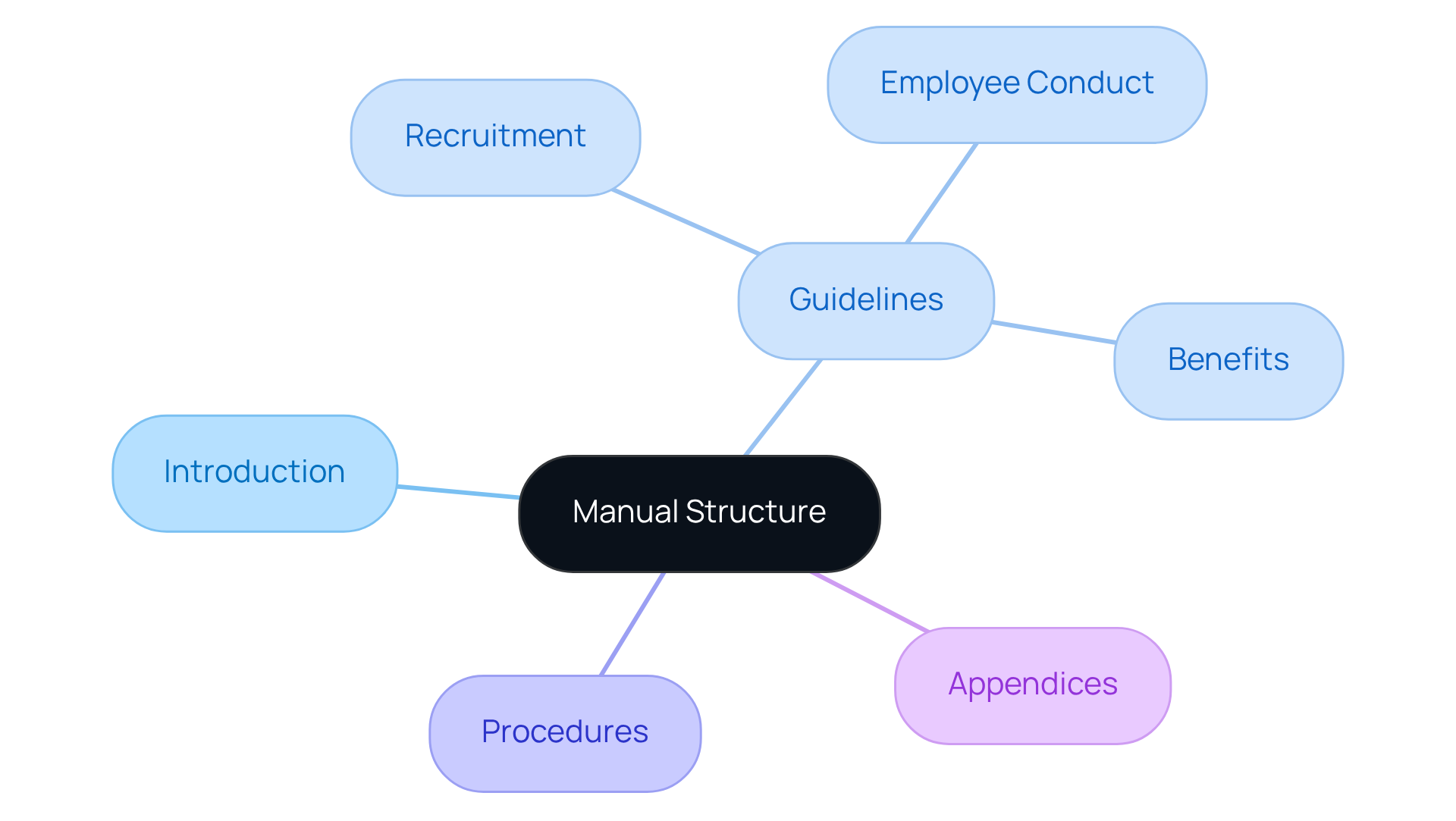
To kick off your , why not start by sketching out its main sections? You might be wondering what those are. Typically, you’ll want to include:
- Introduction
- Guidelines
- Procedures
- Appendices
By organizing these elements with clear headings and subheadings, you create a hierarchy that helps readers navigate the content effortlessly. For example, if you’re putting together a guide on , consider breaking it down into sections for:
- Recruitment
- Employee conduct
- Benefits
This thoughtful organization not only boosts clarity but also makes a breeze, keeping your guide relevant and easy to follow.
Now, here’s a fun fact: research shows that about 25% of a typical 40-hour work week is spent hunting for documents. That really highlights the importance of having a ! Organizations can significantly cut down on this inefficiency by creating a . Plus, clarity in documentation is key; as Jack Butcher wisely said, ',' and it really helps everyone understand things better.
When you’re outlining sections in your instructional guide, think about adding specific directives for each rule, step-by-step processes, and useful appendices that provide extra context or resources. This organized approach, which includes , not only helps with compliance but also allows your team to find the information they need quickly. In the end, that’s what and keeps operations running smoothly.
Involve Key Stakeholders in Development
You might be wondering why it’s so important to in creating a . Well, it’s all about making sure these documents are effective and practical! Start by identifying who will be affected by these guidelines - think department heads, HR reps, and employees. For instance, when you’re putting together a safety guideline, it’s crucial to get . They can share practical insights that really matter. Conducting interviews or surveys can be a goldmine for feedback from these stakeholders.
Now, let’s talk about sharing drafts with stakeholders. Regularly doing this not only fosters collaboration but also allows for some back-and-forth refinement of the content. This approach doesn’t just enhance the quality of the document; it also builds support from those who will be impacted by the guidelines. Did you know that projects with strong succeed 83% of the time? That’s a big difference compared to just 32% for those that don’t focus on this aspect. Plus, . And let’s not forget about - improved engagement can boost satisfaction by as much as 30%! This really highlights how crucial stakeholder contributions are in shaping .
So, by prioritizing stakeholder involvement and using tailored engagement strategies, organizations can ensure their guidelines are not just comprehensive but also in tune with the expectations and realities of those they serve. It’s all about creating a win-win situation!

Write Clear and Accessible Content
You might be wondering how to make your guide more user-friendly. Well, is a great start! When you simplify complex regulations into clear steps, it really helps everyone understand better. For instance, instead of saying, 'employees must adhere to the established protocols,' why not say, 'just follow these steps to get your task done'? This little tweak not only makes things clearer but also boosts the chances that people will actually follow along - are 60% more likely to be read all the way through!
Now, let’s dive into some practical tips. can really enhance readability, letting users quickly grab the key info they need.
- Don’t forget about visuals!
- Flowcharts or diagrams can work wonders in illustrating processes, making it even easier for folks to grasp what’s going on.
Research shows that organizations that focus on see better engagement and . So, it’s definitely worth your time to prioritize !

Review and Revise for Accuracy and Relevance
You might be wondering how to keep your documentation fresh and relevant. Establishing a is key! Think about including from your stakeholders. It’s important to check for clarity, accuracy, and compliance with .
Now, let’s dive into a scenario: if a , you’ll want to ensure that your guide gets . That’s where SowFlow comes in with its . It allows for instant updates, in an ever-changing business environment.
And don’t forget to - maybe annually or bi-annually. This way, you empower your teams with immediate access to the most current information. Keeping things fresh not only helps your documentation but also supports your team in staying informed!

Publish and Distribute the Manual Effectively
You might be wondering how to choose the right format for your guide, right? Well, let’s talk about making it accessible for everyone. Digital formats are often the way to go! They allow for through platforms like an intranet, where your guide can be uploaded for anytime access. Plus, research shows that online guides are usually searchable, . That definitely boosts the !
Now, don’t forget to announce its availability to your staff. You want to make sure everyone knows about this handy resource. And how about organizing some ? That could really help your team navigate the document and understand how to use it in their roles. This approach not only builds familiarity but also encourages consistent usage, which leads to better adherence when creating a .
Organizations that take these steps often see a noticeable increase in . It’s all about ! Speaking of which, a case study mentioned that creating a policy and procedure manual can really simplify the process of developing professional and comprehensive documents when using an . This can further help with , making your life a whole lot easier!

Collect Feedback and Maintain Updates
You might be wondering how to make your more effective. Establishing a solid system for gathering feedback is key! Think about using:
- Surveys
- Suggestion boxes
- Direct chats with users
Analyzing this feedback is super important - it helps you spot areas that need a little TLC and make the necessary updates. For instance, if users are scratching their heads over a specific procedure, can really boost usability.
Now, let’s dive into the . This ensures that creating a remains in sync with any organizational changes and industry standards. Did you know that organizations that prioritize see a whopping 14.9% ? That’s according to Gallup! It really highlights how crucial it is to keep your documentation fresh and reflective of user needs and the realities of your operations, particularly when .
And here’s something to think about: is essential. When people feel secure and valued, they’re much more likely to share their thoughts. Interestingly, 75% of , yet less than 30% feel they get enough of it. That’s a significant feedback gap that we need to tackle together!

Conclusion
You might be wondering why creating an effective policy and procedure manual is such a big deal. Well, it’s crucial for any organization looking to streamline operations and boost employee engagement. By clearly defining the purpose, thoughtfully structuring the content, involving key stakeholders, and keeping things clear, you can develop a guide that not only serves its intended purpose but also resonates with its users. This comprehensive approach turns the manual into more than just a document; it becomes a valuable resource that drives efficiency and compliance.
So, what are the essential steps? It starts with establishing a clear purpose and organizing the manual's structure. Don’t forget to involve stakeholders and ensure the content is accessible! Each of these elements plays a vital role in crafting a document that’s not just informative but also user-friendly. And let’s not overlook the importance of regular reviews and updates - they keep the manual relevant and adaptable to changing organizational needs and industry standards.
Ultimately, the significance of a well-crafted policy and procedure manual is huge. It’s a foundational tool that empowers employees, enhances operational efficiency, and fosters a culture of clarity and collaboration. By prioritizing these best practices, you can create manuals that not only inform but also inspire, leading to a more engaged and productive workforce. So, why not take a moment to think about how your organization can benefit from a solid manual? It might just be the key to unlocking a more efficient and happy workplace!
Frequently Asked Questions
What is the first step in creating a manual?
The first step is to define the purpose of your manual by clearly laying out the main goals and identifying the specific issues you want to address, as well as who will benefit from the guide.
Why is it important to have a well-defined purpose for the manual?
A well-defined purpose boosts clarity, makes the transition smoother for new hires, and can lead to better retention rates. It ensures that the content aligns with intended outcomes and supports effective practices.
What main sections should be included in a manual?
A typical manual should include the following main sections: Introduction, Guidelines, Procedures, and Appendices.
How can organizing the manual help readers?
Organizing the manual with clear headings and subheadings creates a hierarchy that helps readers navigate the content effortlessly, enhancing clarity and making future updates easier.
What are some examples of sections that could be included in an HR policy manual?
Examples of sections for an HR policy manual include Recruitment, Employee Conduct, and Benefits.
What is the significance of having a clear documentation structure?
A clear documentation structure can significantly reduce inefficiency in the workplace, as employees often spend a considerable amount of time searching for documents. It enhances clarity and helps teams find information quickly, boosting productivity.
What additional elements can be included in the manual to improve usability?
Additional elements that can improve usability include specific directives for each rule, step-by-step processes, and useful appendices that provide extra context or resources.
👍
What others are liking


5 Steps to outline your ideal documentation structure
5 MINS READ
Where to start the your journey of mapping out your ideal documentation structure, aligning it with the very heartbeat of your organization?
Defining a winning level of detail in your process
3 MINS READ
What is too much detail, and what is too little? This article described in that winning level detail about what detail is enough.


