


Key Highlights
- Policies establish core principles and values that guide organisational behaviour and decision-making.
- Methods provide specific actions to follow guidelines, enhancing clarity and accountability.
- Clear guidelines and processes improve compliance, boost onboarding experiences, and can increase revenue by 30%.
- 53% of compliance professionals are adopting tech solutions like SowFlow to manage regulatory pressures and improve documentation.
- Effective policies clarify roles and responsibilities, fostering a culture of accountability and reducing legal risks.
- Engaging stakeholders in policy development increases project success rates significantly.
- Using clear language and logical structure in documents aids understanding and compliance.
- SowFlow simplifies the creation and updating of Standard Operating Procedures (SOPs) and training materials.
- Effective communication strategies can lead to a 17% increase in productivity and lower employee turnover.
- Regular monitoring and evaluation of policies are essential to maintain relevance and compliance with changing regulations.
Introduction
You might be wondering why understanding and sticking to organizational policies and procedures is so important. Well, it’s all about creating a productive workplace! These frameworks help clarify roles and responsibilities, making sure everyone knows what’s expected of them. Plus, they boost compliance with legal standards, which leads to smoother operations and a culture of accountability.
But here’s the catch: many organizations struggle with actually implementing and communicating these guidelines effectively. So, what can you do to ensure that policies aren’t just gathering dust on a shelf? How can technology step in to help? Let’s dive into some strategies that can make a real difference!
Define Policies and Procedures
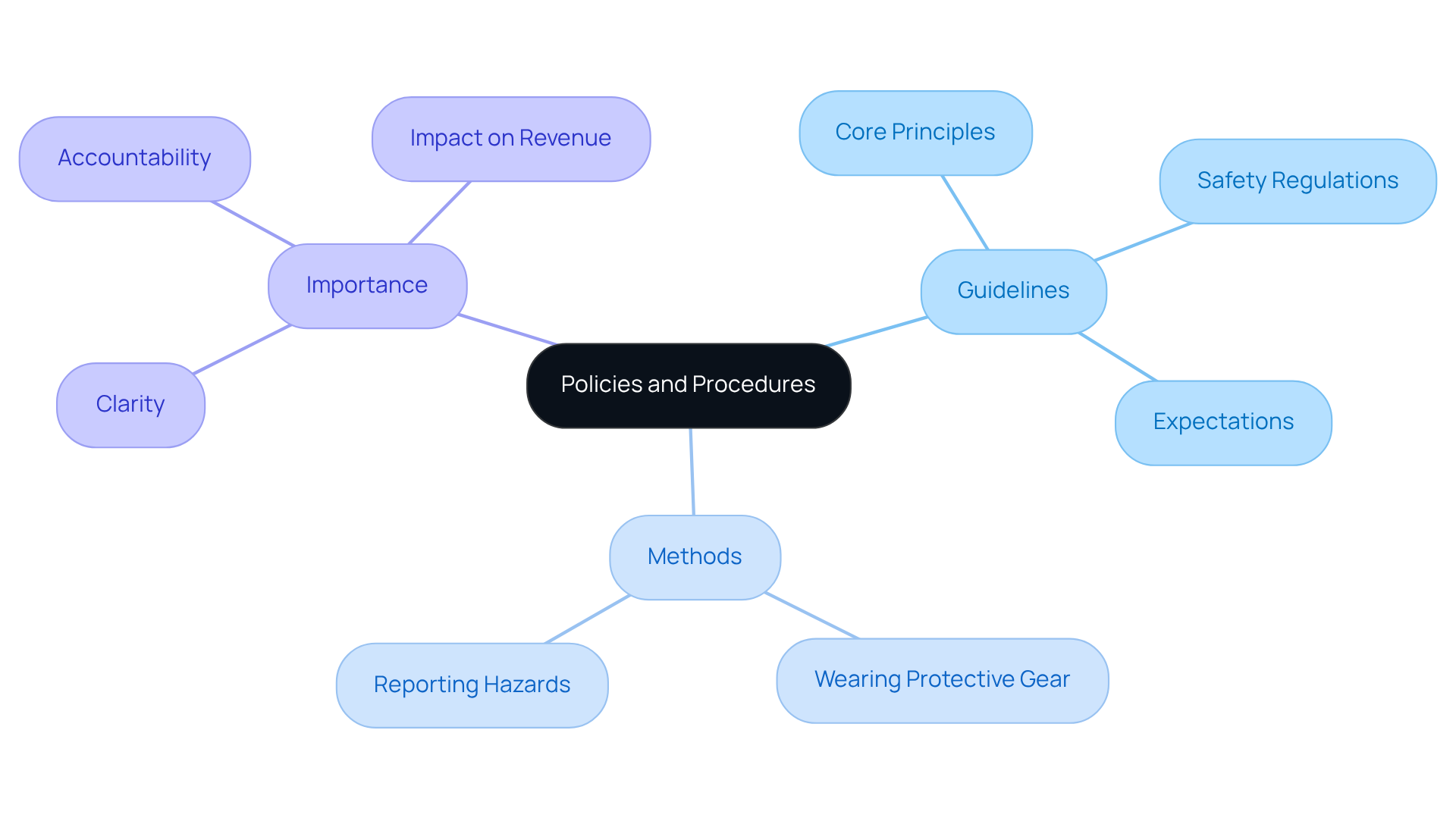
Policies are like the backbone of an organization, right? They lay out the core principles and values that guide how decisions are made and how everyone behaves. For instance, you might have a guideline that says all staff need to follow . But here’s where it gets interesting: methods come into play by providing a on how to actually follow those guidelines. So, while the safety guidelines tell you that you need to adhere to safety rules, the methods will break it down into specific actions, like wearing protective gear or reporting hazards.
Now, you might be wondering why it’s so important to understand the difference between guidelines and methods. Well, set the expectations, while well-defined processes give you the roadmap to meet those expectations. This clarity doesn’t just help with compliance; it also fosters a culture of accountability within the organization. Companies that have detailed staff manuals can really boost their onboarding experience and clarify the differences between guidelines and practices. In fact, this can lead to a whopping and lower turnover rates!
Speaking of compliance, did you know that are turning to tech solutions because of regulatory pressures? That’s where come in handy. They make the a breeze! With SowFlow, teams get instant access to , making updates and revisions super easy. By using SowFlow’s solutions, organizations can ensure that their staff adhere to policy and procedures, significantly enhancing and operational efficiency. So, why not explore how these tools can make your documentation challenges a thing of the past?
Understand the Importance of Policies and Procedures
You might be wondering why it is important to adhere to in the workplace. Well, think of them as your roadmap - they clarify everyone’s roles and responsibilities, making sure things run smoothly. They assist you in adhering to policy and procedures to remain compliant with , which means fewer headaches and penalties down the line. Plus, when everyone knows what’s expected of them, it creates a .
Imagine working in a place where you clearly understand the standards and the consequences of not meeting them. Sounds good, right? Companies that stick to organized guidelines often see happier employees and a safer environment. These frameworks help avoid chaos and keep operations optimized. And here’s a fun fact: organizations that adhere to policy and procedures tend to have , which leads to better resource use and lower liability risks.
Now, let’s talk about how effective strategies can really boost . They help you navigate the tricky regulatory landscape while keeping your focus on what you do best. Anastasia Masadi, a Product Owner, puts it perfectly: "SowFlow has transformed the way we and deliver to our clients. I no longer need to take each screenshot separately or leave the browser while creating and , giving me valuable time back in my life."
This testimonial really highlights how SowFlow can and make SOP development a breeze. It’s all about helping you stay compliant and on top of your game!

Develop Effective Policies and Procedures
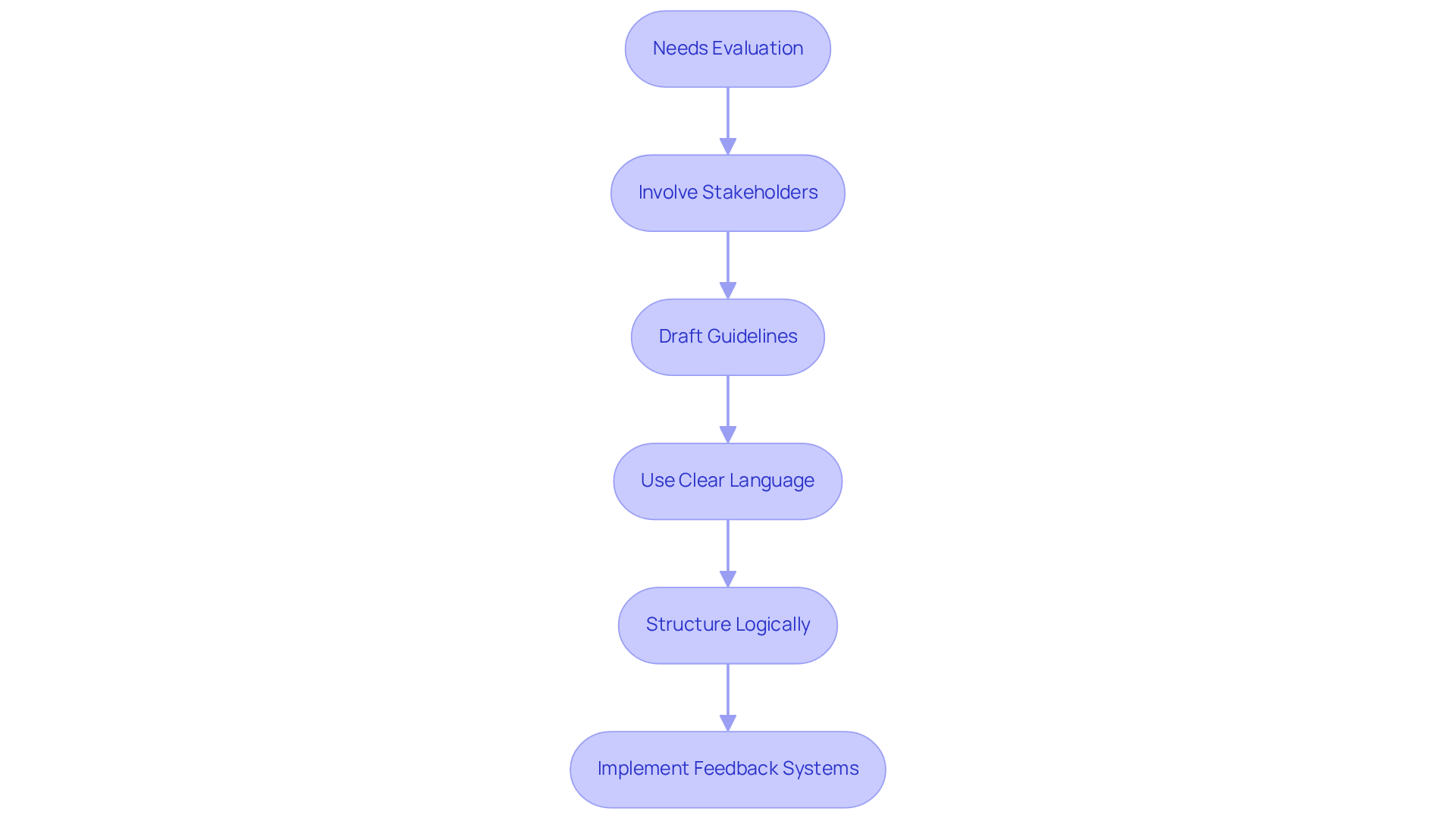
To kick things off, let’s talk about how to create . You might be wondering where to start, right? Well, it all begins with a thorough needs evaluation to pinpoint the specific challenges your organization faces. And here’s a tip: involving is key! It ensures that the guidelines truly reflect the realities of the workplace. Did you know that projects with of 78%? That’s way better than the 40% for those with less engagement. So, getting essential staff involved not only makes the guidelines more meaningful but also fosters a sense of ownership and responsibility.
Now, let’s dive into the nitty-gritty of language. Using is crucial to avoid any confusion. Plus, structuring your documents logically helps everyone understand them better. For example, if you’re drafting a remote work guideline, make sure it clearly outlines:
- Expectations
- Responsibilities
- How to request
This way, everyone’s on the same page! And don’t forget about - they’re fantastic for ongoing improvement. are a must, keeping your manual relevant and responsive to any changes in the organization.
Implement and Communicate Policies and Procedures
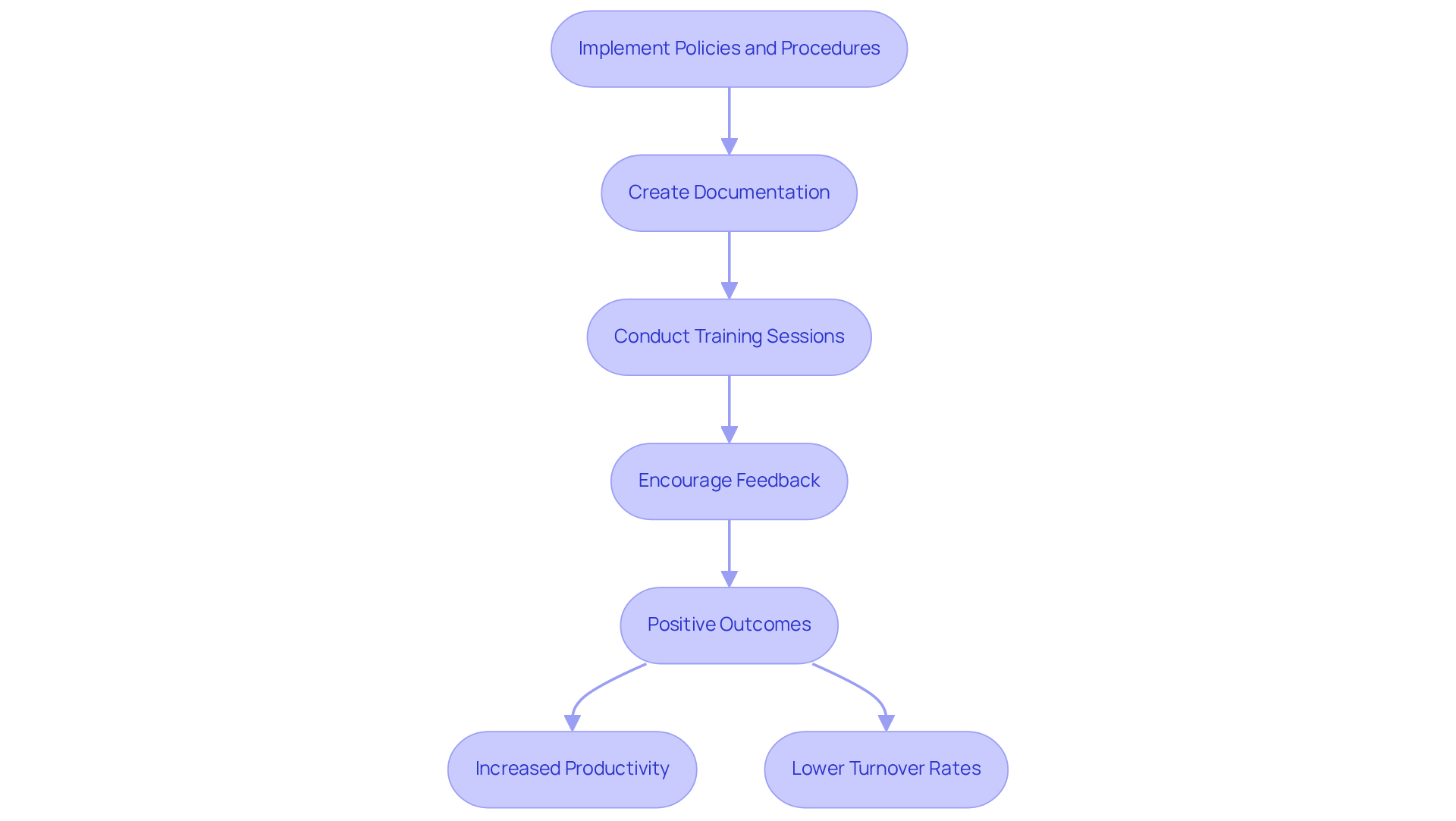
You might be wondering how to make sure your team has easy access to and really understands them. Well, that’s where SowFlow comes in! It gives teams instant access to all the documentation they need, making it super easy to . Plus, using - like meetings, emails, and training sessions - helps reinforce the message and caters to everyone’s learning style.
For example, when you roll out a new safety guideline, holding a can really help. It allows staff to discuss the guideline and its implications, thereby boosting their confidence to . SowFlow streamlines the creation of and training materials, enabling your team to adhere to policy and procedures while saving time and focusing on what really matters.
Encouraging feedback and questions during these sessions is a great way to clear up any confusion and keep everyone engaged. As Anastasia Masadi, a Product Owner, puts it, "SowFlow has been a game changer in the way we document work and deliver to our clients." And did you know that research shows organizations with see a 17% ? That really highlights how important it is to share clear and accessible information.
Moreover, when organizations prioritize staff understanding of guidelines, they often see . Workers feel more knowledgeable and valued in their roles, which is a win-win for everyone!
Monitor and Review Policies and Procedures
You might be wondering why consistent oversight and evaluation of guidelines and practices is so important. Well, keeping them effective and relevant is key! To make this happen, it’s a good idea to set up a - think every one to three years, depending on what’s happening in your industry. And don’t forget to involve essential , like your frontline staff, in the assessment process. Their varied viewpoints can really shed light on how feasible and impactful those regulations are. For example, if a remote work procedure feels cumbersome, why not ask for feedback on how to make it smoother?
Speaking of feedback, technology can be a real game-changer here. It allows for , making it easier to gather insights. Did you know that a study found 38% of firms struggle to provide enough resources for staff to access and understand guidelines? That really highlights the need for . By implementing these tools, companies can boost clarity and ensure everyone is up to speed on .
Now, let’s not forget to keep an eye on changes in laws and regulations that might impact your practices. Regular evaluations help you , enabling you to adapt to these shifts and minimize risks associated with outdated practices that can lead to compliance issues and . As Brian Tracy wisely puts it, "Practice the philosophy of . Get a little bit better every single day." By nurturing a culture of continuous improvement and involving employees in the policy review process, organizations can enhance their ability to adhere to policy and procedures while also improving overall operational efficiency.

Conclusion
You might be wondering why sticking to policies and procedures is such a big deal. Well, it’s all about creating a workplace that’s organized, efficient, and compliant. When organizations understand the difference between guidelines and methods, they can set up a clear framework that not only lays out expectations but also gives employees actionable steps to follow. This kind of clarity boosts accountability and can really ramp up operational efficiency.
So, what are the key steps to effectively sticking to these policies and procedures? First off, it’s crucial to define and develop clear guidelines. Then, make sure to implement and communicate them effectively. Don’t forget to regularly check in on their relevance! Engaging stakeholders in the creation process, using technology for documentation, and keeping the lines of communication open are all essential strategies that help build a culture of compliance and continuous improvement.
In short, having well-defined policies and procedures is super important. They act like a roadmap for employees, clarifying roles and responsibilities while helping to minimize legal risks. Organizations should really focus on developing and communicating these guidelines. Doing so not only boosts compliance but also helps create a positive organizational culture. By embracing these practices, everyone can feel aligned, informed, and empowered to contribute to the organization’s success. Now, doesn’t that sound like a win-win?
Frequently Asked Questions
What are policies and procedures in an organization?
Policies are the core principles and values that guide decision-making and behavior within an organization, while procedures provide step-by-step instructions on how to follow those policies.
Why is it important to understand the difference between guidelines and methods?
Understanding the difference is crucial because clear guidelines set expectations, while well-defined methods provide a roadmap to meet those expectations, fostering accountability and compliance.
How can detailed staff manuals benefit an organization?
Detailed staff manuals can enhance the onboarding experience, clarify differences between guidelines and practices, potentially leading to a 30% increase in revenue and lower turnover rates.
What role does technology play in compliance with policies and procedures?
Technology solutions, like SowFlow, are increasingly used by compliance professionals to streamline documentation processes, making it easier for teams to adhere to policies and procedures, thus enhancing compliance and operational efficiency.
What are the benefits of adhering to policies and procedures in the workplace?
Adhering to policies and procedures clarifies roles and responsibilities, ensures compliance with legal requirements, fosters a culture of accountability, and contributes to a safer and more organized work environment.
How do organized guidelines affect employee satisfaction and safety?
Companies that follow organized guidelines often see happier employees and a safer environment, helping to avoid chaos and optimize operations.
What impact do effective strategies have on operational efficiency?
Effective strategies help organizations navigate regulatory challenges while maintaining focus on core activities, leading to higher compliance rates and better resource utilization.
How has SowFlow changed the documentation process for users?
SowFlow has transformed documentation by allowing users to create standard operating procedures (SOPs) and training materials more efficiently, saving time and simplifying the process.
👍
What others are liking


5 Steps to outline your ideal documentation structure
5 MINS READ
Where to start the your journey of mapping out your ideal documentation structure, aligning it with the very heartbeat of your organization?
Defining a winning level of detail in your process
3 MINS READ
What is too much detail, and what is too little? This article described in that winning level detail about what detail is enough.


