

Knowledge Management through Documentation
|
March 9, 2026
|

5 Best Practices for Easy How to Instructions in Documentation
Key Highlights:
- Understanding the audience is crucial for creating effective how-to guidelines.
- Conduct research through surveys and interviews to gather insights on audience needs.
- Utilise personas to tailor content tone and complexity for different audience types.
- Regular feedback collection improves the relevance and effectiveness of materials.
- Organise documentation into clear sections with overviews, detailed instructions, and troubleshooting tips.
- Use clear and concise language, avoiding jargon to enhance readability.
- Incorporate visual aids like diagrams and screenshots to improve understanding and retention.
- Establish a routine for reviewing and updating documentation to maintain accuracy and relevance.
- Engage team members in the review process for valuable feedback and continuous improvement.
Introduction
Crafting effective how-to instructions in documentation is super important for making sure users can easily grasp and apply the information you provide. You might be wondering, how can we make this happen? By focusing on what your audience really needs and using clear, structured content, organizations can seriously boost the usability of their documentation.
But what happens when those instructions miss the mark on clarity or just don’t grab the reader’s attention? That’s where things can get tricky! In this article, we’re diving into five best practices that not only help streamline the creation of easy-to-follow guidelines but also elevate the overall quality of your documentation. Trust me, this can lead to happier users and smoother operations all around!
Identify Your Audience's Needs
You might be wondering how to develop effective how-to guidelines that truly resonate with your audience. Well, it all starts with understanding who they are. Here are some steps to help you get there:
-
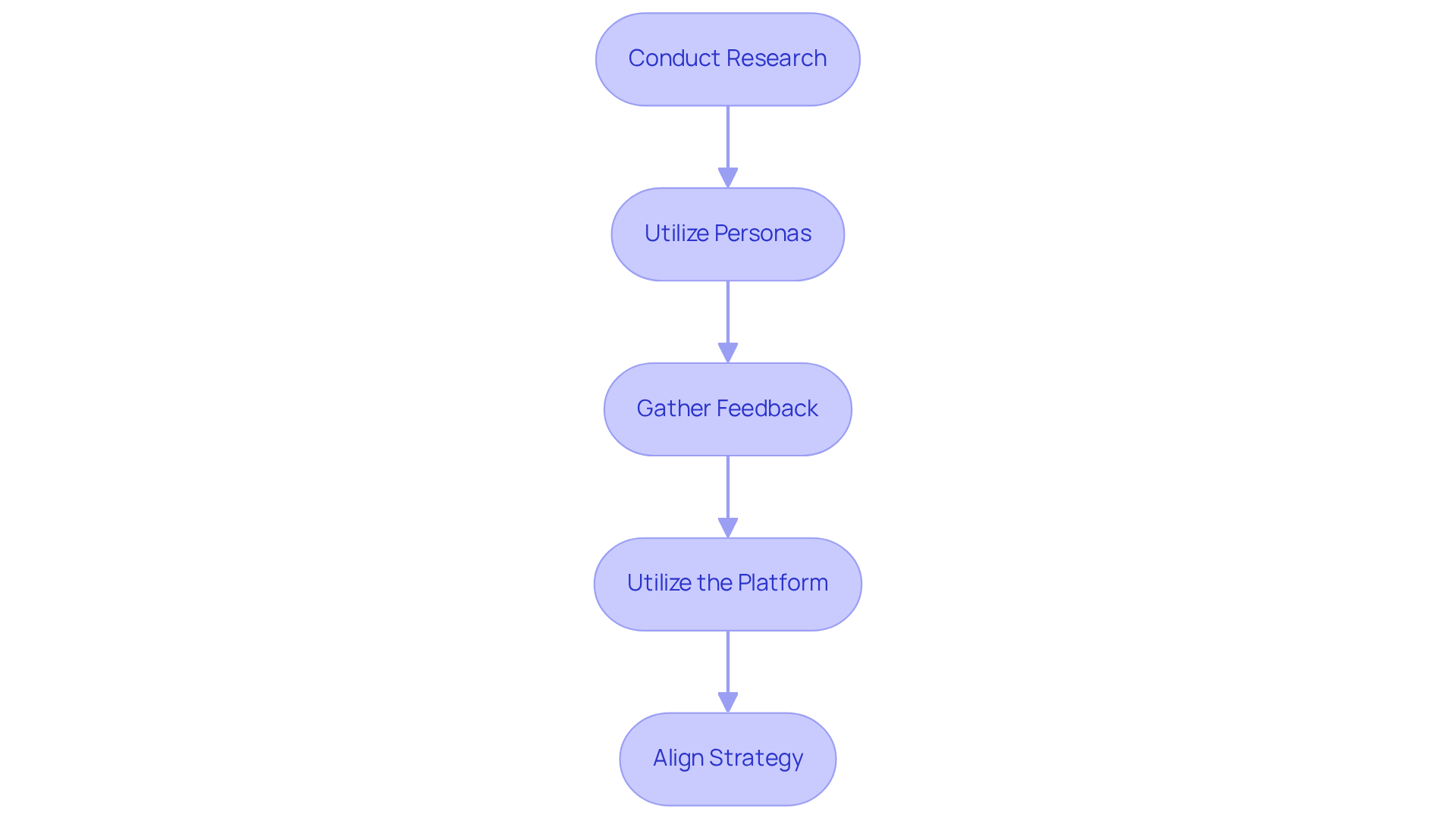
Conduct Research: Think about using surveys, interviews, or focus groups to gather insights into your audience's knowledge levels, preferences, and specific needs. For instance, new employees might need more detailed explanations and context compared to seasoned staff. This way, you can tailor your content to fit their needs.
-
Utilize Personas: Have you ever created personas? They can represent different audience types and guide the tone, complexity, and depth of your content. This targeted approach ensures that your easy how-to instructions resonate with individuals, making it easier for them to follow and apply the guidance you provide.
-
Gather Feedback: Regularly collecting audience opinions through surveys and testing sessions can really help improve your materials. This makes them more relevant and effective, which is what we all want, right?
-
Utilize the Platform: Imagine having immediate access to resources that facilitate easy guide creation and revisions. With the right system, you can invoke the knowledge contained in your records with just a single command, saving you from those endless meetings where you’re just seeking answers.
-
Align Strategy: Now, let’s dive into aligning your content strategy with audience insights. By leveraging SowFlow's capabilities, you can significantly boost user satisfaction and operational efficiency. Implementing a review cycle and tracking metrics related to audience engagement can help you spot areas for improvement, ensuring your documentation stays effective over time.
Organize Instructions for Clarity
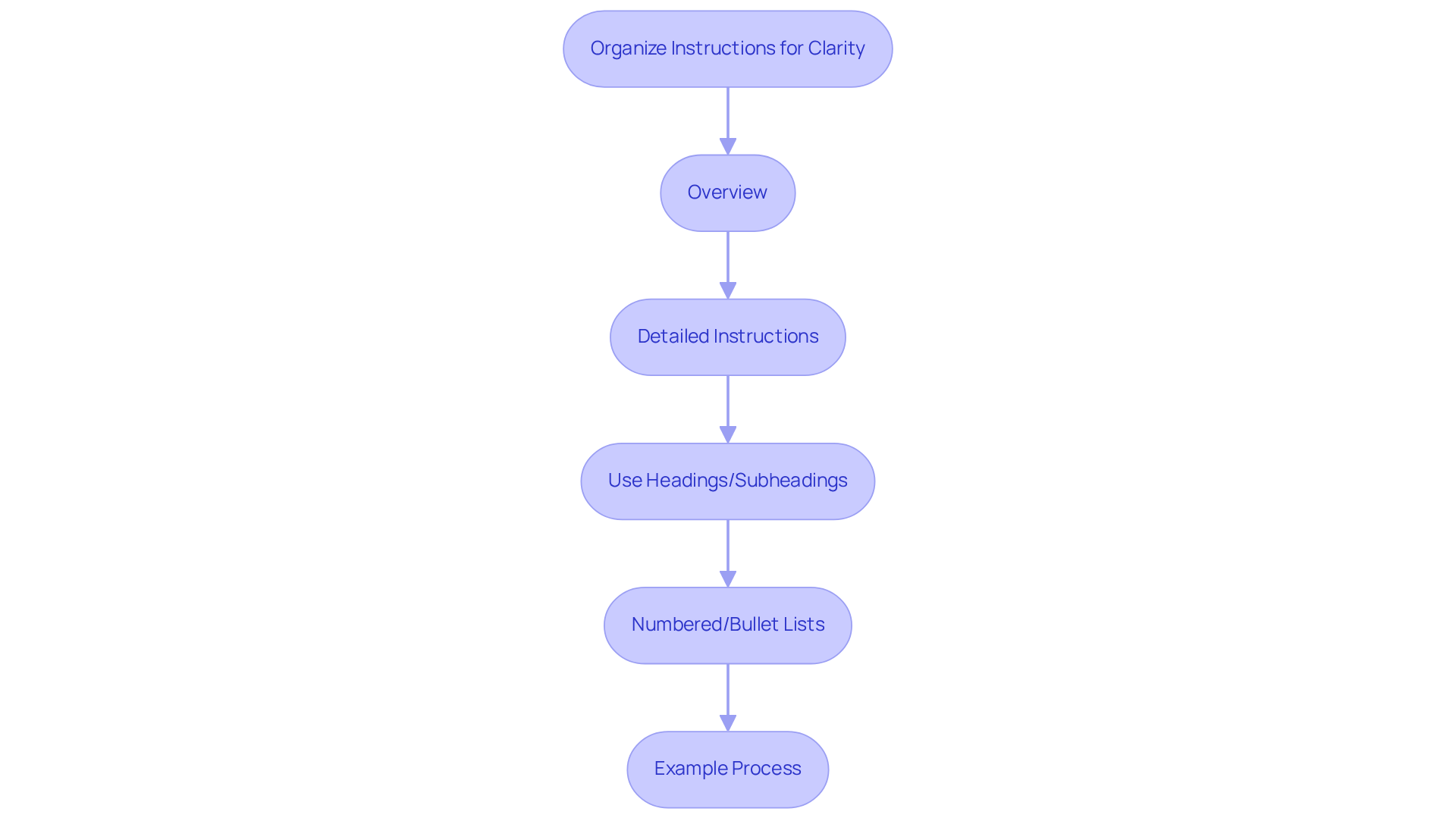
You might be wondering how to make your documentation clearer and more effective. Well, it all starts with breaking down your content into well-defined sections. Kick things off with an overview that quickly outlines the easy how to instructions. Then, dive into easy how to instructions that provide a detailed step-by-step breakdown of tasks. Using headings and subheadings helps categorize information logically, and don’t forget about numbered lists or bullet points - they make scanning through the content a breeze.
For example, if you’re documenting a software installation process, start with a list of prerequisites. Next, walk through the installation steps, and wrap it up with some troubleshooting tips. This structured approach not only offers easy how to instructions but also boosts comprehension and helps users quickly find the info they need. After all, did you know that 48% of people struggle to find documents efficiently? That’s a common challenge!
And here’s something to think about: without a solid document management strategy, 25% of records could end up lost. That really highlights the importance of keeping things organized. As Brayn Wills points out, focusing on accuracy, consistency, and usability ensures that your records stay actionable and empower your teams.
Now, let’s talk about how this platform can help. The immediate guide solution here makes creating user manuals and updating them a walk in the park. You’ll always have materials that are relevant and easy to access. Clear, accessible, and well-maintained records aren’t just nice to have - they’re essential for efficient teams. By putting these best practices into action, especially with SowFlow's capabilities, organizations can seriously enhance their documentation processes. This leads to better productivity and a lot less operational chaos!
Use Clear and Concise Language
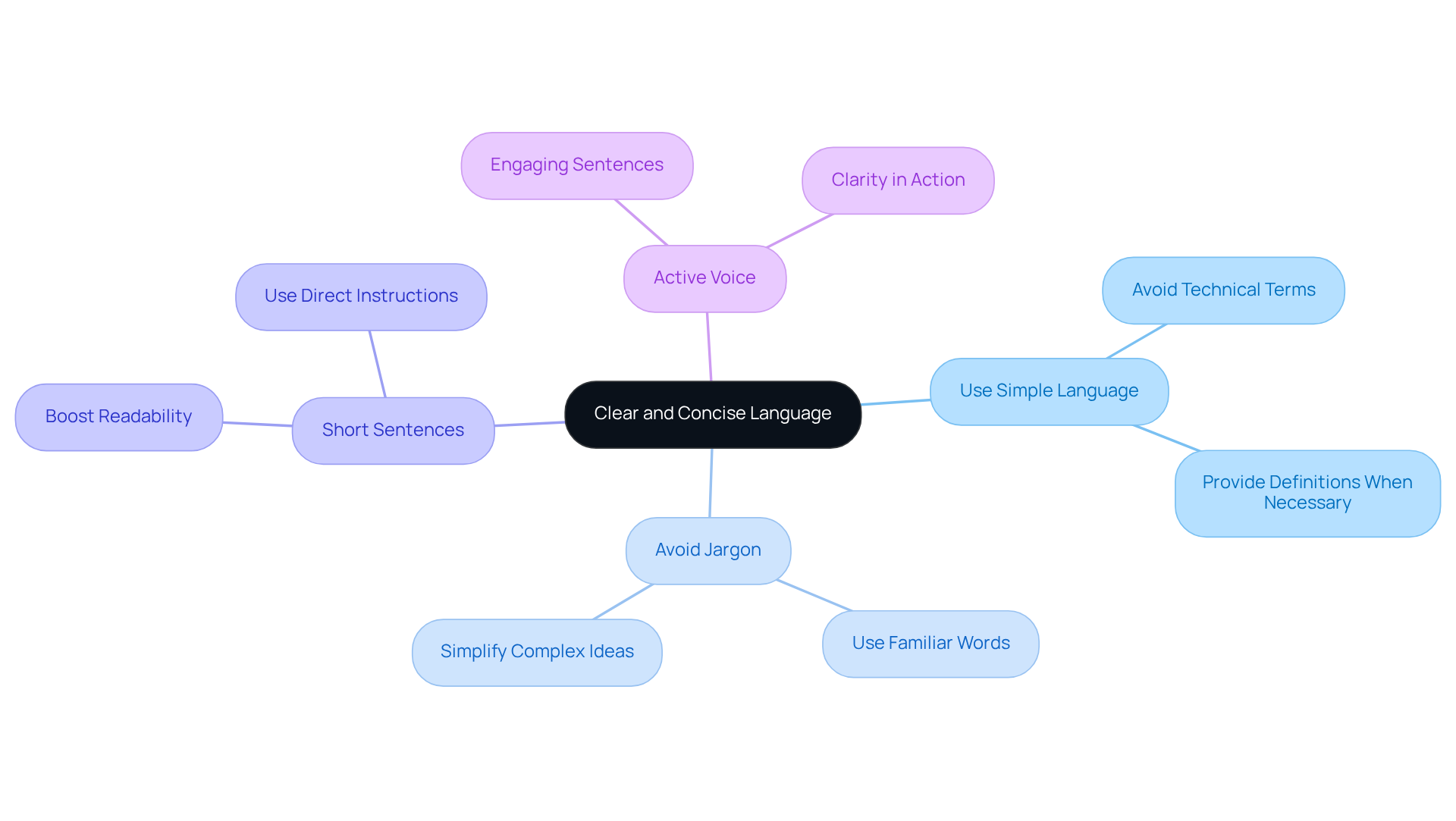
When you're putting together guidelines, clarity should be your top priority. You might be wondering how to achieve that? Well, it’s all about using simple, direct language. Avoid jargon and technical terms unless you really have to; and if you do, make sure to provide definitions. Short sentences and paragraphs can really boost readability. For instance, instead of saying, 'Utilize the application to facilitate the completion of the task,' just say, 'Use the app to complete the task.' This straightforward approach provides easy how-to instructions, cutting down on confusion and helping users get the instructions quickly.
Now, let’s dive into another tip: consider using active voice. It makes your sentences more engaging and easier to follow. With this system, you can quickly refresh and modify your records, keeping them in line with the ever-changing business landscape. Speaking of features, SowFlow shines with its intuitive interface for easy guide creation and the ability to implement changes swiftly. This way, your documentation stays relevant and effective. So, what are you waiting for? Let’s make your guidelines as clear and helpful as possible!
Incorporate Visual Aids and Examples
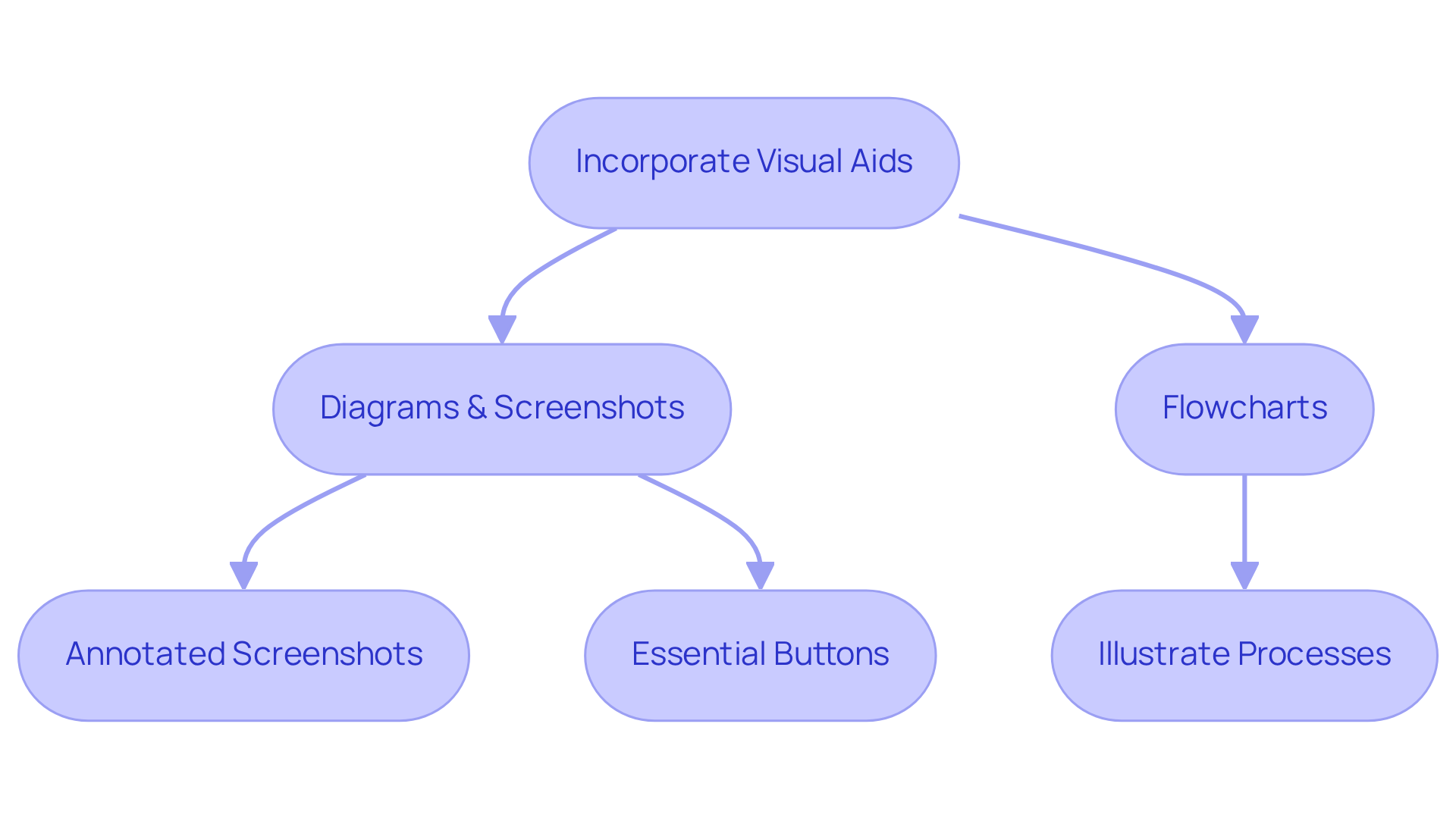
You might be wondering how easy how to instructions can really make a difference with visual aids. Well, let’s talk about it! Diagrams, screenshots, and flowcharts are not just pretty pictures; they play a crucial role in making things clearer and more effective. For example, when you’re explaining a software feature, annotated screenshots can point out those essential buttons or options, helping folks navigate the interface with ease.
Now, flowcharts are another fantastic tool. They illustrate processes and break down action sequences, making it easier to grasp what needs to happen to achieve specific outcomes. To really make the most of these visuals, it’s important to follow easy how to instructions that keep them relevant, clearly labeled, and placed right next to the related text. This way, they reinforce your message beautifully.
Speaking of reinforcement, this smart use of visuals doesn’t just help with understanding; it also boosts engagement and reduces cognitive load. That means a smoother learning experience for everyone involved! Research even shows that when visuals are included, retention rates can skyrocket. People remember up to 65% of information when it’s paired with relevant images, compared to just 10% through auditory methods. Pretty impressive, right?
So, by incorporating these visual elements, your records become more approachable and captivating. Ultimately, this leads to better results for everyone. Why not give it a try?
Regularly Review and Update Instructions
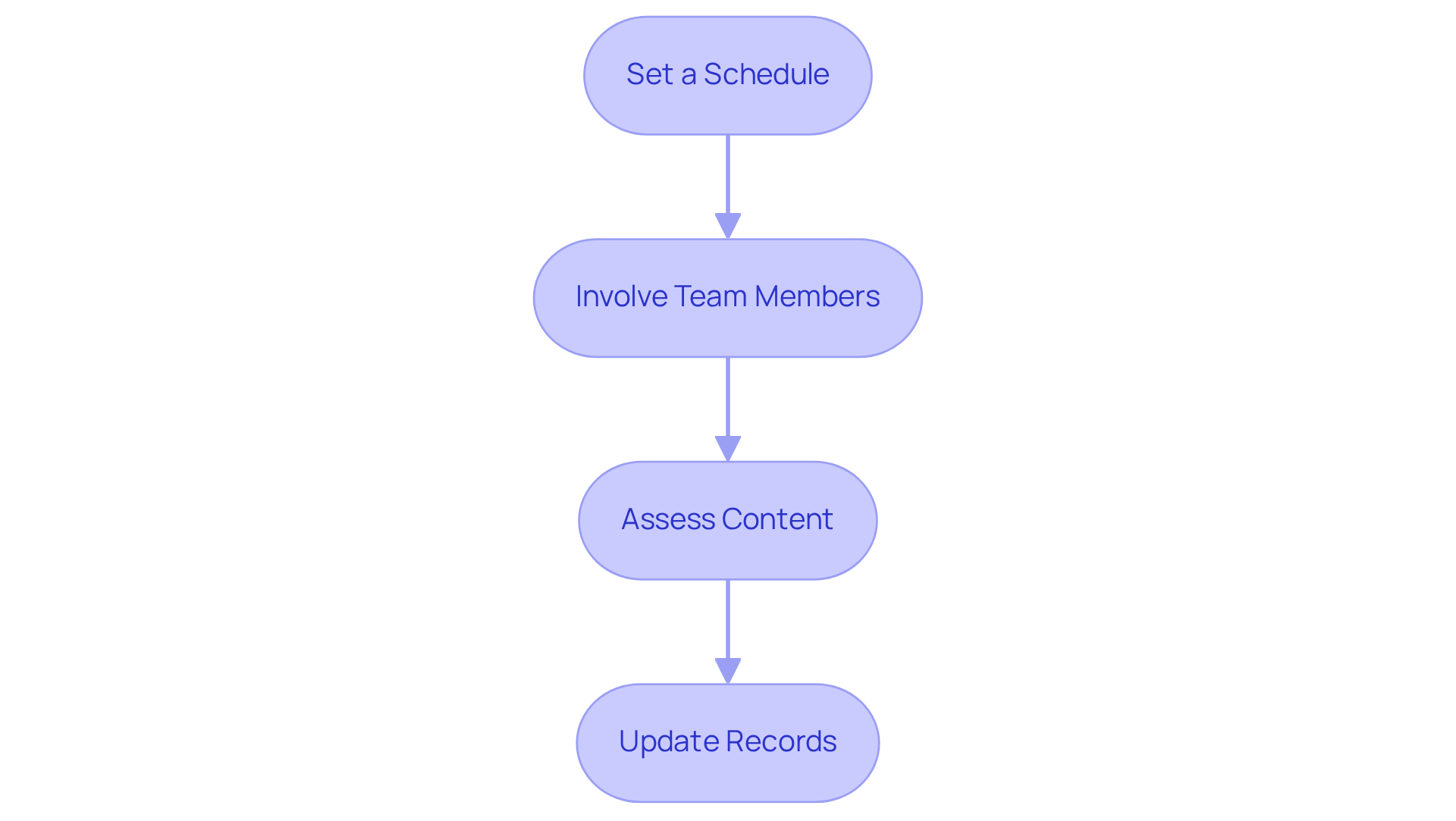
You might be wondering how to keep your records accurate and relevant. Establishing a routine for reviewing and updating them is key! With SowFlow, creating user guides is a breeze, letting you access your materials' knowledge with just one command. So, let’s dive into some steps for effective documentation reviews:
- Set a Schedule: How about planning periodic reviews? Think quarterly or bi-annually.
- Involve Team Members: Engage those who use the materials regularly. Their feedback can be super valuable!
- Assess Content: Check for outdated info, clarify any confusing instructions, and integrate new processes or tools.
- Update Records: If a software update changes the user interface, use SowFlow to quickly revise the relevant records.
This proactive approach not only boosts the quality of your documentation but also includes easy how to instructions that nurture a culture of continuous improvement in your organization. It streamlines process standardization and knowledge sharing, making everything run smoother!
Conclusion
Crafting effective how-to instructions in documentation is super important for making sure users can easily grasp and apply the information. You might be wondering how to do this, right? Well, by focusing on what your audience needs, organizing content clearly, using straightforward language, adding some visual aids, and keeping everything updated, you can really boost the usability and effectiveness of your documentation.
Key insights from the article highlight the need to understand your audience through research and feedback. Structuring instructions logically helps with clarity, and using simple language can clear up any confusion. Visual aids, like diagrams and screenshots, are game-changers for enhancing comprehension and retention. Plus, regular reviews keep your documentation relevant and accurate.
Ultimately, putting these best practices into action not only elevates the quality of your documentation but also nurtures a culture of continuous improvement within your organization. By prioritizing clear communication and user-centered design, you can empower your users, streamline processes, and drive greater operational efficiency. So, why not embrace these strategies? They’ll lead to more effective documentation that meets the ever-changing needs of users in any context.
Frequently Asked Questions
How can I identify my audience's needs when creating guidelines?
You can identify your audience's needs by conducting research through surveys, interviews, or focus groups to gather insights about their knowledge levels, preferences, and specific needs.
What are personas and how can they help in content creation?
Personas represent different audience types and help guide the tone, complexity, and depth of your content, ensuring that your instructions resonate with your audience.
Why is gathering feedback important for documentation?
Regularly collecting audience opinions through surveys and testing sessions helps improve your materials, making them more relevant and effective.
How can utilizing the right platform enhance guide creation?
The right platform can provide immediate access to resources for easy guide creation and revisions, saving time and reducing the need for endless meetings.
What strategies can align content with audience insights?
Aligning your content strategy with audience insights can be achieved by implementing a review cycle, tracking engagement metrics, and using tools like SowFlow to improve user satisfaction and operational efficiency.
How should I organize my documentation for clarity?
Organize your documentation by breaking it into well-defined sections, starting with an overview, followed by detailed step-by-step instructions, and using headings, subheadings, numbered lists, or bullet points for easy navigation.
What is an example of a structured approach to documentation?
An example would be documenting a software installation process by starting with a list of prerequisites, followed by the installation steps, and concluding with troubleshooting tips.
Why is a solid document management strategy important?
A solid document management strategy is important because without it, a significant percentage of records could end up lost, making it difficult to find and utilize important information.
How can organizations enhance their documentation processes?
Organizations can enhance their documentation processes by implementing best practices such as focusing on accuracy, consistency, and usability, and utilizing platforms like SowFlow for better productivity and less operational chaos.
👍
What others are liking


5 Steps to outline your ideal documentation structure
5 MINS READ
Where to start the your journey of mapping out your ideal documentation structure, aligning it with the very heartbeat of your organization?
Defining a winning level of detail in your process
3 MINS READ
What is too much detail, and what is too little? This article described in that winning level detail about what detail is enough.


