


Key Highlights
- Identifying the target audience is crucial for tailoring technical materials to their expertise and needs.
- Understanding audience preferences through surveys and interviews enhances engagement and usability.
- Setting clear goals using the SMART criteria helps define intended outcomes for documentation.
- Conducting thorough research and collaborating with subject matter experts ensures accuracy and credibility.
- Usability testing with real users provides valuable feedback for improving clarity and effectiveness.
- Regular maintenance and updates of documentation are essential to keep information relevant and accurate.
- Version control helps track changes and ensures access to the most current information for users.
Introduction
You might be wondering how to create effective technical writing documents. Well, it’s an art that really hinges on understanding both the content and your audience. By focusing on best practices, you can turn complex information into materials that are not just accessible but also engaging - something that truly resonates with readers.
But here’s the kicker: balancing clarity with technical accuracy can be tricky. You want your documents to inform and empower users, right?
So, what are the essential strategies that can elevate your technical writing from just a set of instructions to invaluable resources? Let’s dive into that!
Define Your Audience and Their Needs
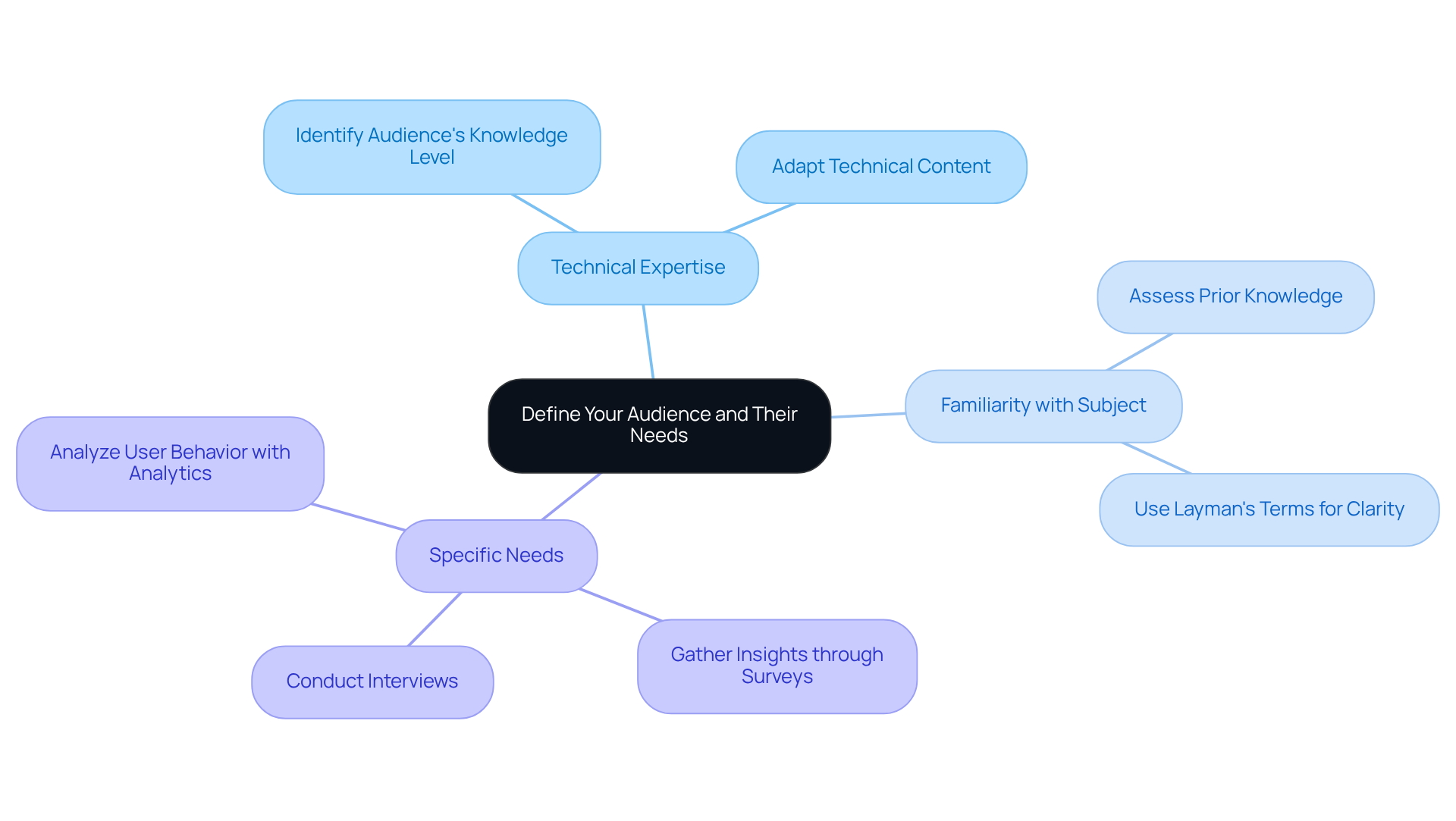
You might be wondering how to create , right? Well, the first step is to clearly . Think about their technical expertise, how familiar they are with the subject, and what they might have. You can gather insights through surveys, interviews, or even analytics to really understand their preferences and challenges.
For instance, if you’re writing for software developers, you’ll want to emphasize and provide detailed instructions. But if your audience is made up of end-users, should be your top priorities. to match your audience's level of understanding can really , making your documentation much more effective.
And here’s the kicker: research shows that materials are not only easier to understand but also more likely to be used effectively. So, by focusing on your audience, you’re not just conveying complex information; you’re also enhancing their overall experience. Now, let’s dive into some practical tips on how to achieve this!
Establish Clear Goals for Documentation
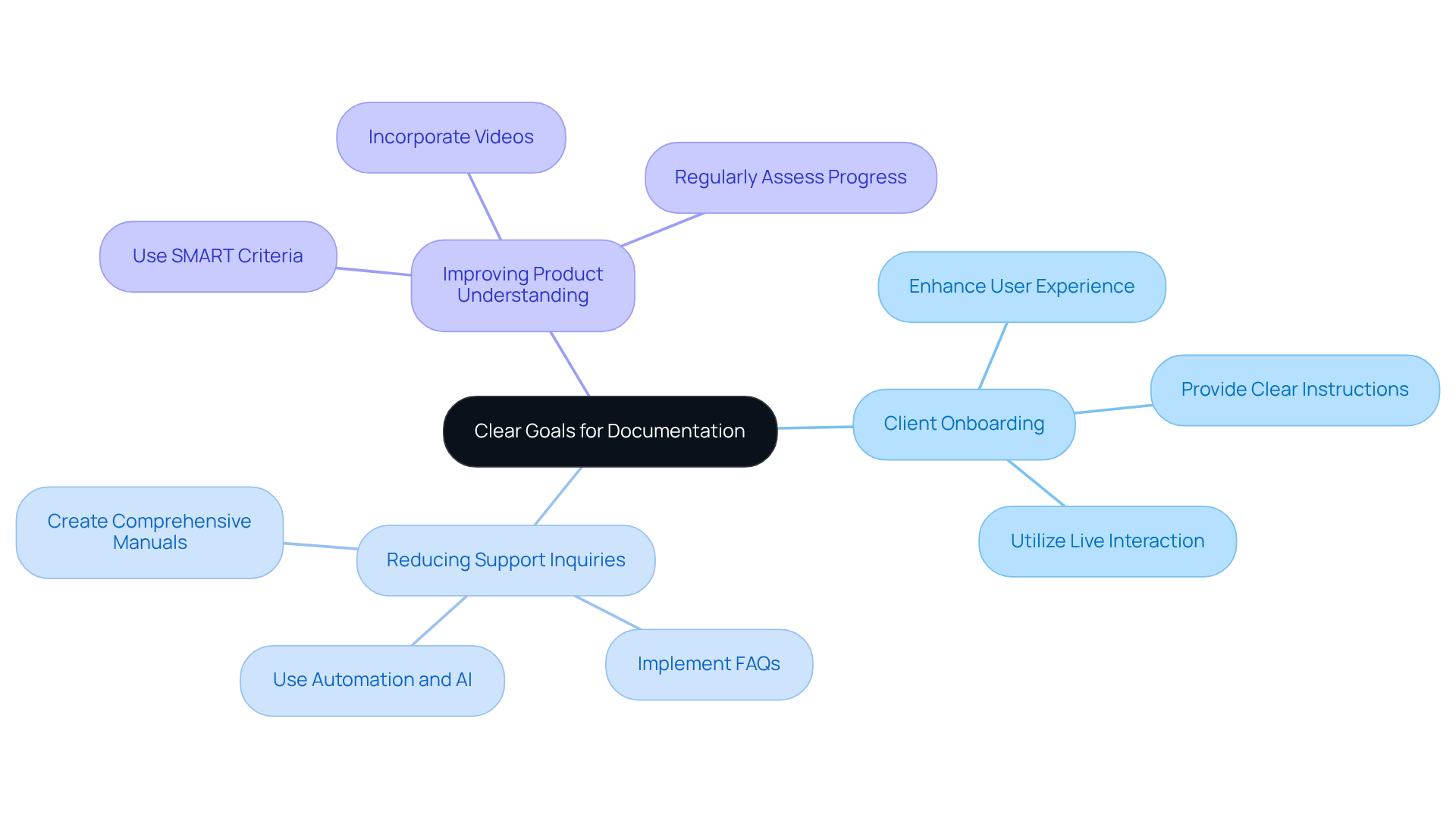
Before you start drafting any document, have you thought about what you really want to achieve? is key to defining those intended outcomes. Whether it’s about making smoother, cutting down on support inquiries, or helping folks understand your product better, having a can make all the difference.
For instance, if you’re aiming to create a manual, think about how it can help people tackle tasks on their own. Using the - Specific, Measurable, Achievable, Relevant, and Time-bound - can really sharpen those goals. This organized approach not only makes the writing process easier but also gives you a way to measure how effective your text is once it’s out there.
Having explicit objectives can really boost clarity, especially when it comes to onboarding. It ensures that people can with confidence and ease. So, what do you think? Are you ready to dive into setting some clear goals for your ?
Conduct Thorough Research and Collaborate with Experts
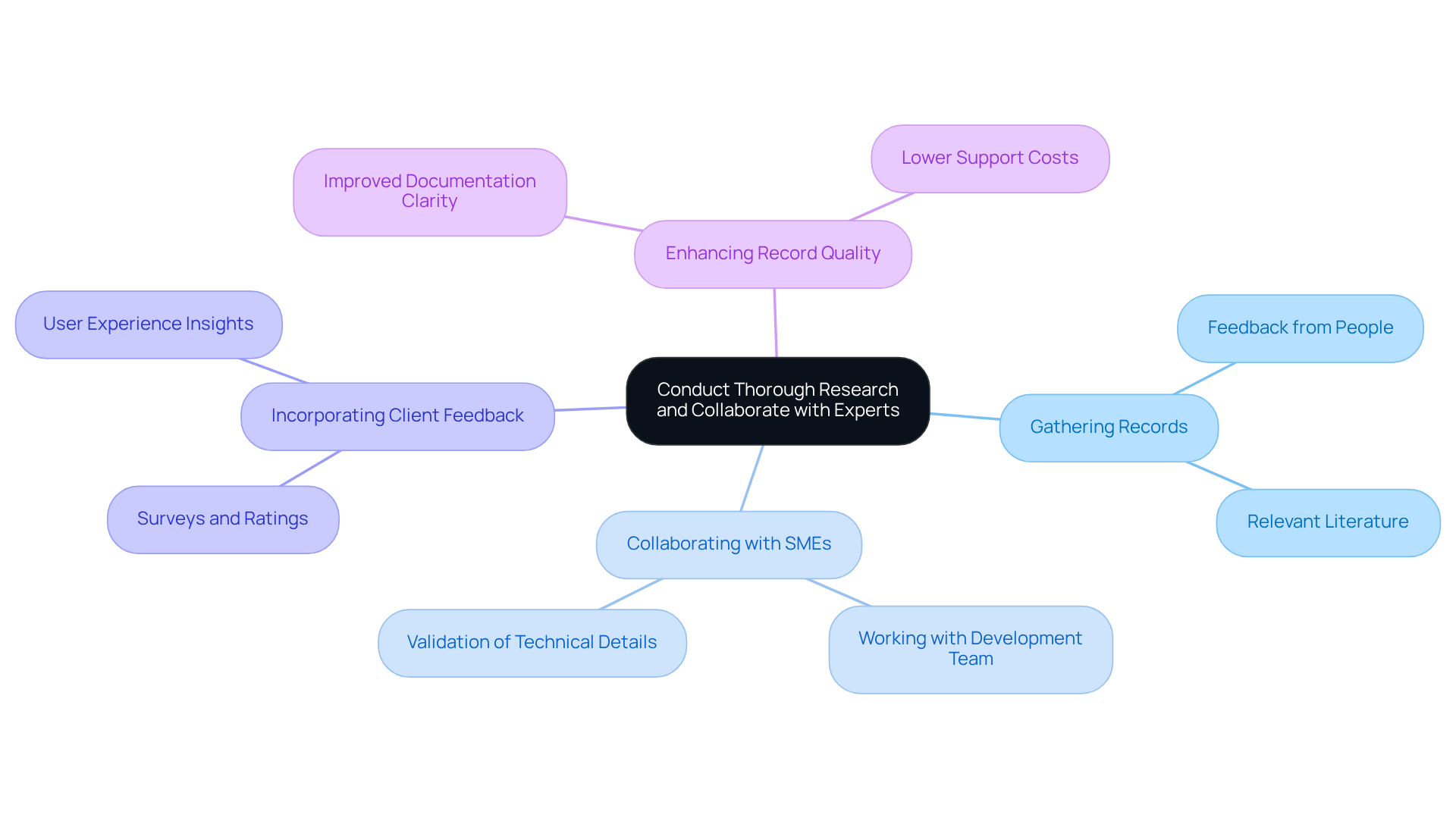
You might be wondering why conducting thorough research is so crucial for . Well, it all starts with gathering available records, feedback from people, and relevant literature. And let’s not forget about ! They’re key to and shedding light on those complex topics.
For example, when you’re recording a new software feature, working closely with the development team can really clarify how it works and help spot any potential challenges. This collaborative approach not only but also gives stakeholders a sense of ownership, leading to more accurate and trustworthy records.
Speaking of teamwork, studies show that , which in turn leads to happier customers and lower support costs. As Bruce Temkin pointed out, a positive customer experience often means a higher chance of referrals. That really highlights how important quality records are!
So, how can you make sure your materials meet client needs and expectations? By ! This not only fosters better product adoption but also builds customer loyalty. Now, let’s dive into some practical tips for effective documentation!
Draft, Revise, and Test for Clarity and Usability
You might be wondering how to kick off the drafting process effectively. Start by organizing your content logically - think headings and bullet points to make everything easier to read. Once you’ve got a draft, take a moment to revise it for clarity. It’s all about making those easy to understand, right?
Now, let’s talk about . This part is crucial! You want real participants to interact with your materials and share their feedback. For example, if someone struggles with a specific section, it might be time to rephrase that content or add some . This back-and-forth is key to creating documentation that truly meets people’s needs.
As experts often say, keeping an eye on how users interact with your materials can reveal some pretty significant insights into usability. This way, you can make that boost . So, are you ready to dive into this ?

Implement Ongoing Maintenance and Updates for Documentation
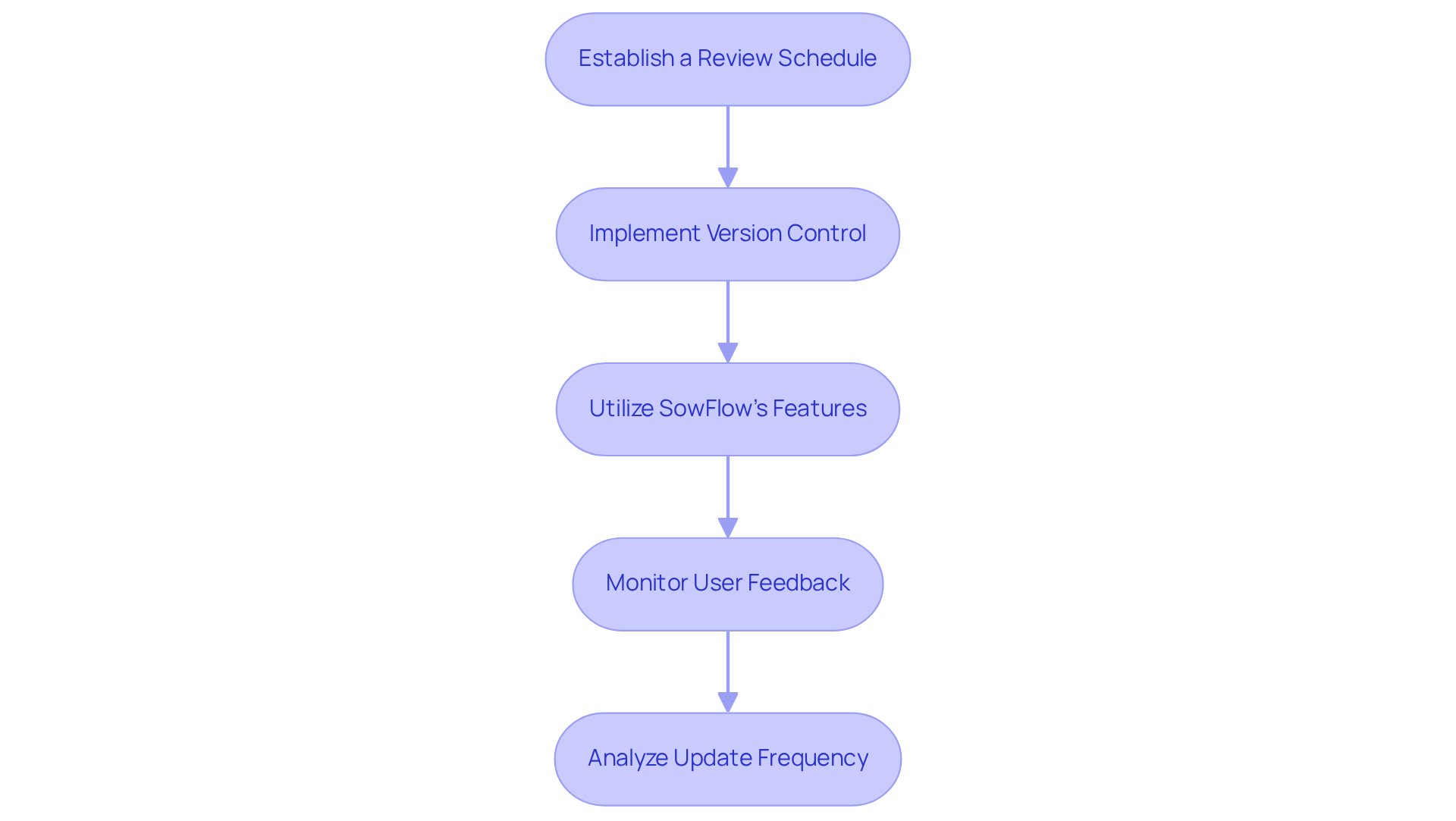
To make sure your technical documents are running smoothly, why not set up a regular schedule for evaluations and revisions? Think about how often your subject matter changes - maybe quarterly, biannually, or even annually. And don’t forget about version control! It’s a great way to keep track of changes and ensure everyone has access to the latest info. With , you can easily tweak and update your manuals to reflect those important software changes in no time. This proactive approach not only boosts user satisfaction but also helps organizations that keep their information fresh see a real improvement in . Plus, it cuts down on the risk of misinformation. has been shown to lower support ticket deflection rates, allowing your teams to focus on more complex issues. By prioritizing version control and quick revisions with SowFlow, organizations can significantly improve the reliability and accessibility of their . And hey, tracking the average time between updates can help you stay relevant and accurate, ensuring your records remain a valuable resource for everyone.
Steps for Effective Documentation Maintenance:
- Establish a Review Schedule: How often does your documentation need a check-up? Figure that out based on how frequently things change in your field.
- : Use version control systems to keep an eye on changes and make sure everyone has the latest info at their fingertips.
- : Take advantage of SowFlow's tools to make refreshing your documents a breeze, so your manuals always reflect the latest software upgrades.
- : Regularly gather user input to spot areas where your materials could use a little love.
- : Keep tabs on how often you’re updating things to ensure your documentation stays relevant and accurate.
Conclusion
You might be wondering how to create effective technical writing documents that really hit the mark. Well, it all comes down to a strategic approach that puts your audience's needs front and center. When you understand who your readers are and what they need, you can tailor your content to make it clearer and more usable. This focus not only boosts the immediate effectiveness of your documentation but also makes for a better overall experience for users.
So, what are some key practices to keep in mind?
- Defining your target audience is crucial.
- Set clear goals for your documentation.
- Do thorough research.
- Collaborate with experts.
- Don’t forget about ongoing maintenance.
Each of these steps is vital in crafting materials that are not just informative but also engaging and user-friendly. Remember, drafting and revising with clarity in mind, along with usability testing, are essential to ensure your documentation meets its intended objectives.
In a nutshell, effective technical writing is a continuous journey that evolves alongside the needs of your audience and the information you share. By committing to best practices like regular updates and incorporating user feedback, organizations can significantly boost the quality and reliability of their documentation. Embracing these strategies will not only enhance user satisfaction but also lead to greater efficiency and effectiveness in communication across technical fields. So, why not take a moment to reflect on your own documentation challenges and see how you can apply these insights?
Frequently Asked Questions
How can I define my audience for technical materials?
To define your audience, consider their technical expertise, familiarity with the subject, and specific needs. You can gather insights through surveys, interviews, or analytics to understand their preferences and challenges.
Why is it important to tailor content to my audience?
Tailoring content to match your audience's level of understanding boosts engagement and usability. Customized materials are easier to understand and more likely to be used effectively, enhancing the overall experience for the audience.
What should I consider when establishing goals for documentation?
When establishing goals, think about what you want to achieve, such as making client onboarding smoother or reducing support inquiries. Use the SMART criteria (Specific, Measurable, Achievable, Relevant, Time-bound) to sharpen your goals.
How do clear goals impact the writing process?
Clear goals provide focus and clarity, making the writing process easier. They also allow you to measure the effectiveness of your documentation once it’s published, ensuring that it meets the intended outcomes.
Can you give an example of how to set goals for a manual?
When creating a manual, consider how it can help users complete tasks independently. Establish specific objectives that guide the content and structure, ensuring users can navigate your products with confidence and ease.
List of Sources
- Define Your Audience and Their Needs
- 5 BEST PRACTICES FOR TECHNICAL WRITING | Nitor Infotech (https://nitorinfotech.com/blog/best-practices-for-technical-writing)
- writingcommons.org (https://writingcommons.org/article/audience-analysis-primary-secondary-and-hidden-audiences)
- (PDF) How Much Importance Do We Give to Target Audiences in Article Writing? (https://researchgate.net/publication/51223493_How_Much_Importance_Do_We_Give_to_Target_Audiences_in_Article_Writing)
- goodreads.com (https://goodreads.com/quotes/tag/technical-writing)
- The Importance of Identifying Your Target Audience: Unlocking Marketing Success - Traffic Radius (https://trafficradius.com.au/the-importance-of-target-audience)
- Establish Clear Goals for Documentation
- akitaapp.com (https://akitaapp.com/blog/customer-onboarding-statistics)
- 11 Surprising Goal Setting Statistics To Crush 2024 (https://bramework.com/goal-setting-statistics)
- 15+ Essential Goal-Setting Statistics [2023]: The Importance of Setting Goals - Zippia (https://zippia.com/advice/goal-setting-statistics)
- userguiding.com (https://userguiding.com/blog/user-onboarding-statistics)
- betterup.com (https://betterup.com/blog/goal-setting-quotes)
- Conduct Thorough Research and Collaborate with Experts
- Maximizing User Satisfaction: Improving Technical Documentation with User Feedback (https://clickhelp.com/clickhelp-technical-writing-blog/maximizing-user-satisfaction-improving-technical-documentation-with-user-feedback)
- How We Collaborate: Reported Frequency of Technical Communicators' Collaborative Writing Activities (https://researchgate.net/publication/233692737_How_We_Collaborate_Reported_Frequency_of_Technical_Communicators'_Collaborative_Writing_Activities)
- 70 Research Quotes to Inspire Your Work - Qualtrics (https://qualtrics.com/articles/strategy-research/research-quotes)
- Top Technical Documentation KPIs to Track (https://document360.com/blog/technical-documentation-kpi)
- Metrics that matter: Measuring the impact of documentation in your year-end reflections (https://medium.com/softserve-technical-communication/metrics-that-matter-measuring-the-impact-of-documentation-in-your-year-end-reflections-2605316f8935)
- Draft, Revise, and Test for Clarity and Usability
- Metrics that matter: Measuring the impact of documentation in your year-end reflections (https://medium.com/softserve-technical-communication/metrics-that-matter-measuring-the-impact-of-documentation-in-your-year-end-reflections-2605316f8935)
- supercopyeditors.com (https://supercopyeditors.com/blog/writing/quotes-about-the-process-of-writing)
- 25 Key Usability Testing Statistics to Revamp your Design | VWO (https://vwo.com/blog/usability-testing-statistics)
- 18 Interesting and Inspirational Quotes About Editing and Proofreading (https://servicescape.com/blog/18-interesting-and-inspirational-quotes-about-editing-and-proofreading)
- What number of users is right for my usability test? - Trymata (https://trymata.com/blog/how-many-users-for-usability-tests)
- Implement Ongoing Maintenance and Updates for Documentation
- Just the Numbers: 10 Document Management Stats You Need to Know (https://foxit.com/blog/just-the-numbers-10-document-management-stats-you-need-to-know)
- Metrics That Matter: Supercharging Your Documentation with Data (https://clickhelp.com/clickhelp-technical-writing-blog/frequency-metrics-for-documentation)
- Top Technical Documentation KPIs to Track for Your Company [2025] - BetterDocs (https://betterdocs.co/top-technical-documentation-kpis-to-track)
- The Metrics That Matter: Supercharging Your Documentation with Data (https://clickhelp.medium.com/the-metrics-that-matter-supercharging-your-documentation-with-data-8b7ee8e5aa7e)
👍
What others are liking


5 Steps to outline your ideal documentation structure
5 MINS READ
Where to start the your journey of mapping out your ideal documentation structure, aligning it with the very heartbeat of your organization?
Defining a winning level of detail in your process
3 MINS READ
What is too much detail, and what is too little? This article described in that winning level detail about what detail is enough.


