


Key Highlights
- Outline Procedures: Create a flowchart of current processes to identify bottlenecks and inefficiencies.
- Gather Data: Collect quantitative and qualitative data such as error rates and customer feedback for analysis.
- Conduct Root Cause Analysis: Use techniques like the 5 Whys or Fishbone Diagram to uncover the root causes of issues.
- Engage Team Members: Involve team members for insights and foster a culture of continuous improvement.
- Document Findings: Keep a record of identified flaws and their impacts for future reference and accountability.
- Analyse Production Data: Review historical production data to identify patterns of overproduction.
- Implement Just-in-Time Principles: Align production schedules with customer demand to reduce excess inventory.
- Conduct Capacity Assessments: Evaluate production capacity to ensure alignment with market demands.
- Engage with Sales and Marketing Teams: Collaborate with these teams to fine-tune production levels based on customer forecasts.
- Document Overproduction Instances: Record causes and impacts of overproduction for targeted improvement strategies.
- Map Transportation Processes: Create a flowchart of transportation activities to identify inefficiencies.
- Measure Transportation Times: Monitor how long each transportation phase takes to spot delays.
- Evaluate Transportation Routes: Look for opportunities to shorten routes or consolidate shipments.
- Identify Unnecessary Movements: Streamline transportation by cutting out or combining unnecessary actions.
- Develop an Action Plan: Create a detailed plan for implementing enhancements based on findings.
- Communicate Changes: Share planned changes with all stakeholders to ensure alignment.
- Pilot Enhancements: Test changes in a controlled environment before full implementation.
- Monitor and Measure Results: Use KPIs to assess the effectiveness of implemented changes.
- Document the Process: Keep thorough records of changes, results, and lessons learned for future initiatives.
Introduction
In the fast-paced world of operations management, you might be wondering: how can we keep up with the never-ending quest for efficiency and effectiveness? Identifying and fixing defects in processes, managing overproduction, and streamlining transportation can really boost productivity and cut down on waste. But let’s be honest - many operations managers struggle with where to start and how to make meaningful changes.
So, what are the essential steps that can turn those operational challenges into opportunities for improvement? This guide dives into four critical steps that empower you to refine your processes and drive success.
Identify Defects in Current Processes
To effectively spot defects in current processes, let’s walk through some essential steps together:
- Outline Procedures: First off, why not sketch out a detailed flowchart of your current procedures? This visual guide helps clarify each phase, making it easier to spot potential bottlenecks and inefficiencies.
- Gather Data: Next, gather both quantitative and qualitative data about how things are running. Think error rates, customer feedback, and the time each step takes. This info lays a solid groundwork for your analysis.
- Conduct Root Cause Analysis: Now, let’s dive into root cause analysis. You can use techniques like the 5 Whys or Fishbone Diagram to dig into the reasons behind issues. By continuously asking why something happened, you’ll uncover the root cause and tackle it head-on.
- Engage Team Members: Don’t forget to involve your team! Those who are directly in the trenches can spot flaws that might not jump out from the data alone. Plus, it fosters a culture of teamwork and ongoing improvement.
- Document Findings: Finally, keep a detailed record of the flaws you’ve identified and their potential impacts on the overall system. This documentation is key for guiding future improvements and ensuring everyone stays accountable.

Evaluate Areas of Overproduction
You might be wondering how to tackle overproduction in your business. Well, let’s break it down into some simple steps that can really help you out:
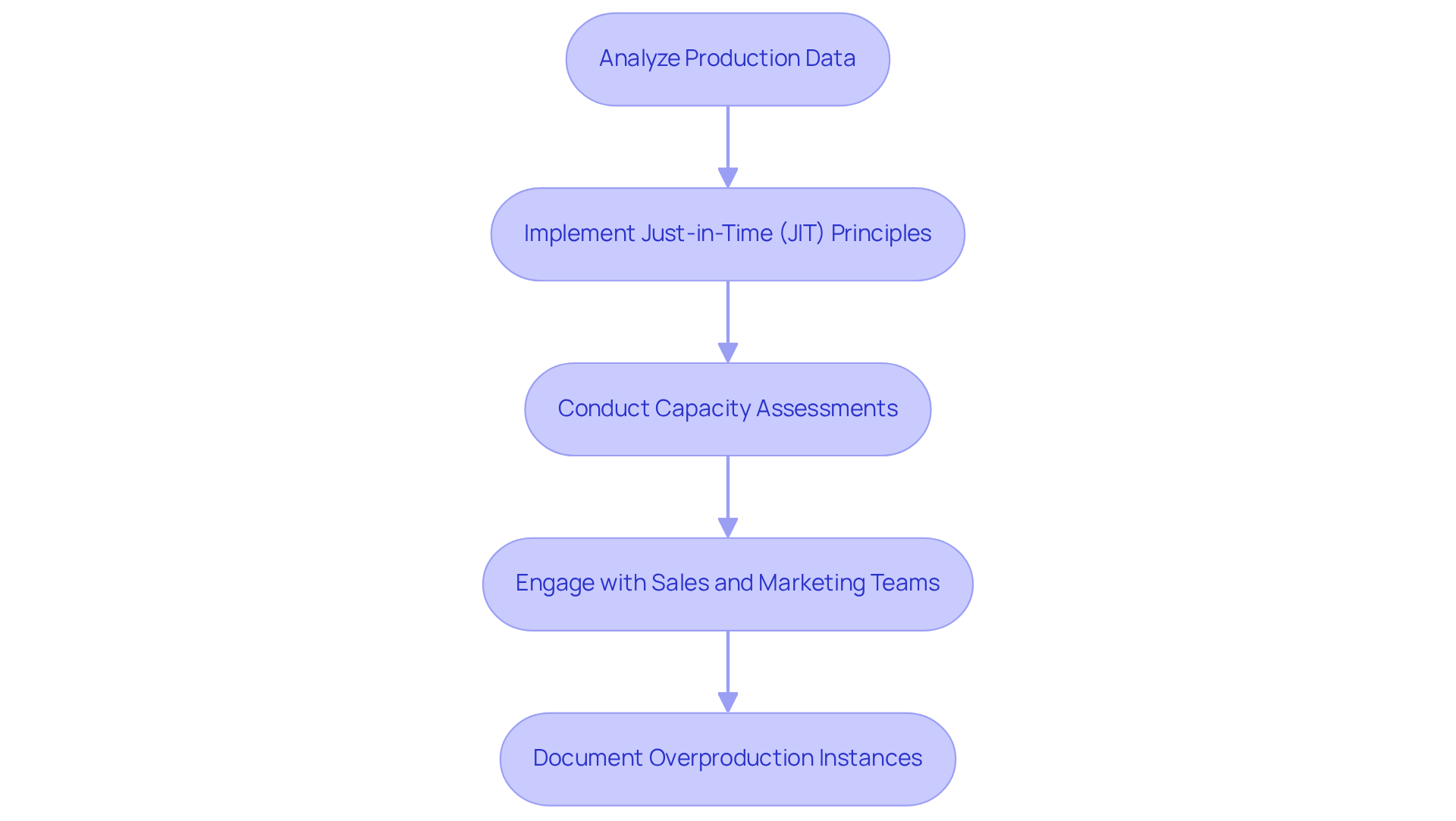
- Analyze Production Data: Start by taking a good look at your historical production data. This is where you can spot patterns of overproduction. Keep an eye out for those times when your output went beyond what customers actually wanted.
- Implement Just-in-Time (JIT) Principles: Have you heard of Just-in-Time principles? They’re a game changer! By aligning your production schedules with customer demand, you can cut down on excess inventory and waste. It’s all about being efficient and responsive.
- Conduct Capacity Assessments: Next up, let’s evaluate your production capacity. Is it in sync with what the market demands? If not, it might be time to make some adjustments to better meet those needs.
- Engage with Sales and Marketing Teams: Don’t forget to chat with your sales and marketing teams! They have valuable insights into customer demand forecasts. By collaborating with them, you can fine-tune your production levels to match what your customers really want.
- Document Overproduction Instances: Finally, keep a record of any overproduction instances you encounter. Note down the causes and impacts. This documentation will be super helpful when you’re developing targeted strategies for improvement.
So, what do you think? These steps to process improvement can significantly impact the management of overproduction and help maintain smooth operations!
Assess Non-Value Added Transportation
To assess non-value added transportation, let’s break it down into some simple steps:
- Map Transportation Processes: First off, grab a piece of paper and create a flowchart of all your transportation activities. You’ll want to pinpoint every stage where materials or information are passed along. It’s like drawing a map of your journey!
- Measure Transportation Times: Next, keep an eye on how long each transportation phase takes. Are there any delays or bottlenecks that are slowing you down? Identifying these can really help you spot inefficiencies.
- Evaluate Transportation Routes: Now, let’s take a look at the routes you’re using to transport materials. Are there ways to shorten those routes or maybe consolidate shipments? Reducing travel time can make a big difference!
- Identify Unnecessary Movements: Think about whether any of your transportation actions can be cut out or combined. For instance, can you move materials directly to the next step instead of making them go through multiple stages? It’s all about streamlining!
- Document Findings: Finally, make sure to keep a record of all those non-value added transportation activities and how they impact your overall efficiency. This documentation will be super helpful when you’re ready to take steps to process improvement.
So, what do you think? Ready to dive into improving your transportation processes?

Implement Process Improvement Strategies
To kick off your process improvement journey, let’s break it down into some easy steps:
- Develop an Action Plan: So, what’s next? Based on what you’ve discovered, whip up a detailed action plan. This should outline the specific enhancements you want to make, who’s responsible for what, and when things need to happen.
- Communicate Changes: Now, let’s talk about communication. It’s super important to share the planned changes with everyone involved. Make sure everyone’s on the same page about why these changes are happening and what their roles will be in making them a reality.
- Pilot Enhancements: Before you go all in, why not test the waters? Consider piloting your enhancements in a controlled environment. This way, you can see how things go and tweak them as needed before the big rollout.
- Monitor and Measure Results: After you’ve implemented the changes, keep an eye on how things are going. Use key performance indicators (KPIs) to measure the effectiveness of your enhancements. It’s all about making sure you’re on the right track!
- Document the Process: Finally, don’t forget to document everything! Keep a thorough record of the changes you made, the results you achieved, and any lessons you learned along the way. This documentation will be a goldmine for any future steps to process improvement initiatives.

Conclusion
You know, improving operational processes is really crucial for any organization that wants to boost efficiency and productivity. By taking a systematic approach - like spotting defects, looking at overproduction, and assessing non-value added transportation - operations managers can really streamline workflows. This isn’t just about fixing immediate problems; it’s about building a culture of continuous improvement within the team.
So, what are the key steps? Well, it starts with:
- Outlining current procedures
- Gathering valuable data
- Getting the team involved to uncover those hidden inefficiencies
Plus, if you leverage Just-in-Time principles and refine transportation processes, you can cut down on waste and better align production with what customers actually want. And don’t forget to document your findings along the way! This keeps everyone accountable and gives you a roadmap for future enhancements.
Ultimately, embracing these strategies gives operations managers the power to make informed decisions that really drive efficiency and effectiveness. Taking the initiative to implement these process improvements not only enhances the current operational landscape but also sets the organization up for long-term success in a competitive marketplace. Engaging in this ongoing journey of improvement isn’t just beneficial - it’s essential for any organization looking to thrive and adapt in today’s fast-paced business world.
Frequently Asked Questions
What is the first step in identifying defects in current processes?
The first step is to outline procedures by sketching a detailed flowchart of your current processes. This visual guide helps clarify each phase and makes it easier to spot potential bottlenecks and inefficiencies.
What type of data should be gathered for analysis?
Both quantitative and qualitative data should be gathered, including error rates, customer feedback, and the time each step takes. This information lays a solid groundwork for analysis.
What is root cause analysis and how can it be conducted?
Root cause analysis involves investigating the underlying reasons for issues. Techniques such as the 5 Whys or Fishbone Diagram can be used to dig deeper into the causes by continuously asking why something happened.
Why is it important to engage team members in the process?
Engaging team members is important because those who are directly involved in the processes can identify flaws that may not be evident from data alone. It also fosters a culture of teamwork and ongoing improvement.
What should be done with the findings once defects are identified?
It is essential to document the identified flaws and their potential impacts on the overall system. This documentation is key for guiding future improvements and ensuring accountability.
List of Sources
- Identify Defects in Current Processes
- 5 inspiring quotes about business process management – Novacura (https://novacura.com/5-inspiring-quotes-about-business-process-management)
- 26 Quotes About Improving Processes That Will Inspire Change (https://niagarainstitute.com/blog/quotes-improving-processes)
- 85 Quotes - Operational Excellence and Continuous Improvement | Rever (https://reverscore.com/85-quotes-operational-excellence-and-continuous-improvement)
- 25 Inspirational Business Process Improvement Quotes (https://teamguru.com/blog/25-inspirational-business-process-improvement-quotes/1632)
- Evaluate Areas of Overproduction
- 85 Quotes - Operational Excellence and Continuous Improvement | Rever (https://reverscore.com/85-quotes-operational-excellence-and-continuous-improvement)
- Overproduction in the Fashion Industry: Causes, Impacts, Solutions (https://nul.global/overproduction-in-the-fashion-industry)
- 25 Inspirational Business Process Improvement Quotes (https://teamguru.com/blog/25-inspirational-business-process-improvement-quotes/1632)
- Just In Time (JIT): Definition, Advantages and Implementation (https://beewatec.com/en/blog/just-in-time-definition-advantages-and-implementation)
- Built to Waste? How Outdated Manufacturing Practices Are Costing Us More Than Money (https://blog.minitab.com/en/blog/built-to-waste-how-outdated-manufacturing-practices-are-costing-us-more-than-money)
- Assess Non-Value Added Transportation
- Development of a Classification Model for Value-Added and Non-Value-Added Operations in Retail Logistics: Insights from a Supermarket Case Study (https://mdpi.com/2071-1050/17/7/3177)
- Eliminating Non-Value-Added Activities and Optimizing Manufacturing Processes Using Process Mining: A Stock of Challenges for Family SMEs (https://mdpi.com/2071-1050/16/4/1694)
- Reducing non-value added (NVA) activities through lean tools for the precast industry - PMC (https://pmc.ncbi.nlm.nih.gov/articles/PMC11021972)
- 68 Supply Chain Statistics To Know in 2025 | Tradeverifyd (https://tradeverifyd.com/resources/supply-chain-statistics)
- 37 Supply Chain Statistics, Trends, and Predictions for 2024 | Fictiv (https://fictiv.com/articles/supply-chain-statistics-you-need-to-know)
- Implement Process Improvement Strategies
- 26 Quotes About Improving Processes That Will Inspire Change (https://niagarainstitute.com/blog/quotes-improving-processes)
- Process Improvement Quotes and Blogs. (https://everythingsupplychain.com/process-improvement-quotes-and-blogs)
- How to create a process improvement plan in 4 simple steps? (https://processmaker.com/blog/how-to-create-a-process-improvement-plan-in-4-simple-steps)
- 25 Inspirational Business Process Improvement Quotes (https://teamguru.com/blog/25-inspirational-business-process-improvement-quotes/1632)
- 65+ Change Management Statistics for Success in 2026 (https://mooncamp.com/blog/change-management-statistics)
👍
What others are liking


5 Steps to outline your ideal documentation structure
5 MINS READ
Where to start the your journey of mapping out your ideal documentation structure, aligning it with the very heartbeat of your organization?
Defining a winning level of detail in your process
3 MINS READ
What is too much detail, and what is too little? This article described in that winning level detail about what detail is enough.


