

Automation and Documentation
|
March 9, 2026
|

4 Steps to Develop Training Material for Effective Operations
Key Highlights:
- Conduct a Training Needs Analysis (TNA) using surveys and interviews to identify skill gaps and future needs.
- Engage stakeholders, including managers and team leaders, to ensure alignment on necessary skills and foster ownership of outcomes.
- Define SMART learning objectives to guide development and measure success effectively.
- Document findings in a straightforward report to serve as a reference throughout the training process.
- Review current instructional materials for relevance and effectiveness, noting that 33% of employees find them outdated.
- Gather feedback from past participants and instructors to improve training experiences tailored to specific roles.
- Create engaging and interactive training content that addresses identified gaps using various formats like videos and infographics.
- Pilot new materials with a small group to gather feedback and refine content before full implementation.
- Identify audience learning preferences through surveys to ensure instructional methods resonate with participants.
- Select delivery methods such as instructor-led training, e-learning, blended education, and microlearning to enhance engagement.
- Consider logistics, including technology and budget constraints, when choosing training methods.
- Create a development schedule to outline timelines for training sessions that align with participant availability.
- Design assessment tools like quizzes and practical exercises to measure knowledge retention and skill application.
- Conduct pre- and post-session assessments to evaluate the effectiveness of training programmes.
- Collect participant feedback post-training to improve content and delivery methods.
- Analyse assessment results and feedback to identify trends and enhance future training programmes.
Introduction
You might be wondering why crafting effective training material is such a big deal for organizations. Well, it’s all about boosting operational efficiency and employee performance! By figuring out what training needs to be addressed, setting clear learning goals, and creating engaging content, companies can really amp up their workforce capabilities.
But here’s the kicker: the real challenge is making sure these training initiatives are not just relevant but also hit home with everyone’s different learning styles. So, how can organizations find that sweet spot between being super prepared and flexible enough to create training experiences that truly make an impact? Let’s dive into that!
Identify Training Needs and Set Learning Objectives
-
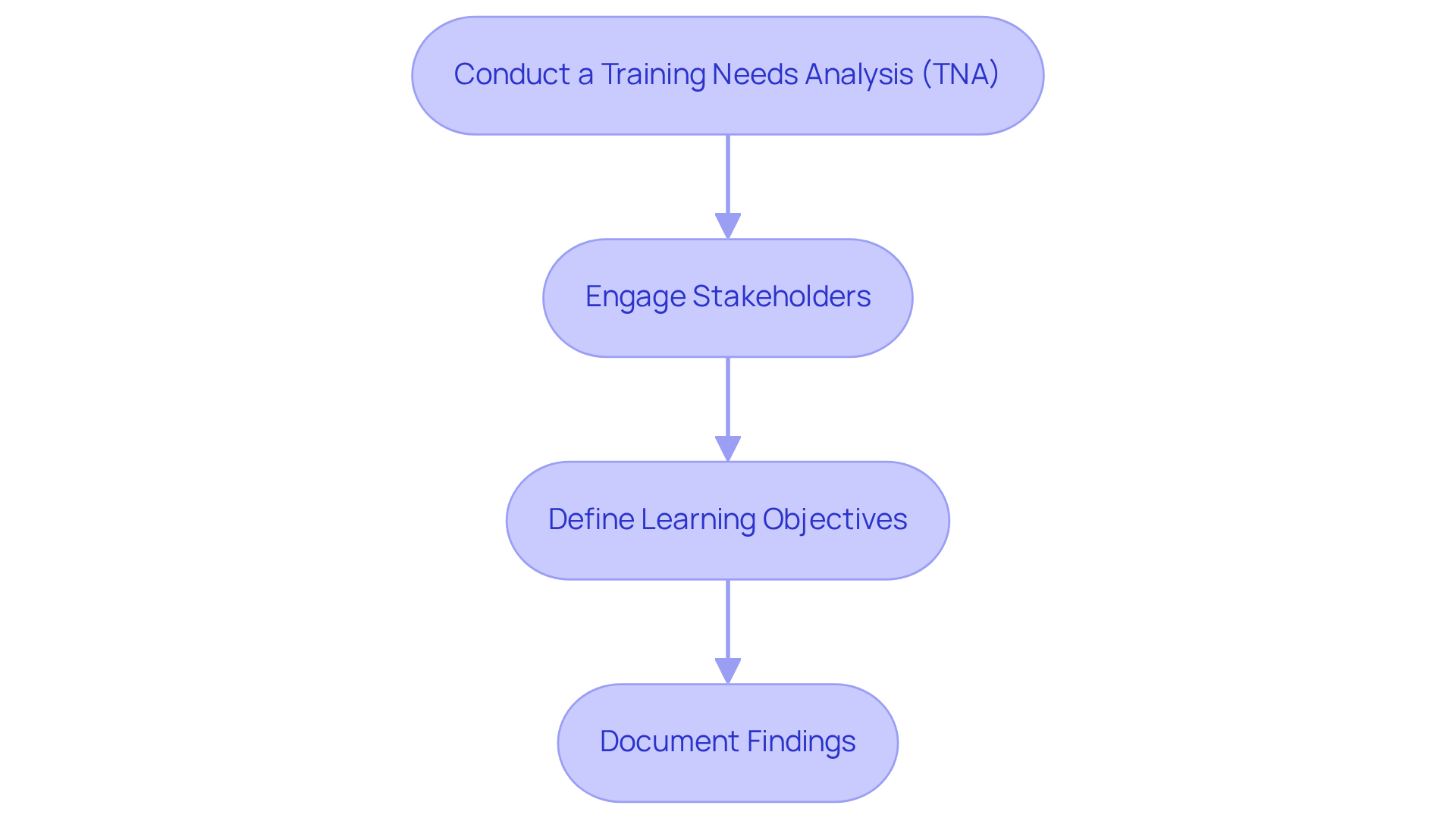
Conduct a Training Needs Analysis (TNA): You might be wondering where to start. Well, kick things off by gathering data through surveys, interviews, and performance reviews. This helps you pinpoint those pesky skill gaps among your employees. Remember, it’s not just about what’s needed now but also what’s on the horizon for your organization. Research shows that companies that take a systematic approach to TNA really boost their workforce capabilities and overall performance. Plus, TNA helps you allocate resources wisely, making the most of your budget, time, and effort.
-
Engage Stakeholders: Now, let’s talk about getting everyone on board. Involve managers and team leaders in the conversation to get their take on what skills their teams really need. This collaboration makes sure that the development is spot-on and has the backing of leadership. Engaging a diverse group of stakeholders in the TNA process not only fosters buy-in but also creates a sense of ownership over the outcomes. As Abdijabbar Ismail Nor puts it, "Engaging a diverse group of stakeholders in TNA fosters buy-in and ownership of outcomes."
-
Define Learning Objectives: Based on what you’ve discovered, it’s time to set some clear goals. Think SMART: specific, measurable, achievable, relevant, and time-bound objectives. Instead of saying, "improve customer service skills," how about specifying, "reduce customer complaint resolution time by 20% within three months?" Clear objectives not only guide the development process but also help you measure success. And here’s a fun fact: 93% of employees want programs that are easy to finish, so well-organized initiatives are a must!
-
Document Findings: Finally, let’s wrap it all up. Compile your analysis and objectives into a straightforward report that can guide you to develop training material. This document will serve as a handy reference throughout the educational journey, ensuring everyone is on the same page and that the instruction stays focused on achieving those desired outcomes.
Evaluate Existing Materials and Develop New Content
-
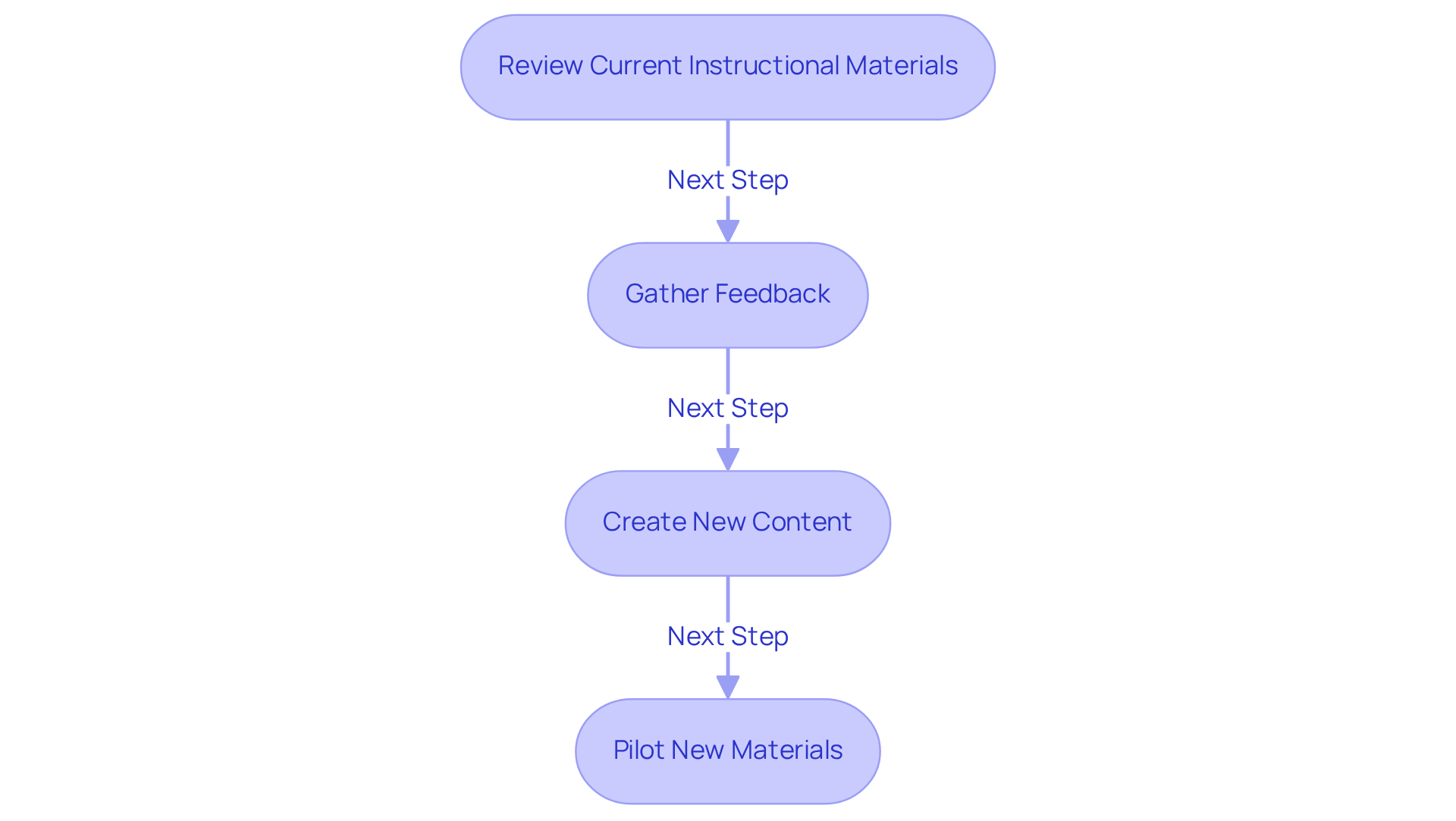
Review Current Instructional Materials: You might be wondering where to start with your existing documents, manuals, and resources. It’s crucial to assess their relevance and effectiveness. After all, 33% of employees say their organization’s development feels outdated! Keeping things fresh is key - 29% of organizations update their educational materials every year to stay effective. With SowFlow, updating and revising your documentation is a breeze, helping you keep pace in today’s fast-changing business world.
-
Gather Feedback: Now, let’s talk about feedback. Have you ever thought about what past participants and instructors really think? Gathering insights from them can reveal what worked and what didn’t. This is super important since 91% of employees prefer development tailored to their specific roles. You can use surveys, focus groups, or even one-on-one interviews to dig deeper into the learning experience. Plus, with SowFlow’s platform, you can access documentation instantly, making it easy for teams to find answers and share insights without endless meetings.
-
Create New Content: So, what’s next? It’s time to roll up your sleeves and develop training material that addresses the gaps you’ve identified. Make sure your content is engaging and interactive - think videos, infographics, and hands-on activities to cater to different learning styles. Did you know that 76% of employees believe companies should offer more digital skills development? With SowFlow, crafting user guides is a snap, letting you tap into your documentation’s wisdom with just a command.
-
Pilot New Materials: Before you go all in, why not test the waters? Conduct a pilot run of your new instructional materials with a small group. This trial can help you develop training material that provides valuable feedback to tweak your content for maximum impact. It’s all about making sure your development meets participants’ needs and aligns with your organizational goals. And don’t forget to use SowFlow’s Chrome extension for smooth workflow management, making it easier to implement and enhance your educational materials.
Choose Appropriate Delivery Methods and Formats
-
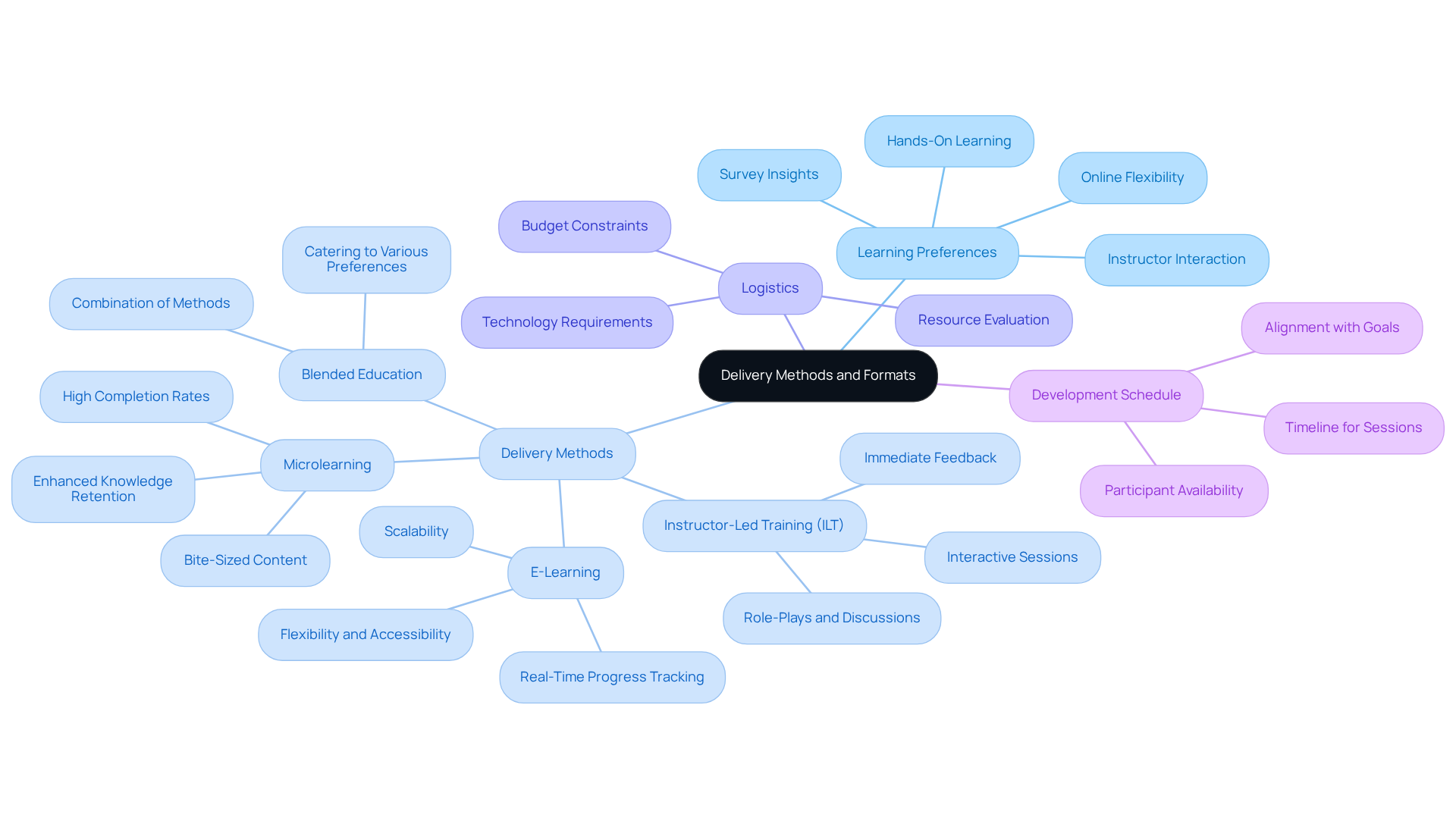
Identify Learning Preferences: You might be wondering why understanding your audience's learning styles is so important. Well, some folks thrive in hands-on environments, while others might lean towards the flexibility of online modules or the interaction of instructor-led sessions. Conducting a quick survey can really help you gather insights into these preferences, making sure your instruction hits the mark.
-
Select Delivery Methods: Now, let’s dive into the different training delivery methods that can really amp up engagement and effectiveness:
- Instructor-Led Training (ILT): This method shines when it comes to interactive sessions. It allows for immediate feedback and encourages deeper understanding through discussions and role-plays.
- E-Learning: If flexibility is what you’re after, e-learning is your best friend. You can access it anytime, which is perfect for remote teams. Plus, it lets you track progress in real-time and can be updated quickly to stay relevant. And the best part? It can scale to fit 10 or even 10,000 employees without a hitch, making it super versatile for any team size.
- Blended Education: This approach combines online and in-person instruction, catering to various preferences and boosting involvement. Organizations often mix things up with online courses, instructor-led sessions, blended methods, and even microlearning to cover all educational bases.
- Microlearning: Here’s a fun fact: microlearning delivers content in bite-sized chunks, making it ideal for busy professionals. With completion rates hovering between 70% and 80%, it’s proven to significantly enhance knowledge retention and engagement.
-
Consider Logistics: Let’s talk logistics. It’s essential to evaluate your available resources, like technology, time, and budget constraints. Did you know that direct learning expenditures are projected to drop to $954 per learner in 2025, down from $1,207 in 2022? This really highlights the importance of keeping an eye on your budget. Make sure the methods you choose are practical and align with what your organization can handle, as developing training material requires careful planning and resource allocation.
-
Create a Development Schedule: Finally, let’s get into creating a development schedule. You’ll want to develop training material that outlines a timeline for sessions aligning with participant availability and overall development goals. A well-organized timetable helps keep the momentum going and ensures that performance objectives are met effectively. As Christopher Pappas puts it, "By investing in development, you can enhance your employees' performance, making them more productive and skilled.
Implement Assessment and Feedback Mechanisms
-
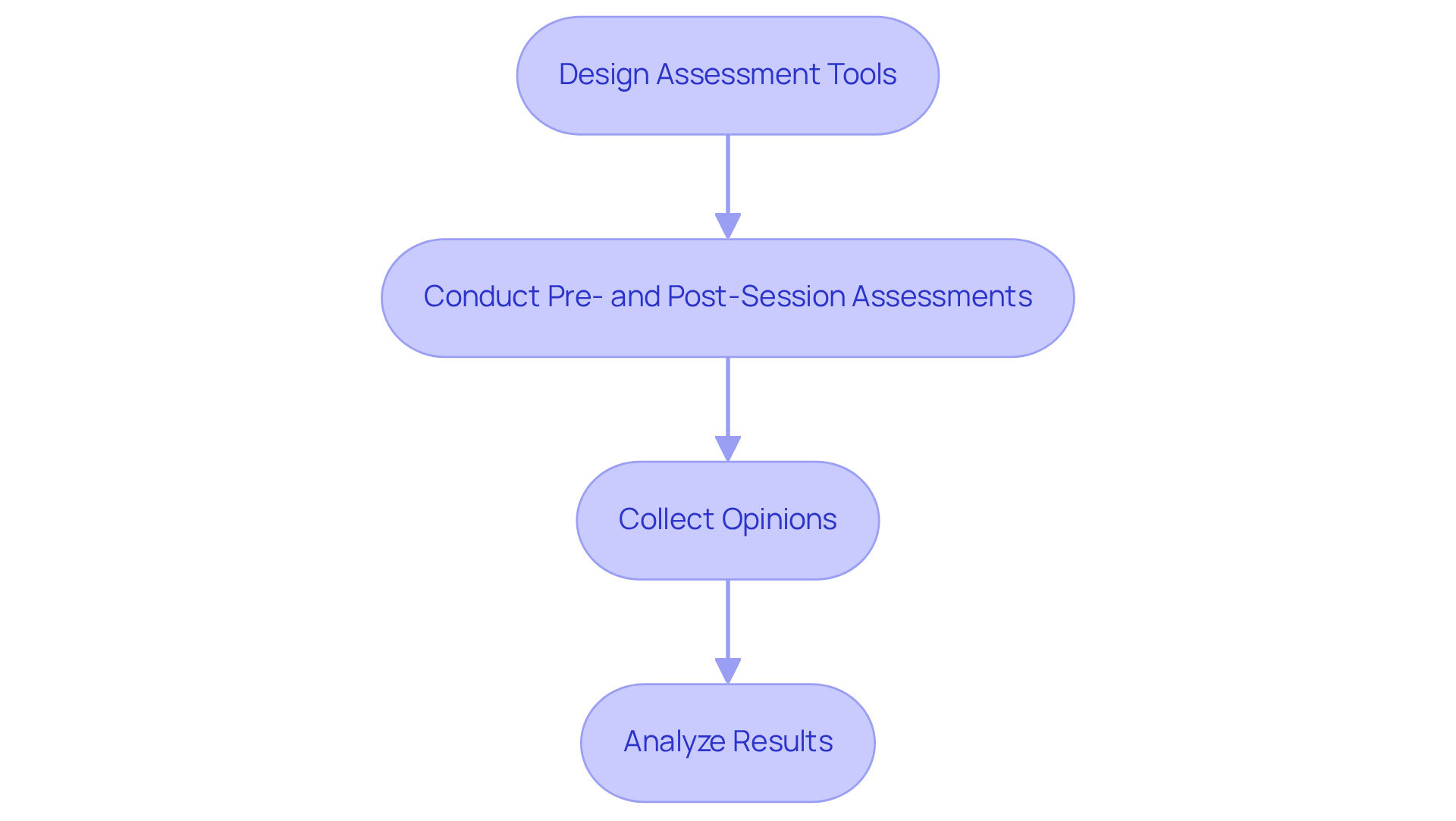
Design Assessment Tools: So, you’re looking to create assessments that really hit home with your learning goals? Think about incorporating quizzes, practical exercises, or even project-based evaluations. These tools are super important for measuring how well knowledge sticks and how effectively skills are applied during education.
-
Conduct Pre- and Post-Session Assessments: Have you considered running evaluations before and after your sessions? This way, you can really see how much progress has been made and how effective the sessions are. It’s all about understanding the impact your program has on participants’ skills and knowledge retention. Fun fact: studies from the American Society for Training and Development show that companies with solid development programs can see a whopping 218% increase in revenue and a 24% boost in profit margins!
-
Collect Opinions: After your instruction, why not gather some insights from participants? Surveys or focus groups can be a goldmine for feedback. Ask about the content, delivery methods, and their overall experience. Research indicates that 76% of employees are likely to stick around with a company that offers continuous learning opportunities. That really highlights how crucial a positive educational experience is!
-
Analyze Results: Now, let’s talk about reviewing the data from those assessments and feedback. It’s all about spotting trends and figuring out where we can develop training material to make improvements. This analysis is key to developing training material and enhancing your educational techniques, ensuring your development program keeps getting better. And here’s a little nugget of wisdom: effective training metrics can lead to a performance boost of 15 to 25%! How cool is that?
Conclusion
You know, developing effective training material is super important for boosting workforce capabilities and making sure organizations succeed. By taking a structured approach - like figuring out training needs, checking out what materials are already out there, and choosing the right delivery methods - companies can create educational experiences that really make an impact. This step-by-step process not only tackles current skill gaps but also gets employees ready for whatever challenges lie ahead, which means better performance and engagement all around.
So, let’s break it down into four key steps:
- First up, you’ll want to conduct a thorough Training Needs Analysis (TNA) to spot those skill gaps.
- Next, evaluate the existing instructional materials and gather feedback to keep improving.
- Then, pick the delivery methods that suit different learning styles best.
- And finally, don’t forget to implement assessment and feedback mechanisms to see how effective everything is.
Each of these steps is crucial for making sure training programs are relevant, engaging, and in line with what the organization aims to achieve.
In conclusion, putting time and resources into developing effective training materials isn’t just a must - it’s a strategic advantage. By taking a thoughtful and comprehensive approach, organizations can create a culture of continuous learning and adaptability, which is key to thriving in today’s fast-paced business world. So, why not embrace these best practices? Elevate your training programs and empower your workforce to really shine!
Frequently Asked Questions
What is a Training Needs Analysis (TNA)?
A Training Needs Analysis (TNA) is a process that involves gathering data through surveys, interviews, and performance reviews to identify skill gaps among employees and determine the training required for both current and future organizational needs.
Why is conducting a TNA important for organizations?
Conducting a TNA is important because it helps boost workforce capabilities and overall performance, allows for wise allocation of resources, and ensures that the training aligns with both immediate and future organizational goals.
How can stakeholders be engaged in the TNA process?
Stakeholders can be engaged by involving managers and team leaders in discussions about the skills their teams need. This collaboration fosters buy-in and creates a sense of ownership over the training outcomes.
What are SMART learning objectives?
SMART learning objectives are goals that are Specific, Measurable, Achievable, Relevant, and Time-bound. For example, instead of a vague goal like 'improve customer service skills,' a SMART objective would be 'reduce customer complaint resolution time by 20% within three months.'
Why is it important to define clear learning objectives?
Defining clear learning objectives is important because they guide the development process and help measure success. Clear objectives ensure that training initiatives are focused and effective.
What should be done after conducting a TNA and defining learning objectives?
After conducting a TNA and defining learning objectives, the findings and objectives should be compiled into a straightforward report. This document serves as a reference to guide the development of training material and keeps everyone aligned on the desired outcomes.
👍
What others are liking


5 Steps to outline your ideal documentation structure
5 MINS READ
Where to start the your journey of mapping out your ideal documentation structure, aligning it with the very heartbeat of your organization?
Defining a winning level of detail in your process
3 MINS READ
What is too much detail, and what is too little? This article described in that winning level detail about what detail is enough.


