

Remote Team Documentation Strategies
|
April 29, 2026
|

4 Key Practices for Crafting an Effective Policy Manual Example
Key Highlights
- A policy manual serves as a reference for rules, procedures, and expectations, promoting clarity and consistency in operations.
- It acts as a resource for decision-making, compliance, and accountability, enhancing organisational efficiency and reducing risks.
- Key components of an effective policy manual include an introduction, policies, procedures, roles and responsibilities, and appendices.
- Engaging stakeholders in the development process improves the manual's relevance and effectiveness, potentially increasing employee retention.
- A structured approach to policy manual development involves research, stakeholder engagement, drafting, review, approval, and distribution.
- Regular reviews and updates are essential for maintaining the manual's effectiveness, with scheduled reviews and stakeholder input being critical practises.
- Documenting changes and communicating updates are necessary to ensure compliance and operational efficiency.
Introduction
You might be wondering why crafting a policy manual is such a big deal. Well, it’s more than just ticking a box; it’s like the blueprint that shapes your organization’s culture and keeps things running smoothly. A well-structured manual doesn’t just sit on a shelf; it empowers your employees, boosts compliance, and fosters accountability in the workplace.
But here’s the catch: many organizations find it tough to create and maintain policy documents that truly reflect their ever-changing needs. So, what can you do to transform a static manual into a dynamic resource? One that not only meets regulatory demands but also supports your organization’s growth? Let’s dive into some key practices that can make all the difference!
Define the Policy Manual: Purpose and Importance
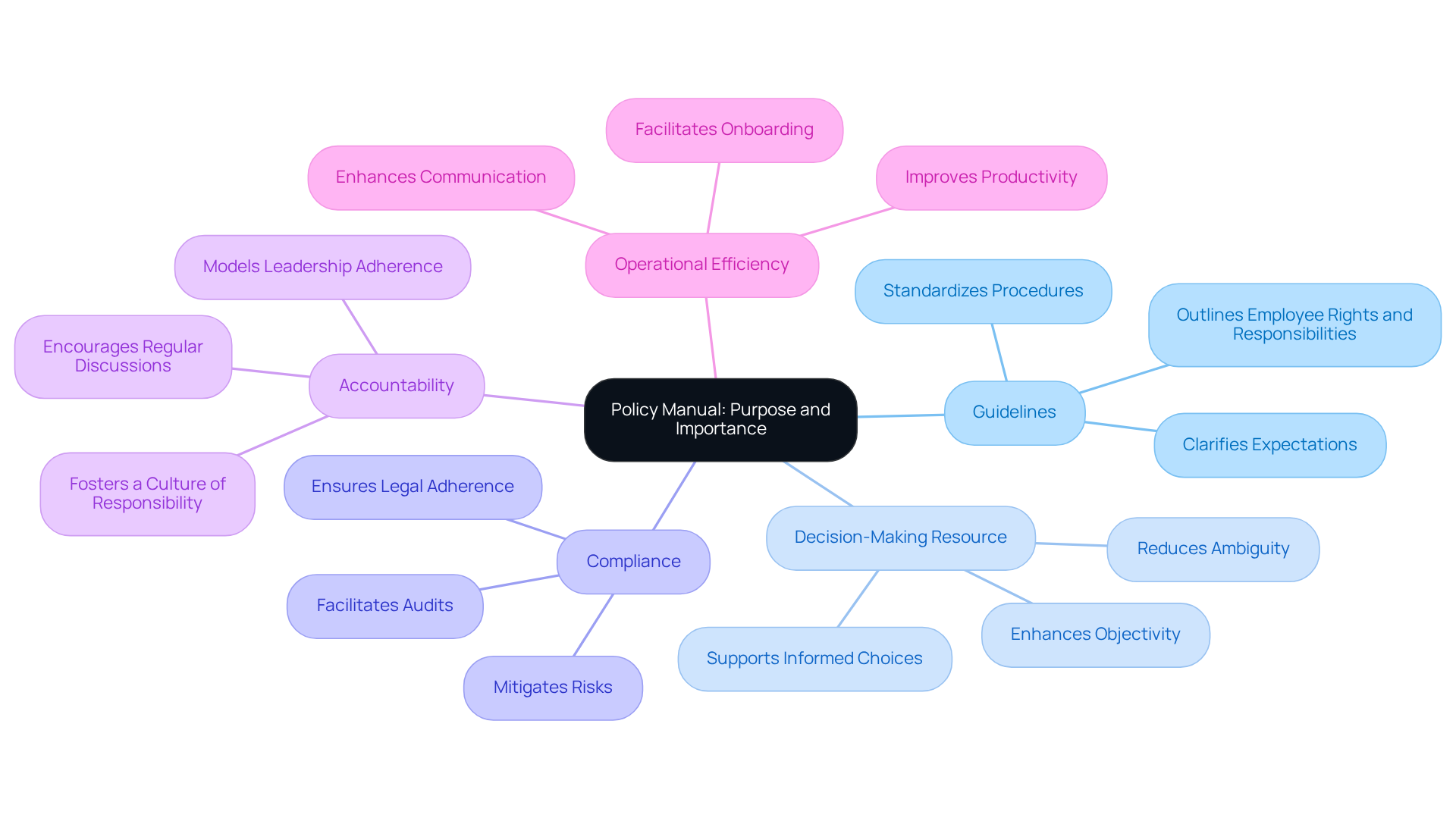
You might be wondering what a set of guidelines really does for an organization. Well, think of it as a policy manual example that provides a detailed reference for the rules, procedures, and expectations for everyone involved. Its main goal? To bring clarity and consistency to operations, making sure all employees know their roles and responsibilities.
The importance of a policy manual example is significant! It’s not just a document; it’s a policy manual example that acts as a go-to resource for decision-making, helps keep things compliant with legal and regulatory standards, and fosters a culture of accountability. By clearly defining the guide's purpose, organizations can better communicate their values and operational standards. This, in turn, boosts efficiency and reduces risks.
At SowFlow, we believe that documentation shouldn’t be a one-off task. Instead, it should be a systematic approach woven into the fabric of the company. This way, guidelines - like all documentation - stay fresh and relevant, making it easy to access the information you need when you need it.
For example, organizations that adopt SowFlow's systematic documentation method often report significant improvements in guideline adherence and operational efficiency. By embracing this mindset, companies can elevate their guidelines from a static reference to a dynamic resource that evolves alongside them. So, why not take a closer look at how you can transform your documentation practices?
Identify Key Components of an Effective Policy Manual
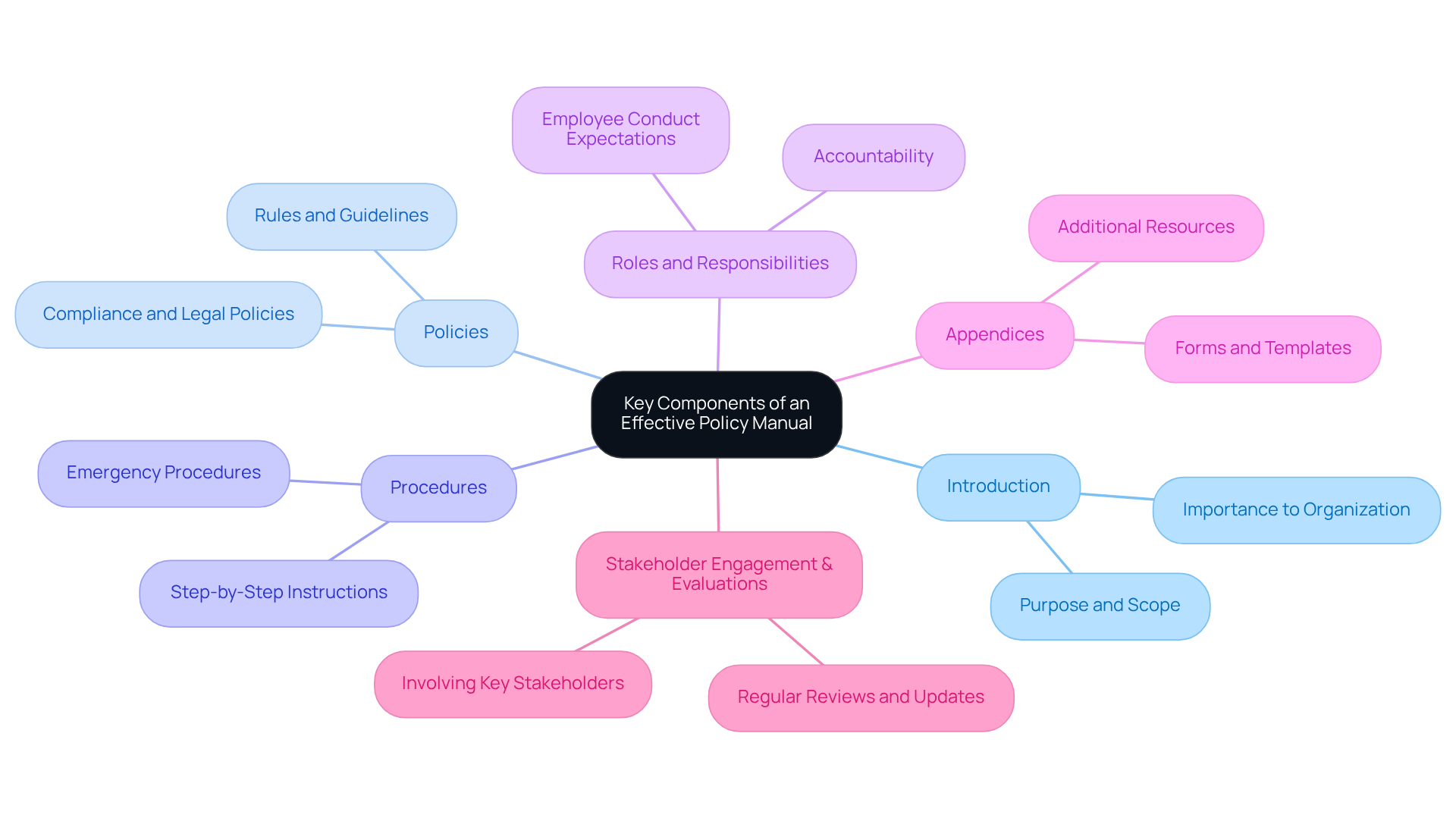
You might be wondering what constitutes a good policy manual example. Well, a policy manual example should really cover a few key components to keep things clear and user-friendly. First up, there’s the Introduction. This part lays out the purpose and scope of the policy manual example, making it clear why it matters to your organization. Then, we have the [Policies section](https://sowflow.io/blog-post/policies-vs-procedure-understanding-their-roles-in-business), where you’ll find a policy manual example that details the rules and guidelines governing staff behavior and organizational practices. This sets the stage for expectations right from the start, helping to avoid any future hiccups.
Next, let’s discuss the policy manual example related to Procedures. These step-by-step instructions act as a policy manual example on how to tackle specific tasks or processes, which can really boost efficiency and consistency. And don’t forget about Roles and Responsibilities! This section serves as a policy manual example that spells out who’s accountable for following each guideline, promoting a sense of responsibility throughout the organization.
Now, what about those handy Appendices? They include additional resources like forms or templates that act as a policy manual example, supporting the policies and procedures and ensuring everyone has the tools they need to comply effectively. Engaging essential stakeholders in the development process is super important, too. It helps gather valuable input and ensures the guide meets user needs.
Regular evaluations and revisions are key to keeping the policy manual example relevant, especially as organizational practices and regulations can change over time. Did you know that staff members spend an average of 1.8 hours a day just looking for documents? A well-organized guide can really cut down on that time!
With SowFlow, creating user guides is a breeze. Teams can whip up documentation effortlessly, making sure everything stays up-to-date and accessible. But watch out for common pitfalls when developing a guideline booklet - like vague wording, skipping stakeholder feedback, and infrequent revisions. By addressing these issues and leveraging SowFlow's features, you can create a comprehensive guide that acts as a centralized knowledge hub, akin to a policy manual example. This not only minimizes the time staff spend hunting for information but also boosts overall compliance with regulations.
Implement a Structured Approach to Policy Manual Development
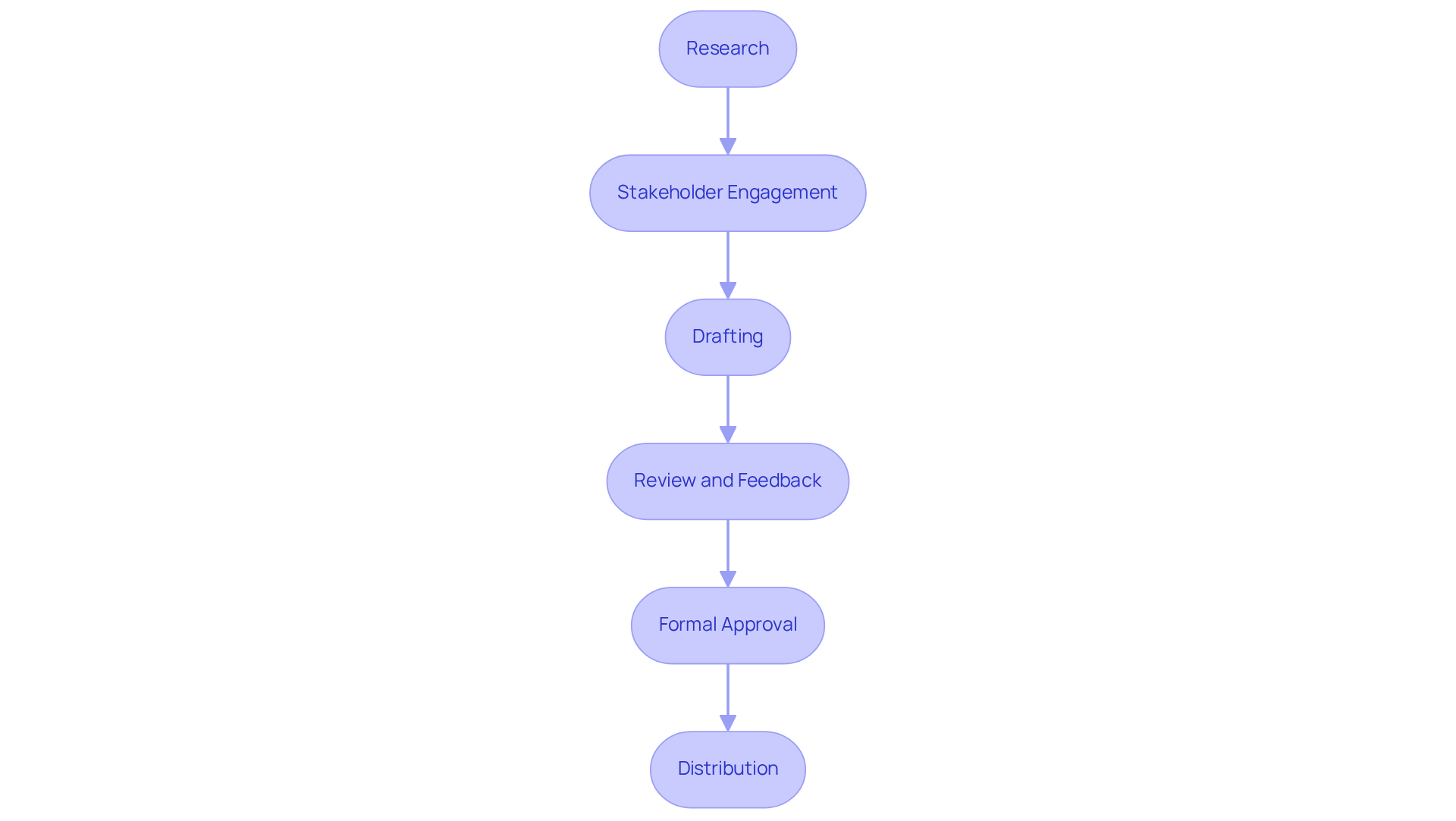
Creating an effective guidelines document? You might be wondering where to start! Well, organizations can really benefit from a structured approach that covers a few key steps.
- Research: Gather information on existing policies and industry best practices to guide your content.
- Stakeholder Engagement: It’s super important to involve key stakeholders throughout the development process. Why? Because their input can lead to a 15% increase in employee retention! Recognizing these key players is vital; their perspectives can really enhance the document's relevance and effectiveness.
- Drafting: Create a comprehensive outline of the guide, weaving in those key components and the feedback you’ve gathered.
- Review and Feedback: Share the draft with stakeholders to get their insights, and don’t hesitate to make revisions to boost clarity and relevance.
- Formal Approval: Once you’ve polished it up, get that formal approval from management to ensure everything aligns with your organizational goals before you finalize the document.
- Distribution: Make sure the guide is easily accessible to all employees - digital platforms can really help with that.
By following this structured method, you can develop a guidelines document that’s not just thorough and understandable, but also effective in guiding operations and fostering a culture of openness and involvement. So, what do you think? Ready to dive into creating your own guidelines?
Establish a Routine for Reviewing and Updating Policies
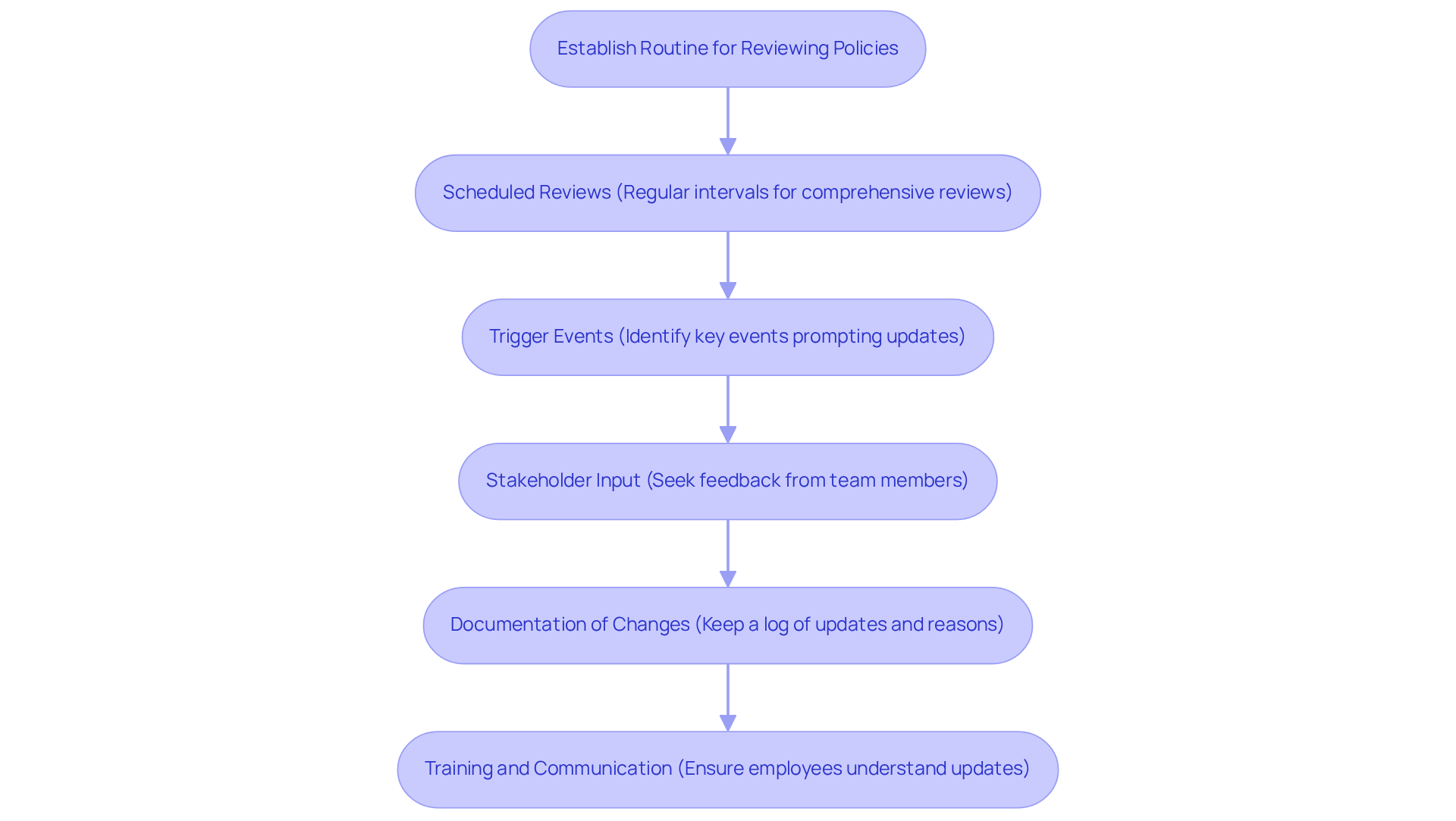
To keep your guidelines effective, it’s super important for organizations to have a routine for reviewing and refreshing their regulations. You might be wondering, what does that look like? Let’s break it down into some key practices:
- Scheduled Reviews: How often do you check in on your policies? Setting specific intervals for comprehensive reviews-like once a year or every six months-can really help keep your manual up to date. A recent survey found that 56% of compliance pros see [data privacy and regulatory compliance](https://xoralia.com/ten-policy-management-and-compliance-statistics-you-need-to-know-for-2023) as top issues, which just goes to show how crucial regular updates are.
- Trigger Events: Have you ever thought about what might prompt a quick update? Identifying key events, like changes in legislation or shifts in your organization, is essential for keeping your guidelines in sync with what’s actually happening. In 2025, 21% of C-Suite executives pointed to regulatory compliance as their number one strategic priority, highlighting the need for timely updates.
- Stakeholder Input: It’s always a good idea to get feedback from your team, right? Actively seeking input from employees and management can help you spot areas that need improvement, creating a culture of continuous enhancement. Experts say that involving stakeholders in the review process can lead to more effective policy updates.
- Documentation of Changes: Keeping track of what changes you make is key. A detailed log of updates, including why each change was made, ensures transparency and accountability. This practice can help your firm avoid the pitfalls of non-compliance-after all, 40% of teams have faced breaches due to outdated compliance methods.
- Training and Communication: Are your employees in the loop about updates? Making sure everyone understands the implications of changes is crucial for effective implementation. If you don’t communicate updates well, you could face hefty penalties-like PCI fines that can range from $5,000 to $100,000 per month until compliance is achieved.
By adopting this structured approach, you can ensure that your policy manual example remains dynamic, evolving with your needs and the regulatory landscape. This not only enhances compliance but also boosts operational efficiency. So, what do you think? Ready to dive into making your guidelines more effective?
Conclusion
Crafting an effective policy manual is super important for any organization that wants to keep things clear, consistent, and compliant. Think of this document as a go-to guide that lays out the rules, procedures, and expectations, helping employees understand their roles and responsibilities. By grasping its purpose and significance, organizations can turn their policy manuals from boring, static documents into lively tools that grow and adapt with their needs.
You might be wondering how to develop a solid policy manual. Well, the article points out four key practices:
- Defining its purpose
- Identifying essential components
- Taking a structured approach to development
- Setting up a routine for reviewing and updating policies
Each of these steps is crucial for keeping the manual relevant and effective in guiding how the organization operates. Engaging stakeholders, communicating clearly, and committing to regular updates are all vital for boosting adherence and operational efficiency.
Now, let’s wrap this up! The importance of a well-structured policy manual really can’t be overstated. It not only helps with compliance to legal standards but also fosters a culture of accountability and transparency within the organization. By focusing on developing and maintaining this essential document, organizations can empower their employees, streamline operations, and ultimately achieve greater success. Embracing these best practices is a smart move toward building a resilient and well-informed workforce.
Frequently Asked Questions
What is the purpose of a policy manual in an organization?
The purpose of a policy manual is to provide a detailed reference for the rules, procedures, and expectations within an organization, ensuring clarity and consistency in operations.
Why is a policy manual important?
A policy manual is important because it serves as a go-to resource for decision-making, helps maintain compliance with legal and regulatory standards, and fosters a culture of accountability among employees.
How does a policy manual benefit employees?
A policy manual benefits employees by clearly defining their roles and responsibilities, which helps them understand what is expected of them and promotes operational efficiency.
What approach does SowFlow recommend for maintaining a policy manual?
SowFlow recommends a systematic approach to documentation, ensuring that guidelines remain fresh and relevant, rather than treating documentation as a one-off task.
What are the reported outcomes of adopting SowFlow's documentation method?
Organizations that adopt SowFlow's systematic documentation method often report significant improvements in guideline adherence and operational efficiency.
How can organizations transform their documentation practices?
Organizations can transform their documentation practices by elevating their guidelines from static references to dynamic resources that evolve alongside the company.
👍
What others are liking


5 Steps to outline your ideal documentation structure
5 MINS READ
Where to start the your journey of mapping out your ideal documentation structure, aligning it with the very heartbeat of your organization?
Defining a winning level of detail in your process
3 MINS READ
What is too much detail, and what is too little? This article described in that winning level detail about what detail is enough.


