

General
|
April 29, 2026
|

4 Best Practices for Your Customer Service Standard Operating Procedure Template
Key Highlights
- Setting clear objectives aligned with organisational goals is crucial for effective client support procedures.
- Use SMART criteria (Specific, Measurable, Achievable, Relevant, Time-bound) to craft objectives for customer service.
- Gathering team input through workshops and feedback channels enhances the relevance and effectiveness of SOPs.
- Document procedures in a step-by-step format using bullet points or numbered lists to improve clarity and comprehension.
- Incorporate visual aids like flowcharts to simplify complex processes in SOP documentation.
- Establish a regular review cycle to evaluate and refine SOPs based on team feedback and performance metrics.
- Promote a culture of continuous improvement by adapting SOPs to meet changing needs and addressing challenges effectively.
Introduction
Crafting an effective customer service standard operating procedure (SOP) is super important for any organization that wants to boost client satisfaction and streamline operations. You might be wondering, how can we make sure our procedures are not just written down but actually work? By implementing some best practices, businesses can set clear objectives and keep those procedures relevant and effective over time.
But here’s the kicker: how do we balance the need for structured guidelines with the flexibility to adapt to our ever-evolving customer needs? Now, let’s dive into four key strategies that can help your team create impactful SOPs. These strategies not only foster a culture of continuous improvement but also drive exceptional service delivery. So, are you ready to explore how to make your SOPs work for you?
Define Clear Objectives for Your SOPs
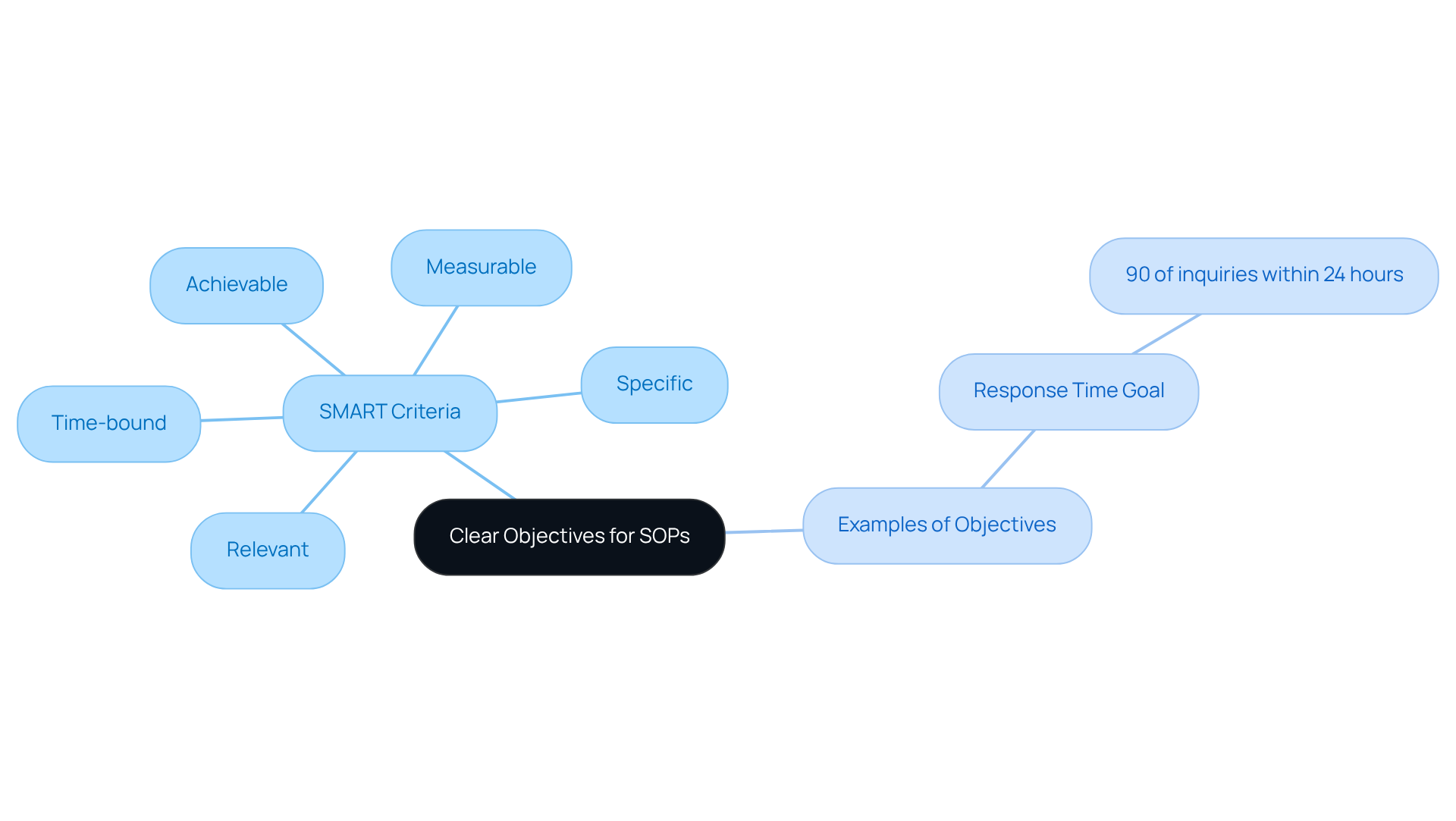
You might be wondering how to kick off efficient , right? Well, it all starts with setting clear objectives that align with what your organization aims to achieve. For example, if you're looking to , it’s crucial to specify a .
Using the - Specific, Measurable, Achievable, Relevant, and Time-bound - can really help in crafting these objectives. This clarity not only guides the creation of your customer service but also facilitates the evaluation of their effectiveness after implementation.
Let’s say your company wants to . You might set a goal to respond to 90% of inquiries within 24 hours. This way, you can track your progress and tweak things as needed to keep improving. Speaking of improvement, how do you think your team would feel about hitting those targets?
Gather Team Input to Enhance SOP Relevance
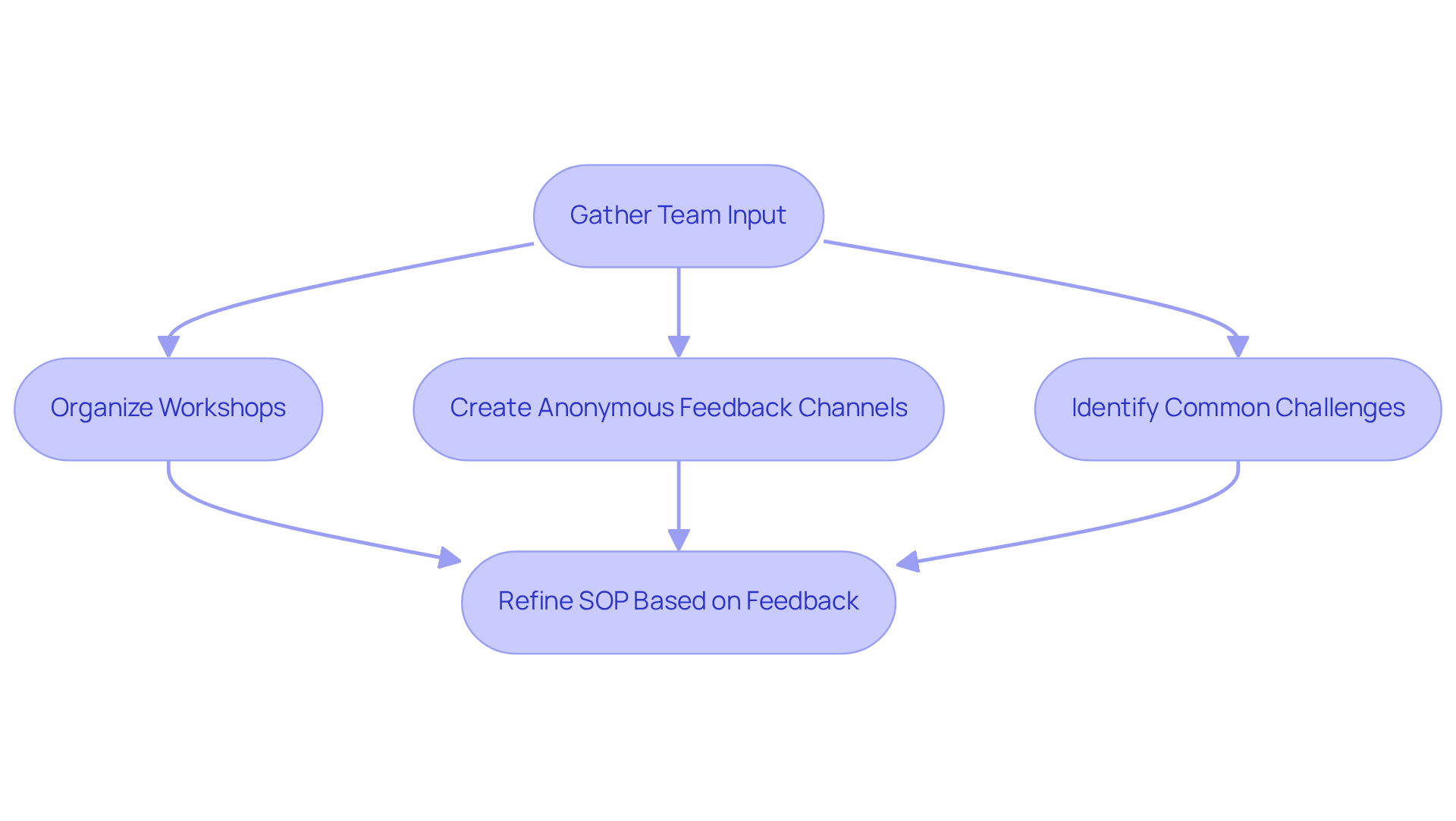
You might be wondering how to keep your relevant and effective. Well, one great way is to . Organizing workshops or brainstorming sessions can really open the floor for employees to share their insights and experiences. This not only helps identify common challenges but also sparks the development of .
For example, a customer service team might highlight frequent issues they face and suggest actionable steps to tackle them directly in the . Plus, can really encourage honest input, making it easier for everyone to share their thoughts without hesitation. This collaborative vibe not only but also ramps up team engagement. When employees see that their contributions matter, it makes a difference!
As Shep Hyken puts it, 'If we consistently surpass the expectations of employees, they will consistently surpass the expectations of our clients.' And don’t forget, and while setting up to measure their success will keep everything aligned with your organizational goals.
Document Step-by-Step Procedures for Clarity
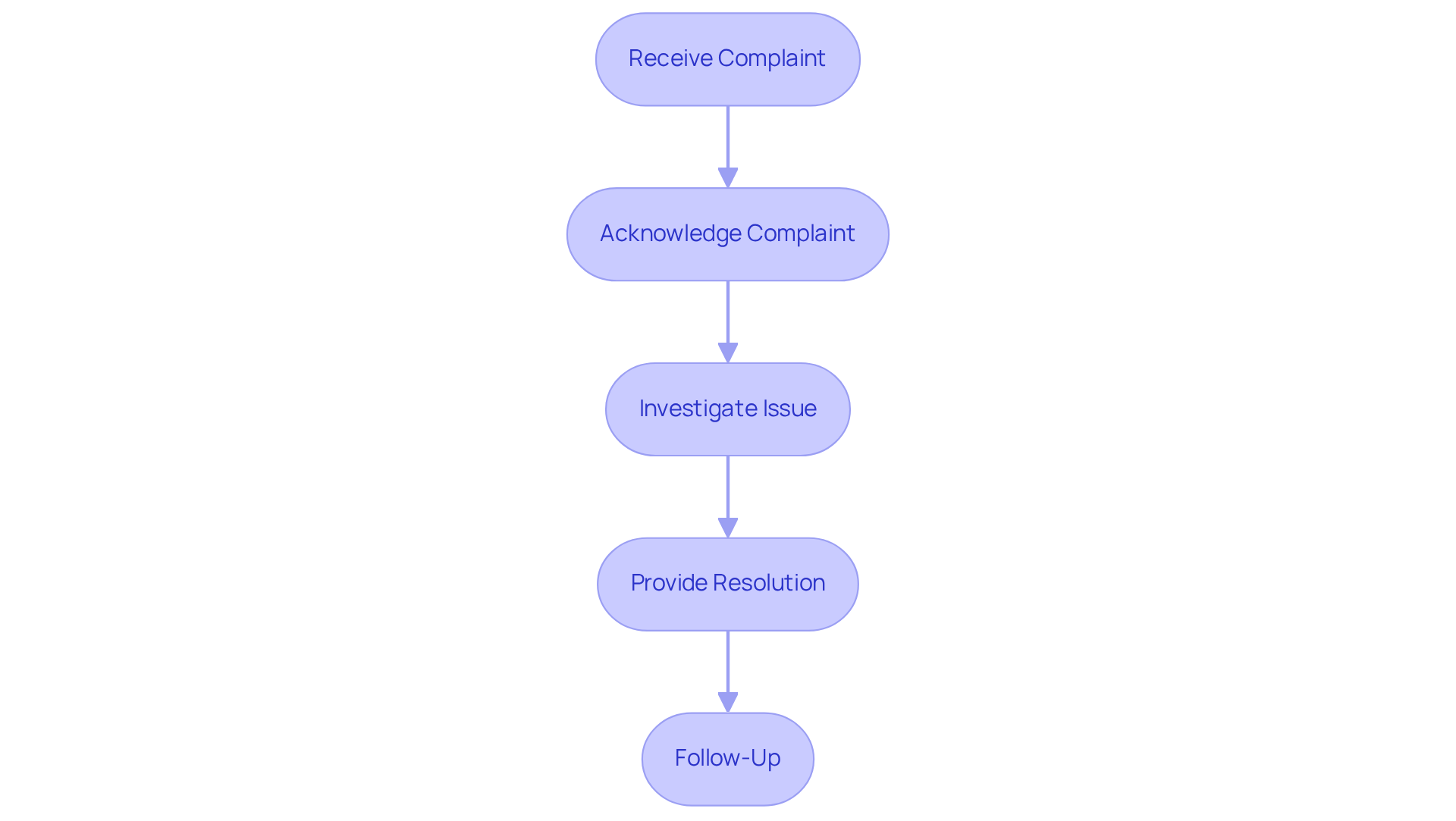
When you're , have you considered breaking down each procedure into ? Using bullet points or numbered lists can really boost readability and comprehension. For example, when you create the customer service for , make sure to detail each step - from receiving the complaint to resolution, including any necessary follow-up actions.
Now, let’s dive into something a bit more visual! Incorporating for those more complex processes can really help guide your team through the steps, making the information easier to digest. This organized approach not only helps train new staff but also serves as a using the customer service . It’s all about in .
With SowFlow, you can easily create and update these , keeping your documentation relevant and accessible. Imagine empowering your team with instant access to the information they need for smooth workflow sharing!
Incorporate Best Practices for Continuous Improvement
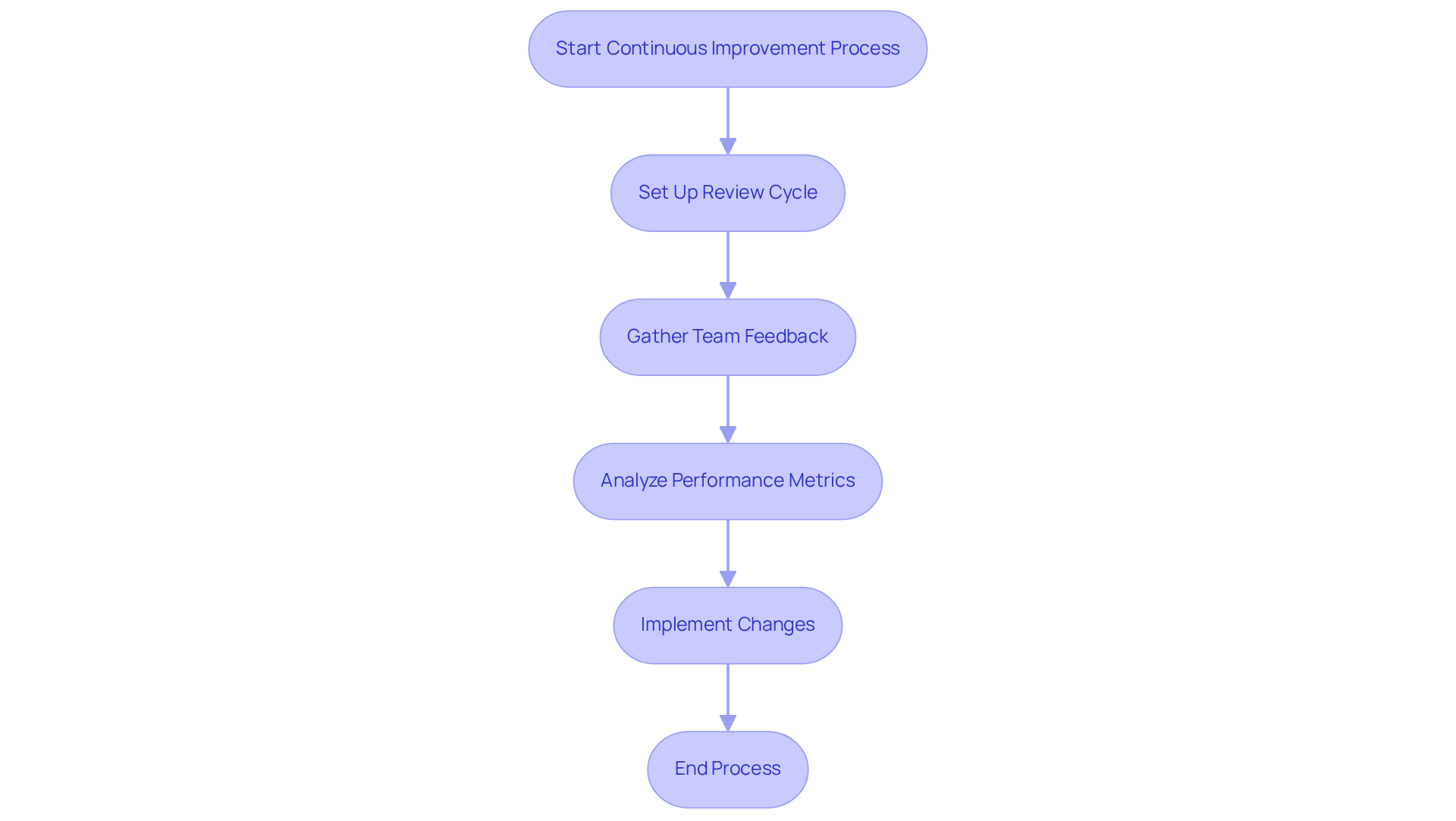
You might be wondering how to keep your customer service effective, right? Well, it’s all about weaving in some best practices for . Start by setting up a regular review cycle - think quarterly or bi-annually - to check in on how relevant and effective each SOP really is. During these evaluations, gather feedback from your team about any hiccups they face with the current procedures.
And don’t forget to look at , like and response times, to spot areas that could use a little TLC. For instance, if you hear that a certain procedure feels like a maze, it might be time to rethink it and make things smoother. Now, here’s a key point: it is super important to use a to before you roll out improvements. Masaaki Imai emphasizes this to ensure that any enhancements you make are not just quick fixes but truly meaningful and sustainable.
Taking this proactive approach not only boosts the quality of your SOPs but also nurtures a culture of within your team. As Peter Drucker wisely said, '' This really highlights the need for us to keep adapting and striving for service excellence.
Conclusion
You know, establishing effective customer service standard operating procedures (SOPs) is super important for any organization that wants to boost client satisfaction and streamline operations. By setting clear goals, getting input from your team, documenting everything carefully, and embracing best practices for ongoing improvement, businesses can build a solid framework that not only meets but actually exceeds customer expectations.
You might be wondering why setting SMART objectives is such a big deal. Well, it’s a foundational step in developing those SOPs. When you involve your team in the process, it keeps the procedures relevant and practical. Plus, having clear, step-by-step documentation makes everything easier to understand and execute. And let’s not forget about regular reviews and performance metrics! They’re key to ensuring that your SOPs keep evolving with the changing business landscape and customer needs.
Ultimately, creating effective customer service SOPs is all about collaboration, clarity, and a commitment to excellence. By embracing these best practices, you’re not just fostering a culture of continuous improvement; you’re also setting your organization up to deliver exceptional service time and time again. So, why wait? Taking action now to implement these strategies can lead to some serious gains in customer satisfaction and operational success!
Frequently Asked Questions
What is the first step in creating efficient client support procedures?
The first step is to set clear objectives that align with your organization's goals.
How can the SMART criteria help in crafting objectives?
The SMART criteria, which stands for Specific, Measurable, Achievable, Relevant, and Time-bound, helps in creating clear and effective objectives for client support procedures.
Can you provide an example of a clear objective for client support?
An example of a clear objective is to respond to 90% of inquiries within 24 hours, which helps in tracking progress and improving response times.
Why is it important to specify target times for inquiries?
Specifying target times for inquiries is important as it provides clarity for the objectives and allows for the evaluation of effectiveness after implementation.
How does setting clear objectives impact team performance?
Setting clear objectives can motivate the team by providing measurable targets to aim for, which can enhance their sense of achievement when those targets are met.
List of Sources
- Define Clear Objectives for Your SOPs
- livechatai.com (https://livechatai.com/blog/customer-support-response-time-statistics)
- 92 customer service statistics you need to know in 2026 (https://zendesk.com/blog/customer-service-statistics)
- Customer Service Response Time - KPI Definition, Formula & Tips - AgencyAnalytics (https://agencyanalytics.com/kpi-definitions/customer-service-response-time)
- timetoreply.com (https://timetoreply.com/blog/impact-of-response-time-on-customer-satisfaction)
- 107 Customer Service Statistics and Facts You Shouldn't Ignore (https://helpscout.com/75-customer-service-facts-quotes-statistics)
- Gather Team Input to Enhance SOP Relevance
- Why Are SOPs Important? Understanding Their Impact on ROI - Whale (https://usewhale.io/blog/the-importance-of-sops)
- SOP Impact On Performance (https://meegle.com/en_us/topics/sop/sop-impact-on-performance)
- 120+ Excellent Customer Service Quotes from the Pros (https://get.nicejob.com/resources/helpful-customer-service-quotes)
- 80+ Employee Engagement Statistics HR Should Know in 2026 - SSR (https://selectsoftwarereviews.com/blog/employee-engagement-statistics)
- 50 Customer Service Quotes to Inspire Your Team (https://qualtrics.com/articles/customer-experience/customer-service-quotes-to-inspire-your-team)
- Document Step-by-Step Procedures for Clarity
- 50 Customer Service Quotes to Inspire Your Team (https://qualtrics.com/articles/customer-experience/customer-service-quotes-to-inspire-your-team)
- speach.me (https://speach.me/blog/10-neuroscience-based-statistics-that-prove-visual-sops-are-more-effective-than-written-procedures)
- 26 Quotes About Improving Processes That Will Inspire Change (https://niagarainstitute.com/blog/quotes-improving-processes)
- helpy.io (https://helpy.io/blog/10-important-customer-support-quotes-from-the-experts)
- How to Write a Standard Operating Procedure [+Examples] (https://sweetprocess.com/how-to-write-a-standard-operating-procedure)
- Incorporate Best Practices for Continuous Improvement
- Inspiring Quotes for Continuous Improvement (https://kpifire.com/blog/quotes-about-continuous-improvement)
- 85 Quotes - Operational Excellence and Continuous Improvement | Rever (https://reverscore.com/85-quotes-operational-excellence-and-continuous-improvement)
- 26 Quotes About Improving Processes That Will Inspire Change (https://niagarainstitute.com/blog/quotes-improving-processes)
- Best Practices for Continuous Improvement in Quality Systems (https://oxford-management.com/articles/best-practices-for-continuous-improvement-in-quality-systems)
- blog.kainexus.com (https://blog.kainexus.com/continuous-improvement/continuous-improvement-leadership-quotes)
👍
What others are liking


5 Steps to outline your ideal documentation structure
5 MINS READ
Where to start the your journey of mapping out your ideal documentation structure, aligning it with the very heartbeat of your organization?
Defining a winning level of detail in your process
3 MINS READ
What is too much detail, and what is too little? This article described in that winning level detail about what detail is enough.


