

Maintaining Up-to-Date Documentation
|
March 9, 2026
|

4 Best Practices for Using Documentation Tools Online Effectively
Key Highlights:
- Organisations should evaluate their document needs by involving various departments to identify essential documents and update frequency.
- Surveys and workshops can gather insights on record-keeping challenges; 79% of companies see efficient document management as increasingly crucial.
- Data entry mistakes cost companies over $600 billion annually, underscoring the need for effective record-keeping practises.
- Integrating documentation tools like SowFlow into existing workflows enhances accessibility and productivity.
- Regular feedback and cheque-ins help improve the integration of documentation tools and keep records relevant.
- A strong training programme tailored to team needs, including workshops and tutorials, is essential for successful tool adoption.
- Companies lose around $13.5 billion annually per 1,000 employees due to inefficient training, highlighting the need for effective training strategies.
- Assigning a documentation owner for each area ensures accountability for regular updates and maintenance.
- Automated reminders within documentation tools can help maintain up-to-date records, improving operational efficiency.
Introduction
You might be wondering why effective documentation is such a big deal in today’s digital landscape. Well, it turns out that many organizations struggle to tap into the full potential of their tools. By pinpointing specific needs and weaving documentation tools into their existing workflows, teams can really boost productivity and collaboration.
But here’s the kicker: how can organizations make sure their documentation practices are not just efficient but also flexible enough to keep up with the ever-changing demands of the workplace? It’s a challenge, right? Let’s dive into this together and explore some ideas that could help!
Identify Organizational Needs for Documentation Tools
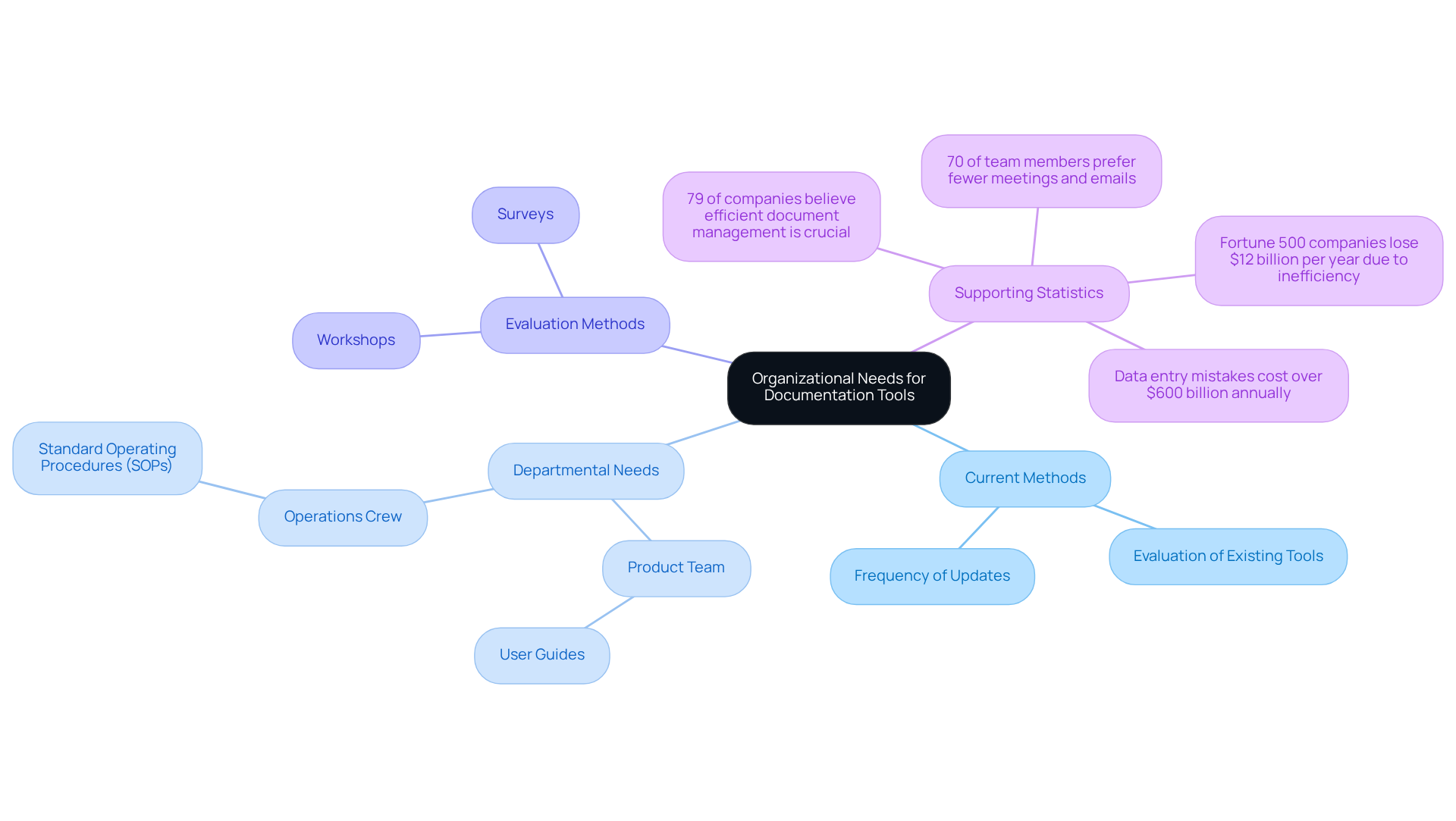
You might be wondering how to really make the most of your record-keeping tools. Well, it all starts with figuring out what your organization truly needs. Take a moment to evaluate your current methods - what kinds of documents do you actually need, and how often do they get updated? It’s super important to involve folks from different departments in this process. For instance, your product team might be on the lookout for detailed user guides, while the operations crew could be more focused on standard operating procedures (SOPs).
Surveys and workshops can be a great way to gather insights about the challenges and needs surrounding record-keeping. Did you know that:
- 79% of companies believe efficient document management solutions are becoming more crucial?
- Lisa Steingold points out that having effective record-keeping strategies can really help cut down on financial losses.
- 70% of team members think that fewer meetings and emails could boost productivity.
This really highlights how important it is to get everyone involved in the evaluation process.
And here’s a staggering fact: data entry mistakes cost companies over $600 billion every year! That’s a hefty price tag for poor record-keeping practices. By taking the time to actively assess your record-keeping methods, you can ensure that the tools you choose meet your diverse needs. This, in turn, can lead to better productivity and collaboration across your teams. So, why not start this journey today?
Integrate Documentation Tools into Existing Workflows
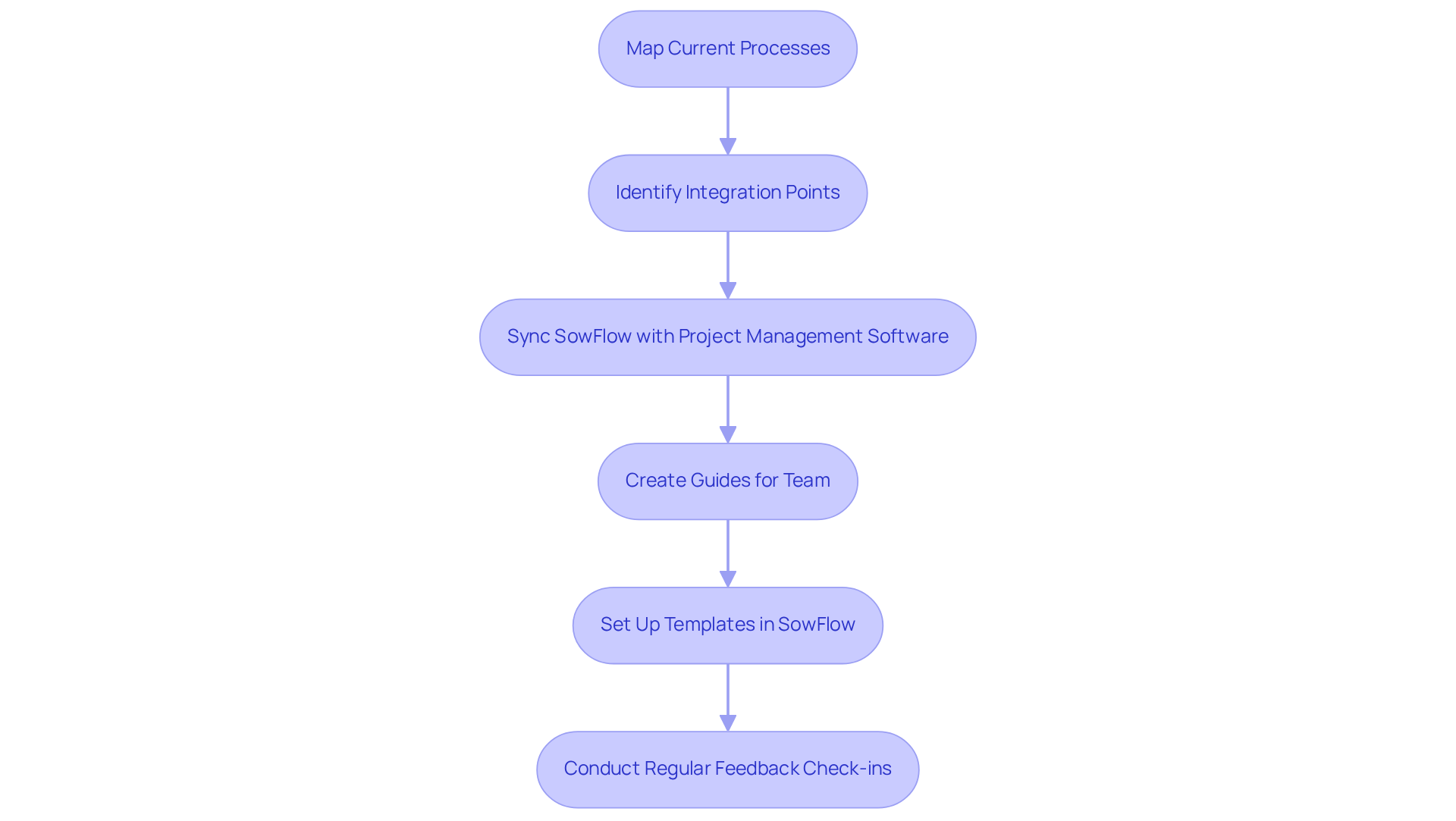
You might be wondering how to make the most of record-keeping tools like SowFlow. Well, the key is to weave them into your existing workflows. Start by mapping out your current processes and identifying where you can incorporate documentation tools online. For example, if your team uses project management software, make sure SowFlow can sync up with it. This way, everyone can easily access the documents they need.
SowFlow makes creating guides a breeze, so your team can quickly get on board with the new system. Plus, consider using documentation tools online to set up templates in SowFlow that fit right into your current workflows. This not only boosts productivity but also smooths out the onboarding process.
Now, let’s talk about feedback. Regular check-ins can really help improve how SowFlow integrates into your routine and tackle any bumps along the way. This ensures that your records stay relevant in our ever-changing business world. And hey, with just a single command, you can pull up your records and skip those unnecessary meetings, keeping everything up to date!
Provide Comprehensive Training and Ongoing Support
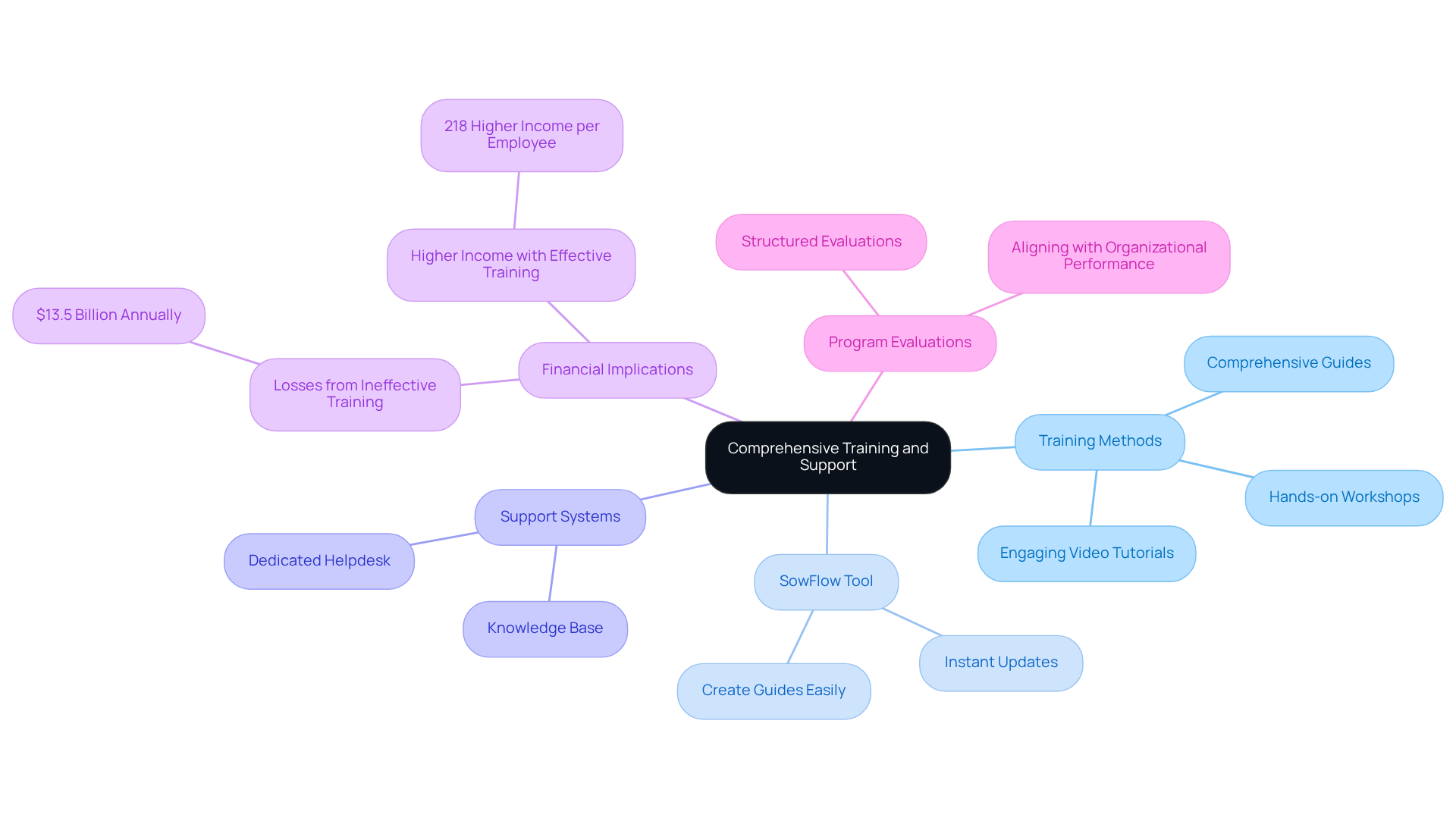
Introducing a new record-keeping tool? You might be wondering how to make sure everyone’s on board. Well, a strong training program is key, and it should be tailored to meet the diverse needs of your team. Think hands-on workshops, engaging video tutorials, and comprehensive guides that speak to the different roles within your organization.
Now, let’s talk about SowFlow. It’s designed to empower teams by offering a simple way to create guides. This means you can make immediate updates using documentation tools online, keeping your documentation relevant in our fast-paced business world. Encouraging your team to ask questions and share feedback during training? That’s a game-changer! It fosters an interactive learning atmosphere that really boosts engagement.
Richard Branson once said that learning happens through doing, and he’s spot on. Practical training methods are crucial. Plus, establishing a support system - like a dedicated helpdesk or a thorough knowledge base - makes it easy for everyone to find answers to common questions.
And here’s a staggering fact: companies lose around $13.5 billion annually per 1,000 employees due to inefficient training. That really puts the financial implications of inadequate training programs into perspective, doesn’t it? So, it’s vital to keep revising your training materials to reflect any changes in the tool or processes.
Lastly, don’t forget about structured evaluations of your training programs. They’re essential for aligning with organizational performance and maximizing employee growth. By implementing these strategies and taking advantage of SowFlow’s intuitive interface and instant updates, you can significantly enhance user proficiency and overall productivity. So, what are you waiting for? Let’s get started!
Establish a Routine for Updating and Maintaining Documentation
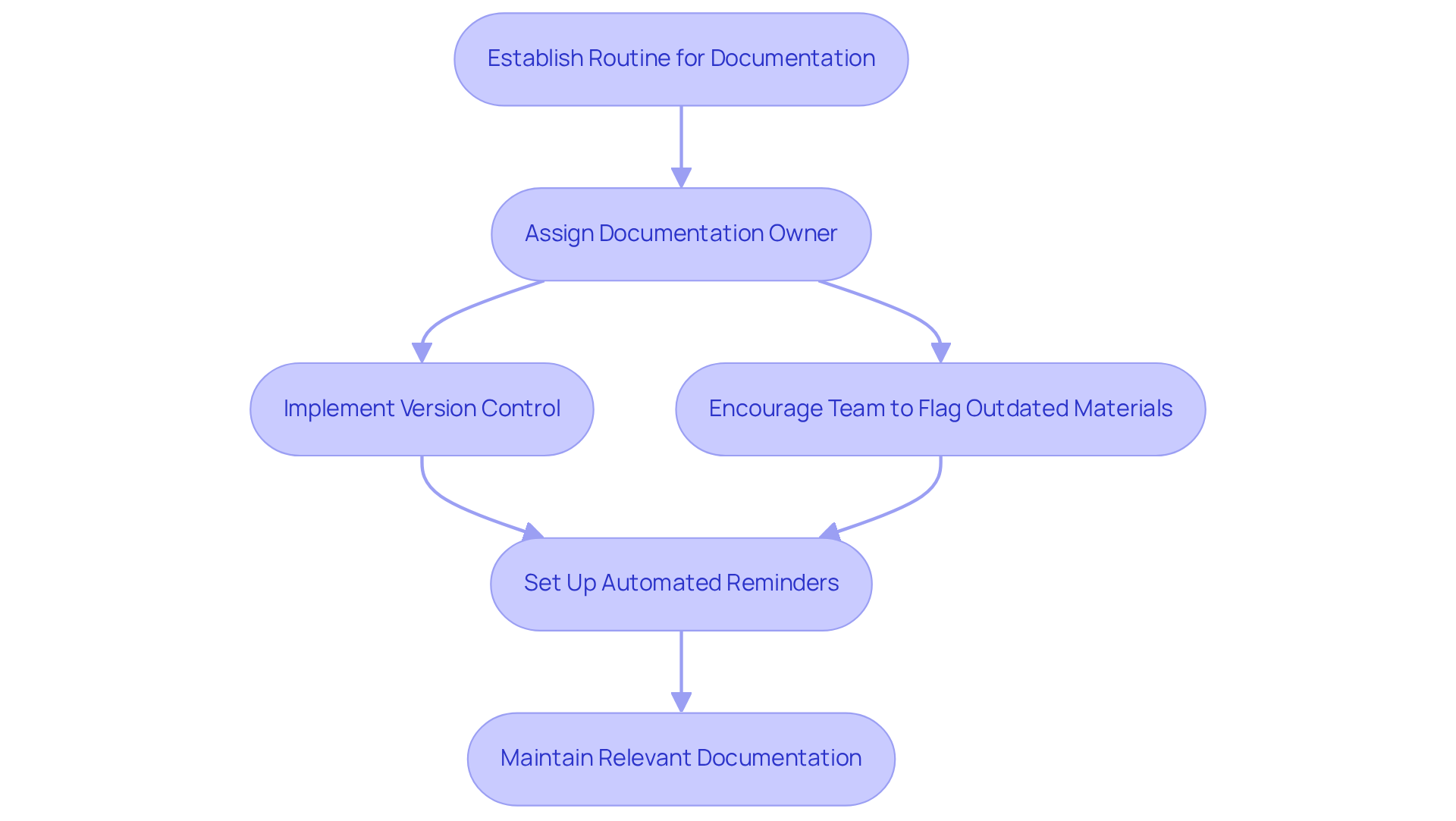
You might be wondering how to keep your documentation relevant and efficient with documentation tools online. Well, it all starts with having a solid plan for regular updates and maintenance, and that’s where SowFlow comes in handy! Assigning a ‘documentation owner’ for each key area is a smart move. This person is in charge of reviewing and updating documents at set intervals - think quarterly or biannually. It’s a great way to boost accountability and create a culture of ownership within your organization.
Now, let’s talk about version control. It’s super important for tracking changes and making sure everyone has access to the latest information. Did you know that 47% of employees have worked on the wrong or outdated version of a document? That really highlights the need for clear ownership and management of records. Encouraging your team to flag outdated or flawed materials can also help foster continuous improvement and engagement.
Speaking of that, using automated reminders or alerts within SowFlow can be a game changer. These prompts can remind users to review specific documents regularly, keeping everything up-to-date. This proactive approach to using documentation tools online for maintenance not only boosts operational efficiency but also aligns with best practices in knowledge management. In the end, it leads to improved productivity and less risk associated with outdated information. So, why not give it a try?
Conclusion
You might be wondering how to make the most of online documentation tools, right? Well, it all starts with understanding what your organization really needs. By integrating these tools into your workflows, providing solid training, and keeping everything updated, you can boost productivity, cut down on errors, and create a culture of continuous improvement.
Identifying the specific documentation needs of different departments is key to picking the right tools. When you weave these tools into your existing workflows, it makes accessing important documents a breeze. Plus, robust training programs can really empower your teams to use these tools effectively. And don’t forget about keeping your documentation fresh! Regular reviews and assigning ownership can help you avoid the pitfalls of outdated information.
So, why not adopt these best practices? They not only streamline your documentation processes but also enhance overall efficiency in your organization. Take a moment to assess your documentation needs, consider integrating tools like SowFlow, and make ongoing training and maintenance a priority. By doing this, you’ll tap into the full potential of your documentation strategies, leading to better collaboration and fewer operational risks. Now, doesn’t that sound like a plan?
Frequently Asked Questions
Why is it important to identify organizational needs for documentation tools?
Identifying organizational needs for documentation tools is crucial because it helps determine what types of documents are necessary and how often they need to be updated, leading to improved productivity and collaboration across teams.
How can an organization evaluate its current record-keeping methods?
An organization can evaluate its current record-keeping methods by assessing the types of documents needed, their update frequency, and involving employees from different departments through surveys and workshops to gather insights on challenges and needs.
What role do employees from different departments play in the evaluation process?
Employees from different departments provide valuable perspectives on their specific documentation needs, such as the product team needing detailed user guides and the operations team focusing on standard operating procedures (SOPs).
What statistics highlight the importance of effective document management?
Statistics show that 79% of companies believe efficient document management solutions are becoming more crucial, and 70% of team members think that fewer meetings and emails could boost productivity.
What are the financial implications of poor record-keeping practices?
Poor record-keeping practices can lead to data entry mistakes that cost companies over $600 billion every year, highlighting the need for effective record-keeping strategies.
What benefits can arise from assessing record-keeping methods?
Assessing record-keeping methods can lead to the selection of tools that meet diverse organizational needs, ultimately resulting in better productivity and collaboration among teams.
👍
What others are liking


5 Steps to outline your ideal documentation structure
5 MINS READ
Where to start the your journey of mapping out your ideal documentation structure, aligning it with the very heartbeat of your organization?
Defining a winning level of detail in your process
3 MINS READ
What is too much detail, and what is too little? This article described in that winning level detail about what detail is enough.


