


Key Highlights:
- Align training objectives with business goals by defining strategic objectives and conducting a needs assessment to identify skill gaps.
- Use SMART criteria (Specific, Measurable, Achievable, Relevant, Time-bound) to create clear learning objectives linked to organisational goals.
- Companies like IBM and Dow Chemicals have successfully applied SMART criteria, leading to improved performance and engagement.
- Firms with strong employee development programmes are 24% more profitable and have better retention rates.
- Incorporate diverse instructional methods to cater to different learning styles, enhancing engagement and accessibility.
- 75% of students in personalised learning environments feel engaged, compared to only 30% in traditional settings.
- Mentorship programmes significantly boost career advancement, with mentored individuals being promoted five times more often.
- 91% of workers with mentors report higher job satisfaction, highlighting the importance of peer support and knowledge sharing.
- Regularly measure training effectiveness using qualitative and quantitative methods, including pre- and post-training assessments.
- Organisations that evaluate staff training report employees are 17% more productive, emphasising the need for continuous assessment.
- 92% of employees believe workplace development positively affects their job engagement, showcasing the broader benefits of training.
Introduction
You might be wondering how to craft a successful training program for business software. Well, it’s not just another task on your to-do list; it’s actually a strategic move that can really boost your organization’s performance and profitability. By aligning your training objectives with your business goals, you can ramp up employee engagement and make sure your team has the skills they need to thrive.
But here’s the kicker: implementing diverse training methods that cater to different learning styles can be a bit tricky. Plus, you’ll want to keep measuring and refining these strategies to ensure they’re effective. So, how can organizations tackle these challenges and create a training environment that truly fosters long-term success? Let’s dive into that!
Align Training Objectives with Business Goals
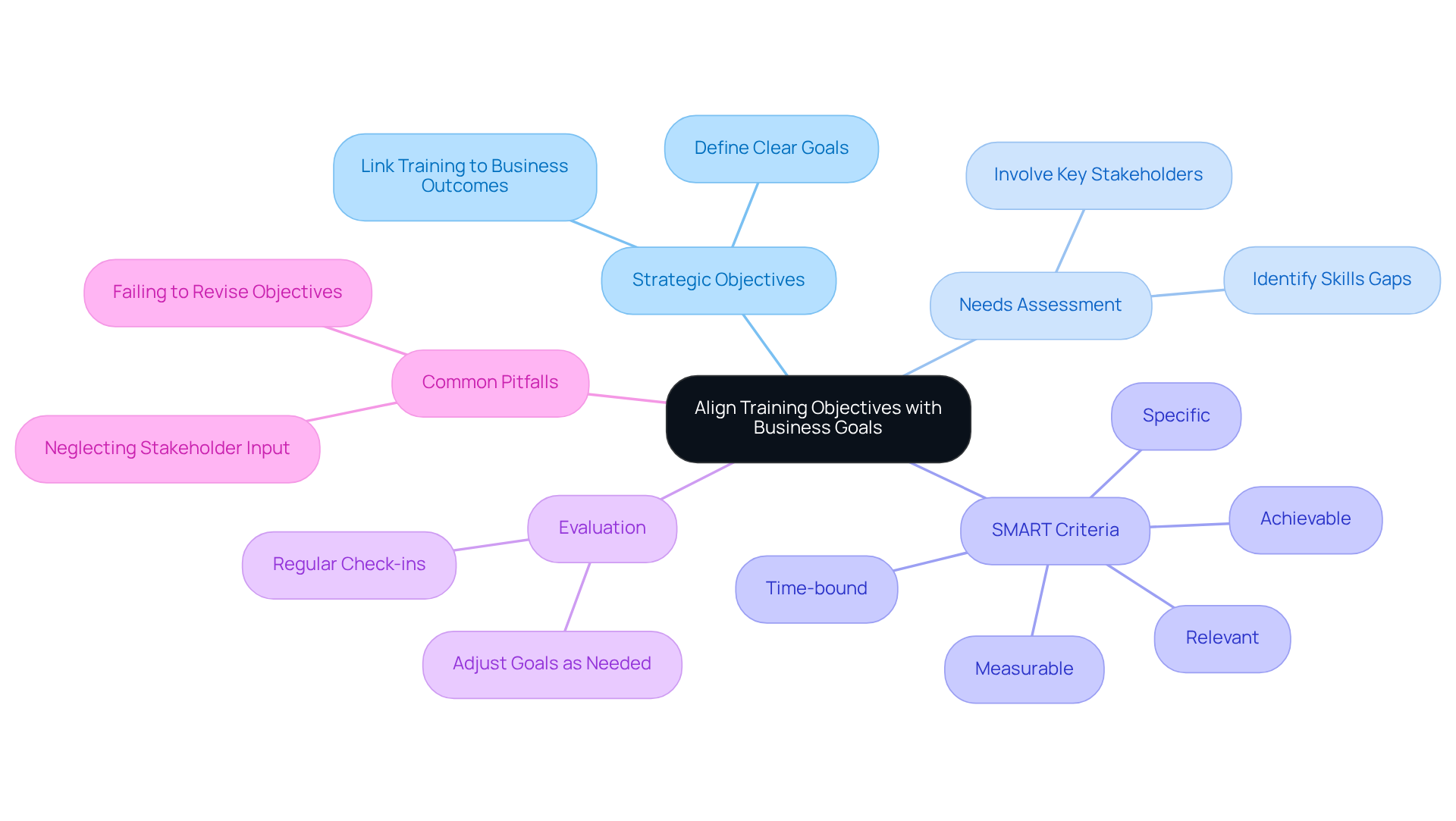
You might be wondering how to effectively align educational objectives with your business goals. Well, it all starts with clearly defining your organization's strategic objectives. A needs assessment is key here; it helps you identify any skills or knowledge gaps that could impede the successful implementation of training business software to reach those goals. For example, if your company wants to boost customer satisfaction, then the training business software should focus on enhancing customer service skills.
Now, let’s talk about the SMART criteria - Specific, Measurable, Achievable, Relevant, and Time-bound. Using these guidelines ensures that your learning objectives are crystal clear and directly tied to your organizational goals. And don’t forget, it’s super important to regularly evaluate and tweak these goals to keep up with any shifts in corporate strategies. This way, you foster a culture of continuous improvement and flexibility within your organization.
Companies like IBM and Dow Chemicals have seen great success by applying the SMART criteria to their learning goals, reporting significant boosts in performance and employee engagement. Plus, did you know that firms with strong employee development programs are 24% more profitable and have better retention rates? This really highlights how crucial a well-organized needs assessment is to your overall strategy for training business software.
However, steer clear of common pitfalls! Make sure to involve key stakeholders in the analysis process and don’t forget to revise your educational objectives as your business needs evolve. Keeping everyone in the loop is essential for success!
Develop Structured Training Programs for Diverse Learning Styles
You might be wondering how to create educational programs that really connect with different learning styles. Well, it’s all about mixing things up with various instructional methods! For instance, using visual aids like videos and infographics can really help those visual learners out there. And let’s not forget about kinesthetic learners - hands-on activities like role-playing and simulations can make a world of difference for them.
Did you know that studies show 75% of students in personalized learning environments feel engaged? That’s a huge jump compared to just 30% in traditional settings! It really highlights how effective diverse instructional methods can be. Plus, offering instruction in different formats - like e-learning modules, in-person workshops, and blended learning - can make things more accessible and engaging for everyone.
Now, here’s a thought: consistently asking for feedback from participants is key to improving content and delivery methods. It ensures that what you’re offering meets the needs of all learners, ultimately leading to better outcomes. This multifaceted approach not only creates a more inclusive learning environment but also boosts participant engagement and retention significantly.
And just to drive the point home, personalized learning can raise student scores by 30%! That’s a pretty impressive impact from tailored instructional strategies, don’t you think?

Provide Continuous Support and Resources for Long-Term Success
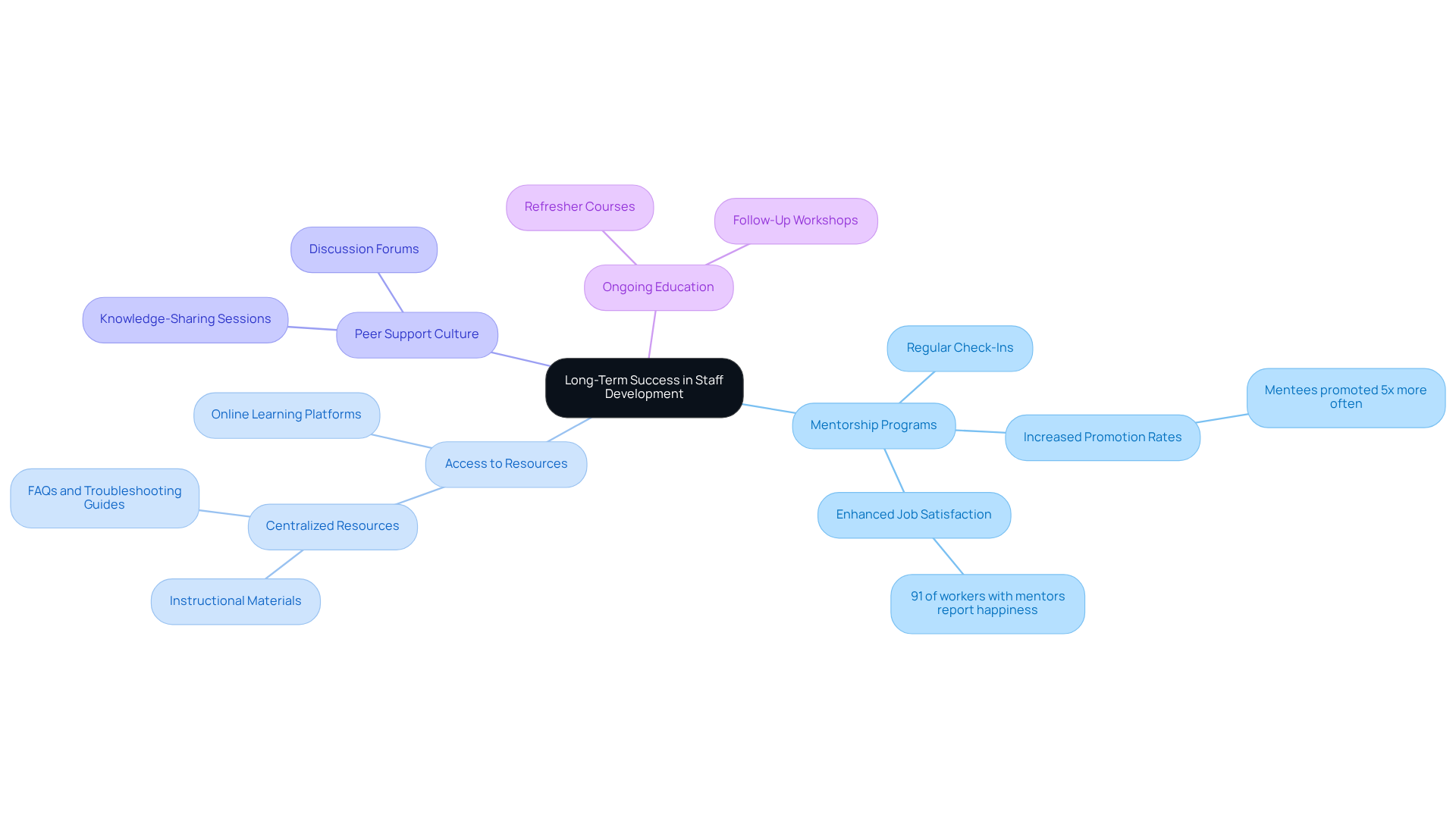
You might be wondering how to ensure long-term success in staff development. Well, it all starts with a solid framework! Think mentorship programs, easy access to online resources, and regular check-ins. Mentorship really makes a difference; studies show that folks with mentors get promoted five times more often than those without. That’s a big deal! It just goes to show how guidance can really boost your career (source needed). Plus, having a centralized spot for instructional materials, FAQs, and troubleshooting guides means staff can find what they need when they need it, which builds independence and confidence in their roles.
Now, let’s talk about the importance of a culture of peer support. Organizing knowledge-sharing sessions or discussion forums can be a game-changer. It gives staff a chance to ask questions and swap best practices, leading to better performance and job satisfaction. Did you know that 91% of workers with a mentor report feeling happier at work? (source needed) That really highlights the value of mentorship in the workplace!
And don’t forget about refresher courses or follow-up workshops! These can help reinforce essential skills and concepts, ensuring that staff stay sharp. Organizations that focus on mentorship and ongoing education not only boost engagement but also see a 23% increase in profitability. That’s some serious motivation to invest in workforce development!
Measure Training Effectiveness and Refine Strategies
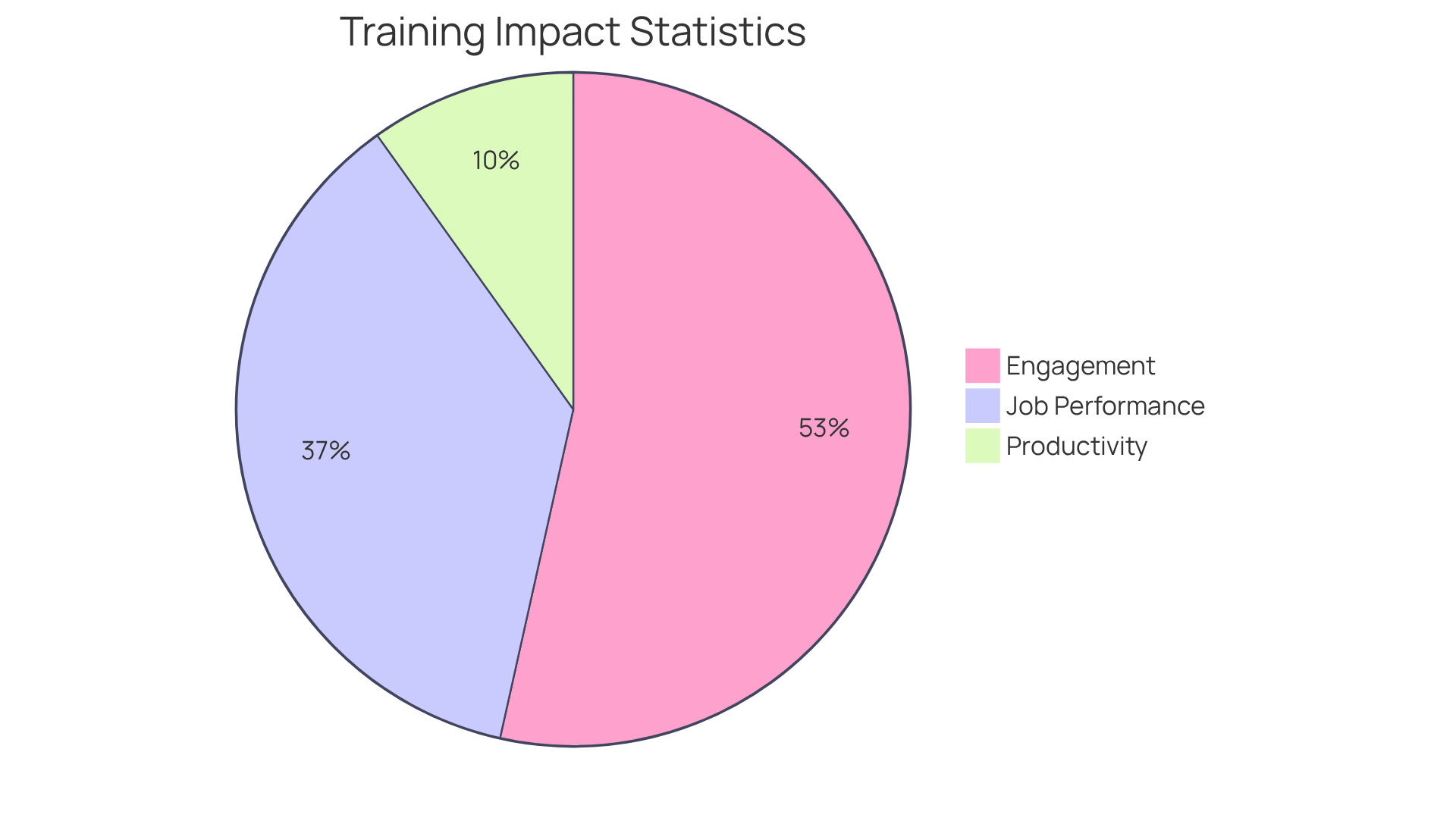
You might be wondering how to really measure the effectiveness of your programs, right? Well, it turns out that a mix of qualitative and quantitative evaluation methods is the way to go. Think about it: implementing pre- and post-training assessments is key for checking how well knowledge sticks and skills are applied in training business software. Research shows that companies utilizing training business software often see a significant boost in employee performance. In fact, 63% of folks report improved job performance, especially after focusing on soft skills development. Plus, gathering feedback through surveys and interviews helps capture participants' thoughts on how relevant and effective the program is.
Now, let’s dive into performance metrics! Looking at productivity rates and customer satisfaction scores gives you a clearer picture of how the program impacts business results. For instance, organizations that regularly evaluate their staff often find that employees who receive training in business software are 17% more productive. That really highlights the importance of ongoing assessment, doesn’t it? And get this: 92% of employees say that workplace development positively affects their job engagement. This really emphasizes the broader benefits of assessment programs.
So, what does all this data mean for you? It not only helps refine your development strategies but also allows for tweaks in content and delivery methods. This way, future initiatives can better align with your organization's needs and drive real improvements in performance. As Anton Chekhov wisely pointed out, continuous training is essential for keeping a skilled workforce.
Conclusion
You might be wondering why aligning training business software with your organizational goals is such a big deal. Well, it’s crucial for creating a productive and engaged workforce! When you set clear training objectives that resonate with your business strategies, you’re not just ticking boxes; you’re paving the way for real improvements in performance and employee satisfaction. And here’s where the SMART criteria come into play. This framework helps you craft focused and relevant training programs that can adapt as your business evolves.
Now, let’s talk about some key insights. It’s all about using diverse instructional methods that cater to different learning styles. Plus, don’t forget the importance of continuous support and resources for long-term success. Engaging employees through personalized learning experiences and providing ongoing mentorship can really boost your training outcomes. And remember, regularly evaluating your training programs allows you to make necessary adjustments that align with both employee development and your corporate objectives.
Ultimately, investing in effective training practices isn’t just about boosting employee engagement and retention; it’s also a smart move for driving profitability and overall organizational success. By embracing these best practices, you can empower your business to cultivate a skilled, adaptable workforce that’s ready to tackle the challenges of a dynamic marketplace. So, why wait? Now’s the time to prioritize training that aligns with your business goals and supports diverse learning needs, ensuring your organization thrives in an increasingly competitive environment.
Frequently Asked Questions
How can organizations align training objectives with business goals?
Organizations can align training objectives with business goals by clearly defining their strategic objectives and conducting a needs assessment to identify skills or knowledge gaps that may hinder the successful implementation of training.
What is the importance of a needs assessment in training?
A needs assessment is crucial as it helps identify any skills or knowledge gaps that could impede the successful implementation of training, ensuring that the training is relevant to the organization's goals.
What does the SMART criteria stand for?
The SMART criteria stand for Specific, Measurable, Achievable, Relevant, and Time-bound, which helps in creating clear learning objectives that are directly tied to organizational goals.
Why is it important to regularly evaluate training goals?
Regularly evaluating training goals is important to adapt to any shifts in corporate strategies, fostering a culture of continuous improvement and flexibility within the organization.
What benefits have companies like IBM and Dow Chemicals experienced by applying the SMART criteria?
Companies like IBM and Dow Chemicals have reported significant boosts in performance and employee engagement by applying the SMART criteria to their learning goals.
How do strong employee development programs impact a company's profitability and retention rates?
Firms with strong employee development programs are 24% more profitable and have better retention rates, highlighting the importance of a well-organized needs assessment in training strategies.
What common pitfalls should organizations avoid when aligning training with business goals?
Organizations should avoid common pitfalls such as failing to involve key stakeholders in the analysis process and neglecting to revise educational objectives as business needs evolve. Keeping everyone informed is essential for success.
👍
What others are liking


5 Steps to outline your ideal documentation structure
5 MINS READ
Where to start the your journey of mapping out your ideal documentation structure, aligning it with the very heartbeat of your organization?
Defining a winning level of detail in your process
3 MINS READ
What is too much detail, and what is too little? This article described in that winning level detail about what detail is enough.


