


Key Highlights
- Defining the purpose of software training documentation is essential for achieving specific goals such as improving client onboarding and product understanding.
- Clear objectives in training documentation can lead to increased productivity and employee retention.
- Common types of training documentation include user manuals, quick reference guides, online help systems, and video tutorials, each serving different needs.
- Quick reference guides are gaining popularity for providing immediate support without overwhelming detail.
- Effective training documentation can boost employee engagement and retention, with 86% of HR managers noting positive impacts on productivity.
- Steps for creating effective training documentation include assessing needs, setting goals, writing clearly, choosing appropriate formats, distributing materials, and keeping them updated.
- SowFlow is a software tool that simplifies the documentation process with features like templates, collaboration tools, and analytics for tracking user engagement.
- Companies investing in employee education and growth see significant improvements in retention and skills gap closure.
Introduction
You might be wondering just how important effective software training documentation really is. Well, it’s a game changer for boosting productivity and keeping employees around longer. By clearly defining what your training materials are all about, you can tailor them to fit the needs of everyone - from fresh-faced new hires to seasoned pros who’ve been around the block.
But here’s the kicker: how do you make sure your documentation isn’t just relevant but also engaging enough to spark a culture of continuous learning? That’s the challenge many organizations face. Exploring some best practices in this area can really open up the door to better onboarding experiences and a smoother overall workflow. So, let’s dive into this together!
Define the Purpose of Software Training Documentation
You might be wondering why it is so important to define the purpose of software training documentation. Well, it’s crucial for making sure your training hits the mark! Organizations really need to pinpoint specific goals - like improving client onboarding, boosting product understanding, or keeping up with industry standards. When you have a clear purpose, you can tailor your content to fit the needs of different audiences, whether they’re new hires, seasoned staff, or even external users.
For instance, if onboarding new employees is your main goal, then your documentation should focus on the essential software features and common tasks they’ll need to know. Establishing a clear purpose not only makes your training materials more relevant but also significantly boosts learning outcomes. Did you know that companies with structured onboarding processes see a whopping 50% increase in productivity? That’s according to the Society for Human Resources Management! Plus, employees who have a positive experience in their first 90 days are ten times more likely to stick around (thanks, Brandon Hall Group!). This really highlights how clear objectives can impact participant success rates.
As Grace Lau, Director of Growth Content, puts it, 'A lack of structured onboarding harms their company.' This just goes to show how important it is to have well-defined objectives. By weaving these elements into your training materials, you can create something that truly resonates with individuals and leads to better learning results. So, let’s dive into how you can make your documentation more effective!

Explore Different Types of Training Documentation
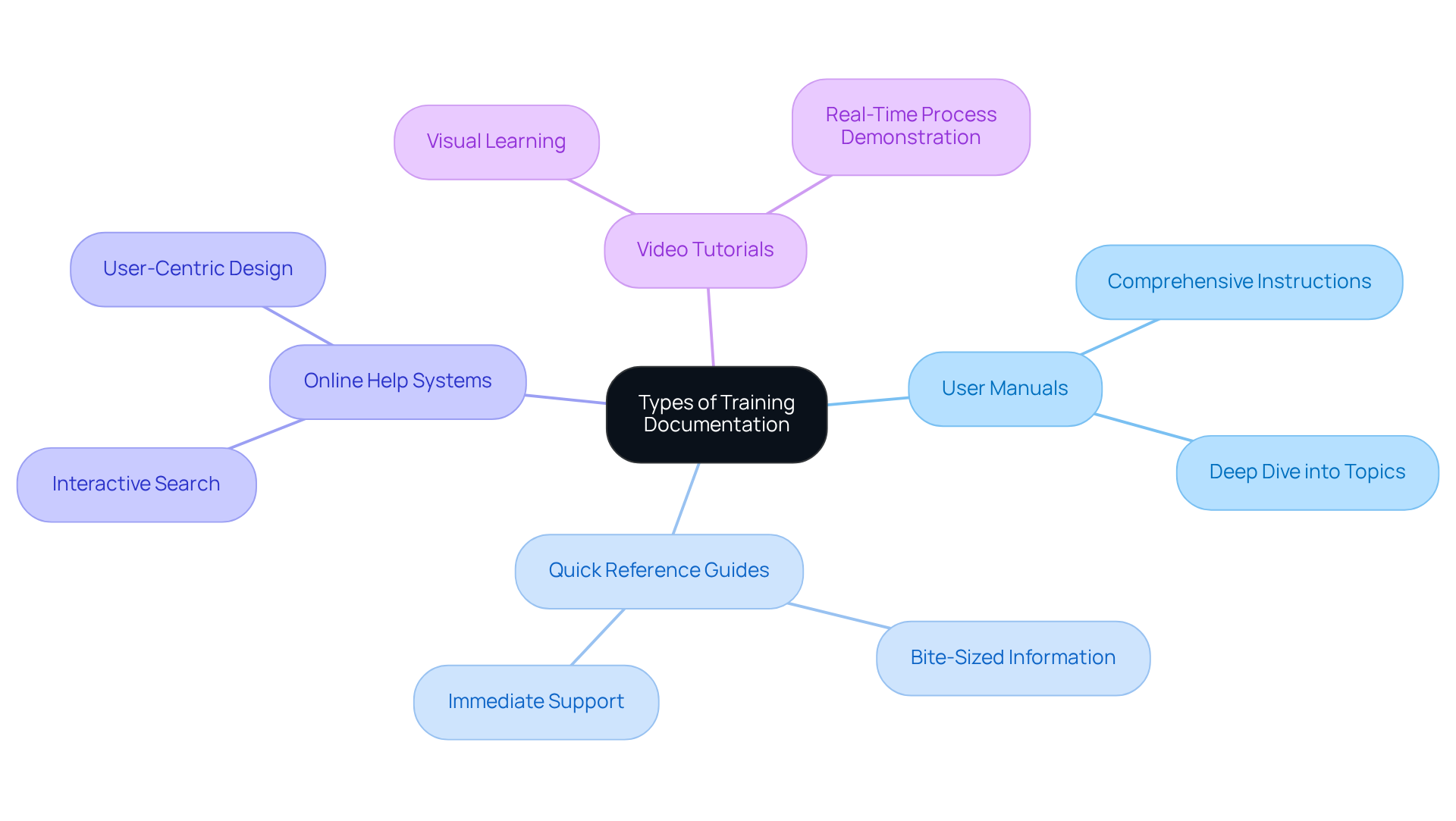
You might be wondering what training documentation really looks like, right? Well, it comes in various formats, each designed to meet specific needs. Let’s break down some common types:
- User Manuals: These are your go-to for comprehensive instructions, perfect for when you need a deep dive into a topic.
- Quick Reference Guides: Think of these as your cheat sheets. They distill essential info into bite-sized pieces, making it super easy to grab what you need in a hurry.
- Online Help Systems: These add a layer of interactivity, letting you search for exactly what you’re curious about.
- Video Tutorials: If you’re a visual learner, these are a game changer! They show you processes in real-time, making it easier to grasp concepts.
Now, here’s something interesting: recent trends show that quick reference guides are becoming more popular. Why? Because they offer immediate support without drowning users in too much detail. By mixing these formats, organizations can really boost their development strategies. This way, staff get the right info in the most efficient way possible.
And it gets better! This smart approach not only improves learning outcomes but also ramps up employee engagement and retention. In fact, 86% of HR managers see the positive effects of tailored educational materials on productivity. Plus, companies with solid development programs enjoy a whopping 24% higher profit margin. That’s a pretty compelling reason to invest in effective educational materials!
As U.S. companies upped their development spending to $101.8 billion in 2023, it’s clear that optimizing educational strategies is key to success. Speaking of which, with SowFlow's easy creation experience, organizations can whip up guides effortlessly, keeping records relevant and accessible. This means teams have instant access to crucial information, making onboarding and knowledge sharing a breeze. Ultimately, this boosts overall team efficiency. So, what are you waiting for? Let’s make documentation work for you!
Implement Steps for Creating Effective Training Documentation
Creating effective software training documentation is all about making sure the materials are clear and relevant for everyone involved.
You might be wondering where to start, right? Well, the first step is to Assess Needs. This means figuring out what your audience really needs. You can do this through surveys or interviews to gather insights on what users require to get their jobs done effectively. For example, organizations that implement structured assessments often see a big boost in employee performance and retention. In fact, studies show that 60% of companies with formal training programs report higher revenue.
Next up, let’s Set Goals. It’s super important to clearly define what you want to achieve with your documentation. Are you looking to enhance user proficiency, cut down on support queries, or improve overall operational efficiency? Establishing measurable outcomes is key to evaluating how effective your software training documentation really is.
Now, let’s talk about writing clearly. Use simple, concise language and steer clear of jargon to make sure your material is easy to understand. Did you know that research shows video-based learning is 95% more effective than text-based methods? That really highlights how crucial clarity in communication is!
When it comes to choosing formats for software training documentation, consider what types of materials will work best for your audience and content. Blended learning methods, which mix online and face-to-face instruction, can cater to different learning preferences and really boost engagement.
Once you’ve got your materials ready, it’s time to Distribute them. Make sure they’re easily accessible, whether through an internal portal or printed materials. Accessibility is key to maximizing the usefulness of your software training documentation resources. For instance, SowFlow’s immediate record-keeping solution empowers teams by providing easy access to user guides, streamlining process standardization, onboarding, and knowledge sharing.
And don’t forget to keep the software training documentation updated! Regularly review and revise your materials to reflect any changes in software or processes. With SowFlow, updating your materials is a breeze, ensuring they stay relevant in our ever-changing business world. Organizations that prioritize keeping their software training documentation current are in a better position to maintain employee engagement and effectiveness. After all, outdated content can lead to confusion and decreased productivity.
By following these steps and taking advantage of SowFlow's features - like the ability to call upon knowledge resources with just a single command - you can develop instructional materials that are not only effective but also adaptable to changing needs. This ultimately helps cultivate a culture of ongoing learning and improvement.

Utilize Training Documentation Software for Enhanced Efficiency
You might be wondering how software training documentation can really make a difference in developing and managing training materials. Well, let me tell you about SowFlow! This tool lets you document workflows right from your browser, making it super easy to capture processes in real-time. With handy features like templates, collaboration tools, and version control, everyone on your team can pitch in and make the recording process a breeze.
But that’s not all! SowFlow also comes with analytics capabilities that track user engagement. This means you can spot areas that need a little TLC. Did you know that:
- 94% of staff would stick around longer at a company that invests in their education and growth?
- 51% of HR managers believe that educating employees is the best way to close the skills gap in their companies?
That really shows how crucial effective instructional materials are!
So, by using tools like SowFlow, businesses can whip up high-quality educational materials that are not only easy to access but also consistently updated. This ultimately boosts learning outcomes and fosters a culture of continuous development. However, let’s be real - keeping software training documentation effective can be a challenge. Engagement issues and the need for timely updates often pop up. For example, one company that jumped on the SowFlow bandwagon saw a noticeable boost in employee engagement and retention rates. Talk about a win-win!

Conclusion
You might be wondering why effective software training documentation is such a big deal. Well, it’s crucial for helping users navigate and use systems confidently. When organizations clearly define the purpose of their training materials, they can tailor content to meet the unique needs of different audiences. This not only boosts learning outcomes but also helps with retention rates. Plus, structured documentation makes onboarding smoother and contributes to overall productivity and employee satisfaction.
Throughout this article, we’ve explored some key practices for developing impactful training documentation. From figuring out the purpose and assessing audience needs to choosing the right formats and using handy tools like SowFlow, every step is vital in crafting materials that really connect with users. And let’s not forget how important it is to keep documentation updated and accessible-outdated info can really throw a wrench in the learning process and productivity.
So, in conclusion, prioritizing effective software training documentation is essential for building a culture of continuous learning and development in organizations. By sticking to best practices and leveraging the right tools, businesses can create engaging, relevant, and efficient training resources that empower employees and drive success. Investing in quality documentation isn’t just a nice-to-have; it’s a smart move that can lead to significant improvements in employee performance and retention, ultimately benefiting the organization as a whole. Now, doesn’t that sound like a win-win?
Frequently Asked Questions
Why is it important to define the purpose of software training documentation?
Defining the purpose is crucial to ensure that training meets specific goals, such as improving client onboarding, enhancing product understanding, or adhering to industry standards.
How does having a clear purpose affect the training content?
A clear purpose allows you to tailor the content to fit the needs of different audiences, including new hires, seasoned staff, or external users, making the training materials more relevant.
What should documentation focus on if the main goal is onboarding new employees?
If onboarding is the main goal, the documentation should focus on essential software features and common tasks that new employees need to know.
What impact do structured onboarding processes have on productivity?
Companies with structured onboarding processes can see a 50% increase in productivity, according to the Society for Human Resources Management.
How does a positive onboarding experience affect employee retention?
Employees who have a positive experience in their first 90 days are ten times more likely to stay with the company, as noted by the Brandon Hall Group.
What does Grace Lau say about the importance of structured onboarding?
Grace Lau, Director of Growth Content, emphasizes that a lack of structured onboarding can harm a company, highlighting the necessity of well-defined objectives in training materials.
👍
What others are liking


5 Steps to outline your ideal documentation structure
5 MINS READ
Where to start the your journey of mapping out your ideal documentation structure, aligning it with the very heartbeat of your organization?
Defining a winning level of detail in your process
3 MINS READ
What is too much detail, and what is too little? This article described in that winning level detail about what detail is enough.


