


Key Highlights
- ERP systems are integrated software platforms that manage key business processes across departments such as finance, HR, and supply chain.
- Key components of ERP include data integration, real-time reporting, and process automation, which enhance operational efficiency.
- Companies implementing ERP often experience a 30% increase in ROI within three years, with 83% meeting their ROI expectations.
- 64% of ERP projects exceed budget, highlighting the need for effective record-keeping and planning.
- 93% of companies view their ERP implementations as successful once systems stabilise, emphasising the role of organised records.
- Structured documentation practises help maintain compliance with industry regulations and internal standards.
- Version control is essential for tracking modifications and ensuring access to the latest documents.
- Well-organised records can boost operational efficiency by 21.3%, reducing training time and identifying bottlenecks.
- Regular reviews and updates of documentation can significantly lower compliance issues and enhance operational integrity.
- Incorporating user feedback into documentation processes fosters accountability and improves usability.
Introduction
You might be wondering why effective documentation is such a big deal for Enterprise Resource Planning (ERP) systems. Well, it’s the backbone of success, yet many organizations tend to overlook its importance. By mastering the art of ERP documentation, businesses can tap into a treasure trove of benefits - think enhanced compliance and improved operational efficiency. But here’s the kicker: a staggering percentage of ERP projects end up exceeding their budgets. So, the real challenge? Creating and maintaining documentation that genuinely supports user needs and aligns with organizational goals.
What best practices can organizations adopt to ensure their ERP documentation not only meets compliance standards but also drives productivity and success? Let’s dive into that!
Understand ERP Fundamentals and Their Importance
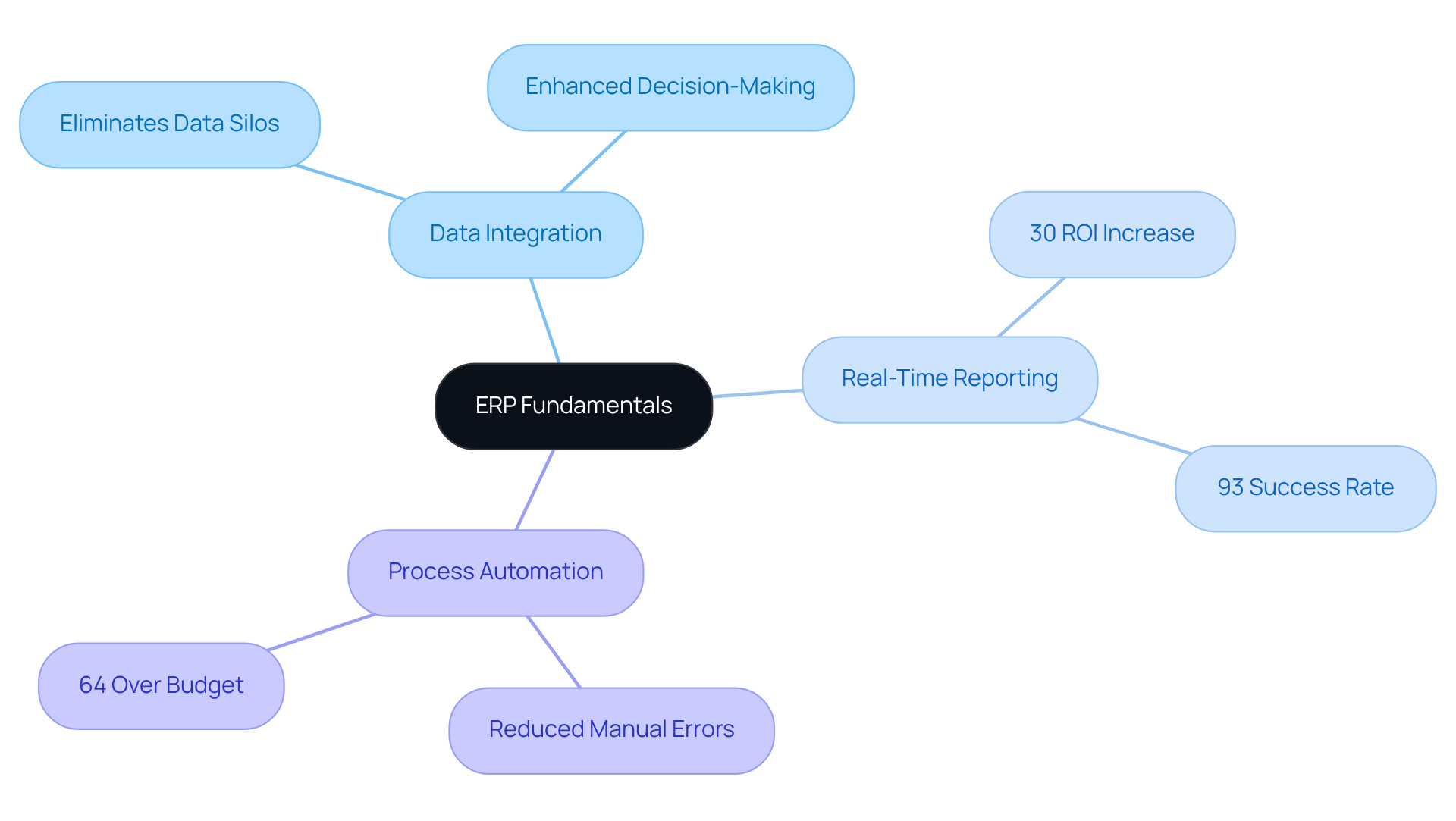
You might be wondering what Enterprise Resource Planning (ERP) solutions really are. Well, they’re integrated software platforms that help manage key business processes across various departments like finance, HR, manufacturing, and supply chain management. Understanding the basics of ERP is super important for keeping your records in check. It helps you sync your recording efforts with what the platform can do, making everything run smoother.
So, what are the key components of ERP? Think data integration, real-time reporting, and process automation. These elements work together to boost operational efficiency. For instance, companies that jump on the ERP bandwagon often see a 30% increase in return on investment within just three years! And get this - 83% of organizations that did an ROI analysis before diving in met their expectations. That really highlights how crucial well-organized records are in showcasing these benefits.
But it’s not all sunshine and rainbows. Did you know that 64% of ERP projects go over budget? That’s a big deal, which is why solid record-keeping and planning are essential. By getting a grip on these basics, your team can create ERP system documentation that not only highlights the platform’s features but also helps users navigate and make the most of the ERP.
Speaking of success, TrustRadius found that [93% of companies eventually view their ERP implementations as successful](https://jacopo.ee/en/resources/erp-statistics) once their systems stabilize. This really underscores the vital role of record-keeping in achieving those positive outcomes. So, are you ready to explore how effective documentation can transform your ERP experience?
Implement Structured Documentation for Compliance
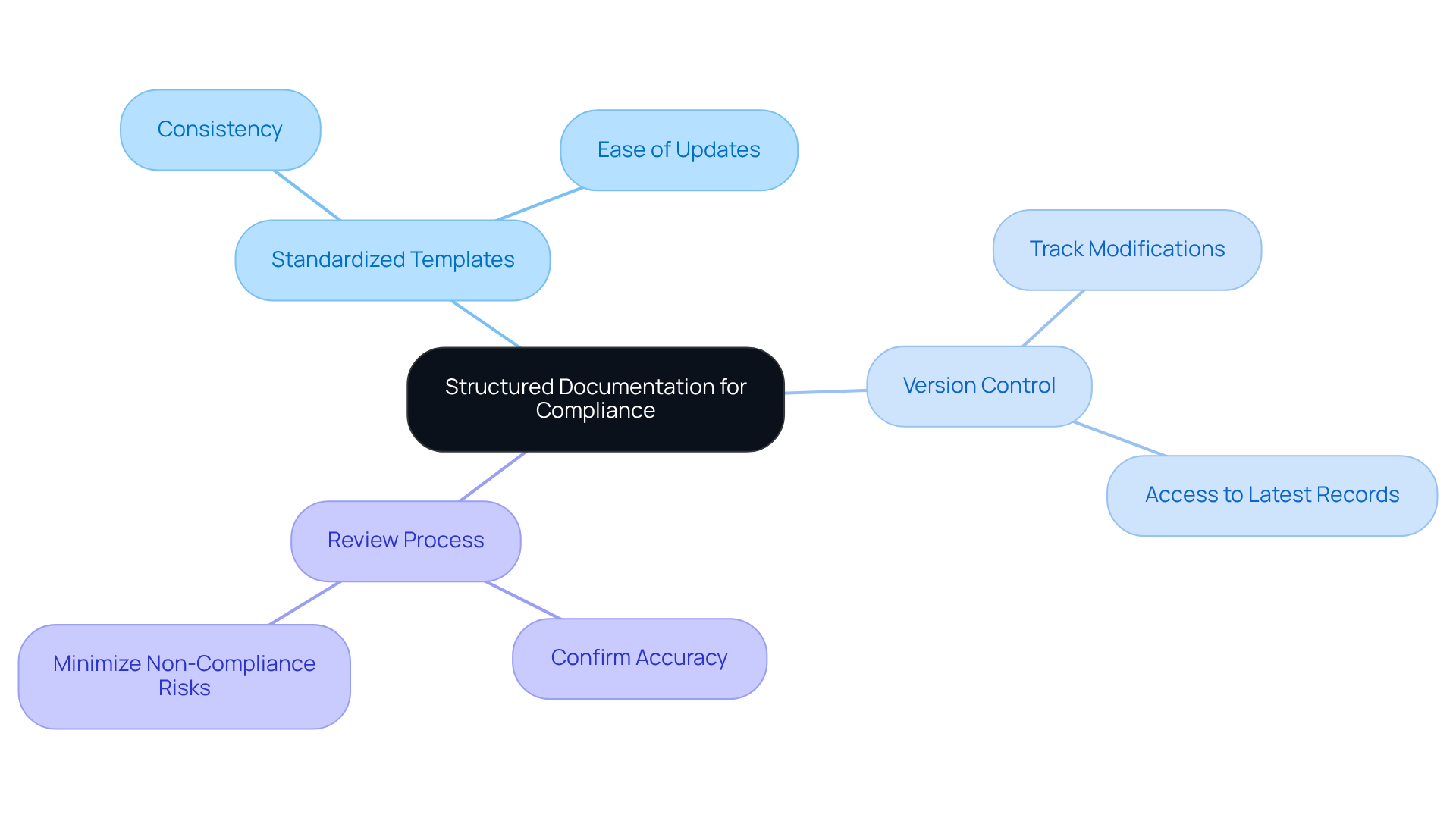
You might be wondering how to keep your organization in line with industry regulations and internal standards. Well, one great way is by implementing organized record-keeping practices. Think about it: adopting standardized templates can really help your team maintain consistency across documents. This makes it so much easier to update and manage information, right?
Now, let’s dive into version control. It’s crucial for keeping track of modifications and ensuring everyone has access to the latest records. Imagine the chaos if someone was working off an outdated document! Plus, having a solid review process in place helps confirm the accuracy and relevance of your materials. This not only minimizes the risk of non-compliance but also boosts your overall operational integrity. So, why not explore these solutions further? You’ll be glad you did!
Leverage Documentation to Enhance Operational Efficiency
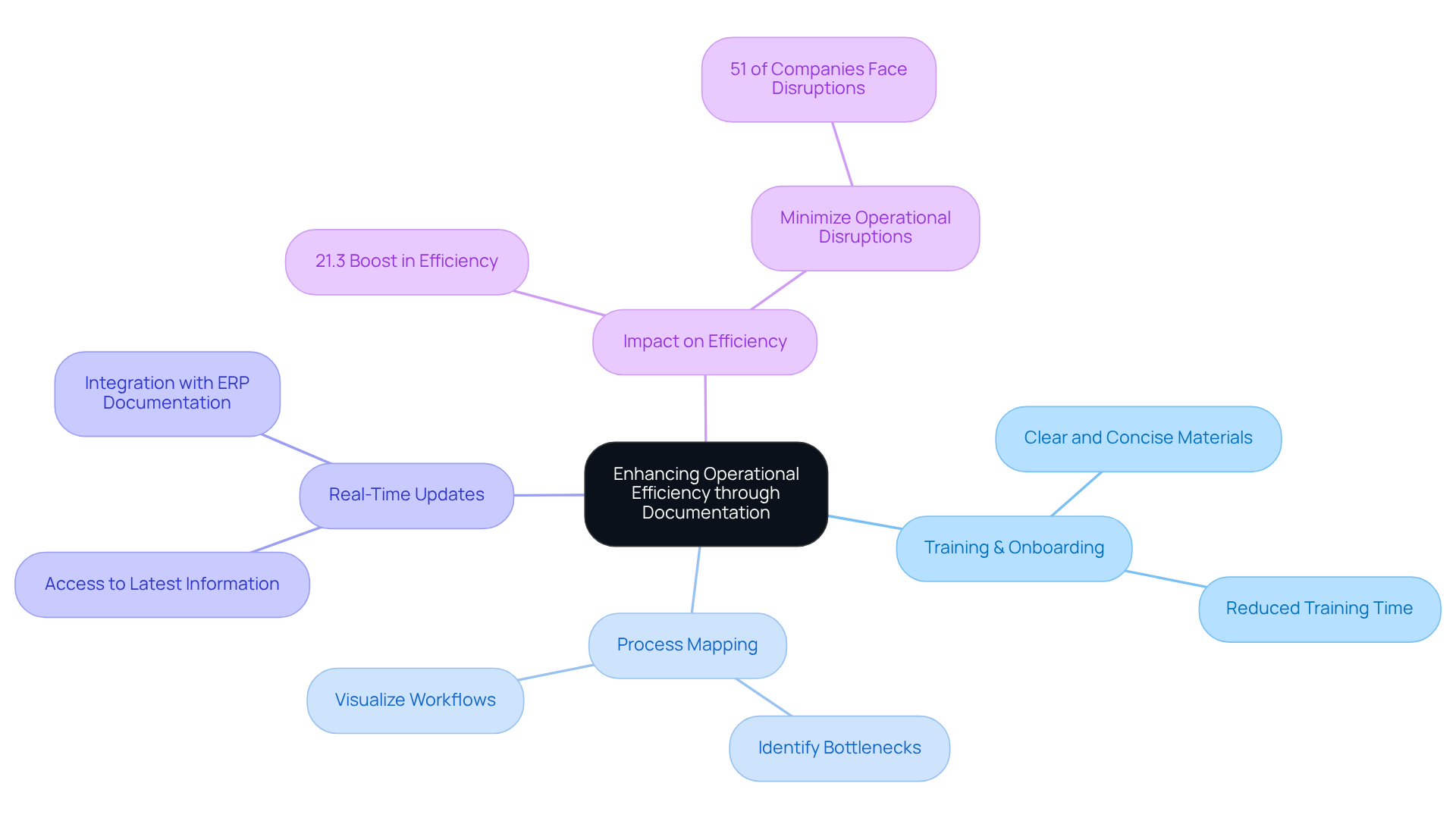
You might be wondering how effective records can really make a difference in your ERP systems. Well, let me tell you, they’re a game changer! By creating clear, concise, and user-friendly materials, companies can cut down on the time spent training and onboarding new staff. Research from the Archive Corporation shows that businesses with well-organized records see a whopping 21.3% boost in efficiency. Why? Because it helps teams quickly spot bottlenecks and inefficiencies, paving the way for a culture of continuous improvement.
Now, think about it: organizations can use process mapping techniques to visualize workflows. This makes it super easy to identify areas that need a little optimization. Plus, when you combine records with the ERP system documentation, you get real-time updates, ensuring everyone on the team has access to the latest info. This is crucial, especially since 51% of companies face operational hiccups during ERP go-live. It really highlights how effective records can help ease those challenges.
So, by tackling these common issues, you can minimize disruptions and boost productivity. Sounds good, right? Let’s dive into how you can start improving your documentation today!
Maintain and Update Documentation Regularly
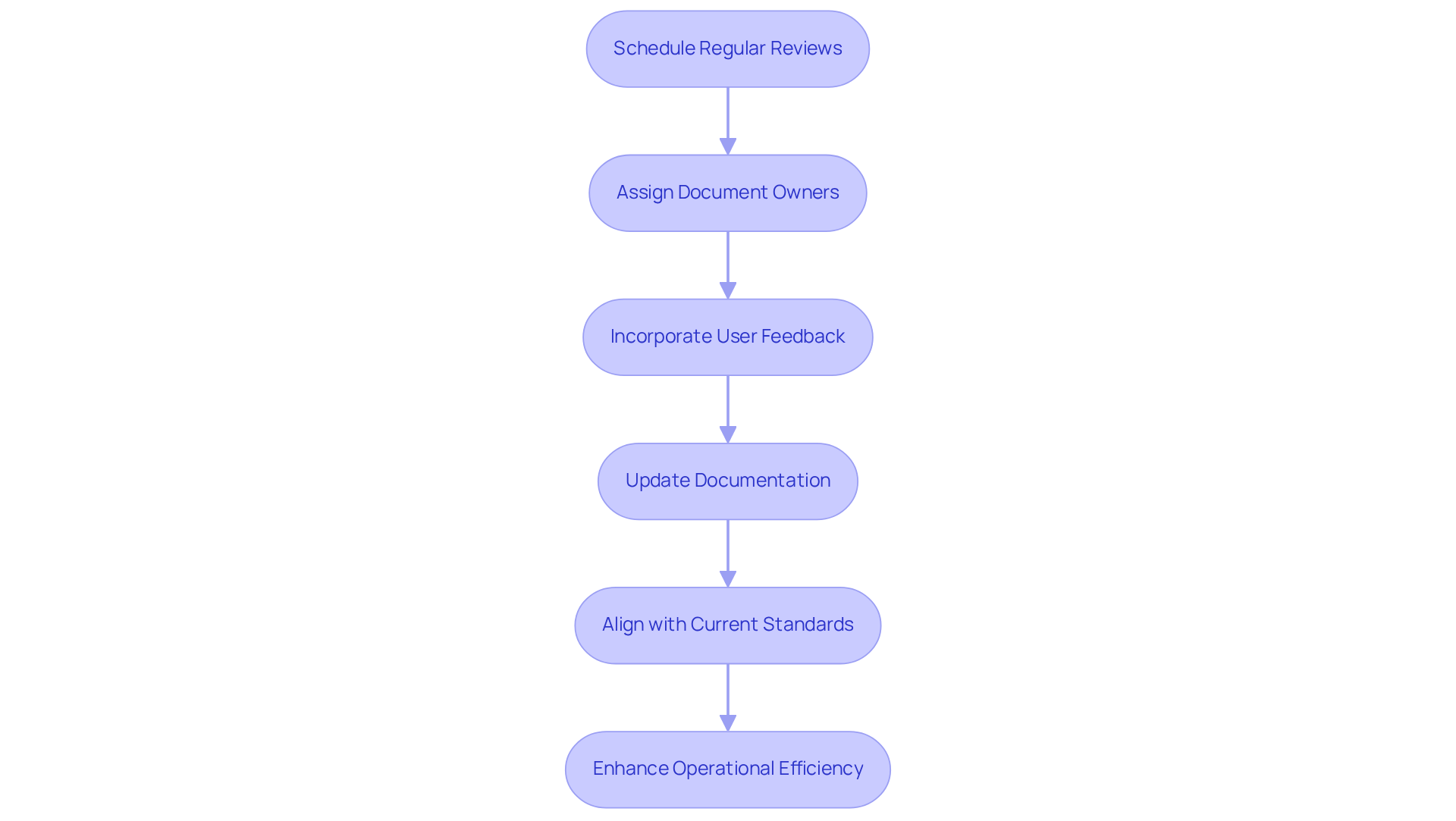
You might be wondering how to ensure that your ERP system documentation remains relevant and efficient. Well, it’s all about building a habit of preserving and refreshing your files! Start by scheduling regular reviews - think quarterly or bi-annually. Assign document owners who are responsible for updates, and don’t forget to incorporate user feedback. This way, you can tackle outdated information head-on and adapt to any changes in processes or regulations.
Speaking of reviews, organizations that stick to organized cycles often notice a significant drop in compliance issues. Regular updates help align records with current standards, which is a win-win! Plus, when you seek feedback from users, you not only gain valuable insights into how usable your materials are, but you also foster a culture of accountability and engagement among your team.
This proactive approach significantly enhances the accuracy of your records, which improves operational efficiency and reduces risks associated with outdated practices in the ERP system documentation. And here’s a little tip: leveraging SowFlow’s capabilities can make it a breeze to create and update user guides. That way, your documentation is always fresh and accessible. So, why not give it a try?
Conclusion
You might be wondering why effective ERP system documentation is such a big deal. Well, it’s essential for getting the most out of your Enterprise Resource Planning solutions! When you grasp the basics of ERP and put structured documentation practices in place, you can really boost compliance, operational efficiency, and productivity. Think of proper documentation as your roadmap - it guides users and helps unlock the full potential of your ERP systems.
Throughout this article, we’ve highlighted some key practices. For instance, organized record-keeping is crucial, and let’s not forget about the perks of version control and the need for regular updates. By using clear and concise documentation, companies can streamline processes, cut down on training times, and dodge the pitfalls of outdated information. The stats we shared show just how much effective documentation can improve operational performance and ROI.
Now, let’s not underestimate the importance of keeping your ERP documentation fresh and up-to-date. It’s really something you should prioritize! Organizations are encouraged to take a proactive stance - regularly reviewing and refreshing documentation to stay in line with current standards and user needs. By doing this, businesses not only boost compliance and efficiency but also cultivate a culture of accountability and continuous improvement. Investing in solid ERP documentation strategies is a key step toward achieving sustainable success in today’s fast-paced business world.
Frequently Asked Questions
What is Enterprise Resource Planning (ERP)?
ERP refers to integrated software platforms that help manage key business processes across various departments, including finance, HR, manufacturing, and supply chain management.
Why is understanding ERP important?
Understanding ERP is crucial for maintaining organized records and syncing recording efforts with the platform's capabilities, which leads to smoother operations.
What are the key components of ERP?
The key components of ERP include data integration, real-time reporting, and process automation, all of which contribute to improved operational efficiency.
What are the potential financial benefits of implementing ERP?
Companies that adopt ERP solutions often experience a 30% increase in return on investment within three years, and 83% of organizations that conducted an ROI analysis met their expectations.
What challenges do companies face when implementing ERP?
A significant challenge is that 64% of ERP projects exceed their budget, highlighting the importance of solid record-keeping and planning.
How does record-keeping impact ERP success?
Effective record-keeping is essential for achieving positive outcomes with ERP implementations, as it aids in creating documentation that highlights the platform’s features and helps users navigate it.
What percentage of companies view their ERP implementations as successful?
According to TrustRadius, 93% of companies eventually consider their ERP implementations successful once their systems stabilize.
👍
What others are liking


5 Steps to outline your ideal documentation structure
5 MINS READ
Where to start the your journey of mapping out your ideal documentation structure, aligning it with the very heartbeat of your organization?
Defining a winning level of detail in your process
3 MINS READ
What is too much detail, and what is too little? This article described in that winning level detail about what detail is enough.


