

Knowledge Management through Documentation
|
April 29, 2026
|

10 Operational Process Examples to Boost Efficiency Today
Key Highlights
- SowFlow enables quick creation of operational process examples, reducing paperwork time and confusion.
- Automating workflows eliminates tedious tasks, allowing teams to focus on strategic initiatives and improve productivity.
- Process mapping visually identifies bottlenecks and enhances communication among team members.
- Continuous improvement methodologies like Lean and Six Sigma help organisations identify inefficiencies and boost performance.
- Key performance indicators (KPIs) provide insights into operational efficiency and are linked to profitability.
- Cross-functional collaboration fosters innovation and streamlines operations by breaking down silos.
- Investing in employee training enhances performance, engagement, and reduces turnover.
- Integrating technology optimises operations by reducing manual tasks and improving accuracy.
- Leveraging customer feedback drives process improvements and boosts revenue and loyalty.
- Effective risk management strategies prepare organisations for challenges and enhance resilience.
Introduction
You might be wondering how operational efficiency can really make a difference for your business. In today’s fast-paced world, it’s all about finding innovative ways to streamline processes and boost productivity. This article dives into ten impactful operational process examples that can help you do just that - from using technology for quick documentation to embracing continuous improvement methods.
But with so many options out there, how do you figure out which strategies will actually work for you? Exploring these examples not only showcases their potential benefits but also raises some important questions about how to implement them and adapt in a landscape that’s always changing. So, let’s jump in and see what’s possible!
SowFlow: Instant SOP Creation for Operational Efficiency
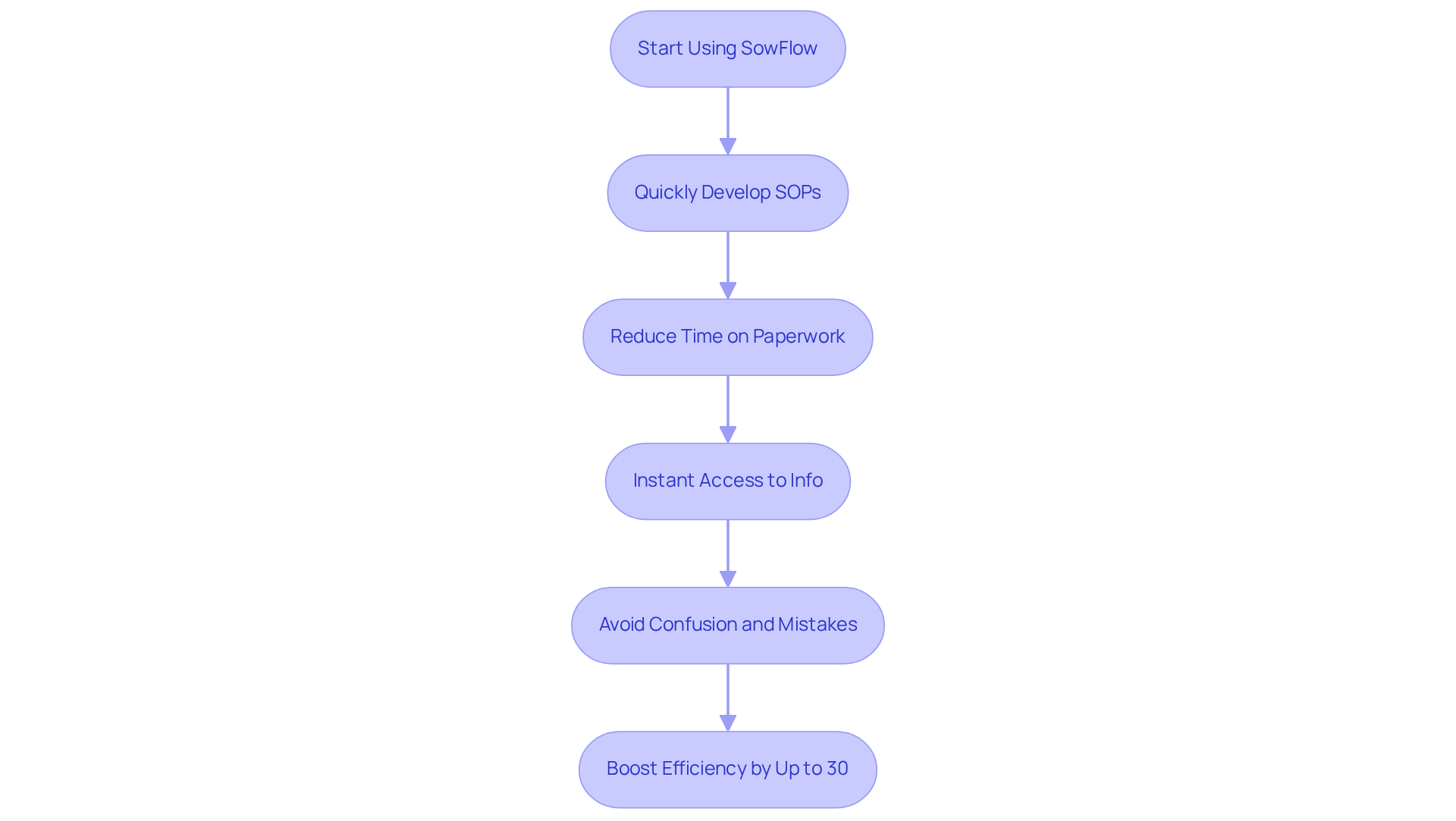
You might be wondering how to make your documentation process smoother and more efficient. Well, that’s where SowFlow comes in! It empowers organizations to quickly develop operational process examples, significantly reducing the hours spent on paperwork. With some nifty tech at your fingertips, your team can quickly create detailed how-to guides that lay out processes clearly.
This isn’t just about saving time; it’s about making sure everyone on your team has instant access to the latest info. Imagine how much confusion and those pesky mistakes could be avoided in daily tasks! And here’s a fun fact: with just one command, you can tap into all that documentation wisdom, cutting out those unnecessary meetings where you’re hunting for answers.
Research shows that companies that regularly review and update their operational process examples can experience efficiency boosts of up to 30%. That’s a big deal! Industry leaders prioritize effective documentation solutions as operational process examples that help streamline onboarding and improve communication within teams. So, why not give SowFlow's tools a shot? They could really transform how you handle documentation, making your framework more agile and responsive.
Automate Workflows to Enhance Operational Efficiency
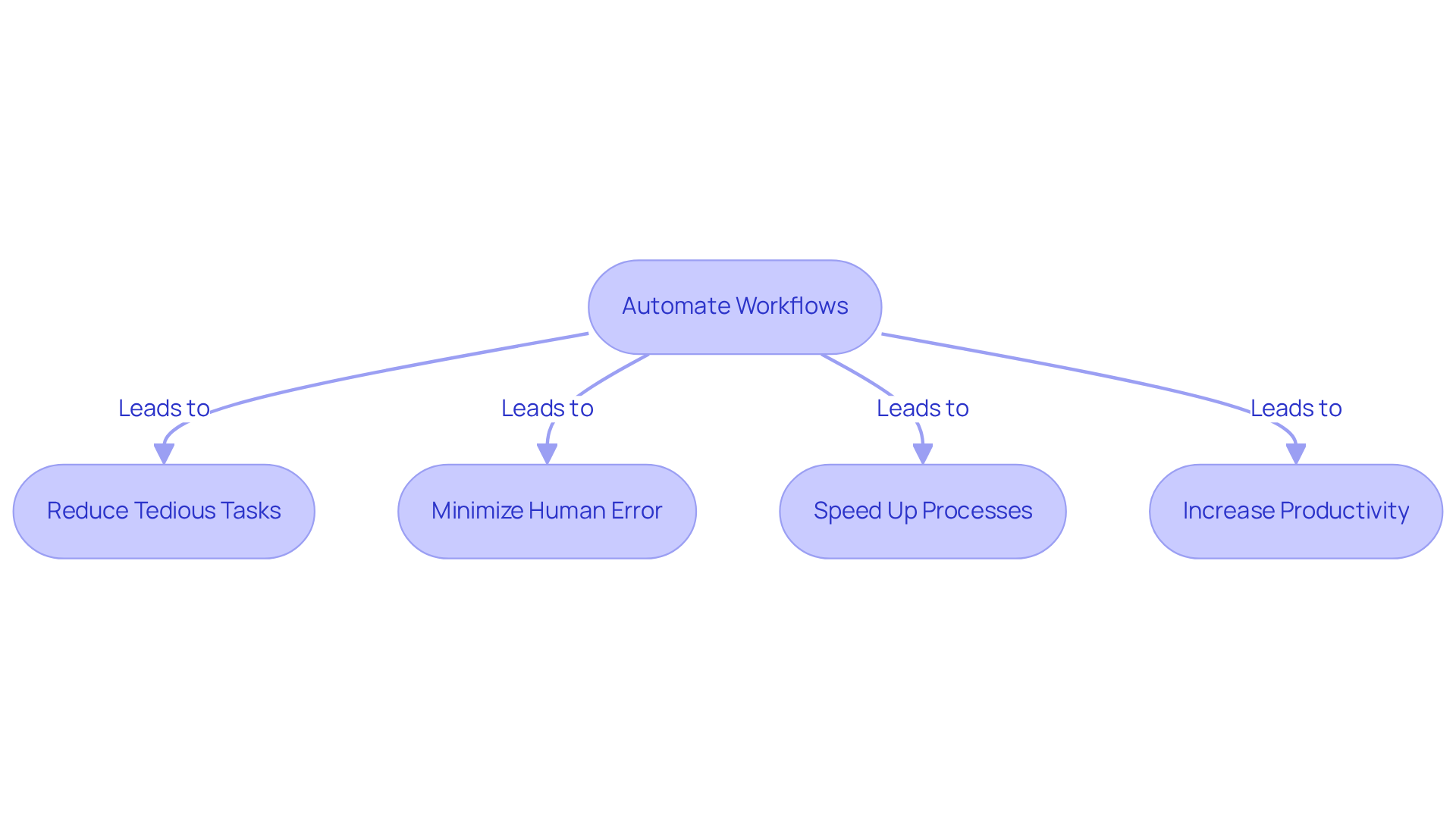
You might be wondering why automating workflows is such a big deal. Well, let me tell you - it’s all about boosting operational efficiency! When companies jump on the automation bandwagon, they can wave goodbye to those tedious, repetitive tasks. Think about it: no more manual data entry or answering the same customer service questions over and over. Instead, your team can focus on the fun stuff - like brainstorming new ideas or tackling strategic initiatives.
Now, imagine how much smoother things could run. By cutting down on human error and speeding up processes, you’re not just saving time; you’re also ramping up productivity. And who doesn’t want faster response times? It’s a win-win! So, if you’re looking to make your work life a little easier, why not explore some automation tools? They might just be the game-changer you’ve been searching for!
Utilize Process Mapping for Clarity and Optimization
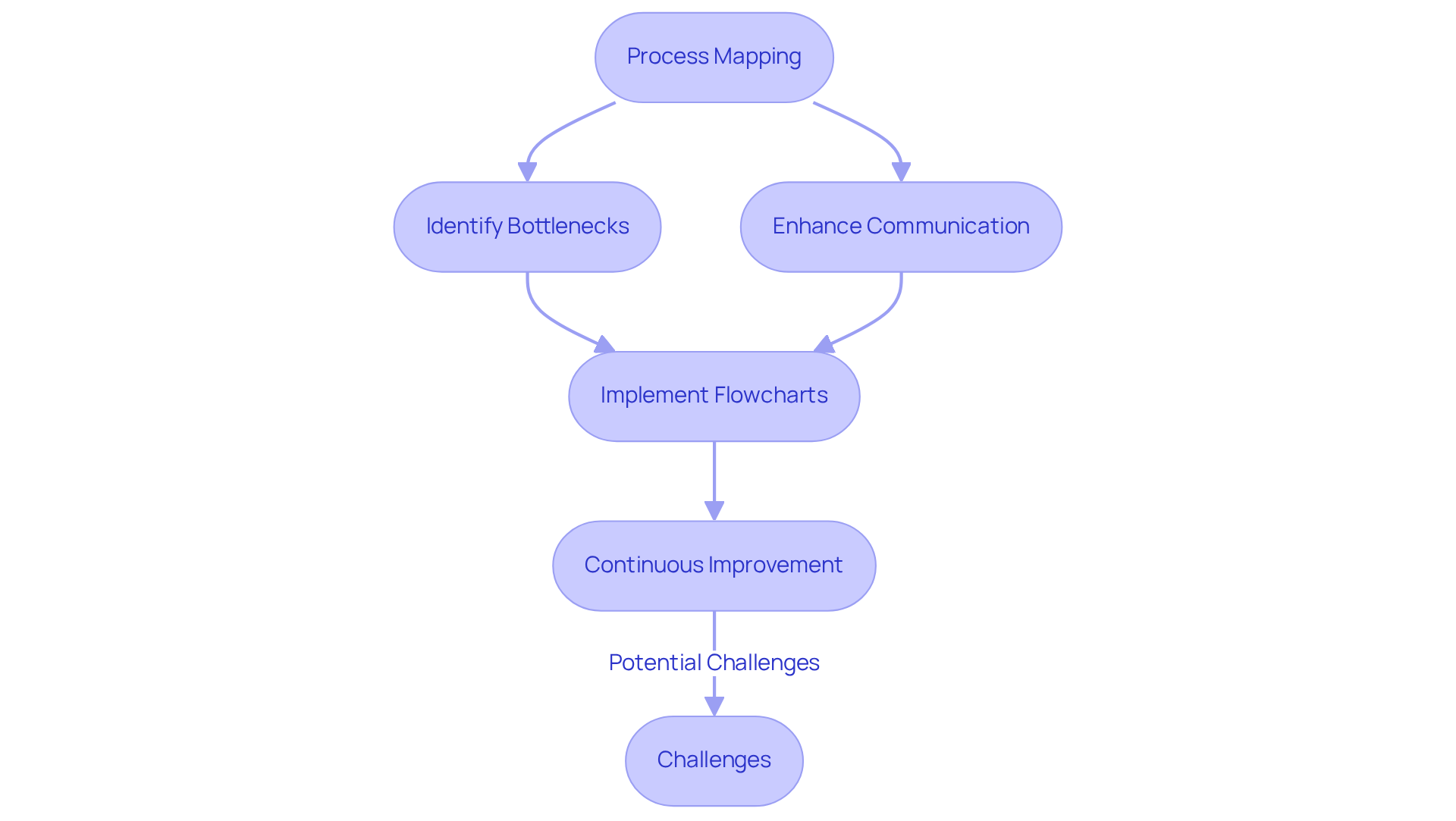
You might be wondering how process mapping can really make a difference in your business. Well, it’s a powerful tool for boosting operational clarity and efficiency! By visually laying out operational process examples, teams can easily spot bottlenecks and redundancies, which helps in making targeted improvements. Lately, there’s been a noticeable trend toward using more sophisticated mapping techniques. Tools like flowcharts and swimlane diagrams are popping up everywhere in businesses these days.
These visual aids do more than just show roles and responsibilities; they also enhance communication among team members. When everyone understands their specific contributions to the overall workflow, things just flow better. For instance, companies that use flowcharts often see significant drops in delays, while swimlane diagrams are great for clarifying how different departments interact with each other.
Experts in performance enhancement emphasize that identifying inefficiencies can be achieved through operational process examples. They argue that a well-organized flowchart provides a clear picture of what needs improvement and the steps required to meet customer expectations. By embracing these techniques, businesses can cultivate a culture of continuous improvement, leading to smoother operations and better productivity.
But let’s be real - implementing effective mapping can come with its own set of challenges. Resistance to change and the need for proper training can make things tricky. Tackling these hurdles is essential if you want to fully reap the benefits of workflow mapping. So, what do you think? Are you ready to dive into the world of process mapping?
Implement Continuous Improvement Methodologies for Process Refinement
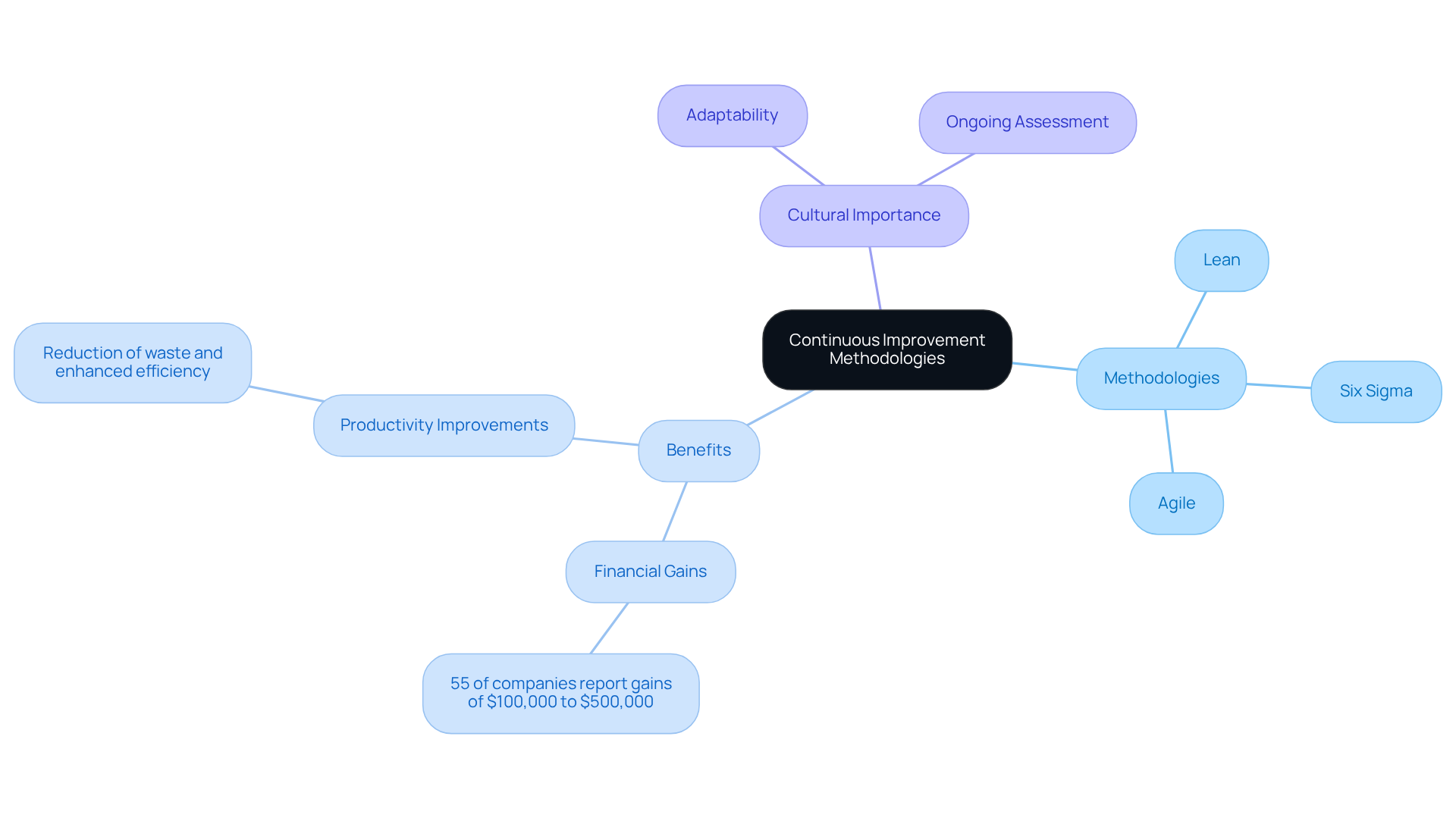
You might be wondering how continuous improvement methodologies like Lean and Six Sigma can really make a difference in your organization. Well, these frameworks are all about helping you take a good look at your operational process examples, identify those pesky inefficiencies, and implement smart changes that boost your performance. More and more companies are mixing Agile methodologies with Lean and Six Sigma to speed things up, which is a great way to ramp up efficiency.
Now, let’s dive into why fostering a culture of continuous improvement is so important. It not only helps you adapt to the ever-changing market but also ensures that your operations stay top-notch. For instance, did you know that companies embracing these methodologies often see impressive returns? In fact, 55% of organizations report gains between $100,000 and $500,000 from their improvements! Plus, businesses that focus on ongoing assessment can improve their operational process examples to cut waste and boost productivity, giving them a solid edge in the marketplace.
As Benjamin Franklin wisely said, "Without continual growth and progress, such words as improvement, achievement, and success have no meaning." So, committing to refining your methods through continuous assessment is key to achieving lasting success and flexibility. Why not explore how you can start implementing these strategies in your own organization?
Leverage Performance Metrics to Drive Operational Success
You might be wondering why performance metrics are such a big deal for operational excellence. Well, key performance indicators (KPIs) like cycle time, error rates, and client satisfaction scores give us some pretty important insights into how efficiently things are running. By keeping an eye on these metrics, organizations can spot trends and make smart choices that lead to continuous improvement.
For example, some top-notch operations have hit on-time delivery rates of 98-99% by using real-time updates and proactive management. That’s a game changer for customer satisfaction! And get this: companies that really leverage their KPIs are 19 times more likely to be profitable. That just goes to show how crucial these metrics are for driving strategic initiatives.
So, by setting up a solid framework for monitoring KPIs, businesses can not only boost their efficiency but also make sure their processes align with their bigger strategic goals. This way, they can keep growing and stay competitive in the long run. Sounds like a win-win, right?

Encourage Cross-Functional Collaboration for Streamlined Operations
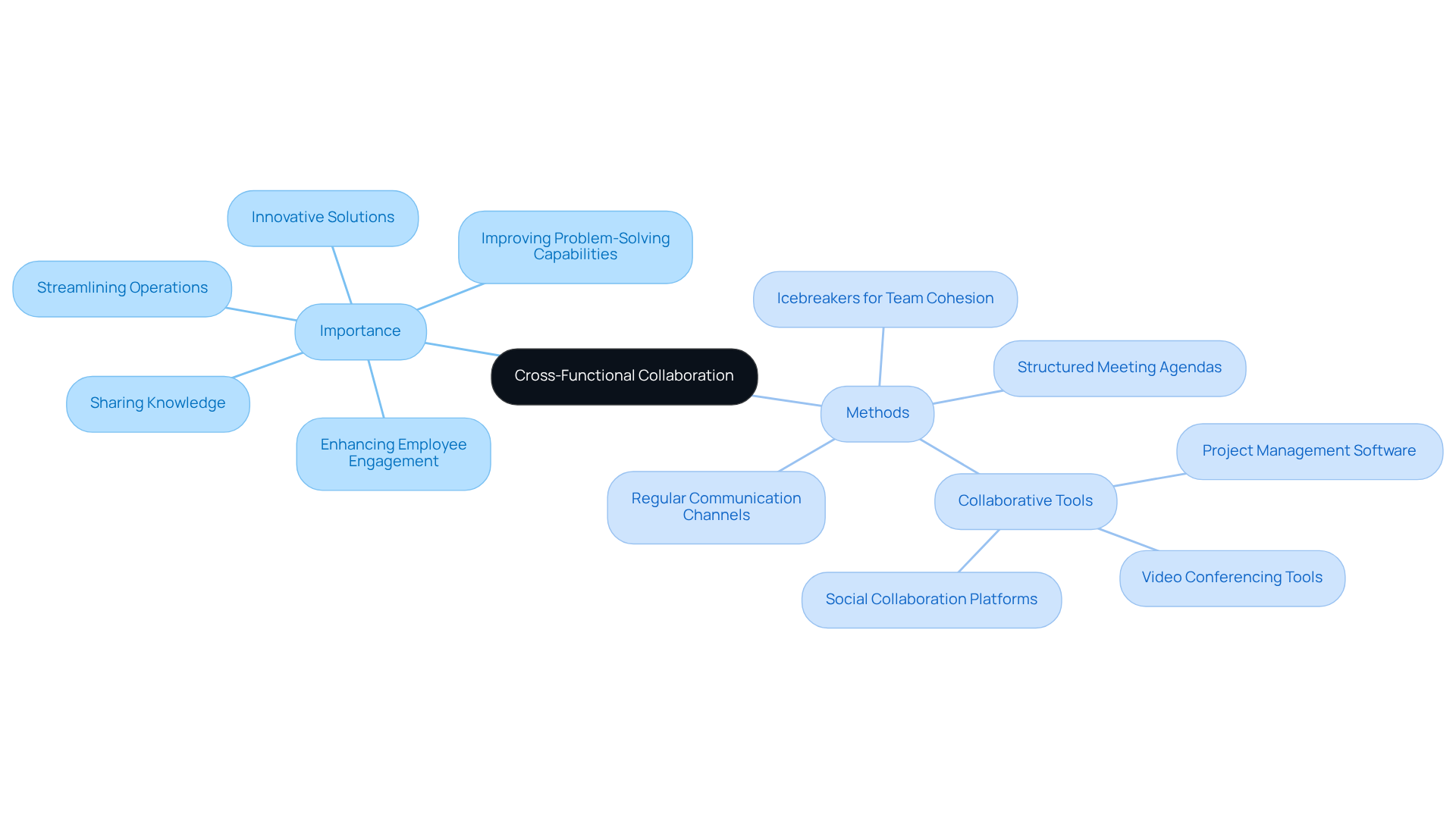
You might be wondering why cross-functional collaboration is so important. Well, it’s all about streamlining operations! When teams from different departments come together, they can share knowledge, resources, and fresh perspectives. This teamwork often leads to innovative solutions that might not have surfaced otherwise.
Now, how can we make this happen? Establishing regular communication channels and using collaborative tools can really help break down those pesky silos. This way, everyone stays aligned and works towards common goals. So, let’s dive into how you can foster this collaboration in your own workplace!
Invest in Employee Training for Enhanced Operational Performance
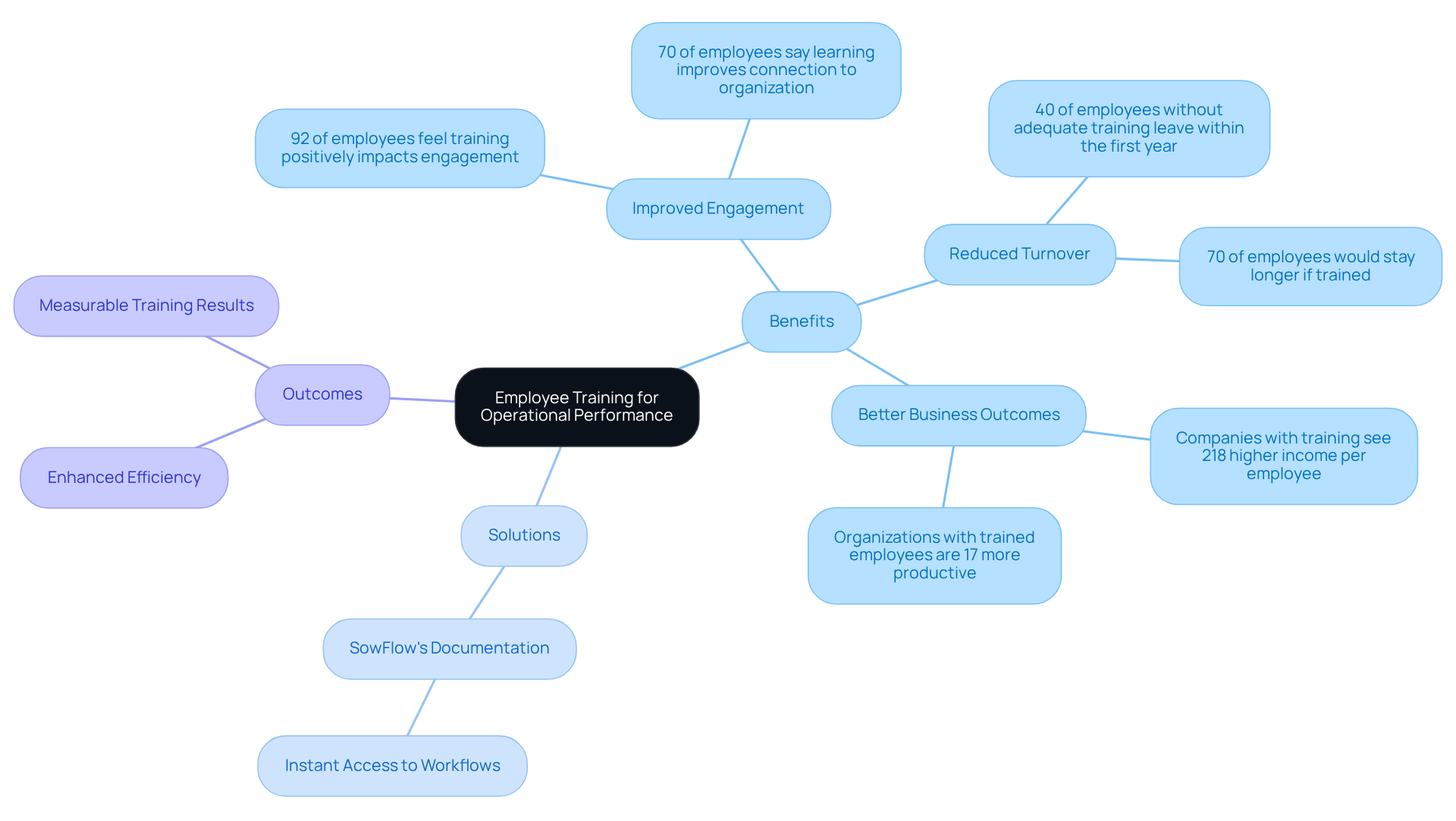
You might be wondering why investing in employee training is such a big deal. Well, let me tell you - it’s essential for boosting work performance! Well-designed training programs can serve as operational process examples that equip employees with the skills and knowledge they need to truly excel in their roles. By focusing on continuous learning and development, organizations can not only improve employee engagement but also reduce turnover. And who doesn’t want better business outcomes, right?
Now, speaking of making things easier, have you heard about SowFlow's instant documentation solution? It’s a game changer! Teams can share their workflows in just seconds, giving employees immediate access to the right documents. This capability really simplifies operational process examples and enhances onboarding and knowledge exchange. It directly supports training efforts, leading to enhanced efficiency and measurable training results. So, why not explore how effective documentation can transform your training approach?
Integrate Technology to Streamline Operational Processes
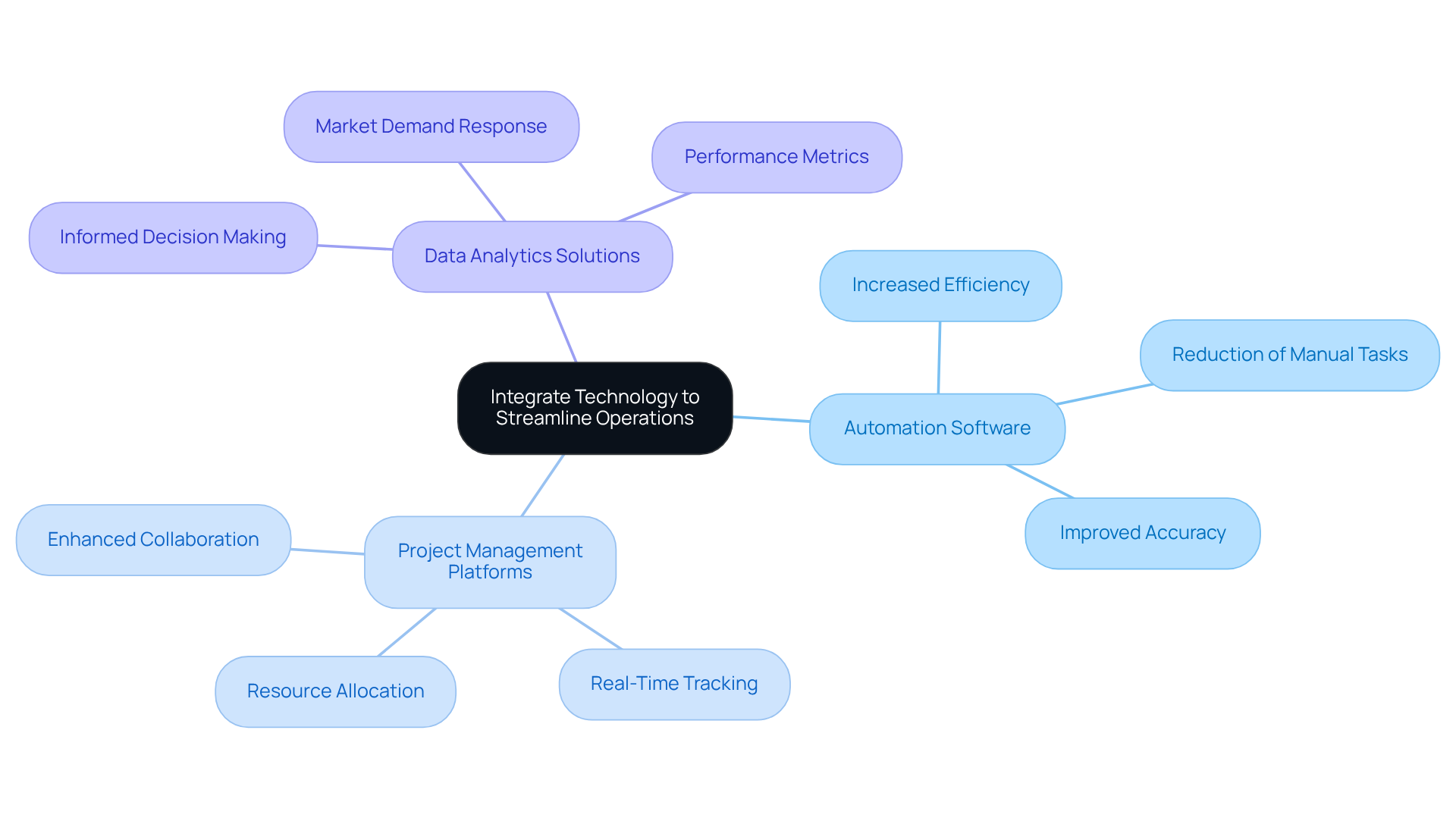
You might be wondering how technology can really make a difference in your operations. Well, incorporating tech into your systems is a game changer for streamlining workflows and boosting efficiency, which can be illustrated through operational process examples. Consider this: tools such as:
serve as operational process examples that can significantly help you optimize your operations.
By embracing digital transformation, you can wave goodbye to those tedious manual tasks. Imagine improving accuracy and being able to respond to market demands in a snap! It’s all about making your life easier and your business more agile. So, why not explore how these tools can fit into your workflow?
Utilize Customer Feedback for Process Improvement
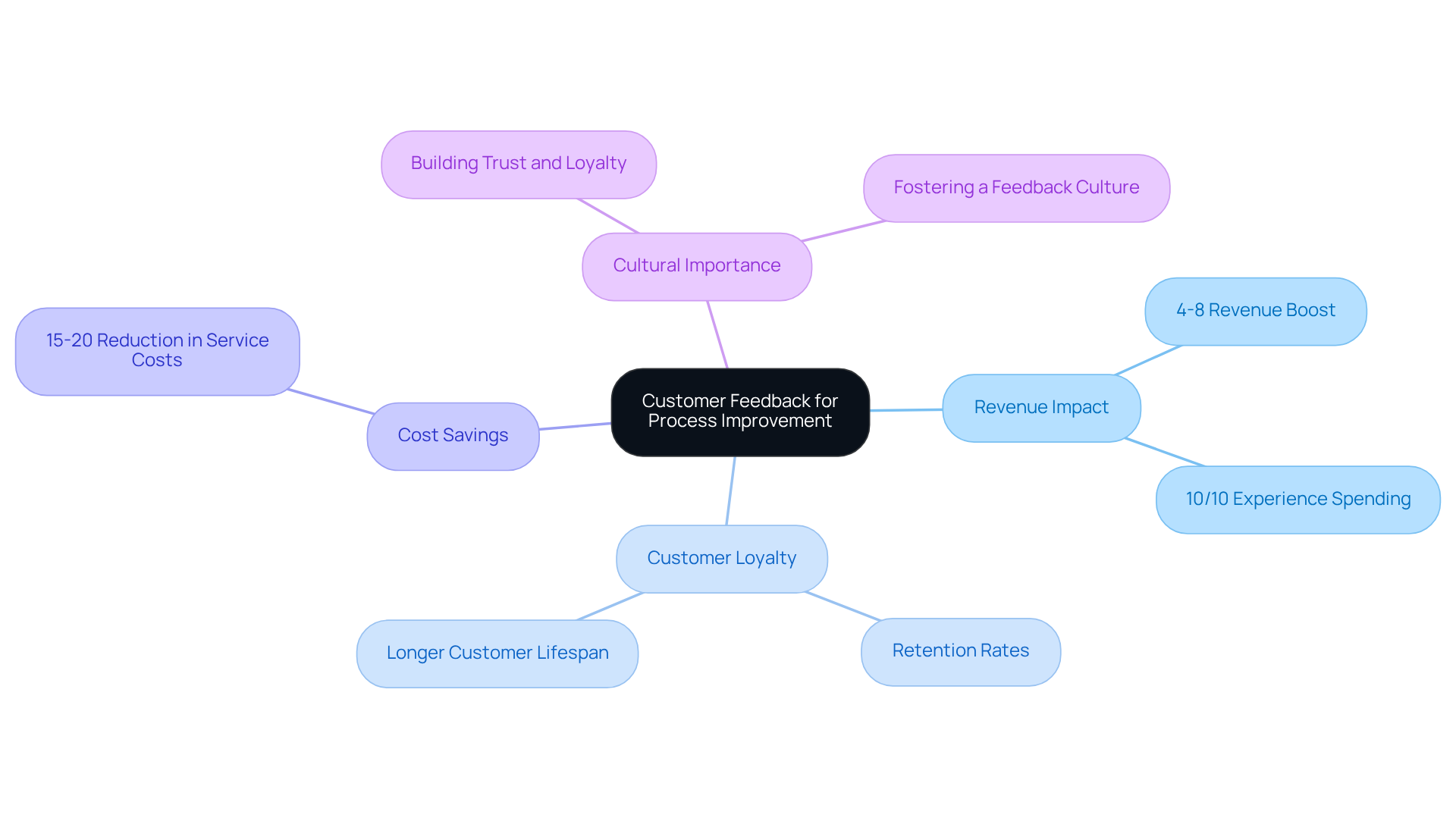
You might be wondering why leveraging client feedback is such a big deal for improving processes. Well, actively seeking and analyzing feedback helps organizations spot where their products or services might be lacking. When businesses focus on client experience, they can boost revenues by 4% to 8% more than their competitors. That’s a pretty compelling reason to pay attention to what clients are saying!
Implementing changes based on client feedback doesn’t just make the experience better; it builds loyalty and trust, which can lead to improved business performance. Did you know that clients who rate their experience a perfect 10/10 spend 140% more and stick around up to six times longer? That really shows how effective feedback can directly impact business success.
And here’s another interesting tidbit: using tools like journey maps can cut service costs by 15% to 20%. It’s clear that incorporating insights into processes pays off! As Melinda Gates wisely said, "the voice of the client is the most powerful marketing tool you have, so make sure you're listening."
By fostering a culture that values customer input and creating regular feedback cycles, companies can drive meaningful changes that enhance customer satisfaction and overall efficiency. So, what are you waiting for? Let’s start listening!
Implement Risk Management Strategies for Operational Resilience
You might be wondering why effective risk management strategies are so crucial for building organizational resilience. Well, it all starts with identifying potential risks and figuring out how they could impact your operations. This means crafting solid mitigation plans that are tailored to tackle those specific risks head-on.
Think about it: proactive risk management doesn’t just prepare businesses for the unexpected; it also keeps things running smoothly, which is key to long-term success. Industry experts agree that nurturing a culture of proactive risk management can really boost a company’s ability to handle challenges. In fact, current trends show that 76% of companies either have or plan to roll out an enterprise risk management (ERM) program. They get it - having a strong risk management strategy is essential for staying efficient and resilient in today’s fast-paced business world.
As Warren Buffett wisely put it, "Risk comes from not knowing what you’re doing." This really drives home the point about making informed decisions in risk management. So, to really strengthen your approach, it’s a good idea to regularly review and update your risk management plans. After all, threats are always evolving, and staying ahead of the game is what it’s all about!

Conclusion
You know, enhancing operational efficiency isn’t just a nice-to-have; it’s a must for organizations that want to thrive in today’s competitive landscape. By embracing innovative tools and methodologies - like SowFlow for creating SOPs, automating workflows, and adopting continuous improvement frameworks - businesses can really streamline their processes and boost productivity. The trick is to recognize that efficiency isn’t one-size-fits-all; it involves integrating technology, effective documentation, and nurturing a culture of collaboration and feedback.
Throughout this article, we’ve explored various strategies that highlight the importance of:
- performance metrics
- process mapping
- employee training
Each of these approaches plays a unique role in refining operations and driving success. Plus, don’t forget about leveraging customer feedback and implementing solid risk management strategies - they’re key to helping organizations navigate challenges and sustain growth.
So, in a world where operational excellence is everything, the message is clear: it’s time to embrace these strategies. Not only will they enhance efficiency, but they’ll also help foster a resilient and adaptive organizational culture. By prioritizing these operational process examples, you can set your business up for sustained success and a competitive edge in the years ahead.
Frequently Asked Questions
What is SowFlow and how does it improve operational efficiency?
SowFlow is a tool that enables organizations to quickly create operational process examples, significantly reducing the time spent on documentation. It allows teams to develop detailed how-to guides that provide instant access to the latest information, reducing confusion and mistakes in daily tasks.
How does SowFlow help in reducing unnecessary meetings?
With SowFlow, users can access all documentation with a single command, minimizing the need for meetings aimed at finding answers to operational questions.
What efficiency gains can companies expect from regularly reviewing their operational process examples?
Research indicates that companies that regularly review and update their operational process examples can experience efficiency boosts of up to 30%.
Why is automating workflows important for operational efficiency?
Automating workflows eliminates tedious, repetitive tasks like manual data entry, allowing teams to focus on more strategic initiatives. This reduces human error, speeds up processes, and enhances productivity.
What are the benefits of using process mapping in a business?
Process mapping visually represents operational processes, helping teams identify bottlenecks and redundancies. This clarity leads to targeted improvements and enhances communication among team members.
What tools are commonly used in process mapping?
Common tools for process mapping include flowcharts and swimlane diagrams, which help clarify roles, responsibilities, and inter-departmental interactions.
What challenges might businesses face when implementing process mapping?
Challenges may include resistance to change and the need for proper training to ensure effective implementation of mapping techniques.
How can businesses benefit from identifying inefficiencies through operational process examples?
Identifying inefficiencies allows businesses to make improvements and meet customer expectations more effectively, fostering a culture of continuous improvement and better productivity.
👍
What others are liking


5 Steps to outline your ideal documentation structure
5 MINS READ
Where to start the your journey of mapping out your ideal documentation structure, aligning it with the very heartbeat of your organization?
Defining a winning level of detail in your process
3 MINS READ
What is too much detail, and what is too little? This article described in that winning level detail about what detail is enough.


